Braised Veal and Pork Cutlets in White Wine Sauce
Veal and pork cutlets braised slowly in white wine with onions, then covered with a silky parsley and egg sauce made from the cooking juices.
Quick Summary
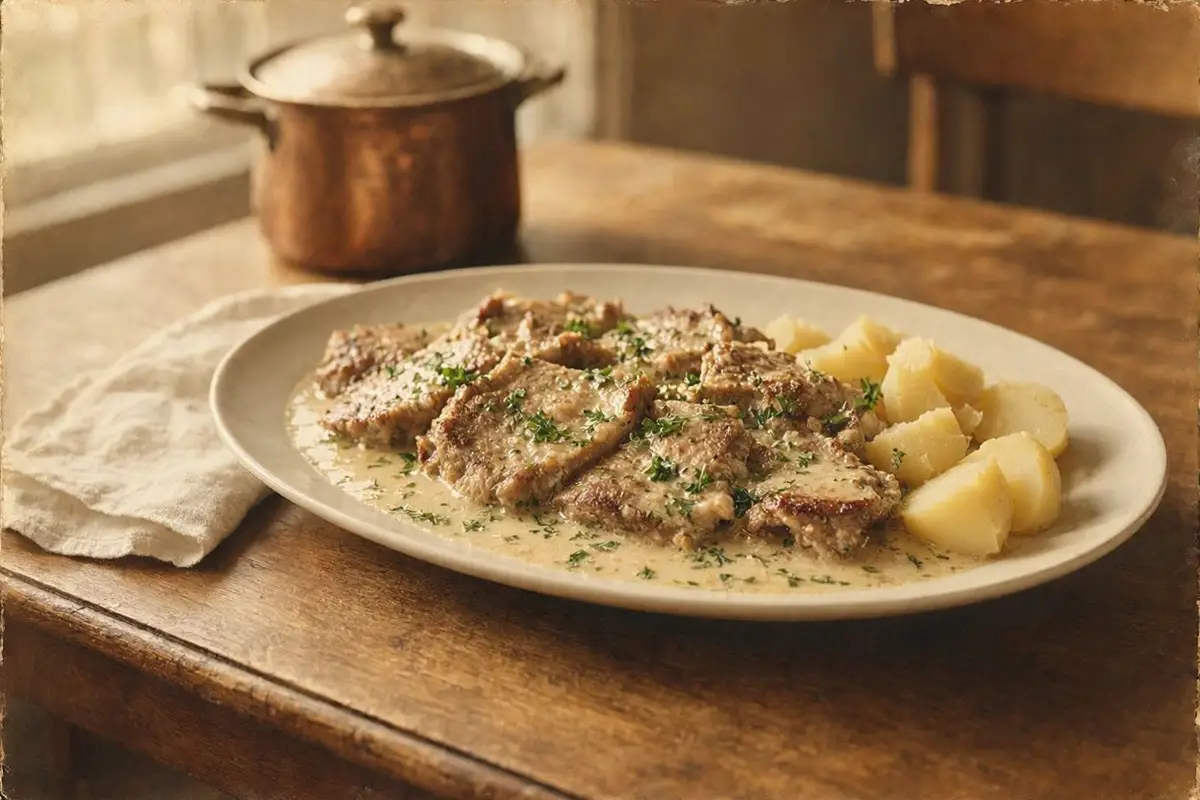
Thin veal and pork cutlets are layered in a pot with onions and dry white wine, then braised gently for about two hours until fork-tender. The strained cooking juices are thickened with whole eggs, flour and parsley into a smooth sauce poured over the meat.
Historical recipe
Modernised adaptation of an early 20th‑century source. Not independently kitchen-tested by Attic Recipes. Quantities, temperatures, and food safety guidance have been updated for a contemporary kitchen — results may vary and errors may exist. Nutritional values, where provided, are estimates only and have not been laboratory tested. Always follow current food safety guidelines for your region. If you have a health condition, allergy, or dietary requirement, consult a qualified professional before preparing this recipe.
Use of this recipe is entirely at your own risk and subject to ourTerms of Service andPrivacy Policy. Attic Recipes accepts no liability for any adverse outcome.
- Eggs
- Dairy
- Gluten
- Sulphites
Additional notes
Warning
The sauce is thickened with whole eggs and must be heated to at least 74°C (165°F) to be safe. This is especially important for pregnant women, children, older adults and immunocompromised people. Make sure the pork is cooked until fully tender, and refrigerate leftovers within 2 hours.
Note
Contains white wine. The long simmer removes most of the alcohol, but a small amount remains, so it may not be suitable for pregnant women, children or anyone avoiding alcohol.
Replace the wine with 400ml unsalted chicken or veal stock plus 2 tbsp white wine vinegar.
- 1
Slice the 500g veal and 500g pork into cutlets about 1cm thick. Pound each cutlet well with a wooden mallet to an even thickness of about 6mm. Season both sides of all the cutlets with a total of 1½ tsp fine salt and 1 tsp freshly ground black pepper.
TipPlace the meat between two sheets of baking paper before pounding to stop it from tearing. Pounding breaks up the muscle fibers and helps the meat turn tender during the braise. - 2
Melt 15g unsalted butter in a heavy 4–5 litre pot over medium heat. Layer the pork cutlets over the bottom of the pot, then place the veal cutlets on top.
TipFor a deeper flavor, brown the cutlets briefly in batches in a little extra fat before layering. This browning step was not part of the period method. - 3
Scatter the 2 finely chopped onions over the meat and pour in 500ml dry white wine. Bring to a bare simmer.
- 4
Cover the pot tightly, lower the heat to the lowest setting so the liquid barely trembles, and braise for 2 hours, until the meat is fork-tender.
TipCheck the pot after 90 minutes. If the liquid has dropped below about half the height of the meat, add 100ml hot water. The tight lid keeps the juices from evaporating. - 5
Lift the meat with tongs onto a long warm platter and cover it with foil. Strain the cooking liquid through a fine sieve into a clean 3-litre saucepan, pressing lightly on the onions. Skim off the surface fat and keep the liquid hot over low heat.
TipYou should have about 500–600ml of liquid. Keep it hot but below a simmer while you prepare the eggs. - 6
In a bowl, whisk 4 large eggs, 1 tbsp plain flour and 20g finely chopped parsley with a wire whisk until smooth and frothy.
- 7
Ladle about 250ml of the hot cooking liquid into the egg mixture in a thin stream, whisking constantly. Then pour the tempered egg mixture back into the saucepan, whisking.
TipAdding hot liquid slowly to the eggs, instead of eggs to hot liquid, keeps them from scrambling into lumps. - 8
Cook over low to medium heat, whisking constantly, until the sauce thickens and reaches at least 74°C (165°F). Then let it come to a gentle bubble for 1 minute, still whisking, to cook out the raw flour. Taste and adjust the salt.
TipDo not let the sauce boil hard. The flour makes it stable enough for a brief bubble, but a rolling boil can still curdle the eggs. - 9
Pour the hot sauce over the meat on the platter and serve immediately.
Nutrition Informationper 1 serving (approx 235g)
Nutritional values are approximate estimates and may vary based on specific ingredients used, preparation methods, and portion sizes.
Serving Suggestions
Serve hot from the platter with boiled potatoes, buttered noodles or rice to catch the sauce, and a crisp green salad or pickles on the side. Leftovers keep in the refrigerator for up to 3 days; reheat gently over low heat, since the egg sauce can separate if it boils.
About This Recipe
This is a slow-braised dish of thin veal and pork cutlets, layered in one pot with onions and dry white wine and left to cook gently for two hours. The meat turns tender and the wine and onions form a savory liquid that carries the flavor of both meats.
The finishing touch is what sets it apart: the strained cooking liquid is thickened with whole eggs, a spoonful of flour and plenty of fresh parsley into a smooth, pale sauce, which is poured over the meat on a long platter. The result is rich without cream, with a mild tang from the wine.
It is a dish for a Sunday table or a holiday meal, best served hot with potatoes or noodles to soak up the sauce.
Why It Works
Pounding the cutlets thin breaks up the muscle fibers, and the long, gentle braise in a covered pot melts the connective tissue in the veal and pork without drying them out. Layering the pork at the bottom and the veal on top keeps the more delicate meat above the heaviest heat. The wine’s acidity also helps the meat soften and gives the sauce its tang.
The sauce is an egg liaison. Whole eggs thicken the strained juices as they set, and the small amount of flour gives the sauce enough stability to withstand a brief bubble without curdling. Adding the hot liquid to the eggs slowly, instead of the reverse, brings the eggs up to temperature gradually so they thicken smoothly.
Modern Kitchen Tips
Use a pot wide enough to hold the cutlets in two even layers, with a tight-fitting lid, so the liquid does not evaporate during the long braise.
Keep the heat very low. The liquid should barely tremble; a hard simmer makes lean meat stringy.
Whisk constantly when adding the tempered eggs back to the pot, and use an instant-read thermometer to confirm the sauce has reached 74°C (165°F). Reheat leftovers gently and never let the sauce boil hard.
A classic of early 20th century home cooking, preserved and adapted for the modern kitchen.
The Story Behind This Recipe
Historical Context
Early 20th century recipes for this dish typically used lean boneless meat, pounded thin and braised slowly in wine. Home cooks of the period sometimes combined veal, pork and lamb in one pot, layering the cutlets in a set order, and thickened the cooking juices with beaten eggs rather than cream or a roux. The traditional approach did not specify the size of the cutlets, the amount of seasoning, or the amount of parsley, and described the braise as lasting about two hours.
Modern Kitchen Adaptation
The period method calls for one spoonful of fat without specifying which; butter is used here, and pork lard is the historical alternative. Because the fat only coats the pot and does not fry the meat, butter works well, but if you add a browning step, use lard, clarified butter or a neutral oil, since plain butter burns at higher heat. Cutlet thickness (1 cm, pounded to about 6 mm), the salt (1½ tsp), the pepper (1 tsp), the onion size (about 150 g each), the parsley (20 g) and the braising heat (barely trembling, about 90°C) were not specified and have been estimated. 'Sharp' (coarse) flour is read as plain flour. The period method says only to pour the juice slowly into the pot and let it come to a boil; here the hot juice is tempered into the egg mixture first, and the finished sauce must reach 74°C (165°F). A brief bubble is allowed because the flour stabilizes the sauce. Veal and pork are used here; boneless lamb can replace the pork, or use 350 g each of pork, veal and lamb layered in that order, pork at the bottom. Skimming the fat and adding a little hot water if the pot runs low are modern additions.
Images on this site are AI-generated illustrations in a 1930s style; your finished dish may look different.
This recipe is an independent modern adaptation developed from historical sources in the public domain. It is provided for informational and educational purposes only and does not constitute professional dietary, nutritional, or medical advice. Food preparation involves inherent risks. The reader assumes full responsibility for safe food handling, ingredient sourcing, and adherence to current local food safety guidelines. The site operator accepts no liability for outcomes resulting from the preparation or consumption of this recipe.
One recipe.
Every week.
You Might Also Like
More recipes you'll enjoy
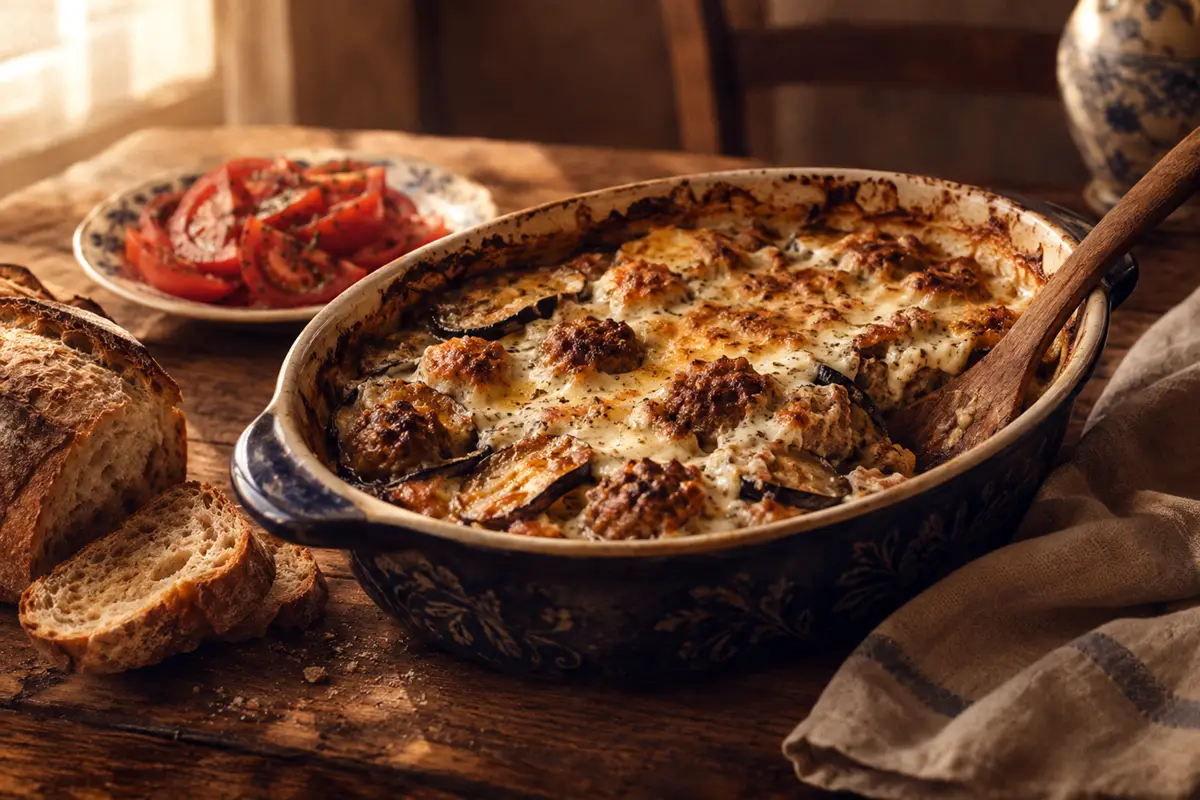
Pork Meatballs Baked in Roasted Eggplant and Sour Cream
Pork meatballs layered between roasted, minced eggplant and garlic, covered with sour cream and baked in a table-ready dish until bubbling.
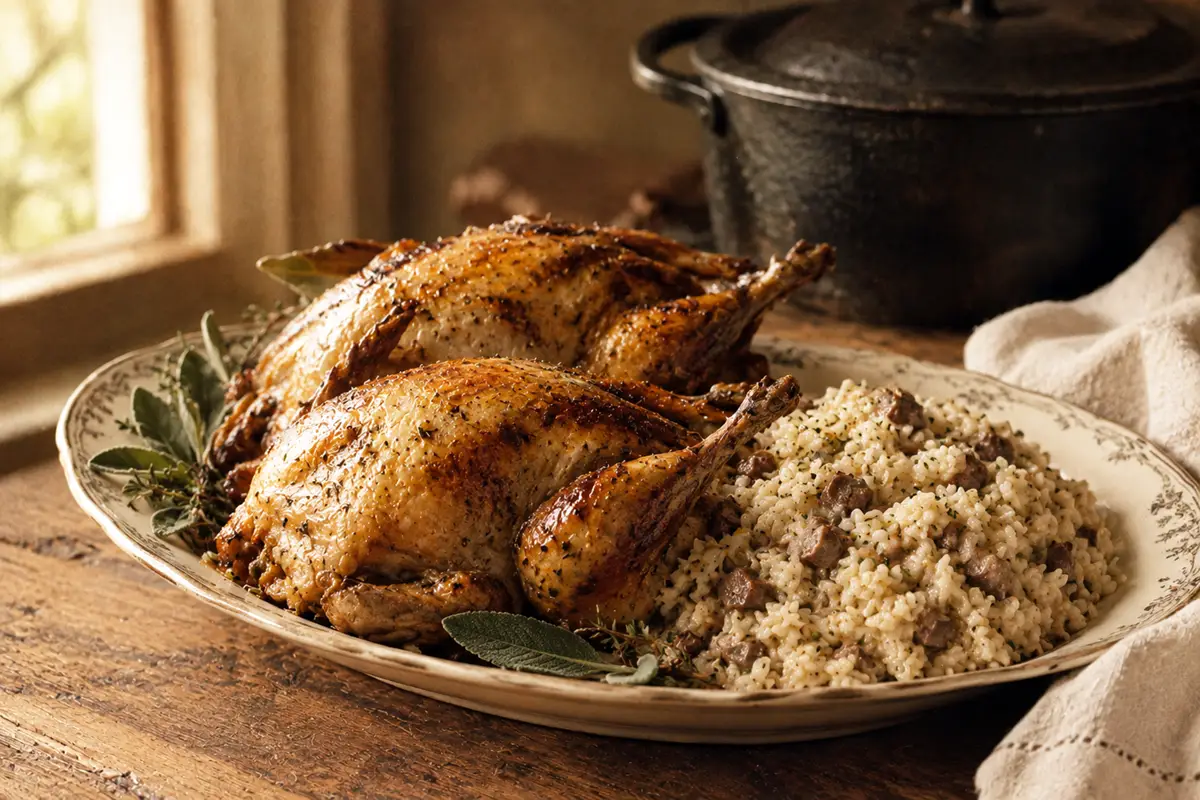
Pot-Roasted Partridge with Giblet Rice
Partridges slowly pot-roasted in butter until tender and served with a savory rice mixed with their own hearts, kidneys and livers, bound with egg.
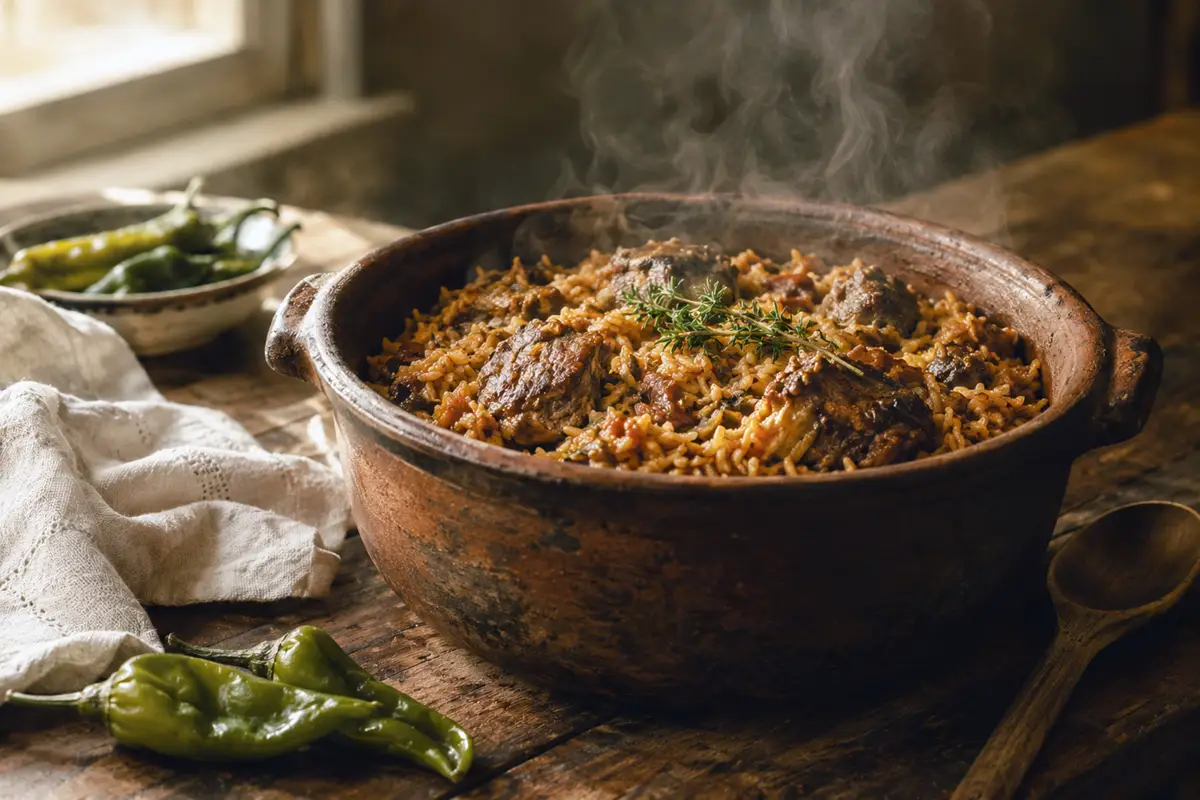
Slow-Simmered Lamb Shoulder Pilaf with Tomato and Thyme
A one-pot pilaf of lamb shoulder simmered with tomato, peppers, garlic and thyme, then cooked with rice in a broth made from the bones.