Slow-Simmered Lamb Shoulder Pilaf with Tomato and Thyme
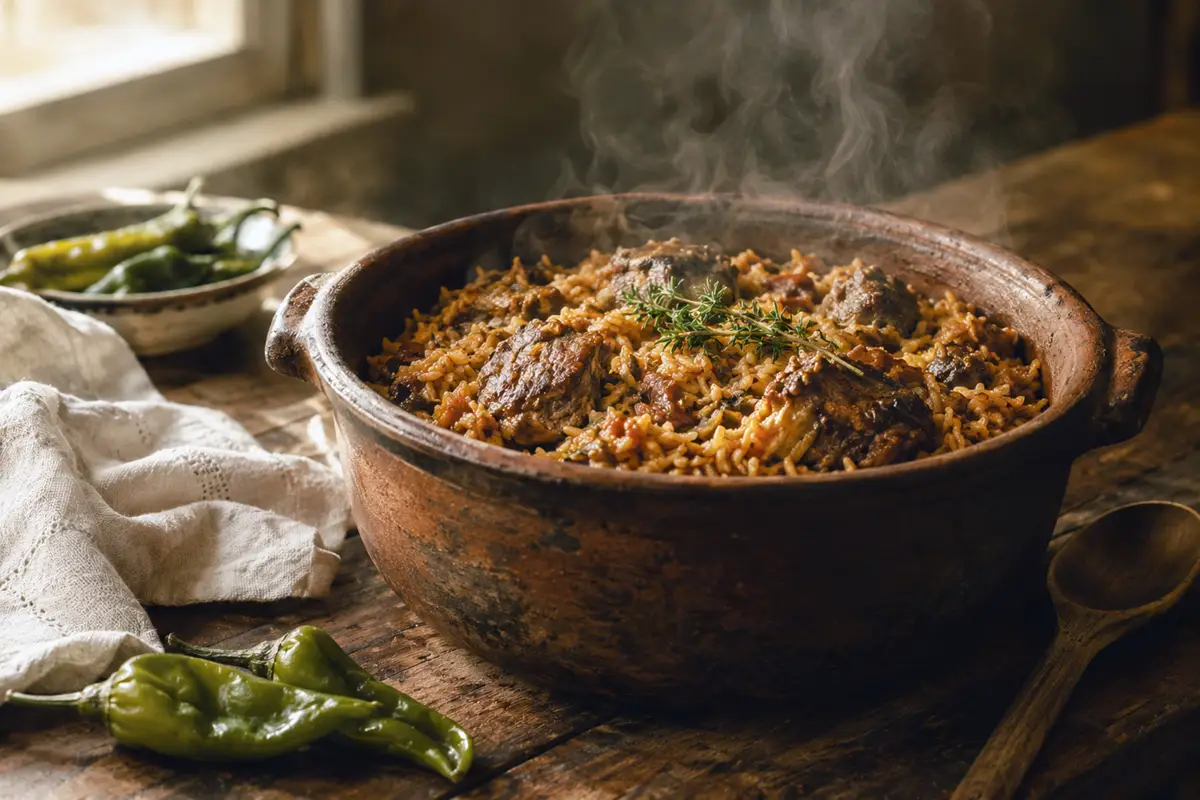
A one-pot pilaf of lamb shoulder simmered with tomato, peppers, garlic and thyme, then cooked with rice in a broth made from the bones.
Quick Summary
Lamb shoulder is cubed, fried with onion in rendered fat, and simmered with tomato, peppers, garlic and herbs in a broth made from its own bones. Rice is added to the same pot and cooked until tender. The dish takes about four hours and feeds six.
This recipe uses The Science of Removing Gamey Flavor from Lamb and Mutton — prepare it in advance if you haven't already.
Historical recipe
Modernised adaptation of an early 20th‑century source. Not independently kitchen-tested by Attic Recipes. Quantities, temperatures, and food safety guidance have been updated for a contemporary kitchen — results may vary and errors may exist. Nutritional values, where provided, are estimates only and have not been laboratory tested. Always follow current food safety guidelines for your region. If you have a health condition, allergy, or dietary requirement, consult a qualified professional before preparing this recipe.
Use of this recipe is entirely at your own risk and subject to ourTerms of Service andPrivacy Policy. Attic Recipes accepts no liability for any adverse outcome.
Additional notes
Warning
Melting suet and frying in hot fat creates a burn and splatter hazard. Keep the pot dry, use a deep pot, and keep children and older adults away from the stove.
Note
This pilaf is very high in saturated fat, about 19g per serving, mostly from the suet. Enjoy it in moderate portions, and skim the surface fat well. This is especially relevant for older adults and anyone monitoring their cholesterol.
Use 100g suet or 100ml olive oil instead of 250g suet, and skim the surface fat thoroughly at the end.
Caution
Cooked rice left at room temperature can grow bacteria that cause food poisoning. Cool leftovers quickly, refrigerate within 1 hour, eat within 1 day, and reheat only once until steaming hot (74°C / 165°F). This is especially important for pregnant women, children, older adults and immunocompromised people.
- 1
Bone the 1.5kg lamb shoulder and trim off the skin, gristle and sinew. Cut the meat into 3cm cubes, about the size of a good walnut; you should have about 950g. Keep all the bones and trimmings.
TipAsk the butcher to bone the shoulder and hand over the bones. Mutton may need longer to cook than lamb. - 2
Put the bones and trimmings in a large stockpot and cover with 2 litres cold water. Bring slowly to a gentle simmer, skimming off and discarding the foam as it rises. Simmer uncovered for about 90 minutes, until about 1.5 litres of clear broth remains. Strain the broth and discard the bones.
TipKeep the broth at a bare simmer for a clear result, because a hard boil clouds it. Leave it unsalted. You can start step 3 during the last 25–30 minutes of simmering. - 3
Put 250g finely chopped suet in a heavy 5–6 litre pot over low heat and melt it slowly, about 10–12 minutes, until it is liquid fat with a few crisp bits. Remove any unmelted bits with a slotted spoon.
TipBURN HAZARD: melted fat is very hot and spits when it meets moisture. Keep the pot dry and use a deep pot. - 4
Raise the heat to medium. Add 5 tbsp finely chopped onion and the meat cubes and fry, stirring often, for about 20 minutes, until the meat is lightly browned.
TipThe fat should shimmer gently at about 150–160°C (300–320°F). If it smokes, lower the heat. - 5
Add 2 tsp salt, 1 tsp pepper, 10g parsley, ½ vine leaf, 3 thyme sprigs, 2 crushed garlic cloves and the 2 bell peppers. Pour in the 1.5 litres of strained broth, stir in 5 tbsp tomato purée, and bring to a gentle simmer.
- 6
Cover the pot and simmer on the lowest heat for 75–90 minutes, until the meat is tender.
TipTest a cube with a fork. If it is not tender, keep simmering and check every 15 minutes. - 7
Remove the vine leaf, the parsley and the thyme stems. Check the amount of liquid in the pot. For 400g rice you need about 900ml, because the rice takes up 200–250g of broth for every 100g. Ladle off the excess, or add hot water if there is too little.
TipTaste the liquid. It should taste properly seasoned, because the rice will absorb it. Save any excess broth for soup. - 8
Add the 400g rinsed, drained rice, stirring once to submerge it. Cover the pot and cook over the lowest heat for 25 minutes, until the rice is tender and the liquid has been absorbed.
TipDo not lift the lid during cooking, as the steam is what cooks the rice. - 9
Remove the pot from the heat. Skim off as much of the surface fat as you like and discard it. Leave the pilaf covered for 5–10 minutes, then fluff gently with a fork and serve.
TipSkimming is traditional and removes a good share of the fat from the suet.
Nutrition Informationper 1 serving (approx 380g)
Nutritional values are approximate estimates and may vary based on specific ingredients used, preparation methods, and portion sizes.
Serving Suggestions
Serve hot straight from the pot, with a tomato and cucumber salad, pickled peppers or a bowl of plain yogurt on the side. Cool leftovers quickly, refrigerate within 1 hour, and eat within 1 day, reheating only once until steaming hot.
About This Recipe
This is a one-pot dish of lamb shoulder and rice, built in stages in the same heavy pot. The bones are simmered into a clear broth, the meat is browned in rendered fat with onion, and everything then simmers slowly with tomato, peppers, garlic, parsley, thyme and a small piece of vine leaf, before rice goes in to finish in the same liquid.
The method is thrifty. A modest cut of meat, its own bones and a handful of pantry ingredients make a full meal for the family, and nothing is wasted. The rice takes up the broth, the tomato and the rendered fat, ending up tender, fragrant and a pale rusty red.
It suits any season, hot from the pot with a sharp salad or pickled peppers.
Why It Works
The broth made from the bones and trimmings gives the whole dish a deep, savory base and a little body from the collagen, so the rice cooks in a liquid that already tastes of lamb. Frying the meat in fat first browns the surface for flavor, and the long, gentle simmer breaks down the connective tissue in the shoulder until the meat is tender.
The liquid for the rice is set by weight, with 200 to 250 g of broth for every 100 g of rice. That ratio is what makes the pilaf work: too little broth leaves hard grains, and too much turns the rice to mush. A tight lid and the lowest heat let the rice steam through without stirring.
Modern Kitchen Tips
Ask the butcher to bone the shoulder and give you the bones, then make the broth first so it is ready when the meat is browned.
Measure the liquid in the pot before the rice goes in. If there is too much, ladle off the excess; if too little, top it up with hot water.
Rinse the rice until the water runs clear, and let the finished pilaf rest off the heat so the grains firm up. Skim the fat from the surface before serving.
A classic of early 20th century home cooking, preserved and adapted for the modern kitchen.
The Story Behind This Recipe
Historical Context
Rice dishes cooked with lamb or mutton in a single pot entered Central European kitchens during the centuries of Ottoman presence in the region and became a familiar part of home cooking in every season. Home cooks of the period valued this kind of pilaf because it was neither costly nor difficult, using a modest cut of meat, its bones for the broth, and rice to stretch the meal. The traditional approach fried the meat in rendered mutton fat in a clay or bronze pot, used a piece of vine leaf and a sprig of thyme for flavor, and measured the broth for the rice by weight, about 200 to 250 g of broth for every 100 g of rice.
Modern Kitchen Adaptation
The period text gives the weight of the shoulder as the weight of the cut, so it is read here as a bone-in shoulder of 1.5 kg, which yields about 950 g of boneless meat (estimated). The onion (4–5 spoonfuls) is set at 5 tbsp, the tomato purée (5–6 spoonfuls) at 5 tbsp, the bell peppers are read as two sweet green peppers of about 150 g each, and the parsley, vine leaf and thyme amounts, the salt (2 tsp), the pepper (1 tsp), the broth water (2 litres) and the cutting size of the peppers were not specified and have been estimated. Tomato purée means a thick passata; if using double-concentrated paste, use 1½ tbsp. The period method fries the meat in 250 g of suet or in olive oil; if using olive oil, substitute about 230 ml. This is a very rich quantity of fat, and skimming the surface fat at the end removes a good share of it. For a lighter dish, use 100 g suet or 100 ml olive oil. Measuring the liquid before adding the rice, to the period ratio of 200–250 g of broth per 100 g of rice, is added to make the rice reliable. Mutton may need longer than lamb, and brined vine leaves should be rinsed, since some preserved leaves contain sulphites. Heavy enameled cast iron replaces the clay or bronze pot.
Images on this site are AI-generated illustrations in a 1930s style; your finished dish may look different.
This recipe is an independent modern adaptation developed from historical sources in the public domain. It is provided for informational and educational purposes only and does not constitute professional dietary, nutritional, or medical advice. Food preparation involves inherent risks. The reader assumes full responsibility for safe food handling, ingredient sourcing, and adherence to current local food safety guidelines. The site operator accepts no liability for outcomes resulting from the preparation or consumption of this recipe.
One recipe.
Every week.
You Might Also Like
More recipes you'll enjoy
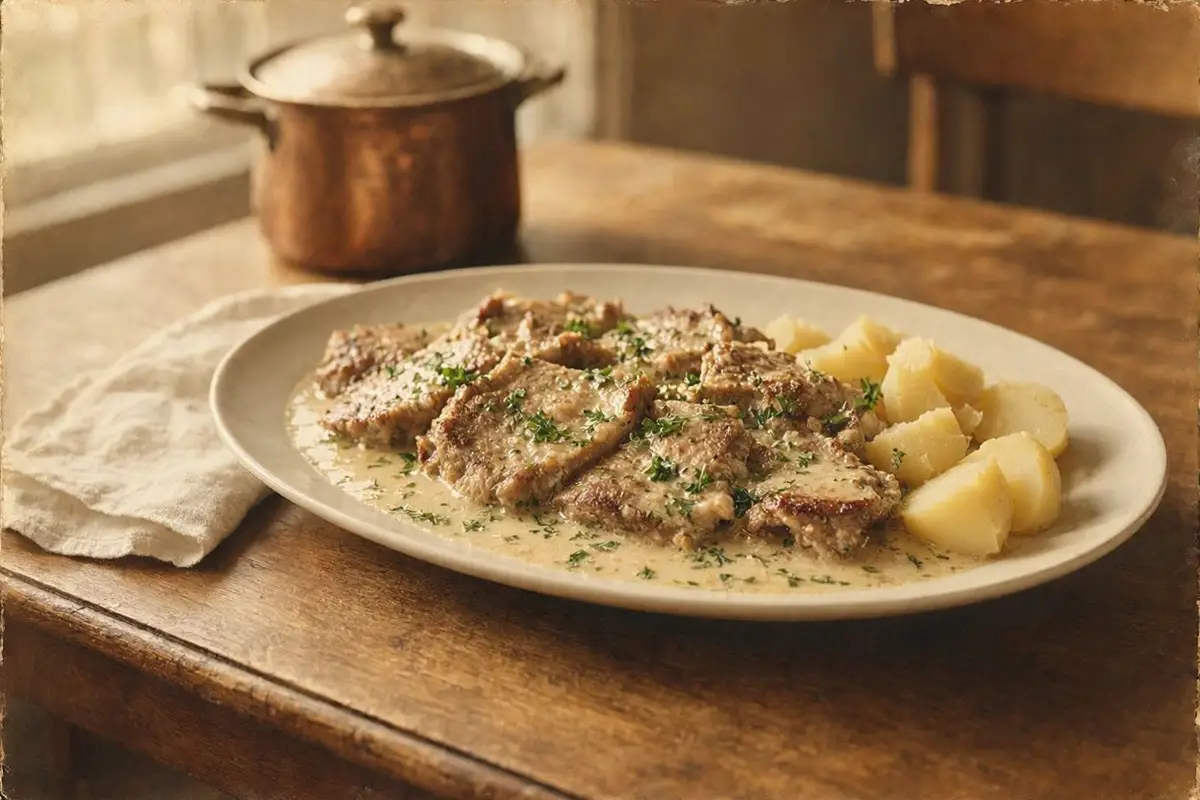
Braised Veal and Pork Cutlets in White Wine Sauce
Veal and pork cutlets braised slowly in white wine with onions, then covered with a silky parsley and egg sauce made from the cooking juices.
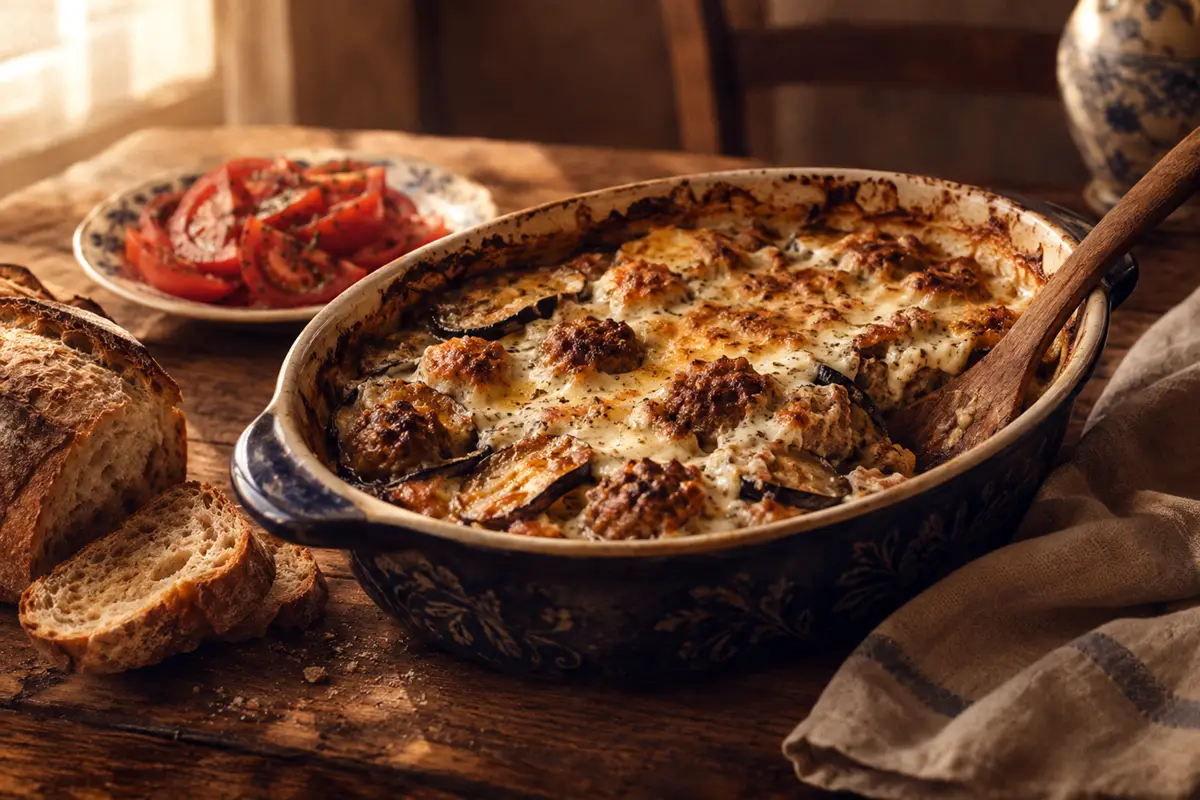
Pork Meatballs Baked in Roasted Eggplant and Sour Cream
Pork meatballs layered between roasted, minced eggplant and garlic, covered with sour cream and baked in a table-ready dish until bubbling.
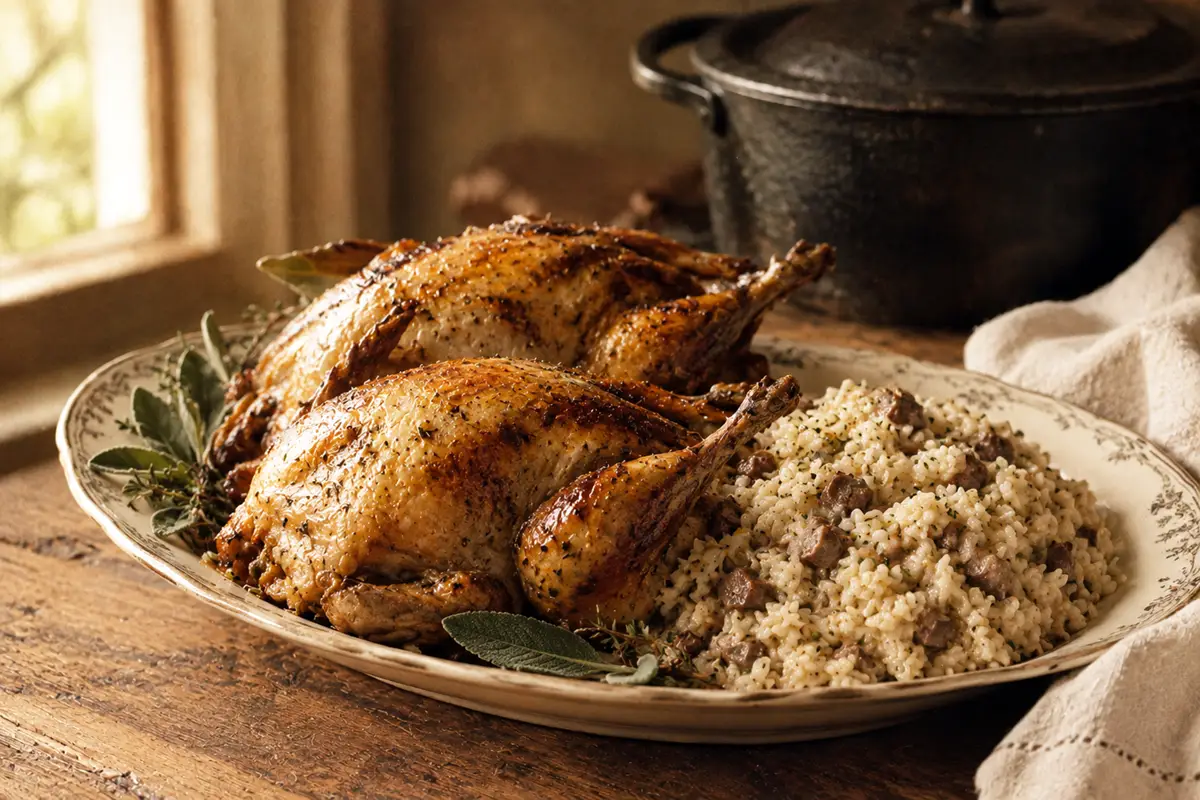
Pot-Roasted Partridge with Giblet Rice
Partridges slowly pot-roasted in butter until tender and served with a savory rice mixed with their own hearts, kidneys and livers, bound with egg.