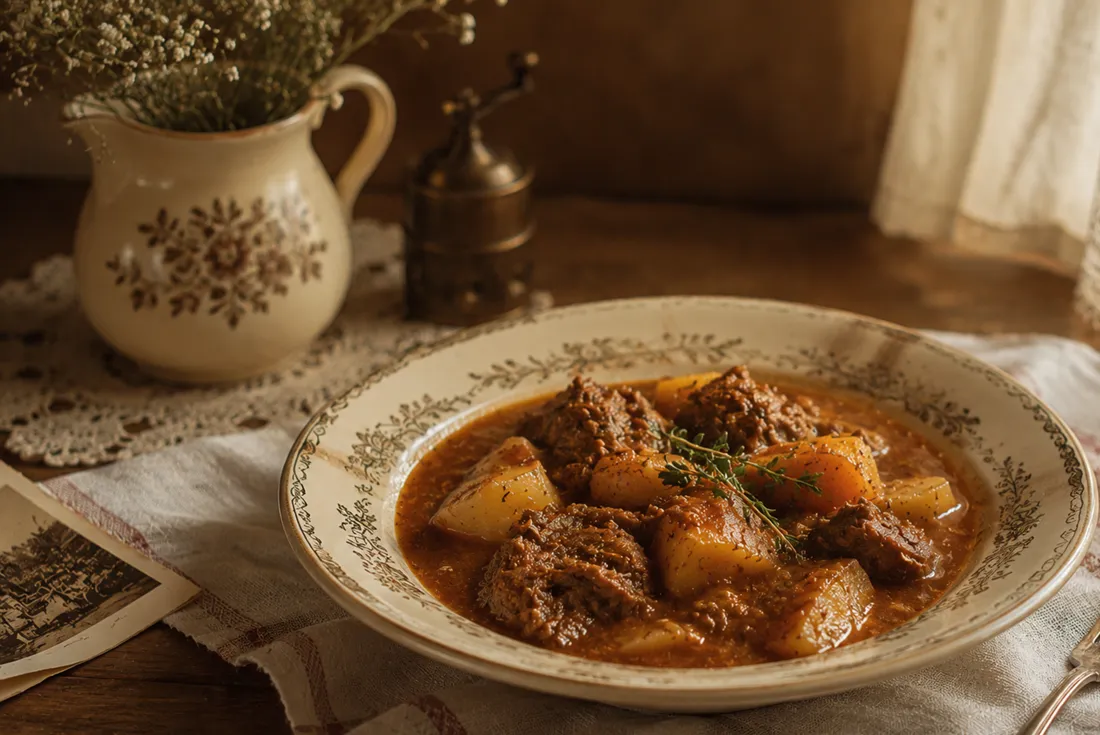
The Science of Removing Gamey Flavor from Lamb and Mutton
The chemistry behind lamb and mutton's gamey smell, and the acid-based techniques cooks have used for generations to tame it.
Introduction
Anyone who has cooked mutton knows the smell can fill a kitchen before the meat even hits the pan. It’s strong, distinctive, and divisive — some cooks consider it part of the meat’s character, while others go to considerable lengths to tame it. Long before anyone could name the chemical compounds responsible, home cooks had already worked out effective ways to deal with it.
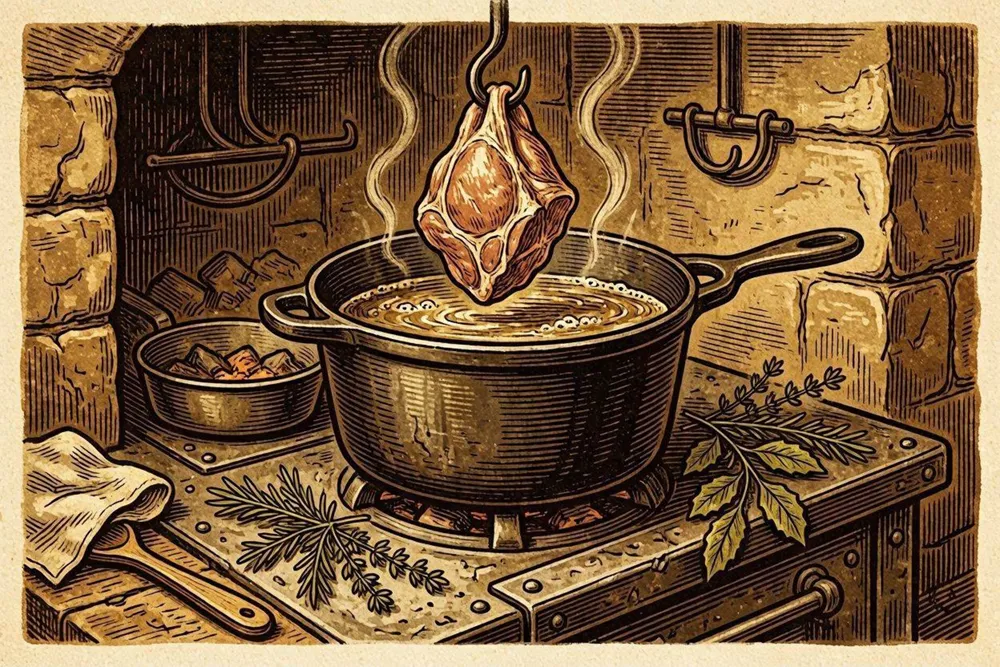
What’s notable is how consistent these methods are across time and geography. A technique recorded in early 20th century Central European kitchens — scalding the meat in boiling water heavily acidified with wine vinegar — lines up closely with what food science now understands about why lamb and mutton smell the way they do, and what actually reduces it.
What Actually Causes the Smell
The characteristic aroma of lamb and mutton comes almost entirely from the fat, not the muscle itself. The main culprits are branched-chain fatty acids, compounds produced by bacteria in a sheep’s digestive system and then deposited in its fat tissue over the animal’s lifetime. Because these fatty acids are volatile, they release their aroma easily once the meat is heated, and the human nose is highly sensitive to them even at very low concentrations.
This is also why age matters so much. These compounds accumulate over time, which is why mutton — meat from an older sheep — carries a noticeably stronger smell and flavor than lamb from a young animal. A second contributor is skatole, a compound also associated with the “boar taint” found in some pork, which adds an earthy, pungent note even in small amounts.
None of this indicates spoilage. These are naturally occurring compounds in ruminant fat, and their presence is simply a matter of the animal’s age, diet, and individual variation — not food safety.
The Techniques That Work, and Why
Acid-based soaking or scalding
Marinating or briefly scalding meat in an acidic liquid — vinegar, lemon juice, or yogurt — is one of the most consistently effective methods, and it appears in cooking traditions worldwide, not just in one region. The acid helps break down some of the odor-causing fatty compounds directly, rather than simply covering the smell with something stronger. A hot, heavily acidified water bath, in particular, does double duty: the acid addresses the fatty compounds while the heat causes blood and surface proteins to coagulate and rise as foam, which can then be skimmed away.
Trimming visible fat
Since branched-chain fatty acids concentrate in fat rather than muscle, removing as much visible fat as possible before cooking reduces the intensity of the smell released during cooking. This is most effective as a complement to an acid soak, not a replacement for one.
Salting and rinsing
A generous salt rest draws out some of the myoglobin — the reddish liquid in meat, often mistaken for blood — that also contributes to the smell. Rinsing the meat afterward removes both the salt and the drawn-out liquid.
Milk soaking
Milk is a gentler alternative to acid, commonly used for other strong-flavored meats like venison as well. It draws out some of the intensity over a longer soak, typically several hours or overnight, though it’s generally considered less aggressive than an acid-based method.
Aromatics
Fresh herbs — rosemary, thyme, mint, parsley — and aromatics like garlic and onion don’t remove the compounds responsible for the smell, but they layer in enough competing aroma that the overall effect is far less noticeable. This is a finishing touch, not a substitute for the methods above.
Practical Takeaways
- The gamey smell comes from fat, not muscle — trimming fat and treating the meat before cooking both help
- Acid (vinegar, lemon, or yogurt) does more than mask the smell; it helps break down some of the responsible compounds
- Older meat (mutton) will always carry a stronger aroma than younger meat (lamb), regardless of technique
- A strong smell is a matter of preference, not a sign the meat has spoiled
Attic Recipes — digitizing and adapting Central European home cooking from the early twentieth century.
Frequently Asked Questions
01Why does mutton smell stronger than lamb?▶
The compounds responsible for the 'gamey' smell build up in an animal's fat tissue over time, so older sheep typically carry higher concentrations than young lamb. This is why mutton has a noticeably stronger aroma than lamb from a younger animal.
02Does soaking meat in vinegar actually reduce the smell, or does it just cover it up?▶
Research indicates acidic marinades help break down some of the odor-causing compounds themselves, rather than simply masking the smell with a stronger scent.
03Can milk be used instead of vinegar to reduce gamey flavor?▶
Yes, soaking in milk is a widely used alternative that draws out some of the strong-flavored compounds. Acid-based methods are generally considered more effective, but milk is a gentler option that also works.
04Is trimming the fat enough on its own to reduce the smell?▶
Trimming helps significantly, since the responsible compounds concentrate in fat, but it typically works best combined with an acid soak or blanch rather than as a standalone step.
05Does a strong smell mean the meat has gone bad?▶
Not necessarily. The compounds responsible for lamb and mutton's characteristic smell are naturally occurring and unrelated to spoilage — the smell is a matter of preference, not a food safety signal.