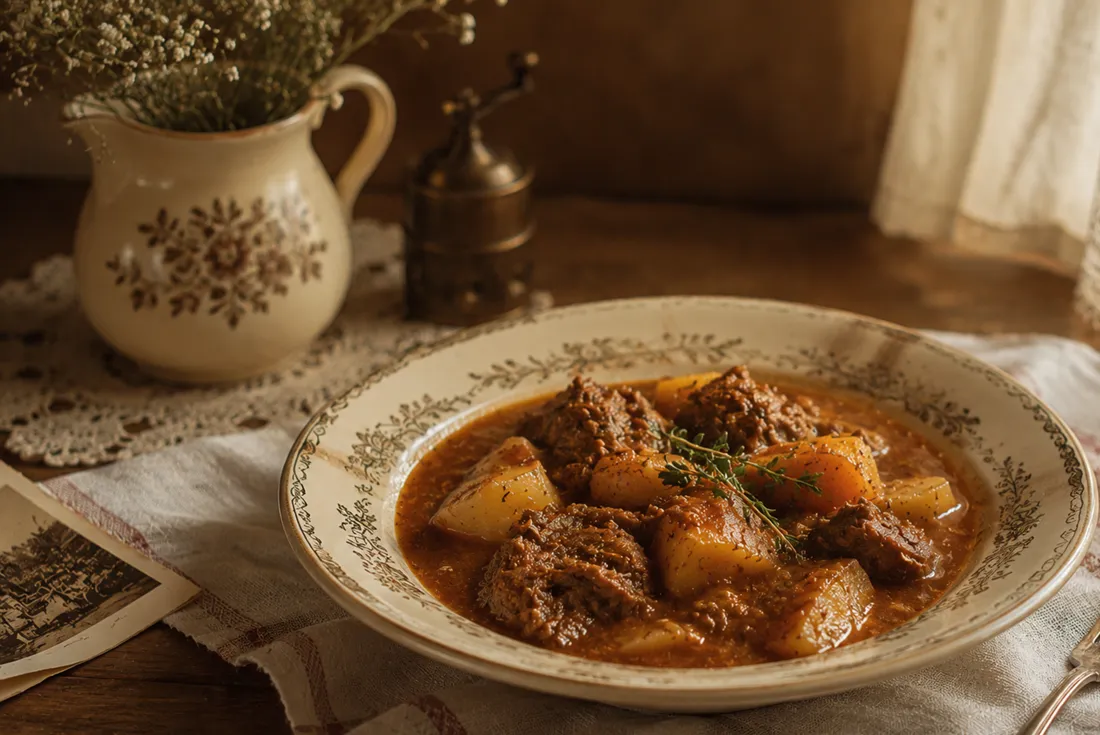
Mutton and Potato Stew
Mutton shoulder and breast seared in lard, thickened with a light roux, and simmered with potatoes, herbs, and bay leaf until tender and rich.
Quick Summary
This Central European mutton and potato stew takes 115 minutes to prepare and cook. Mutton is seared in lard, then simmered with root vegetables and herbs. It stands out for browning meat and onions first, then adding flour to create a light built-in roux.
Historical recipe
Modernised adaptation of an early 20th‑century source. Not independently kitchen-tested by Attic Recipes. Quantities, temperatures, and food safety guidance have been updated for a contemporary kitchen — results may vary and errors may exist. Nutritional values, where provided, are estimates only and have not been laboratory tested. Always follow current food safety guidelines for your region. If you have a health condition, allergy, or dietary requirement, consult a qualified professional before preparing this recipe.
Use of this recipe is entirely at your own risk and subject to our Terms of Service and Privacy Policy. Attic Recipes accepts no liability for any adverse outcome.
- Gluten
Additional notes
-
Note
This dish is high in saturated fat, largely from the lard, the fattier breast cut, and the roux (over 20g saturated fat per serving). Trimming more visible fat, using leaner cuts, or substituting oil for the lard reduces this.
- 1
In a heavy pot, melt the lard over medium heat. Add the meat pieces and sear until well browned on all sides.
Tip Earthenware or a heavy-bottomed pot holds heat evenly for the long braise ahead. - 2
Add the chopped onion and cook until it browns well alongside the meat.
- 3
Sprinkle the flour evenly over the meat and onion. Stir and let it brown for a few minutes, forming a light roux with the fat in the pot.
Tip Flour burns quickly once it starts to brown — keep stirring and don't leave the pot unattended. - 4
Add the parsley, celery root, bay leaves, salt, and pepper. Pour in the broth or water — enough to fully submerge the meat.
- 5
Cover and simmer for 1 hour.
- 6
Add the potatoes. If the sauce looks too thick, thin it with a little more broth or water. Cover again and simmer for another 30 minutes, until the potatoes are fully cooked and the meat is tender.
Tip Very old mutton may need extra simmering time beyond the 30 minutes to become fully tender.
Nutrition Information per 1 serving (approx 1/6 of recipe)
Nutritional values are approximate estimates and may vary based on specific ingredients used, preparation methods, and portion sizes.
Serving Suggestions
A hearty one-pot main on its own — no side needed beyond crusty bread to soak up the sauce.
About This Recipe
This is a straightforward, generous one-pot stew that leans on two often-overlooked cuts — shoulder and breast — braised together until tender, with a light roux giving the sauce body. The potatoes cook right in the same pot, soaking up the browned meat and onion flavor along the way.
It’s an honest, unfussy dish built for a full pot and a hungry table, with nothing more demanding than patience during the long simmer.
Why It Works
Browning the meat and onion before adding the flour builds a foundation of deep, roasted flavor that carries through the whole braise, while the light roux thickens the sauce just enough to cling to the meat and potatoes without turning heavy. Simmering the meat alone for the first hour before adding the potatoes ensures the tougher cuts have time to soften before the potatoes are added, so neither overcooks nor undercooks.
Modern Kitchen Tips
Cut the meat and potatoes into similarly sized pieces so they finish cooking around the same time. If you’re working with a particularly mature mutton, don’t rush the final simmer — a longer, gentler cook does more for tenderness here than higher heat.
A classic of early 20th century home cooking, preserved and adapted for the modern kitchen.
The Story Behind This Recipe
Historical Context
Early 20th century recipes for mutton dishes often included a note on removing any strong odor from the meat before cooking, typically by scalding it briefly in boiling water heavily acidified with vinegar — a technique considered especially useful for meat from older or lowland animals, as mountain-raised mutton was thought to carry little to no odor of its own.
Modern Kitchen Adaptation
If your mutton or lamb has a stronger smell than you'd like, an acid-based scald or soak before cooking is an effective way to reduce it — see our companion piece on the science of removing gamey flavor from lamb and mutton for the technique and why it works. This step is optional and not included in the timing above. Lard is kept here as the historically correct fat; a neutral oil or butter in the same quantity works as a substitute with a milder flavor. Herb quantities, salt, and pepper were not given as precise measures in the original and have been estimated.
This recipe is an independent modern adaptation developed from historical sources in the public domain. It is provided for informational and educational purposes only and does not constitute professional dietary, nutritional, or medical advice. Food preparation involves inherent risks. The reader assumes full responsibility for safe food handling, ingredient sourcing, and adherence to current local food safety guidelines. The site operator accepts no liability for outcomes resulting from the preparation or consumption of this recipe.
One recipe.
Every week.
You Might Also Like
More recipes you'll enjoy
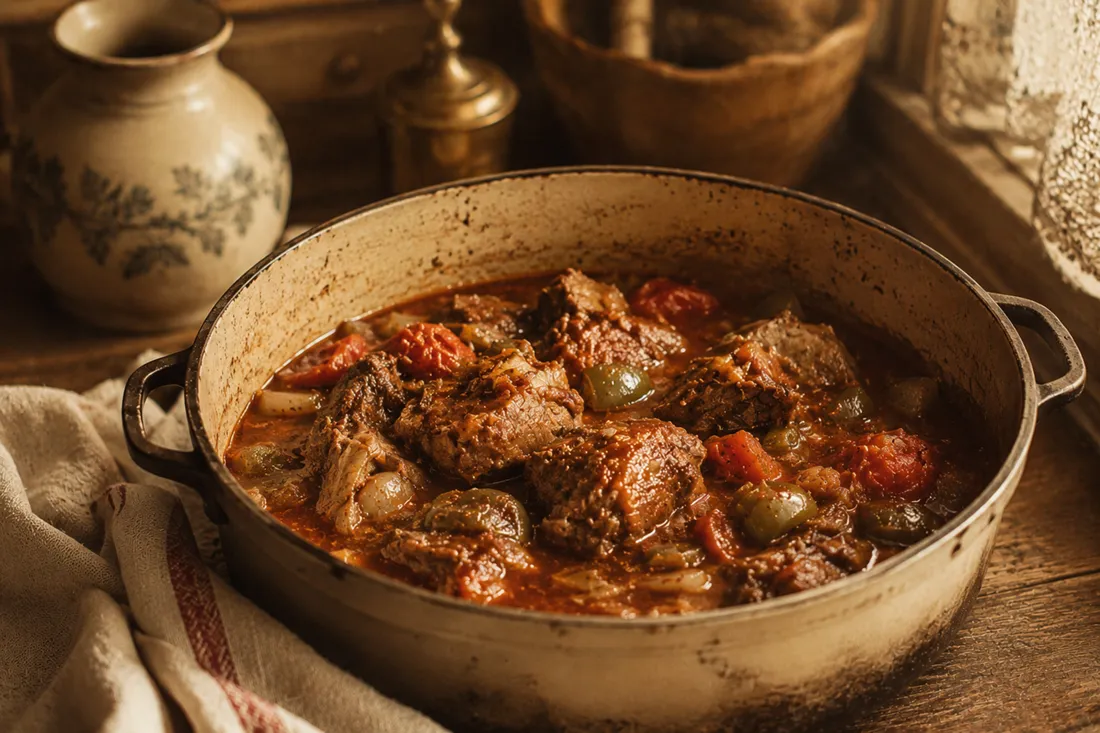
One-Pot Lamb Stew with Tomatoes and Peppers
Tender lamb slow-simmered with onion, sweet paprika, tomatoes, and mild green peppers into a rich, saucy one-pot stew.
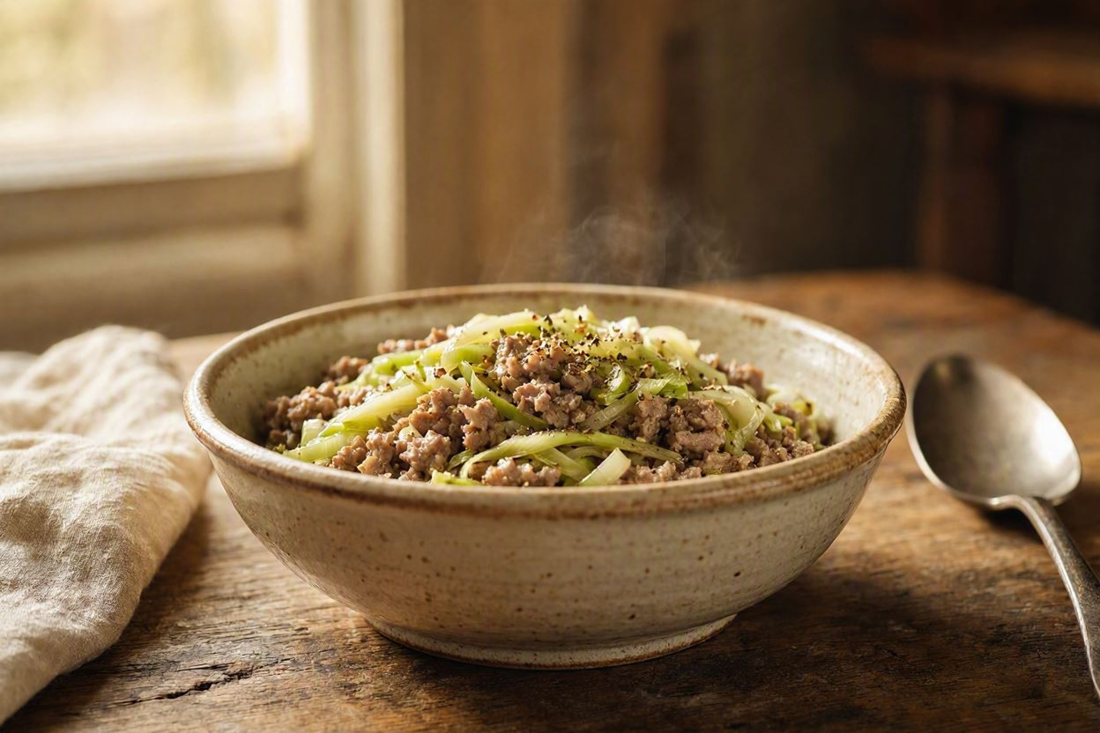
Chopped Pork with Leeks
A one-pan dish of browned, hand-chopped pork and tender leeks, cooked down together until the leeks melt into the meat.
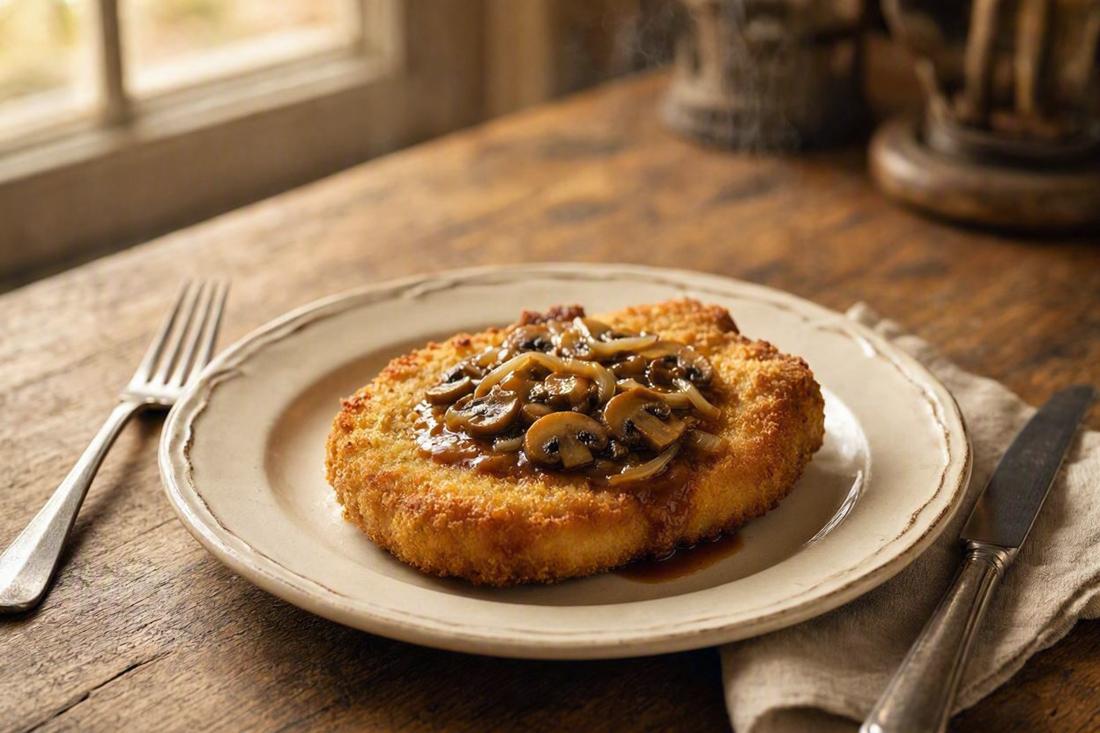
Breaded Pork Chops with Mushroom Sauce
Breaded pork chops, first lightly fried then braised in a caraway-scented broth with onion and mushrooms for a rich pan sauce.