Pot-Roasted Partridge with Giblet Rice
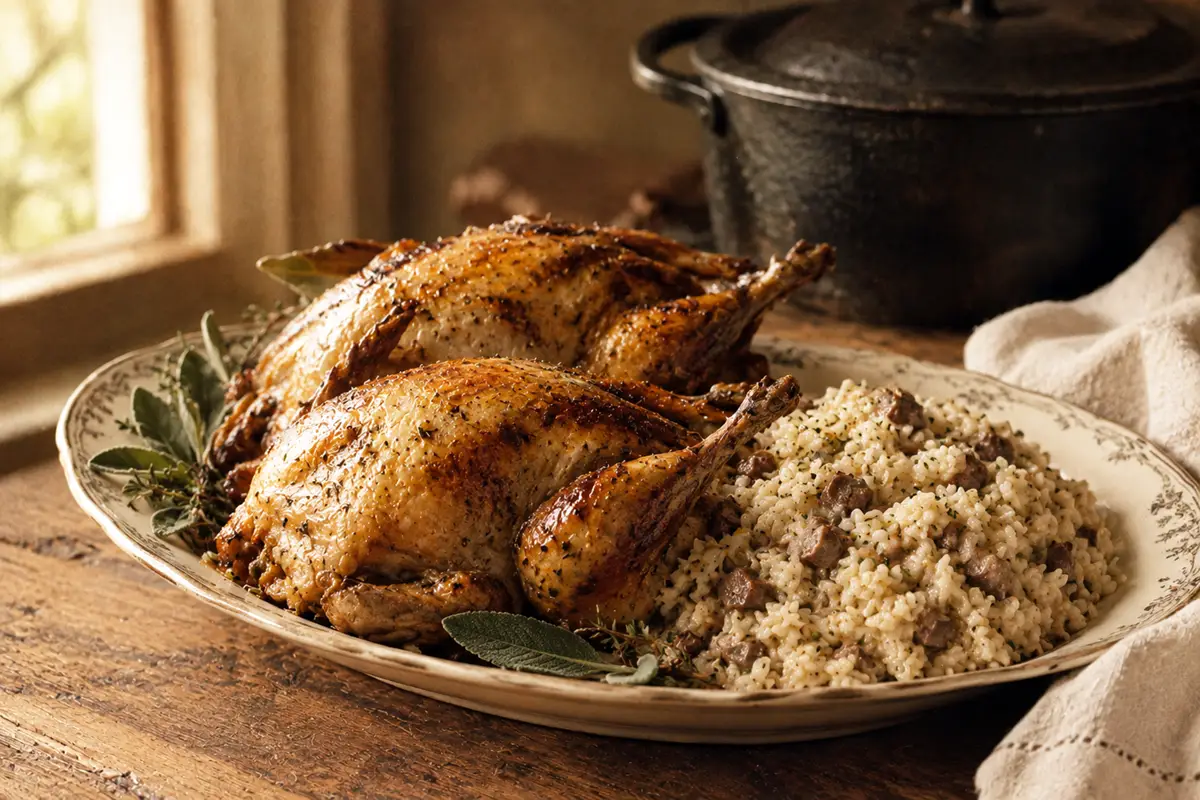
Partridges slowly pot-roasted in butter until tender and served with a savory rice mixed with their own hearts, kidneys and livers, bound with egg.
Quick Summary
Whole partridges are browned in butter and cooked slowly in a covered pot until tender. A savory rice is built in the same pot with onion, chopped hearts, kidneys and livers and beaten eggs, then stirred until soft and dry. It takes about 110 minutes.
Historical recipe
Modernised adaptation of an early 20th‑century source. Not independently kitchen-tested by Attic Recipes. Quantities, temperatures, and food safety guidance have been updated for a contemporary kitchen — results may vary and errors may exist. Nutritional values, where provided, are estimates only and have not been laboratory tested. Always follow current food safety guidelines for your region. If you have a health condition, allergy, or dietary requirement, consult a qualified professional before preparing this recipe.
Use of this recipe is entirely at your own risk and subject to ourTerms of Service andPrivacy Policy. Attic Recipes accepts no liability for any adverse outcome.
- Eggs
- Dairy
Additional notes
Warning
Wild game birds, organ meats and the egg-and-liver rice must all be cooked through. Cook the partridges until the thigh reaches at least 74°C (165°F) and the rice mixture reaches the same temperature. This is especially important for pregnant women, children, older adults and immunocompromised people. Wash hands, boards and knives after handling raw game and giblets, and refrigerate leftovers within 2 hours.
Note
Liver is very rich in vitamin A, so pregnant women are generally advised to avoid it. Kidneys and hearts are also organ meats and are best eaten in moderation by children and older adults.
Caution
Wild birds shot with lead ammunition may contain tiny lead fragments. Check the meat carefully, and note that health authorities advise pregnant women and children to avoid eating lead-shot game.
- 1
If the partridges are not already dressed, pluck them, singe off any pin feathers, and remove the innards. Set aside the hearts, kidneys and livers. Rinse the birds inside and out, pat them dry, and season them with 1 tsp fine salt, inside and out. Keep the livers refrigerated.
TipBuy dressed birds with the giblets if you can. Check the meat carefully for any small shot pellets. - 2
Melt 15g unsalted butter in a heavy 5-litre pot over medium heat. Add the partridges and brown them on all sides, about 10 minutes.
TipDo not let the butter turn dark. If the pot looks dry or the birds start to stick, add up to 15g more butter or a splash of neutral oil. - 3
Add the 4 hearts and 8 kidneys to the pot and cook until browned and cooked through, about 6–8 minutes. Remove them to a board and let them cool.
TipHearts and kidneys cook faster than the birds, so they come out first to avoid turning tough. - 4
Cover the pot, lower the heat to low, and cook the partridges for 35–40 minutes, turning them once, until the meat is fully tender and the thickest part of the thigh reaches at least 74°C (165°F).
TipWild partridge is lean and can be tough, so the legs may need a few more minutes to become tender. If the pot dries out, add 50ml hot water. - 5
Transfer the partridges to a warm plate and cover with foil. Leave the fat and browned bits in the pot.
- 6
Add 1 finely chopped medium onion to the pot and cook over medium-low heat for 3–4 minutes, stirring, until soft but not browned. Add 190g rinsed, drained rice and stir for 2 minutes to coat it in the fat. Transfer the rice to a large bowl and let it cool for 10 minutes.
TipThe rice must cool before the eggs go in, otherwise the eggs scramble on contact. - 7
Finely chop the cooked hearts and kidneys and stir them into the rice. Finely chop the 4 raw livers and add them to the rice. Beat in 2 large eggs, ½ tsp fine salt and ½ tsp black pepper until well combined.
TipChop the livers very finely so they melt into the rice as it cooks. - 8
Return the rice mixture to the pot and pour in 600ml hot water, enough to submerge the rice. Cook over medium-low heat, stirring constantly, for 20–25 minutes, until the rice is soft and the liquid is absorbed. The mixture should be creamy but not wet, and must reach at least 74°C (165°F).
TipConstant stirring prevents scorching and helps the rice release starch for a creamy texture. If the rice is still firm and the pot is dry, add 50–100ml hot water. - 9
Spoon the hot rice onto a platter and serve it with the partridges, halved with kitchen shears if you like.
Nutrition Informationper 1 partridge with risotto (approx 300g edible)
Nutritional values are approximate estimates and may vary based on specific ingredients used, preparation methods, and portion sizes.
Serving Suggestions
Serve one partridge per person on a bed of the giblet rice, with braised red cabbage or a sharp green salad to cut the richness. Refrigerate leftovers within 2 hours, keep for up to 2 days, and reheat until steaming hot (74°C / 165°F).
About This Recipe
This is a whole-bird dish for the game season: partridges browned in butter and cooked slowly in a covered pot until the lean meat is completely tender. Alongside them goes a savory rice cooked in the same pot, built from onion, chopped hearts, kidneys and livers, and bound with beaten eggs.
Nothing is wasted. The giblets that would otherwise be discarded give the rice a deep, rich flavor, and the rice picks up the browned bits and fat left behind by the birds. The result is a creamy, soft rice that is closer to a savory pudding than a loose pilaf.
Each person gets one small partridge on a mound of rice, a hearty main course for an autumn table or a festive meal.
Why It Works
Wild partridge is lean and can be tough, so it needs fat and slow, moist heat. Browning builds flavor, then the covered pot traps steam and juices so the meat turns tender without drying out. Pulling the hearts and kidneys out early keeps those small cuts from turning rubbery.
The rice is first coated in fat and cooled, so that the beaten eggs mix in evenly without scrambling. Once water is added and the pot is stirred constantly, the starch from the rice and the eggs bind everything into a creamy, cohesive mass, and the chopped livers dissolve into it, seasoning the whole pot.
Modern Kitchen Tips
Ask your butcher for dressed partridges with the giblets, and check each bird for lead shot before cooking.
Use an instant-read thermometer in the thickest part of the thigh. Wild birds vary in size and age, so time alone is not a reliable guide.
Keep stirring the rice during the final stage and keep the heat on medium-low. The rice is thick and will scorch on the bottom of the pot if left alone.
A classic of early 20th century home cooking, preserved and adapted for the modern kitchen.
The Story Behind This Recipe
Historical Context
Early 20th century recipes for game birds such as partridge typically cooked them whole in fat in a covered pot until the meat was completely tender, since wild birds were lean and often tough. Home cooks of the period used every part of the bird: the hearts and kidneys were browned and chopped, the livers were chopped raw, and all of them were mixed into the rice served alongside the bird. The traditional approach measured the rice by the number of birds, one small coffee cup per partridge, and did not specify the number of birds, the amount of water, or the seasoning.
Modern Kitchen Adaptation
The period method calls for one spoonful of fat without specifying which; butter is used here, and pork lard is the historical alternative. Lard has a higher smoke point, and butter can burn during long browning, so use lard, clarified butter, or butter with a splash of neutral oil if the pot runs hot. The number of birds (4), the rice (190 g, from 4 coffee cups of about 60 ml, one per bird), the onion size (150 g), the hot water (600 ml), the salt (1½ tsp), the pepper (½ tsp), the browning and covered cooking times, and the giblets per bird were not specified and have been estimated. The dish is called roasted in the period text but is cooked in a covered pot on the stovetop, so it is described here as pot-roasted. The partridges must reach at least 74°C (165°F) at the thigh, and the egg-and-liver rice must reach the same temperature. The rice is cooled before the raw eggs go in, as in the period method, so they do not scramble. This is closer to a creamy, egg-bound rice cooked by absorption than an Italian risotto. If giblets are not available, chicken hearts and livers can be used. Wild birds shot with lead ammunition may contain fragments, so check the meat carefully.
Images on this site are AI-generated illustrations in a 1930s style; your finished dish may look different.
This recipe is an independent modern adaptation developed from historical sources in the public domain. It is provided for informational and educational purposes only and does not constitute professional dietary, nutritional, or medical advice. Food preparation involves inherent risks. The reader assumes full responsibility for safe food handling, ingredient sourcing, and adherence to current local food safety guidelines. The site operator accepts no liability for outcomes resulting from the preparation or consumption of this recipe.
One recipe.
Every week.
You Might Also Like
More recipes you'll enjoy
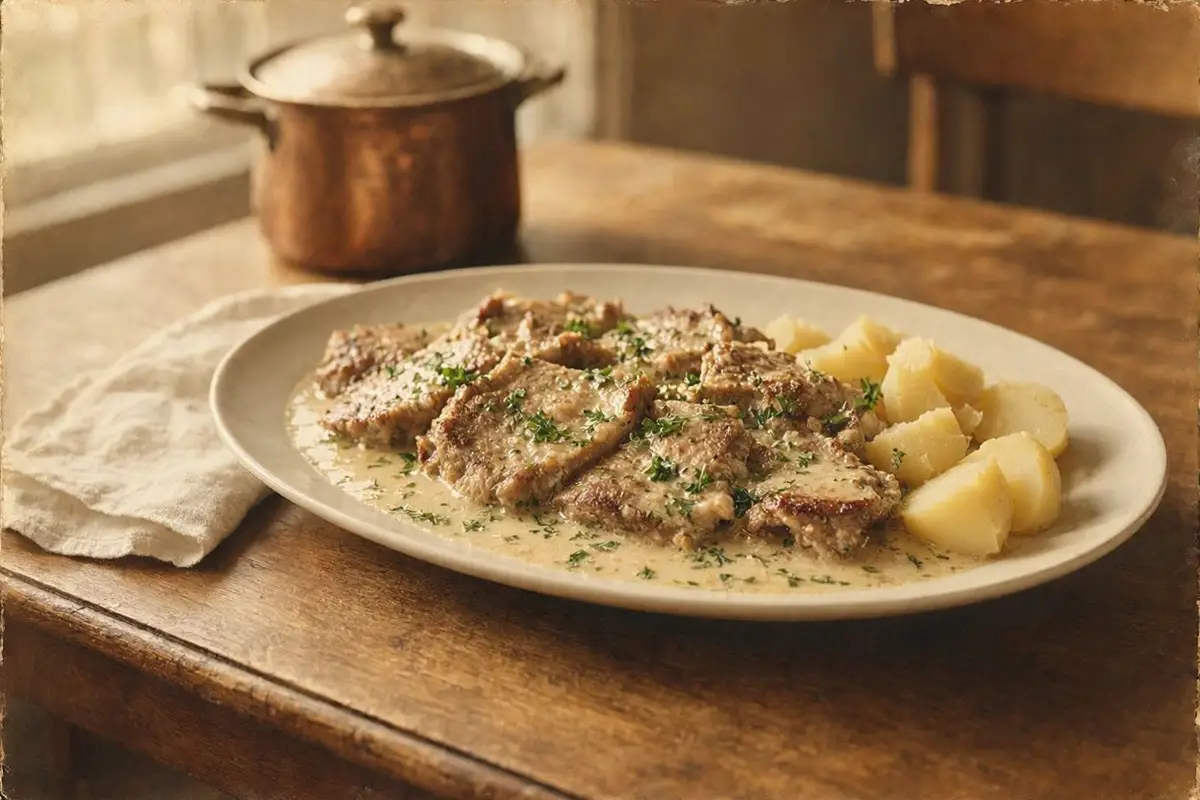
Braised Veal and Pork Cutlets in White Wine Sauce
Veal and pork cutlets braised slowly in white wine with onions, then covered with a silky parsley and egg sauce made from the cooking juices.
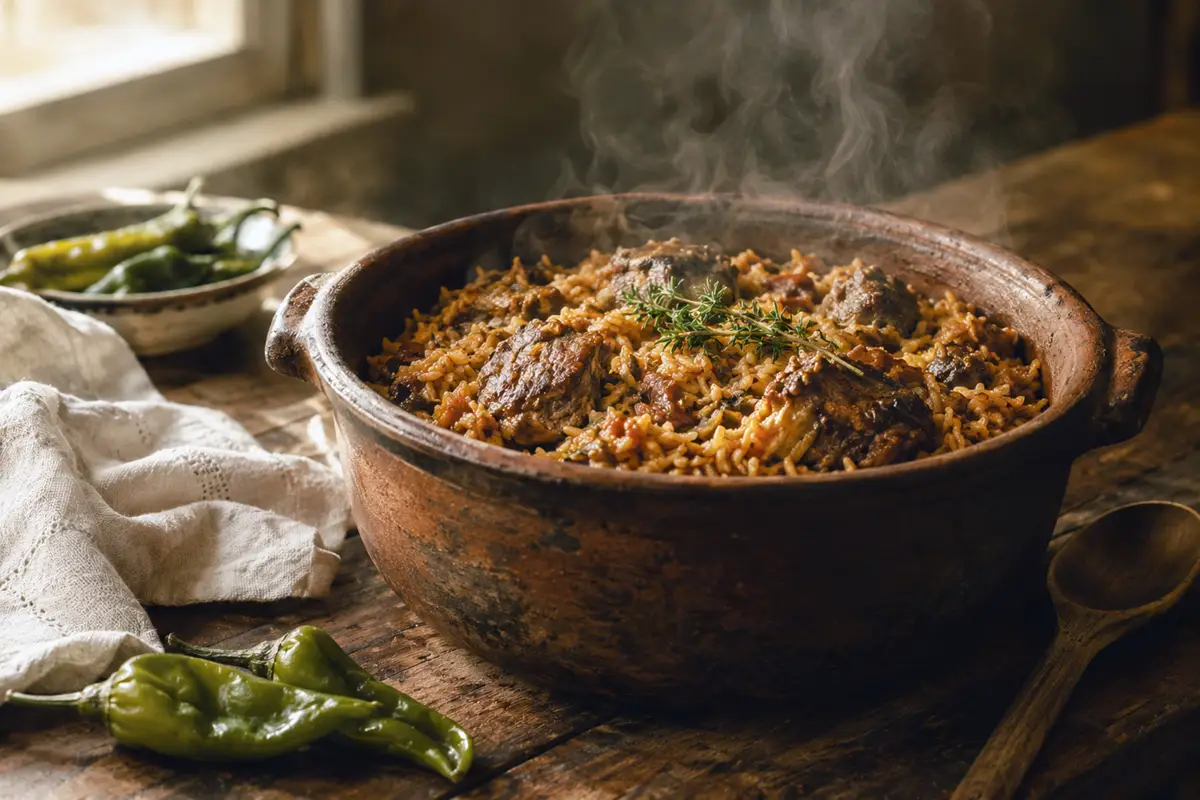
Slow-Simmered Lamb Shoulder Pilaf with Tomato and Thyme
A one-pot pilaf of lamb shoulder simmered with tomato, peppers, garlic and thyme, then cooked with rice in a broth made from the bones.
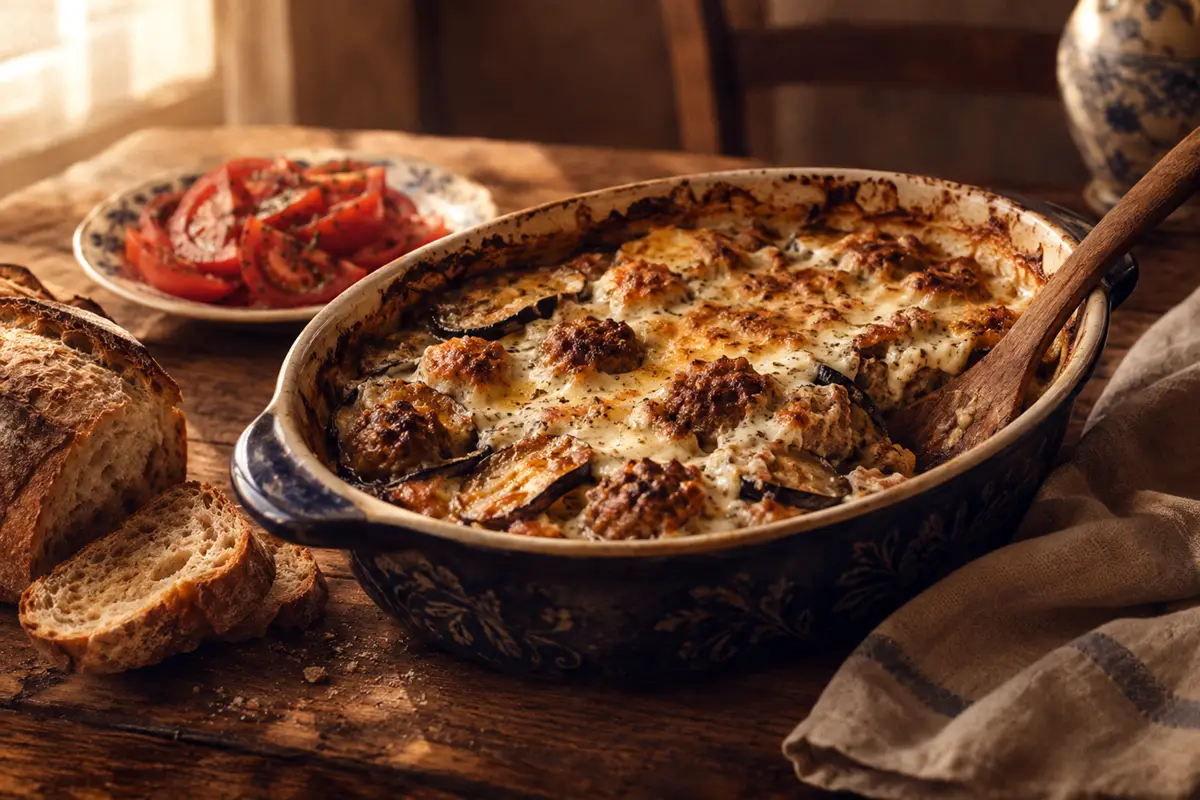
Pork Meatballs Baked in Roasted Eggplant and Sour Cream
Pork meatballs layered between roasted, minced eggplant and garlic, covered with sour cream and baked in a table-ready dish until bubbling.