Veal and Pork Pate with Sardine-Egg Dressing
A rich, finely ground veal and pork pate enriched with whipped butter, capers, sardines, and mustard, set with aspic and finished with a whisked egg dressing.
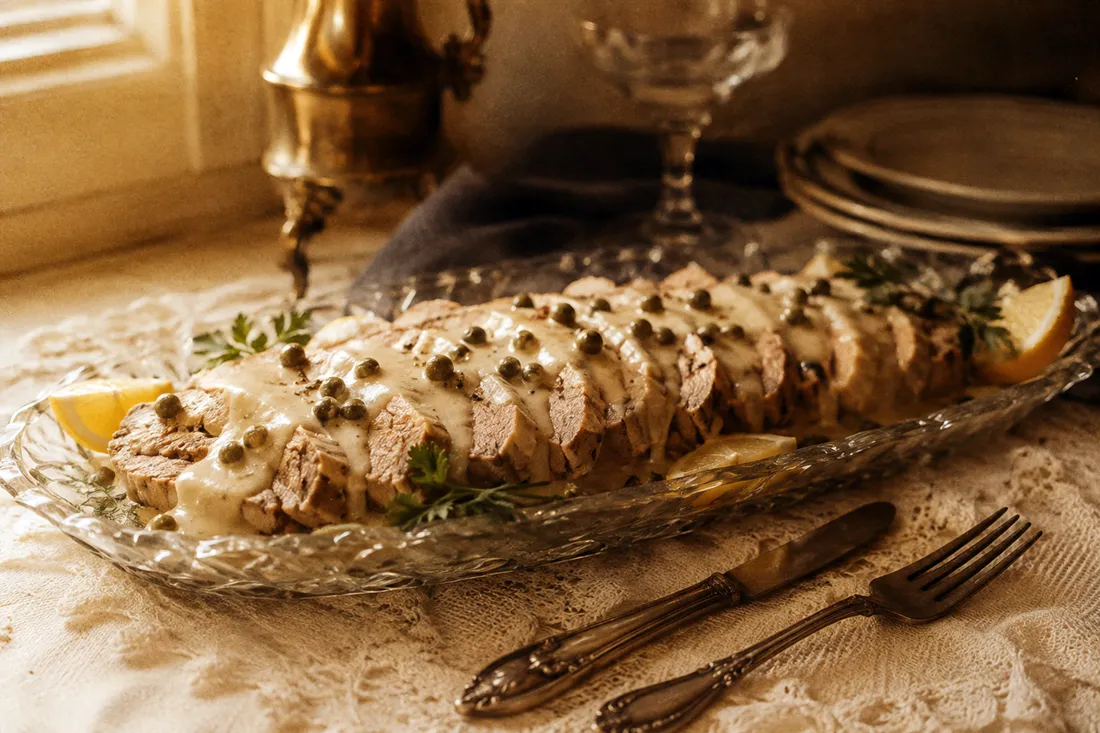
Quick Summary
Sautéed veal and pork are ground fine and enriched with whipped butter, capers, mustard, sardines, and lemon, then set in a mold with aspic until firm. Served chilled, sliced, and topped with a whisked egg and oil dressing for a piquant, savory finish.
This recipe uses Aspic Is a Technique, Not a Dish — prepare it in advance if you haven't already.
Historical recipe
Modernised adaptation of an early 20th‑century source. Not independently kitchen-tested by Attic Recipes. Quantities, temperatures, and food safety guidance have been updated for a contemporary kitchen — results may vary and errors may exist. Nutritional values, where provided, are estimates only and have not been laboratory tested. Always follow current food safety guidelines for your region. If you have a health condition, allergy, or dietary requirement, consult a qualified professional before preparing this recipe.
Use of this recipe is entirely at your own risk and subject to our Terms of Service and Privacy Policy. Attic Recipes accepts no liability for any adverse outcome.
- Eggs
- Dairy
- Fish
- Mustard
Additional notes
-
Warning
The finishing dressing contains raw egg yolk that is not cooked. Use pasteurized eggs, especially when serving pregnant women, young children, the elderly, or anyone immunocompromised.
-
Note
This pate is very rich in saturated fat, largely from the whipped butter. Serve in thin slices; those managing saturated fat intake may want a smaller portion.
- 1
In a large pan, melt the tablespoon of butter. Add the finely chopped onions and sauté until soft and translucent.
- 2
Add the veal and pork and cook until browned and cooked through, about 12-15 minutes.
- 3
Let the cooked meat cool completely, then grind it finely.
Tip The original calls for passing the meat through a hand-crank grinder four times for a smooth, fine texture. A food processor achieves a similarly fine result much faster — just make sure the meat is fully cooled first, or it will smear rather than grind cleanly. - 4
To the cooled ground meat, add the whipped butter, salt, white pepper, chopped capers, nutmeg, mustard, pureed sardines, and lemon juice. Mix thoroughly until smooth and well combined.
- 5
Fold the melted aspic into the meat mixture to help it set.
- 6
Lightly oil the terrine mold, pour in the mixture, and smooth the top. Refrigerate for at least 4 hours, or until fully set.
- 7
Before unmolding, dip the mold briefly in hot water to loosen the pate, then turn it out onto a long glass serving platter.
- 8
To make the dressing, whisk the egg yolks in a bowl with the chopped capers, pureed sardines, salt, and white pepper.
- 9
Add the oil drop by drop, whisking constantly, until the mixture emulsifies into a thick, smooth dressing.
Tip This is a hand-whisked emulsion, similar to a flavored mayonnaise — adding the oil too quickly will cause it to split rather than thicken. - 10
Pour some of the dressing over the pate to coat, and serve the remainder on the side.
Nutrition Information per 1 slice (approx 70g), based on 16 slices
Nutritional values are approximate estimates and may vary based on specific ingredients used, preparation methods, and portion sizes.
Serving Suggestions
Serve chilled, sliced thin, with the remaining dressing on the side. Good with crusty bread or crackers.
About This Recipe
This pate sits at the more elaborate end of what a home cook might have prepared for a special occasion — sautéed veal and pork, ground fine and worked with a generous amount of whipped butter, capers, mustard, sardines, and lemon, then set with aspic in a mold until firm enough to slice. What sets it apart from a simpler meat spread is the finishing dressing: a hand-whisked emulsion of egg yolk and oil, built the same way a mayonnaise is built, poured over the sliced pate at the table.
The combination of capers, sardines, and mustard running through both the pate and its dressing gives the whole dish a piquant, savory edge that keeps the richness of the butter in check.
Why It Works
Grinding the cooked meat until fine, then working in whipped butter, is what turns two ordinary cuts of meat into something spreadable and cohesive rather than crumbly. The aspic does double duty — it helps the mixture hold its shape once unmolded and adds a light glaze to the finished slices. The dressing, meanwhile, isn’t just a garnish: whisking oil into egg yolk drop by drop builds a stable emulsion that clings to each slice rather than pooling on the plate.
Modern Kitchen Tips
Make sure your meat is completely cool before grinding — even slightly warm meat will smear in a food processor instead of breaking down cleanly. When whisking the dressing, add the oil in a very thin stream at first; once the emulsion starts to thicken, you can add the rest a little faster.
A classic of early 20th century home cooking, preserved and adapted for the modern kitchen.
The Story Behind This Recipe
Historical Context
Early 20th century recipes for pates like this one called for passing the cooked meat through a hand-crank grinder as many as four times to achieve a fine, spreadable texture — a labor-intensive step before food processors existed. Whipped butter was worked in generously to enrich and bind the mixture, and the finishing dressing, an egg yolk and oil emulsion whisked by hand and flavored with capers and sardines, functioned much like a savory mayonnaise built specifically to accompany the pate.
Modern Kitchen Adaptation
The finishing dressing is a raw egg yolk and oil emulsion that is never cooked, so pasteurized egg yolks are specified here in place of raw eggs to reduce food safety risk. A food processor can replace the traditional four passes through a meat grinder. The mold size, as well as the exact amounts of salt, pepper, nutmeg, and aspic, were not specified in the original and have been estimated. This recipe uses a previously prepared aspic — see our guide to clarifying aspic for the technique.
This recipe is an independent modern adaptation developed from historical sources in the public domain. It is provided for informational and educational purposes only and does not constitute professional dietary, nutritional, or medical advice. Food preparation involves inherent risks. The reader assumes full responsibility for safe food handling, ingredient sourcing, and adherence to current local food safety guidelines. The site operator accepts no liability for outcomes resulting from the preparation or consumption of this recipe.
One recipe.
Every week.
You Might Also Like
More recipes you'll enjoy
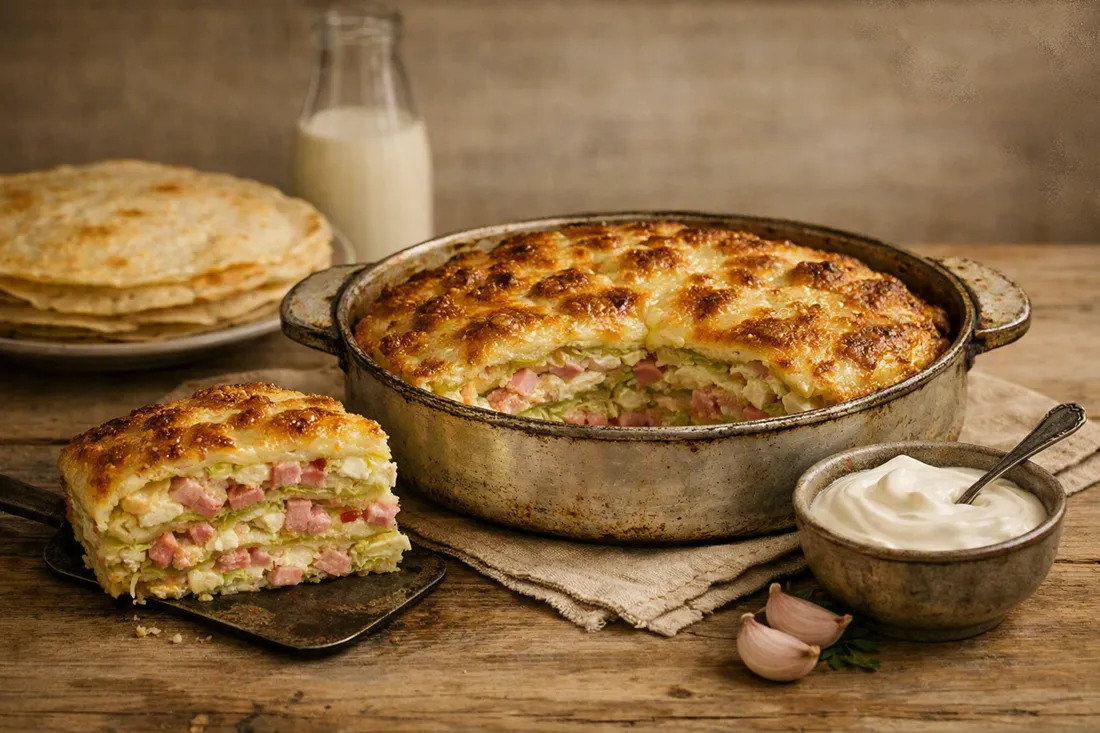
Savory Cabbage Crepes with Ham and Sour Cream
Thin cabbage-and-egg crepes layered with smoked ham and sour cream, baked until warmed through — a hearty Central European appetizer.
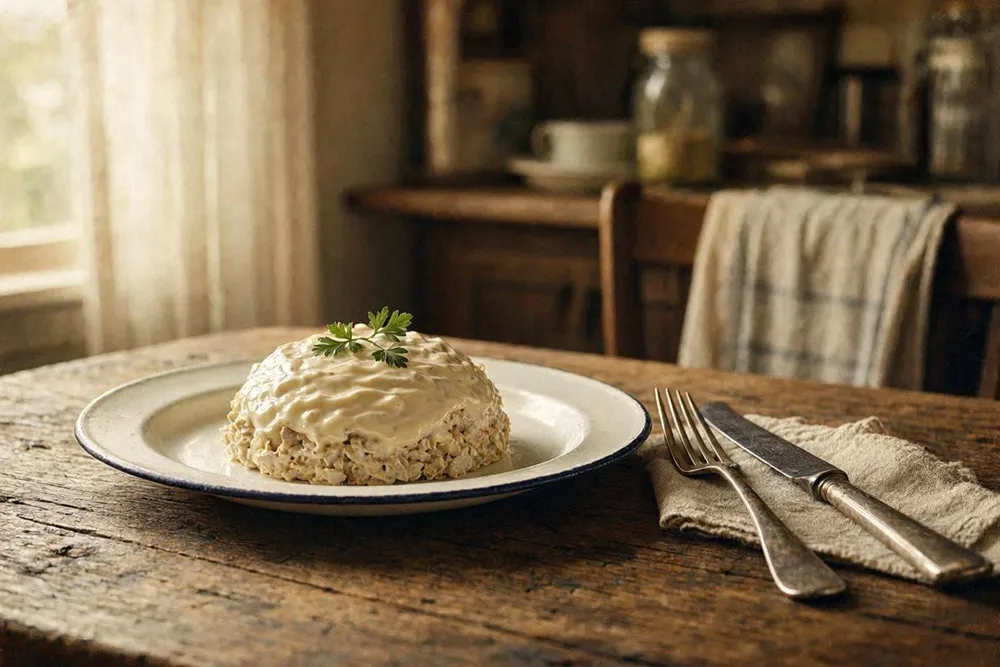
Mushroom and Chicken Appetizer with Anchovy
Rehydrated dried mushrooms combined with diced cooked chicken and anchovy, bound in mayonnaise, molded on a plate, and coated in more mayonnaise.

Veal Scrolls with Tartar Sauce
Cold appetizer of blanched veal leg, sliced thin, shaped into scrolls, and filled with a rich tartar sauce of egg yolks, ham, and capers.