Savory Cabbage Crepes with Ham and Sour Cream
Thin cabbage-and-egg crepes layered with smoked ham and sour cream, baked until warmed through — a hearty Central European appetizer.

Quick Summary
Cabbage is cooked down, pureed into an egg batter, and cooked into thin savory crepes. Layered with ham and sour cream and baked until golden, this dish turns a humble vegetable into a rich, warming starter. Traditionally served hot.
Historical recipe
Modernised adaptation of an early 20th‑century source. Not independently kitchen-tested by Attic Recipes. Quantities, temperatures, and food safety guidance have been updated for a contemporary kitchen — results may vary and errors may exist. Nutritional values, where provided, are estimates only and have not been laboratory tested. Always follow current food safety guidelines for your region. If you have a health condition, allergy, or dietary requirement, consult a qualified professional before preparing this recipe.
Use of this recipe is entirely at your own risk and subject to our Terms of Service and Privacy Policy. Attic Recipes accepts no liability for any adverse outcome.
- Eggs
- Dairy
- Gluten
Additional notes
-
Note
This dish is rich in saturated fat, largely from the butter and sour cream. Those managing saturated fat intake may want a smaller portion.
- 1
Wash the cabbage and slice it into thin strips, as you would for a salad.
- 2
Melt the butter in a large pan. Add the cabbage and salt, and cook over medium heat, stirring occasionally and adding the water gradually, until the cabbage is completely soft, about 15-20 minutes.
- 3
Pass the cooked cabbage through a food mill or fine sieve into a smooth puree.
Tip This step is essential for the crepe batter to have a smooth, even texture rather than visible cabbage pieces. - 4
To the cabbage puree, add the egg yolks, milk, salt, pepper, and flour. Mix into a batter and beat well to prevent lumps.
- 5
Whip the egg whites to stiff peaks and fold evenly into the batter.
- 6
Cook the crepes in a lightly greased pan over medium heat, as you would any crepe, keeping them thin rather than thick.
- 7
Once all the crepes are cooked, slice them into wide strips.
- 8
In an oven-safe dish, layer the crepe strips and ham, coating each layer generously with sour cream.
- 9
Finish with a top layer of crepes, coated with the remaining sour cream.
- 10
Bake at 180°C (350°F) / 160°C fan for 20-25 minutes, until heated through and lightly golden on top.
- 11
Serve hot as an appetizer.
Nutrition Information per 1 portion (approx 280g), based on 5 servings
Nutritional values are approximate estimates and may vary based on specific ingredients used, preparation methods, and portion sizes.
Serving Suggestions
Serve hot, straight from the baking dish, as a savory starter. Pairs well with a simple green salad to balance the richness.
About This Recipe
Cabbage rarely gets treated as a luxury ingredient, but this dish makes a strong case for it. A whole head is cooked down until soft, pureed until smooth, and worked into an egg batter — the vegetable essentially disappears into the crepes themselves rather than sitting as a filling. The result is a thin, pale-green crepe with a savory depth that plain flour-and-milk versions don’t have.
Layered with ham and sour cream and finished in the oven, the dish sits somewhere between a crepe stack and a savory gratin. It was designed to be served warm as a starter, substantial enough to open a meal without being heavy.
Why It Works
Passing the cooked cabbage through a food mill does more than smooth out texture — it breaks the vegetable down enough that its flavor integrates into the batter rather than announcing itself as “cabbage.” Whipping the egg whites separately and folding them in at the end gives the crepes a lighter texture than a batter made with whole eggs alone, which matters here since the batter is already carrying a full vegetable puree.
Modern Kitchen Tips
Let the cabbage puree cool slightly before adding it to the egg yolks, so you don’t start cooking the yolks prematurely. If your food mill isn’t available, a fine mesh sieve and the back of a spoon will get you most of the way there — just push firmly and be patient. The crepes can be made a day ahead and refrigerated; assemble and bake just before serving.
A classic of early 20th century home cooking, preserved and adapted for the modern kitchen.
The Story Behind This Recipe
Historical Context
Early 20th century recipes for this dish typically called for dry-cured, often smoked ham, reflecting a period when drying and smoking were the standard ways to preserve meat through the year. The smoking process also added a distinct depth of flavor. Home cooks of the period valued cabbage as an inexpensive, plentiful vegetable that could be stretched into a substantial dish through techniques like pureeing and layering.
Modern Kitchen Adaptation
Dry-cured, prosciutto-style ham has become a specialty ingredient today, and using it for this quantity would be costly relative to the dish's humble origins. A readily available smoked or cooked cured ham makes a practical substitute without changing the character of the dish. The oven temperature was not specified in the original and has been estimated based on standard practice for gratin-style baked dishes. The water added while cooking the cabbage, the salt and pepper quantities in the batter, and the flour amount were not given precise measures in the original and have been estimated based on standard crepe batter proportions for this quantity of milk and eggs.
This recipe is an independent modern adaptation developed from historical sources in the public domain. It is provided for informational and educational purposes only and does not constitute professional dietary, nutritional, or medical advice. Food preparation involves inherent risks. The reader assumes full responsibility for safe food handling, ingredient sourcing, and adherence to current local food safety guidelines. The site operator accepts no liability for outcomes resulting from the preparation or consumption of this recipe.
One recipe.
Every week.
You Might Also Like
More recipes you'll enjoy

Baked Potato and Egg Gratin with Sour Cream
Layers of sliced boiled potato and hard-boiled egg, baked with sour cream until golden — a simple, hearty Central European side dish.
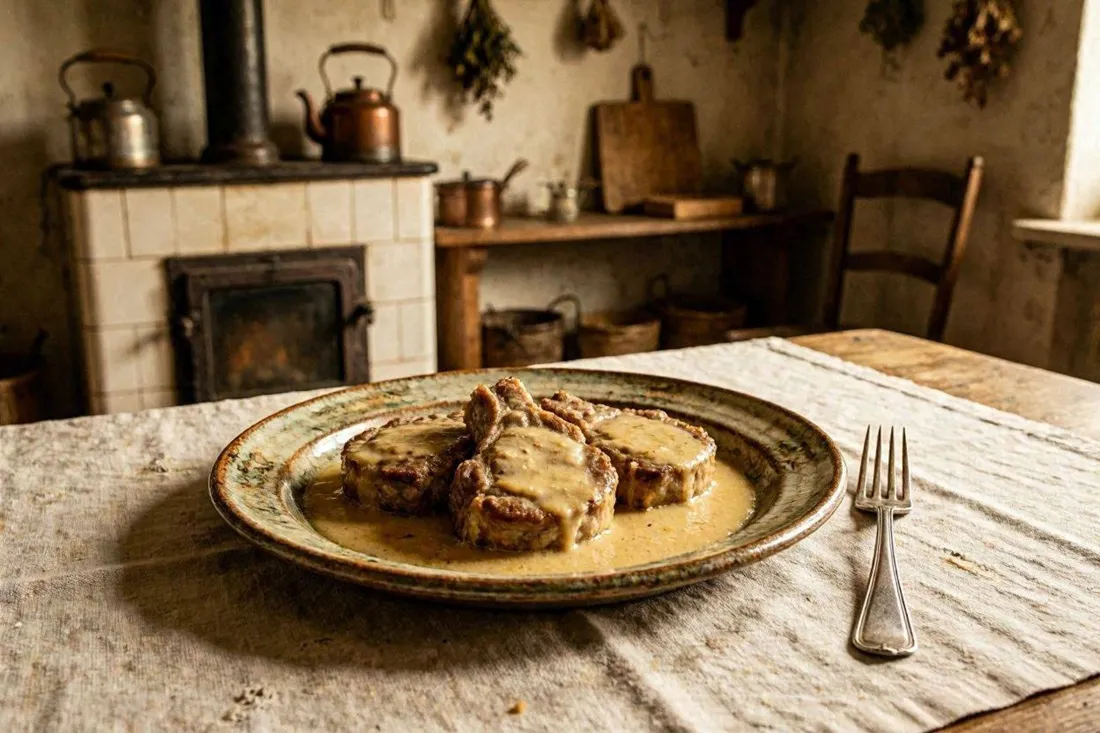
Braised Pork Chops in White Wine and Sour Cream Sauce
Pork loin chops braised with onion, carrot, parsley root, and celery root in white wine, then finished with a strained sour cream sauce.
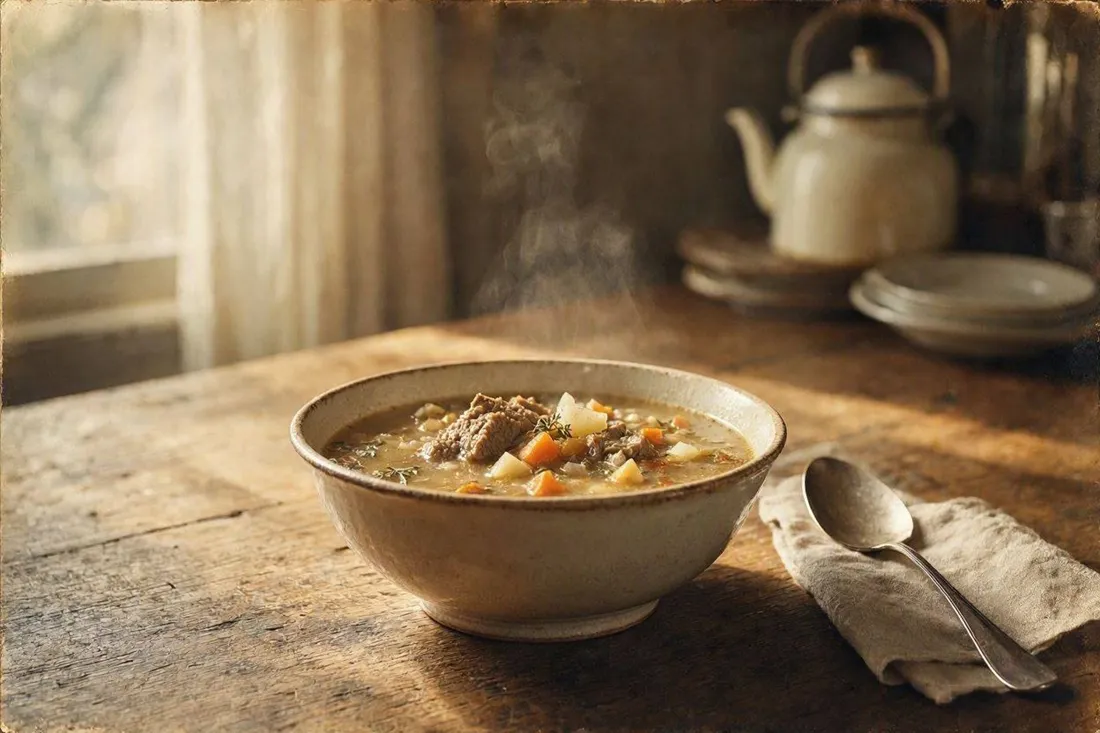
Veal Soup with Egg and Buttermilk Enrichment
A veal and root vegetable soup thickened with a roux, enriched with egg yolk and buttermilk, and finished with a touch of vinegar.