Kohlrabi and Veal Musaka
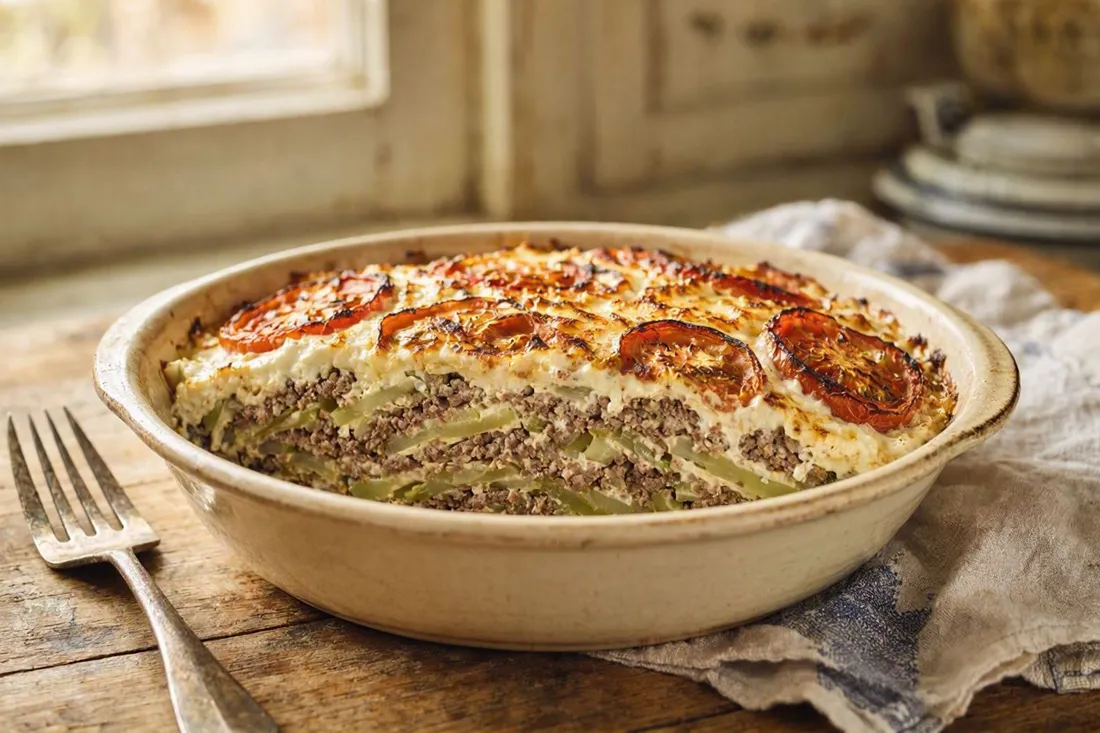
A layered casserole of braised kohlrabi and seasoned ground veal, baked under sour cream and tomato - a comforting vintage Central European dish.
Quick Summary
This layered casserole combines braised kohlrabi with seasoned ground veal, baked under sour cream and tomato. Home cooks of the early 20th century built it in alternating layers, finishing with a tangy sour cream topping. Ready in just over an hour.
Historical recipe
Modernised adaptation of an early 20th‑century source. Not independently kitchen-tested by Attic Recipes. Quantities, temperatures, and food safety guidance have been updated for a contemporary kitchen — results may vary and errors may exist. Nutritional values, where provided, are estimates only and have not been laboratory tested. Always follow current food safety guidelines for your region. If you have a health condition, allergy, or dietary requirement, consult a qualified professional before preparing this recipe.
Use of this recipe is entirely at your own risk and subject to our Terms of Service and Privacy Policy. Attic Recipes accepts no liability for any adverse outcome.
- Eggs
- Dairy
Additional notes
-
Warning
This dish contains raw egg mixed into ground meat before baking. Ensure the center of the casserole reaches at least 71°C (160°F) before serving, particularly for pregnant women, young children, older adults, and immunocompromised individuals.
-
Note
This dish is high in saturated fat (over 10g per serving) due to the butter and sour cream. Those managing cholesterol or saturated fat intake should be mindful of portion size.
- 1
Rinse the veal, cut into small cubes, and grind it (or use pre-ground veal).
- 2
Melt 30g butter in a pot, add 75g of the chopped onion, and cook until softened.
- 3
Add the ground veal and sauté lightly, just until it loses its raw color.
- 4
Remove from the heat and mix in the egg, salt, pepper, and chopped parsley.
Tip The raw egg is fully incorporated into the meat mixture and will cook through during baking, but check that the finished casserole reaches an internal temperature of at least 71°C (160°F) before serving. - 5
Peel the kohlrabi and cut it into thin batons.
- 6
In a separate pot, melt 30g butter, add the remaining 75g chopped onion, and add the kohlrabi batons.
- 7
Braise the kohlrabi over medium-low heat, adding the water or broth a little at a time, until it is completely soft.
- 8
Grease a baking dish with butter.
- 9
Layer the kohlrabi and meat mixture alternately, pouring a little of the thinned sour cream (300ml sour cream mixed with 100ml broth or milk) between each layer, until the dish is full.
- 10
Arrange the tomato rounds as the final layer on top.
Tip The tomato rounds may darken during baking - this is expected, as their purpose is to release their tangy juice into the dish. Remove them before serving if you prefer a cleaner presentation. - 11
Pour the remaining 150ml sour cream over the top, dot with 15g butter, and bake for 30 minutes.
Tip Bake at 180°C (350°F) / 160°C fan until the top is set and lightly golden and the center reaches at least 71°C (160°F).
Nutrition Information per 1 portion (approx 380g)
Nutritional values are approximate estimates and may vary based on specific ingredients used, preparation methods, and portion sizes.
Serving Suggestions
Serve hot, straight from the baking dish, with crusty bread to soak up the sour cream. A simple green salad with a sharp vinaigrette balances the richness well.
About This Recipe
This casserole layers two textures that don’t often meet: silky, braised kohlrabi and richly seasoned ground veal, bound together with soured cream. Kohlrabi rarely gets top billing in modern kitchens, but in this dish it plays the same structural role a potato or eggplant might in more familiar layered bakes - absorbing flavor from the meat and dairy while keeping its own gentle, slightly peppery sweetness.
What makes the technique interesting is the order of operations: the kohlrabi is fully braised on the stovetop before it ever meets the oven, so the final bake is really just about setting the layers and building color on top, rather than cooking anything through from raw. The tomato on top is a flavoring device as much as a garnish - its acidity cuts through the richness of the butter and sour cream underneath.
Why It Works
Braising the kohlrabi separately, low and slow with small additions of liquid, breaks down its fibers fully before assembly - so by the time the casserole goes into the oven, every component is already tender and only needs to come together and brown. The sour cream, thinned with broth or milk, seeps between the layers as it bakes, acting as both a binder and a light sauce, while the tomato on top releases acidity that balances the fattiness of the veal and butter beneath it.
Modern Kitchen Tips
Because the ground veal is mixed with raw egg and only baked for 30 minutes, a food thermometer is the most reliable way to confirm doneness - look for at least 71°C (160°F) at the center of the dish. If your kohlrabi batons are on the thicker side, give them a few extra minutes on the stovetop before assembling, since undercooked kohlrabi won’t finish softening in the short bake time.
A classic of early 20th century home cooking, preserved and adapted for the modern kitchen.
The Story Behind This Recipe
Historical Context
Early 20th century recipes for this dish typically called for veal that was hand-cut and ground at home, rather than pre-ground meat. Kohlrabi, a cool-season vegetable, was braised separately before assembly, and the layering with soured dairy was a common way to bind and enrich vegetable-and-meat casseroles of the period. The traditional approach did not specify an oven temperature, relying instead on a fixed baking time.
Modern Kitchen Adaptation
The oven temperature was not specified in the original method, so 180°C (350°F) / 160°C fan is used here as a standard casserole-baking temperature. Salt, pepper, and the tomato quantity were also not given precisely and have been estimated. Because the raw egg is mixed directly into the meat before baking, the finished dish should reach an internal temperature of at least 71°C (160°F) to ensure the egg and ground meat are fully cooked - check with a food thermometer at the center of the dish, especially given the relatively short 30-minute bake time.
This recipe is an independent modern adaptation developed from historical sources in the public domain. It is provided for informational and educational purposes only and does not constitute professional dietary, nutritional, or medical advice. Food preparation involves inherent risks. The reader assumes full responsibility for safe food handling, ingredient sourcing, and adherence to current local food safety guidelines. The site operator accepts no liability for outcomes resulting from the preparation or consumption of this recipe.
One recipe.
Every week.
You Might Also Like
More recipes you'll enjoy
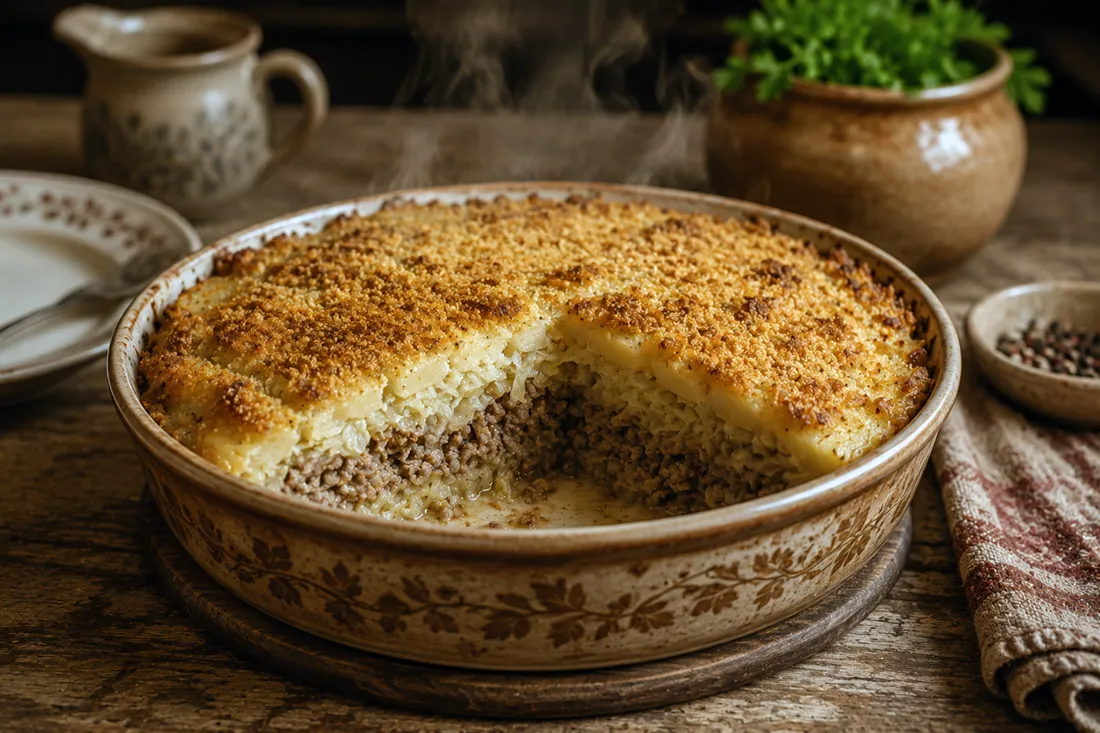
Layered Meat, Cabbage, and Potato Musaka
A hearty layered casserole of pre-roasted ground meat, sautéed sauerkraut, and thinly sliced raw potato, baked in a bacon-lined mold until golden.
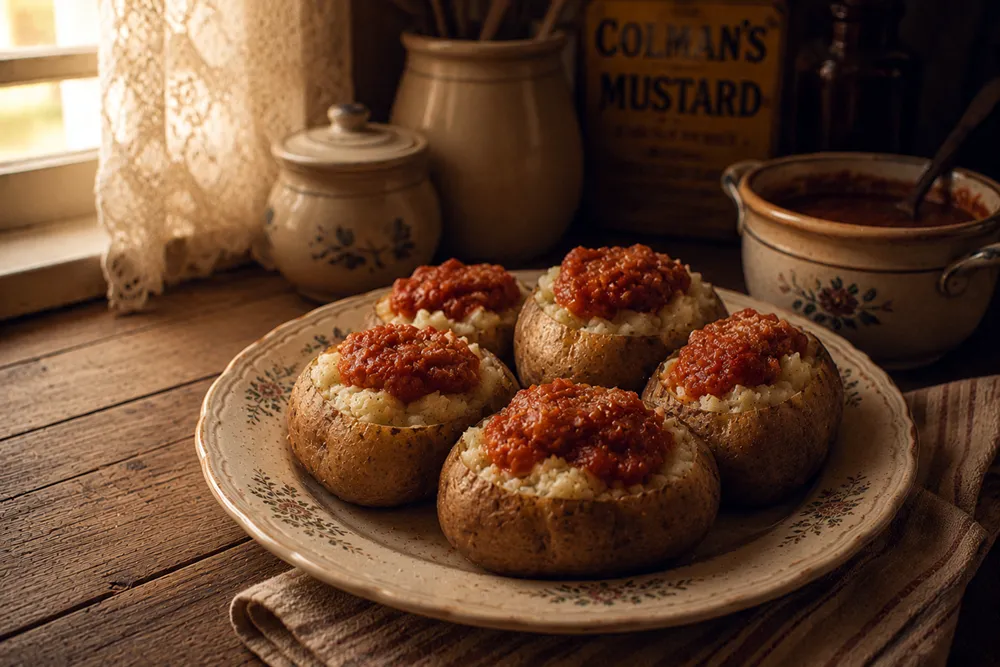
Stuffed Potatoes with Tomato Sauce
Whole potatoes hollowed out, stuffed with a veal and cured pork filling bound with egg and bread, baked until tender, and served with tomato sauce.
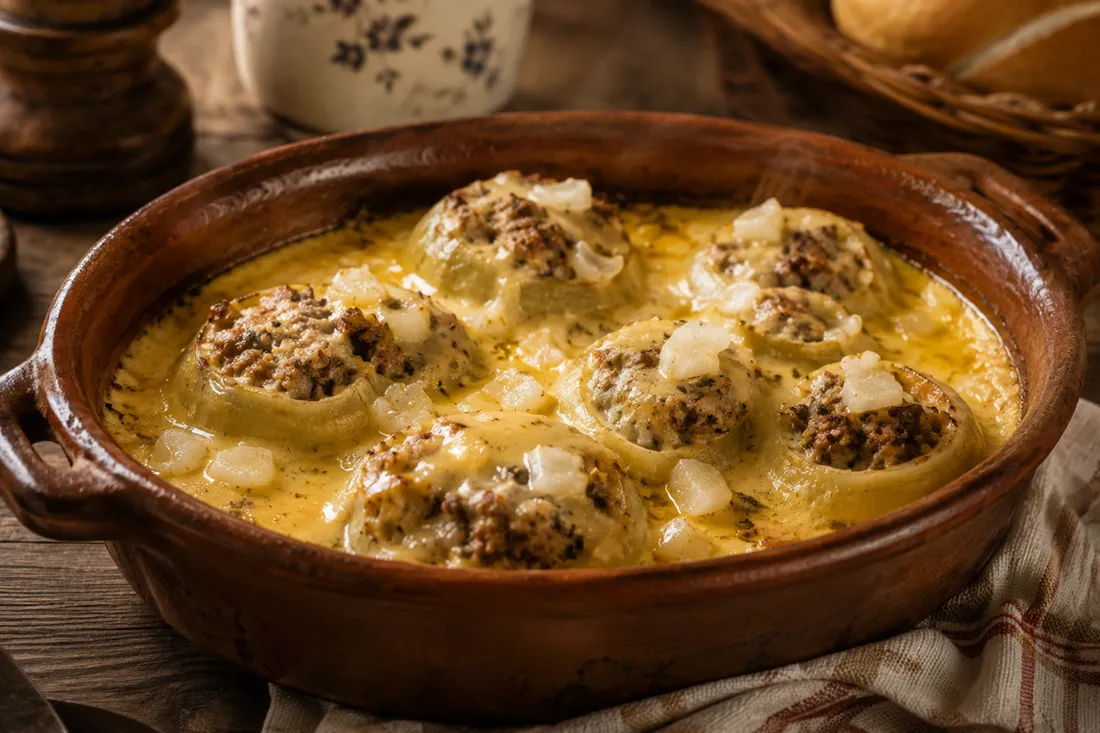
Stuffed Cucumbers in Lemon Sauce
Large cucumbers filled with seasoned ground meat, braised with bacon and root vegetables, then finished in a tangy lemon sauce - a savory main course.