Layered Meat, Cabbage, and Potato Musaka
A hearty layered casserole of pre-roasted ground meat, sautéed sauerkraut, and thinly sliced raw potato, baked in a bacon-lined mold until golden.
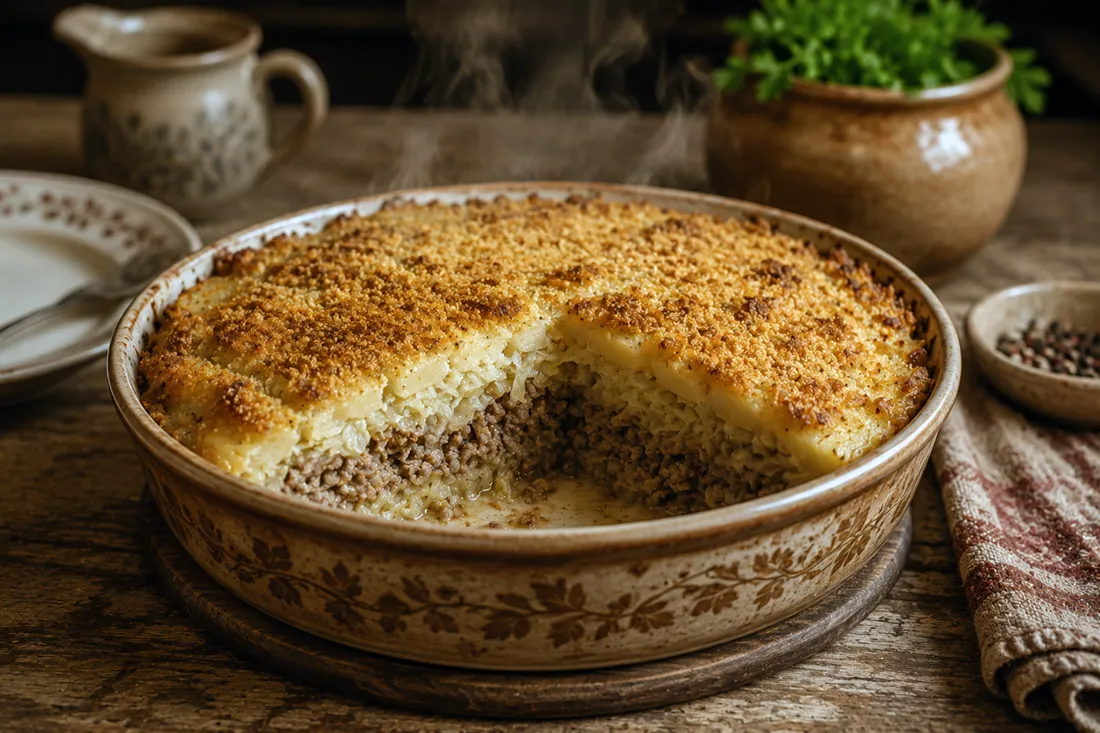
Quick Summary
A layered Central European casserole of pre-roasted ground meat, sauteed sauerkraut, and raw potato slices, baked in a bacon-lined mold. Takes about 1 hour 45 minutes total. Using already-roasted meat and raw potato baked together in one mold is what sets this dish apart.
Historical recipe
Modernised adaptation of an early 20th‑century source. Not independently kitchen-tested by Attic Recipes. Quantities, temperatures, and food safety guidance have been updated for a contemporary kitchen — results may vary and errors may exist. Nutritional values, where provided, are estimates only and have not been laboratory tested. Always follow current food safety guidelines for your region. If you have a health condition, allergy, or dietary requirement, consult a qualified professional before preparing this recipe.
Use of this recipe is entirely at your own risk and subject to our Terms of Service and Privacy Policy. Attic Recipes accepts no liability for any adverse outcome.
- Gluten
- Dairy
Additional notes
-
Note
This dish is high in saturated fat due to the bacon lining and butter topping. Those managing saturated fat intake, including pregnant women, elderly, or immunocompromised individuals with specific dietary guidance, may wish to reduce or substitute these ingredients.
- 1
Preheat the oven to 180°C (350°F) / 160°C fan.
Tip The oven temperature was not specified in the traditional method; this is calibrated for the raw potato layers to cook through fully. - 2
Line a deep baking dish or mold with thin strips of bacon, covering the bottom and sides.
- 3
If not already ground, finely mince or grind the roasted meat.
- 4
Sauté the chopped sauerkraut in a pan until slightly softened, about 5-7 minutes.
- 5
Layer the mold: a layer of meat, then a layer of sauerkraut, then a layer of thinly sliced raw potato. Repeat until all the meat, sauerkraut, and potato are used.
Tip Press each layer down gently and spread evenly so the potato rounds cook at an even rate. - 6
Finish with a final layer of meat on top.
- 7
Season the top layer with the salt and black pepper, then sprinkle evenly with the breadcrumbs.
- 8
Drizzle the melted butter evenly over the top.
- 9
Bake for 60-70 minutes, until the potato layers are tender when pierced and the top is golden brown.
Tip Check tenderness with a skewer through the center; raw potato is the slowest part of the dish to cook. - 10
Serve hot, straight from the mold.
Nutrition Information per 1 portion (approx 450g, based on 7 servings)
Nutritional values are approximate estimates and may vary based on specific ingredients used, preparation methods, and portion sizes.
Serving Suggestions
Serve directly from the baking dish with a simple green salad on the side to balance the richness. Leftovers keep well refrigerated for up to 3 days and reheat well in the oven, covered, at a low temperature.
About This Recipe
This layered casserole was a practical answer to a common kitchen question: what to do with meat left over from a roast. Ground and layered with sautéed sauerkraut and raw potato in a bacon-lined mold, it turns already-cooked meat into something new rather than simply reheating it. The raw potato slices cook through in the oven alongside everything else, absorbing flavor from the layers around them as the whole dish bakes together.
It’s an unfussy, stackable dish — three components repeated in a mold, finished with a breadcrumb and butter top — built for a kitchen that didn’t waste a good roast.
Why It Works
Using already-roasted meat instead of raw ground meat changes both the texture and the cooking logic of the dish. The meat only needs to heat through and meld with its neighboring layers, while the raw potato — the one truly uncooked component — sets the baking time, since it needs the full hour-plus to soften completely. The bacon lining bastes the dish gently from the outside in as it renders, and the breadcrumb-and-butter top browns into a light crust that contrasts with the soft layers underneath.
Modern Kitchen Tips
Slice the potatoes as thin and even as possible — uneven thickness is the main reason a layer can end up undercooked while everything else is done. If short on pre-roasted meat, a store-bought rotisserie chicken or leftover pot roast both work well as substitutes, ground or shredded finely. Let the casserole rest for 5-10 minutes after baking before serving; it holds its layers better once it’s had a moment to set.
A classic of early 20th century home cooking, preserved and adapted for the modern kitchen.
The Story Behind This Recipe
Historical Context
Early 20th century recipes for this dish were a practical way to use leftover roasted meat, ground and layered fresh rather than reheated on its own. The traditional approach did not specify an oven temperature, baking time, or exact quantities for the bacon lining, breadcrumb topping, or butter — these were left to the cook's judgment based on the size of the mold.
Modern Kitchen Adaptation
The oven temperature (180°C / 350°F), baking time (60-70 minutes), and the quantities for the bacon lining, breadcrumbs, salt, pepper, and butter are estimated, since the traditional method gave no specific amounts. For a lighter version, the bacon lining can be omitted or reduced, and the mold greased with a thin layer of butter or oil instead. Turkey bacon or a plant-based butter can be substituted for a lower-saturated-fat or dairy-free version, though this changes the flavor of the finished dish.
This recipe is an independent modern adaptation developed from historical sources in the public domain. It is provided for informational and educational purposes only and does not constitute professional dietary, nutritional, or medical advice. Food preparation involves inherent risks. The reader assumes full responsibility for safe food handling, ingredient sourcing, and adherence to current local food safety guidelines. The site operator accepts no liability for outcomes resulting from the preparation or consumption of this recipe.
One recipe.
Every week.
You Might Also Like
More recipes from the same category
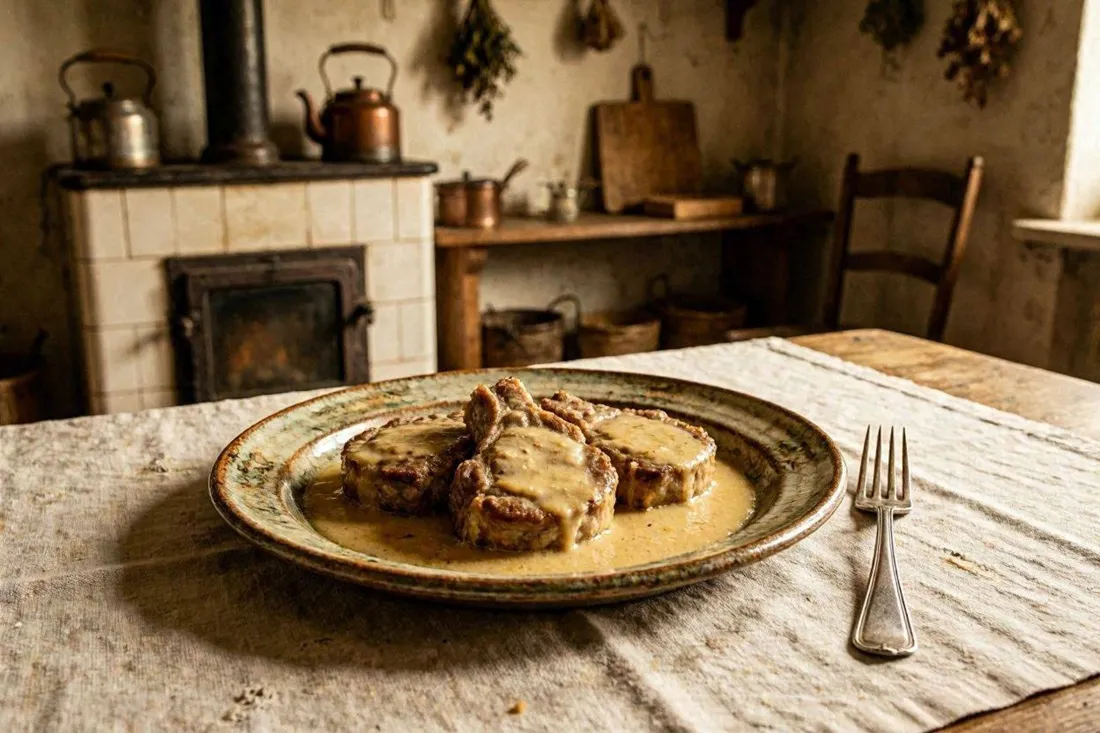
Braised Pork Chops in White Wine and Sour Cream Sauce
Pork loin chops braised with onion, carrot, parsley root, and celery root in white wine, then finished with a strained sour cream sauce.
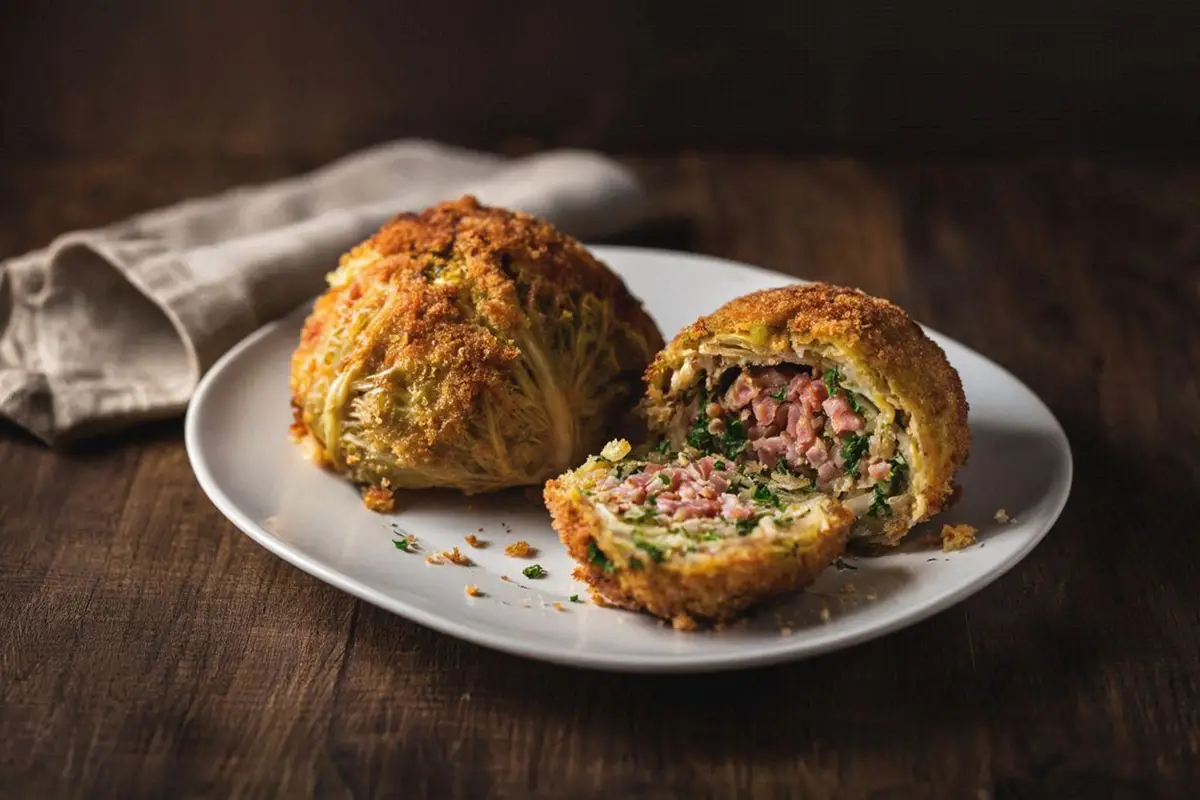
Breaded Savoy Cabbage Stuffed with Ham
Tender young savoy cabbage heads filled with ground ham, fried onion, and herbs, breaded and pan-fried until golden. A hearty Central European classic.
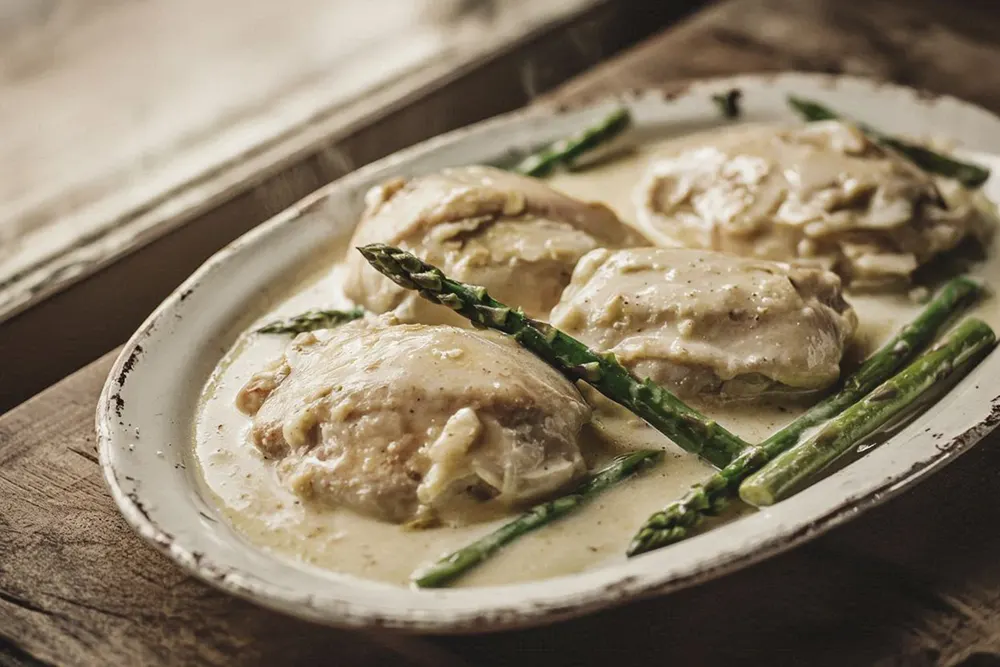
Chicken in Asparagus Sauce
A whole chicken poached in spiced broth, then finished in a silky velouté enriched with egg yolks and cream, garnished with tender asparagus tips.