Chicken in Asparagus Sauce
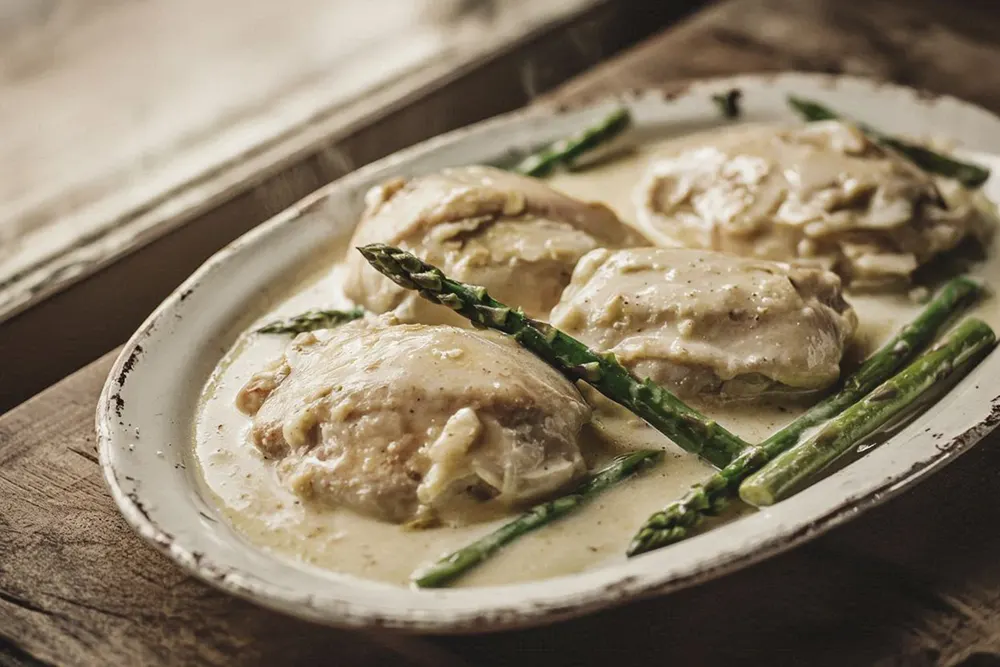
A whole chicken poached in spiced broth, then finished in a silky velouté enriched with egg yolks and cream, garnished with tender asparagus tips.
Quick Summary
A whole chicken poached in spiced broth, then finished in a silky velouté enriched with egg yolks and cream, garnished with tender asparagus tips.
Historical recipe
Modernised adaptation of an early 20th‑century source. Not independently kitchen-tested by Attic Recipes. Quantities, temperatures, and food safety guidance have been updated for a contemporary kitchen — results may vary and errors may exist. Nutritional values, where provided, are estimates only and have not been laboratory tested. Always follow current food safety guidelines for your region. If you have a health condition, allergy, or dietary requirement, consult a qualified professional before preparing this recipe.
Use of this recipe is entirely at your own risk and subject to our Terms of Service and Privacy Policy. Attic Recipes accepts no liability for any adverse outcome.
- Eggs
- Dairy
- Gluten
Additional notes
-
Warning
The egg yolk and cream liaison is added at the end of cooking and does not reach full pasteurisation temperature. The sauce must be held below boiling (below 82°C / 180°F) after the liaison is added. Not recommended for pregnant women, children under 18, the elderly, or immunocompromised individuals without using pasteurised egg yolks.
Pasteurised liquid egg yolks can be substituted in equal quantity. The texture of the finished sauce will be very slightly less rich but the safety profile is significantly improved.
-
Warning
Poultry must reach an internal temperature of 74°C (165°F) at the thickest part of the thigh before serving. Use an instant-read thermometer to verify — visual checks alone are not reliable.
-
Note
This recipe contains approximately 20g of saturated fat per serving due to the butter, cream, and egg yolks. Individuals managing cardiovascular conditions or cholesterol levels should be aware.
- 1
Prepare the asparagus: wash and trim 500g of fresh asparagus. Snap or cut off the woody lower ends — approximately the bottom 4–5cm — and set them aside. These woody ends (approximately 150g) will flavour the poaching broth. The remaining tender spears with tips (approximately 350g) set aside separately for later.
- 2
Poach the chicken: place the whole cleaned chicken in a large pot and cover with just enough cold water to fully submerge it. Bring to a boil over medium-high heat, then skim off any grey foam that rises to the surface. Add 1 carrot, 1 parsnip, 1 parsley root, 1 celery stalk, 2 onions each studded with 2 cloves, 10 peppercorns, 1 bay leaf, and 1 teaspoon of salt. Add the woody asparagus ends to the pot. Reduce heat to a gentle simmer, partially cover, and cook for approximately 50–60 minutes.
Tip The water should barely tremble — a hard boil will make the meat tough and the broth cloudy. Skim the surface every 15 minutes for a clearer broth. - 3
Cook the asparagus separately: while the chicken poaches, bring a separate small saucepan of well-salted water to a boil. Add the reserved tender asparagus spears and cook for 3–5 minutes until just tender but still bright green. Drain immediately and transfer to a bowl of cold water to stop the cooking. Drain again and set aside. These will be used to garnish the finished dish.
- 4
Check the chicken: after 50 minutes, test the chicken by piercing the thickest part of the thigh with a skewer — the juices should run clear, not pink. When almost cooked but not yet completely soft, remove the chicken to a plate and allow it to cool enough to handle. Do not discard the broth — strain it through a fine-mesh sieve, discarding the vegetables and asparagus ends, and reserve the clear broth. You will need at least 700ml for the sauce; keep any remainder warm on the stove.
- 5
Portion the chicken: once cool enough to handle, use a sharp knife to remove the legs and thighs at the joint, keeping each piece intact. Carefully remove the breast meat in whole pieces, cutting along the breastbone and following the ribcage, keeping the wing attached to each breast. Trim excess backbone and tail bones. Keep all pieces whole and intact — they will finish cooking in the sauce.
- 6
Make the roux: in a medium saucepan over medium heat, melt 100g of butter until foaming. Add 20g (approximately 2 tablespoons) of flour all at once and stir continuously with a wire whisk for 2–3 minutes until the mixture turns light golden yellow — do not let it brown. This is the zapraška (roux).
Tip Cooking the roux until it smells nutty and turns pale gold eliminates the raw flour taste. If it turns beige or brown, the flavour will be too strong for this delicate sauce. - 7
Build the velouté: gradually ladle the strained warm chicken broth into the roux, whisking constantly after each addition to prevent lumps. Start with a small ladle and whisk until fully smooth before adding more. Once all the broth is incorporated (approximately 600–700ml — enough to make a sauce that coats the back of a spoon), bring the sauce to a gentle simmer and cook for 10 minutes, stirring occasionally.
- 8
Finish the chicken in the sauce: lower all the chicken pieces into the sauce. Simmer gently for a further 15–20 minutes until the chicken is completely cooked through and reaches an internal temperature of 74°C (165°F) at the thickest part of the thigh.
Tip Keep the heat low — the sauce should barely simmer. Hard boiling will dry out the meat and risk breaking the sauce later. - 9
Prepare the liaison: in a small bowl, combine 2 egg yolks and 200ml of heavy cream. Beat together with a wire whisk until smooth. To temper the liaison and prevent scrambling: ladle approximately 4–5 tablespoons of the hot sauce from the pan into the bowl with the yolk-cream mixture, whisking constantly. Repeat once more, then pour the warmed liaison back into the main saucepan in a slow, steady stream, whisking continuously. Keep the sauce over low heat, stirring, until it reaches at least 71°C (160°F) — use a thermometer to verify. Do not allow the sauce to boil after this point — hold it below 82°C (180°F).
Tip Tempering is not optional — adding cold yolks directly to hot sauce causes them to curdle instantly. If the sauce gets too hot after the liaison is added, remove the pan from the heat immediately and whisk in a small amount of cold broth. - 10
Season and finish: squeeze in the juice of ½ lemon (approximately 1–2 tablespoons) and stir through. Add the reserved cooked asparagus spears to the sauce to warm through for 1–2 minutes. Taste and adjust salt and lemon as needed — the sauce should be bright, rich, and coat the back of a spoon.
- 11
Serve: arrange the chicken pieces on a warmed serving platter. Lift the asparagus spears from the sauce and arrange them alongside the chicken. Pour the cream sauce generously over the chicken and asparagus and serve immediately.
Nutrition Information per 1 serving (approx 350g)
Nutritional values are approximate estimates and may vary based on specific ingredients used, preparation methods, and portion sizes.
Serving Suggestions
Traditionally served with steamed potatoes, buttered rice, or boiled egg noodles — all of which absorb the cream sauce well. A simple green salad dressed with lemon and oil offers a clean contrast to the richness of the dish.
About This Recipe
There is a category of old recipe that announces its ambitions in the first line. This one opens by asking you to poach a whole chicken in a carefully spiced broth, then build a sauce from that same broth, then enrich the sauce with a liaison of egg yolks and cream, then finish the asparagus separately so that it arrives at the table still bright and just tender. It is a dish with a method — not a quick weeknight supper, but a Sunday lunch that rewards the cook who follows each step in sequence.
The technique is a textbook velouté: a pale roux of butter and flour, loosened with the strained poaching broth, then enriched at the end with the classic French liaison of egg yolks beaten with cream. In the Central European bourgeois kitchen of the early twentieth century, this kind of sauce represented the highest register of everyday home cooking — not restaurant food, but the food a careful home cook would make for a family occasion. The asparagus, appearing in the broth as trim and on the plate as garnish, was a spring luxury and a mark of the season.
What makes this recipe worth reviving is the intelligence of the method. The woody asparagus ends that would otherwise be discarded go into the poaching liquid and give the broth — and therefore the sauce — a quiet, grassy undertone that lifts the richness of the butter and cream. Nothing is wasted. The chicken poaches gently, stays moist, and then finishes in the sauce so that every piece is saturated with flavour by the time it reaches the table.
Why It Works
The two-stage cooking method — poach first, finish in sauce — solves a problem that roasting cannot: how to keep chicken breast moist while ensuring the legs and thighs are fully cooked. Poaching the whole bird in barely simmering water cooks it gently and evenly, while the subsequent finish in the sauce allows any remaining cooking to happen slowly, surrounded by fat and liquid that prevent the meat from drying out.
The roux provides body and stability to the sauce. The ratio here — 100g butter to 20g flour — produces a sauce that is voluptuous rather than starchy, with enough structure to coat the chicken and asparagus without becoming gluey. The liaison of egg yolks and cream, added off the heat and never allowed to boil, thickens the sauce further through gentle protein coagulation and emulsification, giving it the characteristic silkiness of a properly finished velouté. The lemon juice at the end is not decoration — it cuts the fat and brings every other flavour into focus.
Modern Kitchen Tips
On the broth: skim it diligently during the first 20 minutes of poaching. The grey foam is coagulated protein from the chicken — removing it produces a clearer, cleaner-tasting sauce. A fine-mesh sieve or cheesecloth when straining will do the rest.
On the liaison: have everything ready before you add it. The sauce should be off direct heat, the liaison tempered with hot sauce before it goes in, and you should be whisking continuously from the moment it enters the pan. It takes about 60 seconds of steady whisking. This is the critical moment of the dish.
On the asparagus: the cold-water shock after boiling is essential if you want it to stay green. Transfer it directly from the boiling water to a bowl of iced water, leave for two minutes, then drain. It can sit at room temperature for up to an hour before being warmed through in the finished sauce.
On the chicken: an instant-read thermometer removes all guesswork. Insert it into the thickest part of the thigh, away from bone. At 74°C (165°F), the meat is safe, juicy, and done.
A spring Sunday lunch from the early twentieth century Central European table — nothing wasted, nothing rushed.
The Story Behind This Recipe
Historical Context
Early 20th century recipes for braised and poached poultry in cream sauce frequently relied on this two-stage technique: the bird was first poached in a spiced vegetable broth, then portioned and finished in a sauce built from that same broth. This approach reflects a period kitchen logic where nothing was wasted — the poaching liquid became the sauce base, the aromatic vegetables gave all their flavour to the broth before being discarded, and the asparagus trimmings that would otherwise be thrown away were put to work flavouring the stock. The thickening method — a butter-flour roux enriched at the end with egg yolks and cream — is the classic Central European zapraška (roux) enriched with a French-influenced liaison, common in the bourgeois home cooking of the era. Home cooks of the period understood that the liaison must not boil, though recipes rarely stated this explicitly, assuming it was already known.
Modern Kitchen Adaptation
The original recipe gives no weight for the chicken — 1.4kg whole chicken is used here as a practical standard for 4 portions. 'A cup of sweet cream' has been standardised to 200ml of heavy cream (minimum 30% fat). The lemon quantity is not specified in the original; the juice of ½ lemon is used as a starting point, to be adjusted by taste. Tempering instructions for the egg yolk liaison have been made explicit — the original assumes this knowledge. An internal temperature target of 74°C (165°F) has been added for food safety; the original specifies only that the chicken should be 'completely soft.' Asparagus quantities are divided explicitly: approximately 150g woody ends into the broth, approximately 350g tender spears cooked separately — the original describes this split without giving weights.
This recipe is an independent modern adaptation developed from historical sources in the public domain. It is provided for informational and educational purposes only and does not constitute professional dietary, nutritional, or medical advice. Food preparation involves inherent risks. The reader assumes full responsibility for safe food handling, ingredient sourcing, and adherence to current local food safety guidelines. The site operator accepts no liability for outcomes resulting from the preparation or consumption of this recipe.
One recipe.
Every week.
You Might Also Like
More recipes from the same category
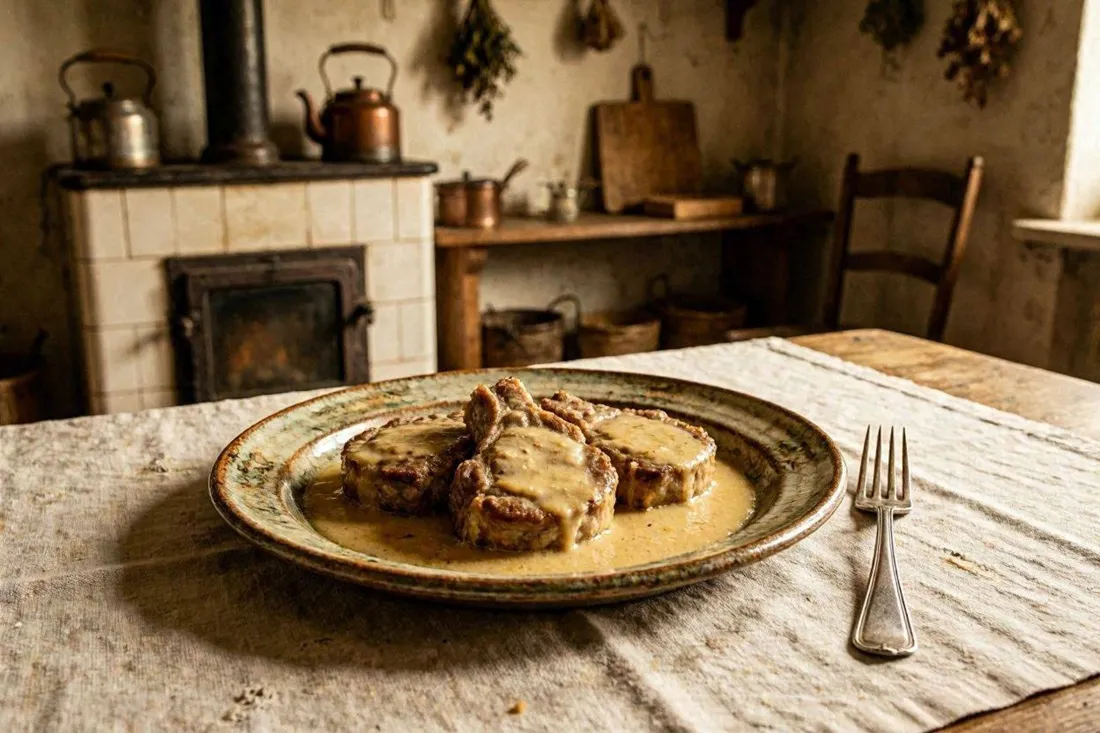
Braised Pork Chops in White Wine and Sour Cream Sauce
Pork loin chops braised with onion, carrot, parsley root, and celery root in white wine, then finished with a strained sour cream sauce.
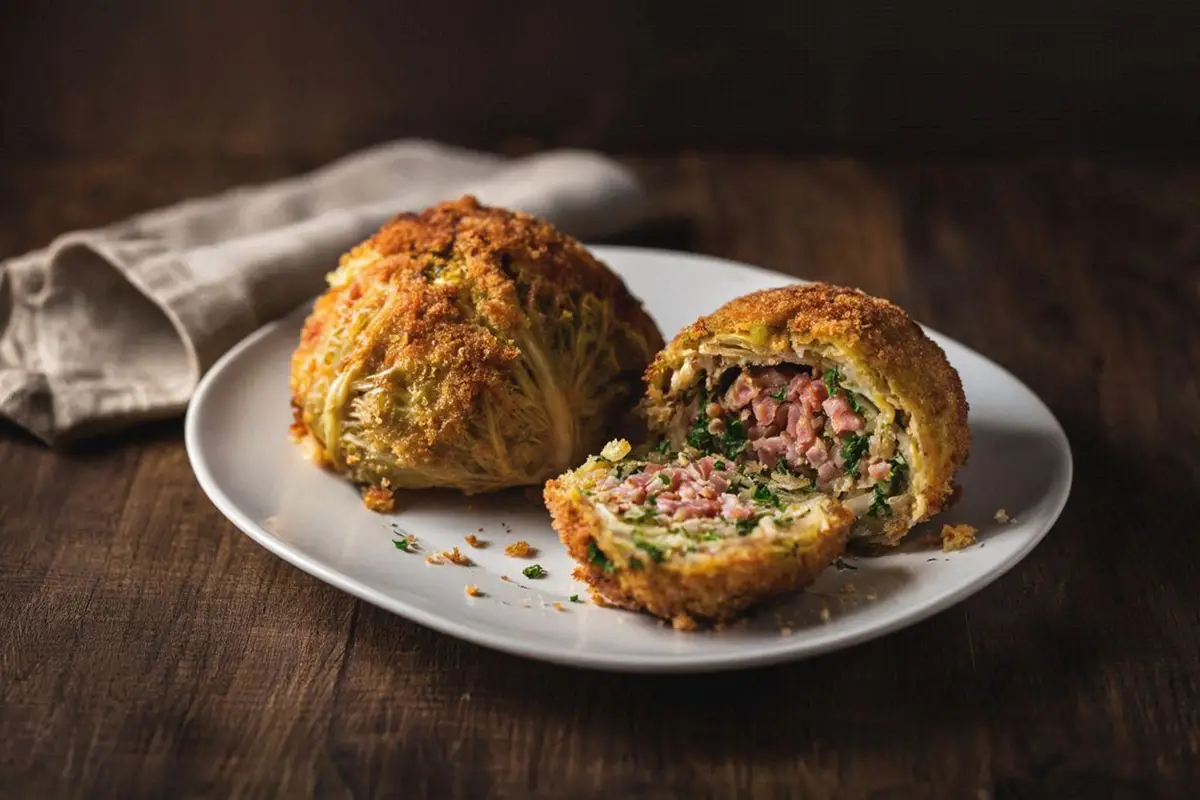
Breaded Savoy Cabbage Stuffed with Ham
Tender young savoy cabbage heads filled with ground ham, fried onion, and herbs, breaded and pan-fried until golden. A hearty Central European classic.
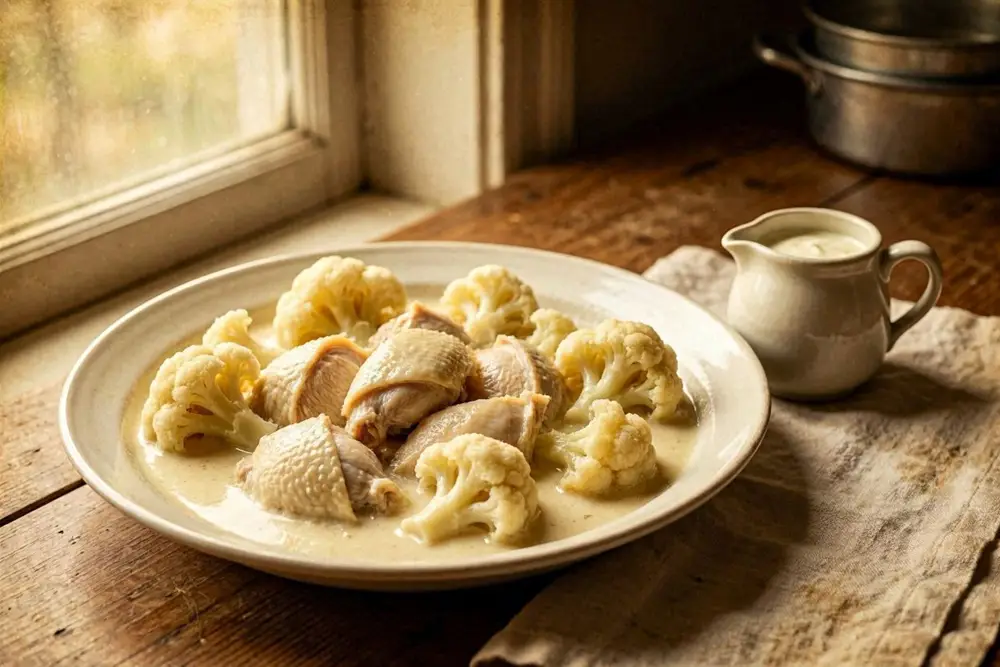
Chicken and Cauliflower in Sour Cream Sauce
A quartered young chicken cooked in a white sour cream roux, served with boiled cauliflower florets arranged around the meat and the cooking sauce poured over.