Stuffed Potatoes with Tomato Sauce
Whole potatoes hollowed out, stuffed with a veal and cured pork filling bound with egg and bread, baked until tender, and served with tomato sauce.
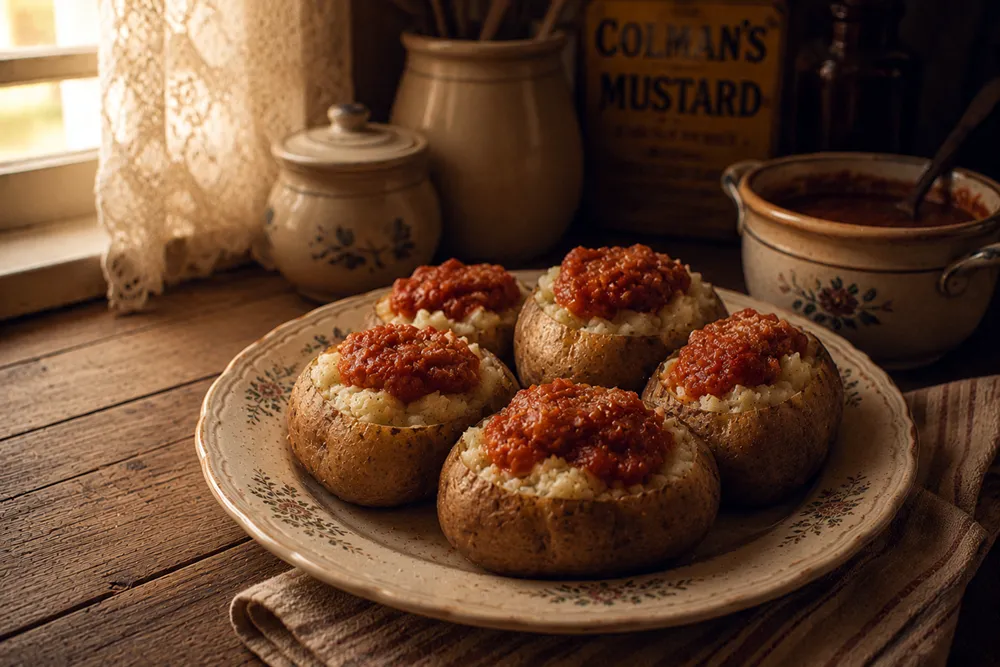
This recipe uses Slow-Simmered Tomato Sauce — prepare it in advance if you haven't already.
Historical recipe
Modernised adaptation of an early 20th‑century source. Not independently kitchen-tested by Attic Recipes. Quantities, temperatures, and food safety guidance have been updated for a contemporary kitchen — results may vary and errors may exist. Nutritional values, where provided, are estimates only and have not been laboratory tested. Always follow current food safety guidelines for your region. If you have a health condition, allergy, or dietary requirement, consult a qualified professional before preparing this recipe.
Use of this recipe is entirely at your own risk and subject to our Terms of Service and Privacy Policy. Attic Recipes accepts no liability for any adverse outcome.
- Eggs
- Gluten
- Dairy
- Mustard
Additional notes
-
Warning
This filling contains raw ground meat and raw egg before baking. Confirm the filling reaches a minimum internal temperature of 74°C (165°F) throughout before serving, especially important for pregnant women, children under 18, the elderly, and immunocompromised individuals.
Use a food thermometer to verify doneness rather than relying on baking time alone.
- 1
Grind the veal and dry-cured smoked pork together, or have your butcher grind them for you.
- 2
In a pot, melt 14g lard and add the chopped onion. Sauté until the onion is about half-cooked, then add the ground meat and fry together for 10 minutes, stirring occasionally.
- 3
Remove the pot from the heat and let the meat mixture cool completely.
- 4
Soak the bread roll in the 50ml milk, then squeeze out the excess liquid. Add it to the cooled meat along with the egg, mustard, 15g sour cream, salt, and pepper. Mix thoroughly until evenly combined.
- 5
Peel the potatoes. Using a small paring knife or corer, carefully hollow out the center of each potato, leaving a shell about 1cm thick.
- 6
Fill each hollowed potato with the meat mixture.
- 7
Grease an ovenproof baking dish with 14g lard and arrange the stuffed potatoes inside.
- 8
Preheat the oven to 180°C (350°F) / 160°C fan. Cover the dish and bake for 1 hour, until the potatoes are tender and the filling reaches a minimum internal temperature of 74°C.
Tip Since the filling contains raw ground meat and raw egg before baking, check the internal temperature with a food thermometer at the thickest point of the filling to confirm it's fully cooked. - 9
While the potatoes bake, make the sauce: cook the tomatoes with 14g lard and 3g salt over medium heat for about 15 minutes, until reduced and thickened.
- 10
Stir the 45g sour cream into the tomato sauce at the end of cooking.
- 11
Pour the tomato sauce over the baked stuffed potatoes and serve.
Nutrition Information per 1 stuffed potato with sauce (approx 340g)
Nutritional values are approximate estimates and may vary based on specific ingredients used, preparation methods, and portion sizes.
Serving Suggestions
Serve hot, one or two stuffed potatoes per person, spooning extra tomato sauce over the top. A simple green salad pairs well alongside.
About This Recipe
This dish turns whole potatoes into edible vessels, hollowed out and packed with a rich filling of veal and cured, dried meat before being baked slowly until the potato itself turns tender and the filling cooks through. It’s a clever way of building a complete meal — starch, protein, and sauce — around a single humble ingredient.
Combining fresh ground meat with a home-cured, dried meat was a common way to add depth and a savory, almost smoky backbone to a filling without needing to season heavily. The dish was traditionally brought to the table in the same covered dish it baked in, keeping everything hot until serving.
The tomato sauce that finishes the dish is deliberately simple: a reduced tomato base finished with sour cream, letting the richness of the stuffed potatoes take center stage.
Why It Works
Hollowing out the raw potato and stuffing it with a raw filling means both cook together over a full hour in the oven — long enough for the potato to become fully tender and for the ground meat and egg mixture inside to cook through safely. The soaked bread roll in the filling keeps the meat mixture moist and tender rather than dense, a classic technique borrowed from meatball and meatloaf preparations. Finishing the tomato sauce with sour cream at the very end, rather than cooking it in, keeps the sauce from breaking or curdling.
Modern Kitchen Tips
A vegetable corer or melon baller makes hollowing out the potatoes much easier and more even than a paring knife alone. If you’d like extra insurance that the filling cooks through evenly, you can pre-cook the ground meat mixture a little longer before stuffing, or reduce the size of the hollowed cavity slightly so the filling layer is thinner.
A classic of early 20th century home cooking, preserved and adapted for the modern kitchen.
The Story Behind This Recipe
Historical Context
Home cooks of the period used a home-dried, hard-cured meat alongside fresh veal for the filling — thin, cylindrical pieces of meat cured and dried until dark and firm, a technique no longer commonly practiced or available for purchase today. The dish was traditionally baked and served directly in the same covered earthenware dish it was cooked in, brought straight to the table. The tomato sauce was not given as a separate recipe, only noted by the amount of sour cream stirred into it at the end.
Modern Kitchen Adaptation
The home-dried cured meat called for in the original is no longer commercially available; dry-cured smoked pork or smoked bacon is recommended here as the closest modern substitute. The tomato sauce recipe itself was not specified beyond the amount of sour cream added at the end — a basic reduced tomato sauce base has been added here to complete the dish. The amount of onion, bread roll, milk, mustard, filling sour cream, salt, pepper, oven temperature, and sauce ingredients were not specified and have been estimated here, marked accordingly. Because the filling contains raw ground meat and raw egg before baking, checking the internal temperature with a food thermometer is recommended to confirm the filling reaches a safe temperature throughout, rather than relying on baking time alone.
This recipe is an independent modern adaptation developed from historical sources in the public domain. It is provided for informational and educational purposes only and does not constitute professional dietary, nutritional, or medical advice. Food preparation involves inherent risks. The reader assumes full responsibility for safe food handling, ingredient sourcing, and adherence to current local food safety guidelines. The site operator accepts no liability for outcomes resulting from the preparation or consumption of this recipe.
One recipe.
Every week.
You Might Also Like
More recipes from the same category

Baked Fish with Tomatoes
Whole fish baked over ripe tomatoes with generous olive oil and lemon — a simple, fragrant Central European oven dish.
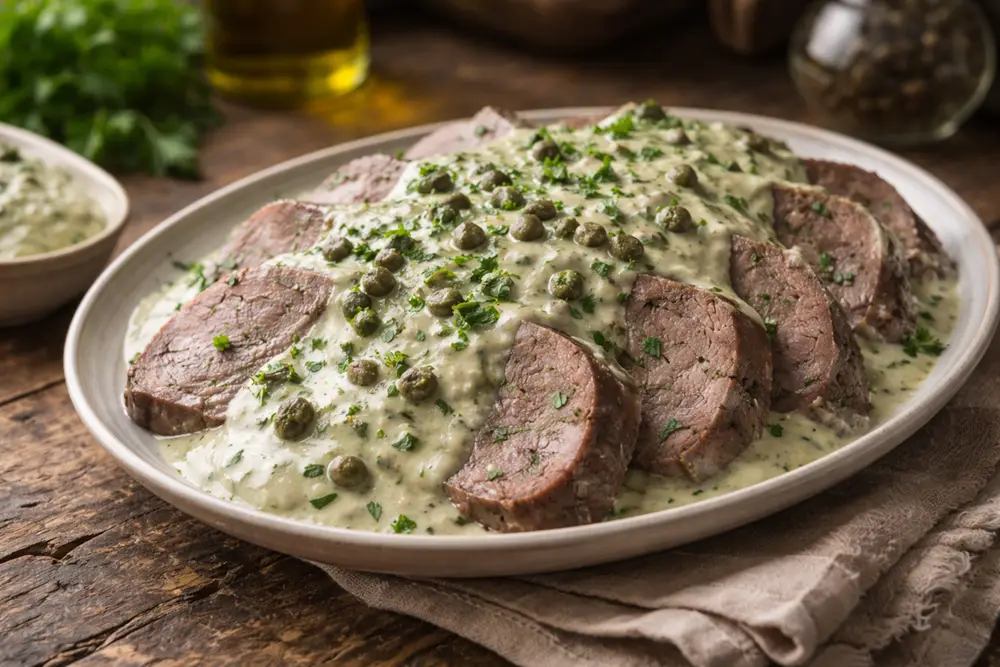
Baked Tongue in Green Sauce
Beef tongue braised with herbs, larded with bacon and roasted until golden, served in a green sauce of capers, anchovy, parsley and sour cream.
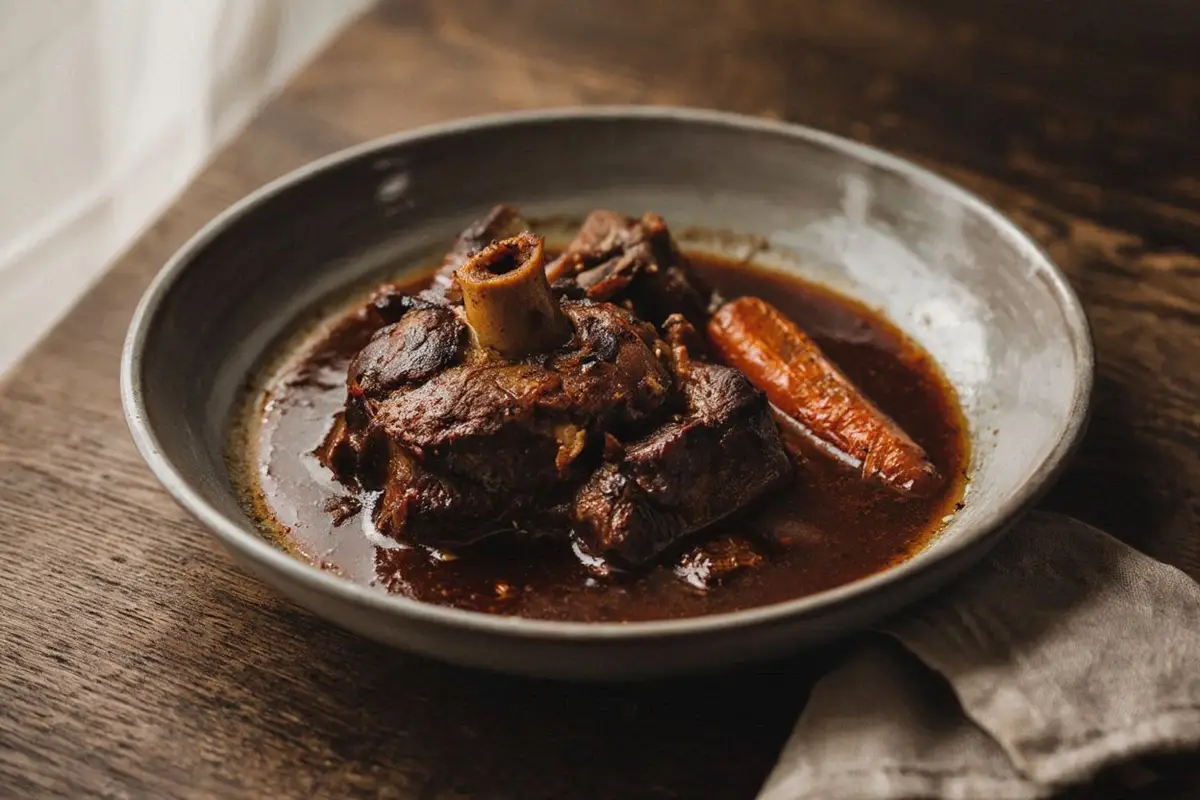
Beef Tail in Red Wine Sauce
Slow-braised oxtail in a rich red wine broth with carrots, lemon zest, and a silky roux-thickened sauce. A forgotten Central European classic.