Baked Tongue in Green Sauce
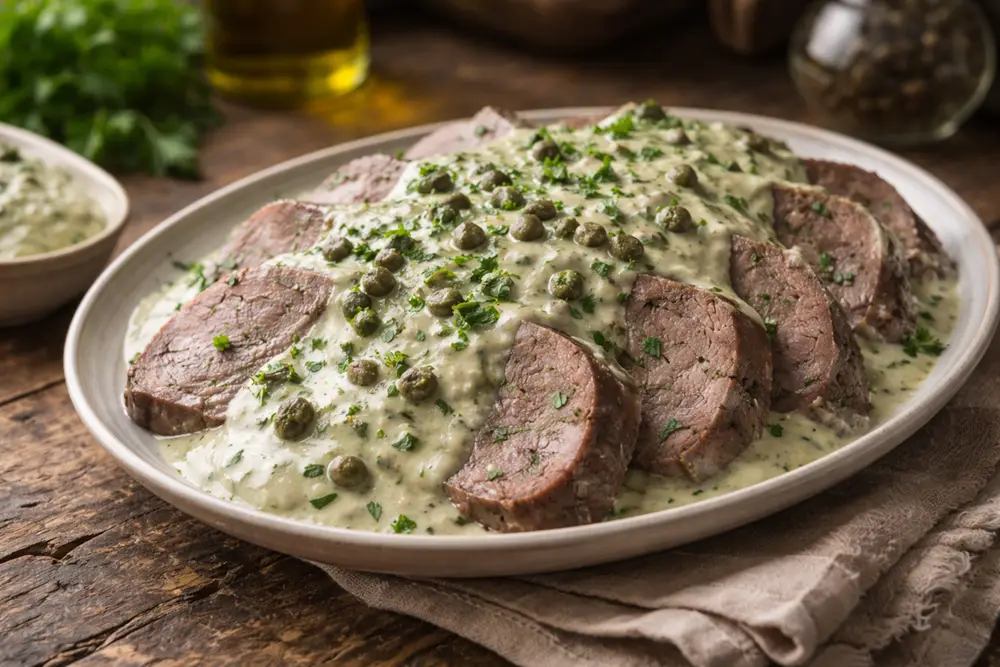
Beef tongue braised with herbs, larded with bacon and roasted until golden, served in a green sauce of capers, anchovy, parsley and sour cream.
Historical recipe
Modernised adaptation of an early 20th‑century source. Not independently kitchen-tested by Attic Recipes. Quantities, temperatures, and food safety guidance have been updated for a contemporary kitchen — results may vary and errors may exist. Nutritional values, where provided, are estimates only and have not been laboratory tested. Always follow current food safety guidelines for your region. If you have a health condition, allergy, or dietary requirement, consult a qualified professional before preparing this recipe.
Use of this recipe is entirely at your own risk and subject to our Terms of Service and Privacy Policy. Attic Recipes accepts no liability for any adverse outcome.
- Dairy
- Gluten
- Fish
- Sulphites
Additional notes
-
Warning
Beef tongue must reach an internal temperature of 71°C (160°F) before consumption. Use a meat thermometer to verify doneness — the tongue should be completely tender throughout with no resistance when pierced.
-
Warning
Do not boil the sauce after adding the sour cream. Boiling will cause it to curdle and split.
-
Note
Each serving contains approximately 23g of saturated fat. This dish is intended for occasional consumption. Individuals managing cardiovascular conditions or cholesterol levels should be aware of the fat content.
-
Note
This recipe contains anchovy and capers, both of which are high in sodium. The estimated sodium content per serving is 498mg before any additional seasoning. Add salt to the sauce cautiously and taste before seasoning.
- 1
Place the beef tongue in a large pot and cover with cold water. Add the herb bunch, 1 tbsp white wine vinegar, 2 bay leaves, and the roughly chopped onion. Bring to a boil, then reduce to a gentle simmer. Cook for 2–2.5 hours until the tongue is completely tender — a skewer inserted into the thickest part should meet no resistance.
Tip Top up with hot water during cooking if needed to keep the tongue submerged. Reserve at least 400ml of the braising liquid for the sauce. - 2
Remove the tongue from the pot and peel the outer skin immediately while still hot. Use tongs or protect your hands — the tongue must be peeled while hot or the skin will not come away cleanly. Discard the skin. Strain and reserve the braising liquid.
- 3
Preheat the oven to 200°C (400°F) / 180°C fan. Using a small sharp knife, make shallow slits across the surface of the peeled tongue and press the thinly sliced bacon into and over the surface to lard it.
- 4
Heat 2 tbsp of lard in an oven-safe roasting pan over high heat. Place the larded tongue in the hot fat and transfer to the preheated oven. Roast for 25–30 minutes, turning once or twice, until golden brown on all sides. Remove the tongue from the pan and set aside. Do not discard the fat and pan drippings.
- 5
Place the roasting pan with the reserved fat over medium heat on the hob. Add 75g of finely chopped yellow onion and fry until soft and translucent, about 5 minutes.
- 6
Add 30g of flour to the pan and stir into the fat to form a roux. Cook for 1–2 minutes, stirring constantly, until the roux turns a pale golden colour.
- 7
Gradually pour in the reserved braising liquid, whisking continuously to avoid lumps, until a smooth sauce forms. Add enough liquid to reach a consistency that coats the back of a spoon — approximately 300–400ml. Simmer for 5 minutes.
- 8
Add 15g of chopped capers, the chopped anchovy fillet, 15g of chopped parsley, and ½ tsp of lemon zest to the sauce. Stir to combine and simmer for a further 2 minutes.
- 9
Remove the pan from the heat and stir in 125ml of sour cream until fully incorporated. Do not boil after adding the sour cream or it will split. Taste and adjust seasoning — the capers and anchovy are already salty, so add salt cautiously.
Tip If the sauce is too thick, let it down with a little more braising liquid. If too thin, simmer briefly before adding the sour cream. - 10
Slice the roasted tongue and arrange on a warm round serving dish. Pour half of the green sauce over the sliced tongue. Serve the remaining sauce separately in a small jug or bowl alongside.
Nutrition Information per 1 serving (approx. 250g)
Nutritional values are approximate estimates and may vary based on specific ingredients used, preparation methods, and portion sizes.
Serving Suggestions
Serve with boiled or mashed potatoes, bread dumplings, or egg noodles to absorb the sauce. A simple green salad alongside cuts the richness of the dish. The tongue slices well when warm and holds its shape cleanly.
About This Recipe
Beef tongue was not unusual food in early twentieth century Central European kitchens — it was prized, not merely tolerated. A whole tongue braised for two and a half hours until completely tender, then peeled, larded with bacon, and roasted until golden, represents the kind of careful, multi-stage cooking that treated every cut of the animal with the same attention given to a roast or a stew. The green sauce that accompanies it — built from the braising liquid and finished with capers, anchovy, parsley, and sour cream — is the dish’s second act, and in many ways the more interesting one.
For anyone who has not cooked tongue before: the texture after braising and roasting is closer to a well-braised short rib than to anything that reads as offal. It is dense, yielding, and deeply savoury, and it slices cleanly into portions that hold their shape on the plate.
The name green sauce refers not to the colour of the finished sauce — which is pale and cream-coloured — but to the green herbs and aromatics that flavour it. This naming convention was common in the period.
Why It Works
The braising liquid is doing double duty: it cooks the tongue to tenderness and simultaneously builds the flavour base for the sauce. By the time the tongue is done, the liquid has absorbed two hours of herb, onion, and tongue flavour — it is already a light broth. Using it as the base of a roux-thickened sauce means no stock needs to be made separately.
The anchovy and capers are not there to taste of anchovy or capers. Used in these quantities, they dissolve into the sauce and contribute depth and salinity — the same role they play in a Worcestershire sauce or a good Caesar dressing. The sour cream added off the heat rounds the acidity and gives the sauce body without making it heavy.
Modern Kitchen Tips
A slow cooker works well for the braising step — set it on low for 6–8 hours if you want to start the tongue in the morning and finish the dish in the evening.
If the tongue is very large (over 1.3kg), add 30 minutes to the braising time and check tenderness with a skewer before removing from the pot.
Leftover sliced tongue reheats well in a covered pan with a little of the sauce and a splash of water over low heat. It also makes an excellent cold sandwich the following day.
A classic of early 20th century home cooking, preserved and adapted for the modern kitchen.
The Story Behind This Recipe
Historical Context
Braised and roasted beef tongue was a standard centrepiece dish in Central European middle-class households of the early twentieth century, appearing regularly in household cookbooks of the period alongside other offal preparations that have since largely disappeared from everyday cooking. The green sauce — built from the braising liquid, enriched with sour cream, and sharpened with capers, anchovy, and lemon — is characteristic of the Austro-Hungarian culinary tradition, where offal was treated with the same care and technique as prime cuts. Serving the sauce divided — half over the meat, half alongside — was a common presentation convention of the era.
Modern Kitchen Adaptation
The original recipe gave no oven temperature; 200°C / 180°C fan is estimated based on standard roasting practice for cooked meat being browned. No braising time was specified; 2–2.5 hours at a gentle simmer is standard for beef tongue of this size. The quantities for capers, parsley, lemon zest, vinegar, herbs, and cooking fat were all unspecified in the original — the amounts here are estimated based on the volume of the sauce and standard period proportions. Lard is the historically correct fat; neutral oil is an acceptable substitute in equal quantity. The instruction to lard the tongue with bacon is interpreted here as surface-larding with slits rather than deep needle-larding, which requires specialist equipment.
This recipe is an independent modern adaptation developed from historical sources in the public domain. It is provided for informational and educational purposes only and does not constitute professional dietary, nutritional, or medical advice. Food preparation involves inherent risks. The reader assumes full responsibility for safe food handling, ingredient sourcing, and adherence to current local food safety guidelines. The site operator accepts no liability for outcomes resulting from the preparation or consumption of this recipe.
One recipe.
Every week.
You Might Also Like
More recipes from the same category
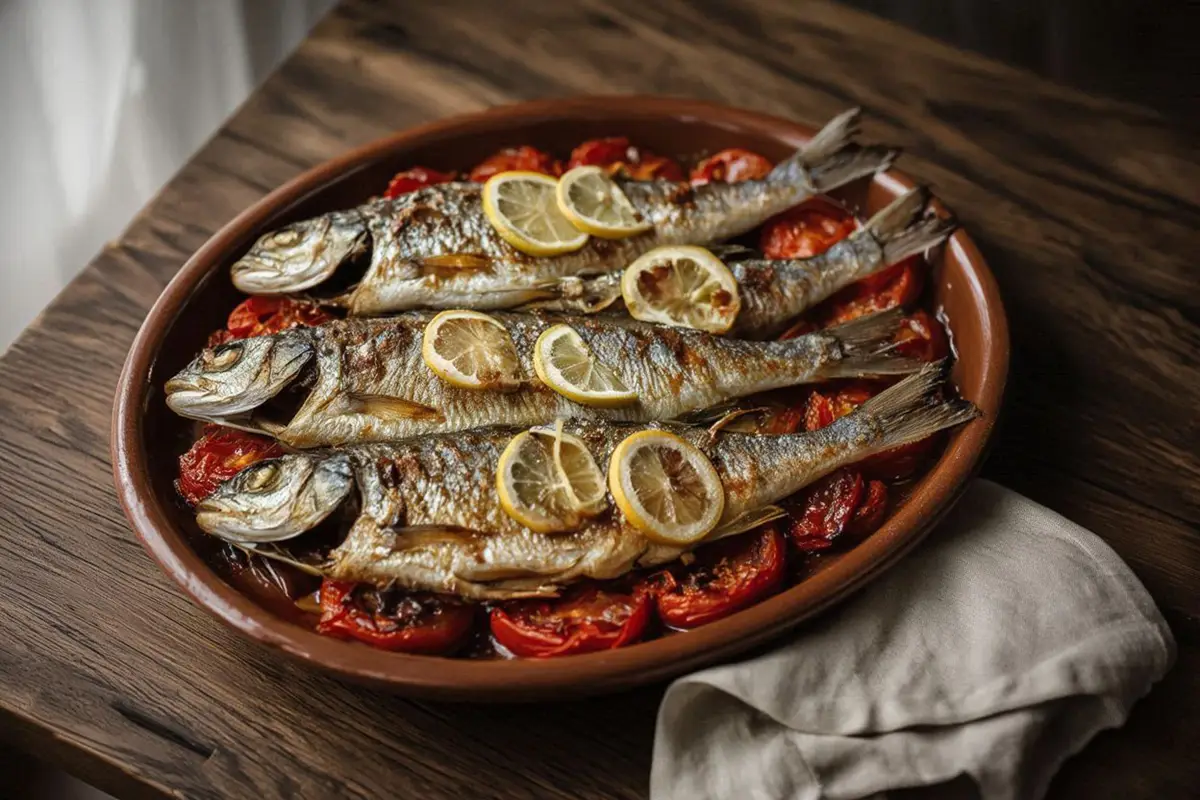
Baked Fish with Tomatoes
Whole fish baked over ripe tomatoes with generous olive oil and lemon — a simple, fragrant Central European oven dish.
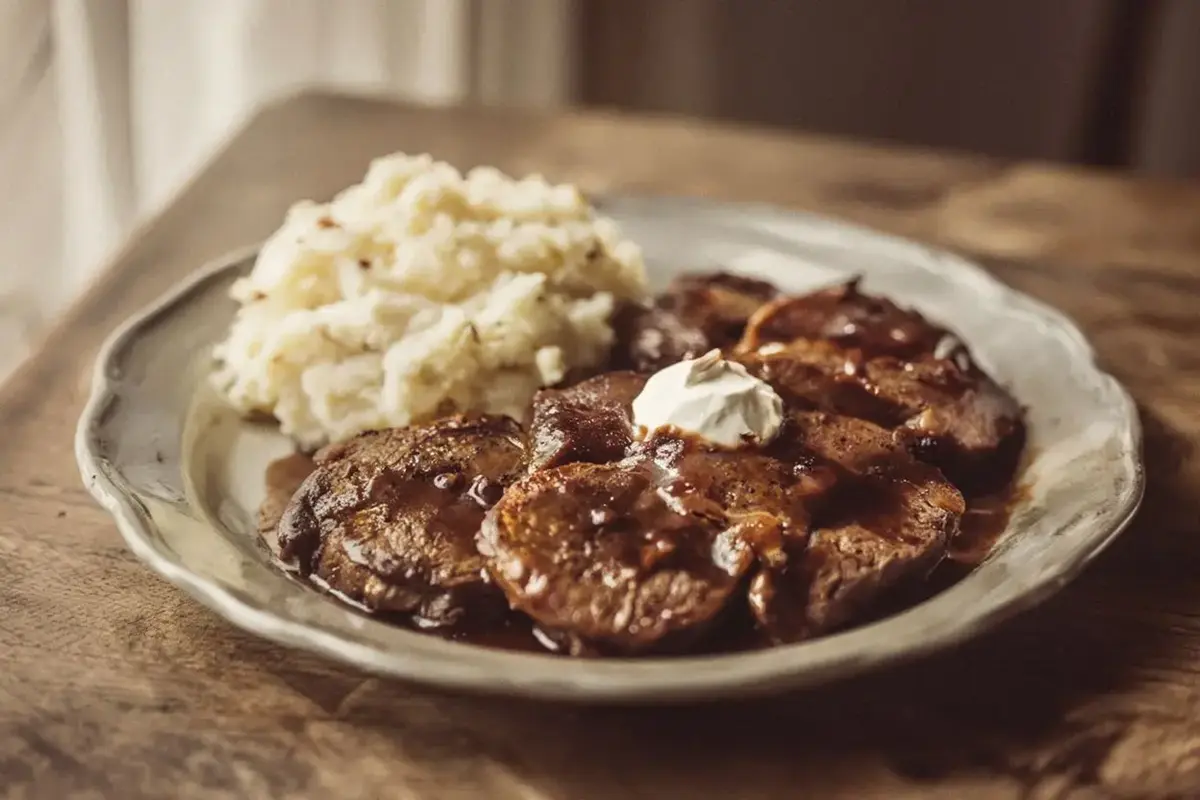
Beef Kidney with Wine
Beef kidney marinated in red wine, braised with herbs, finished with sour cream. Tender, rich, and deeply flavored.
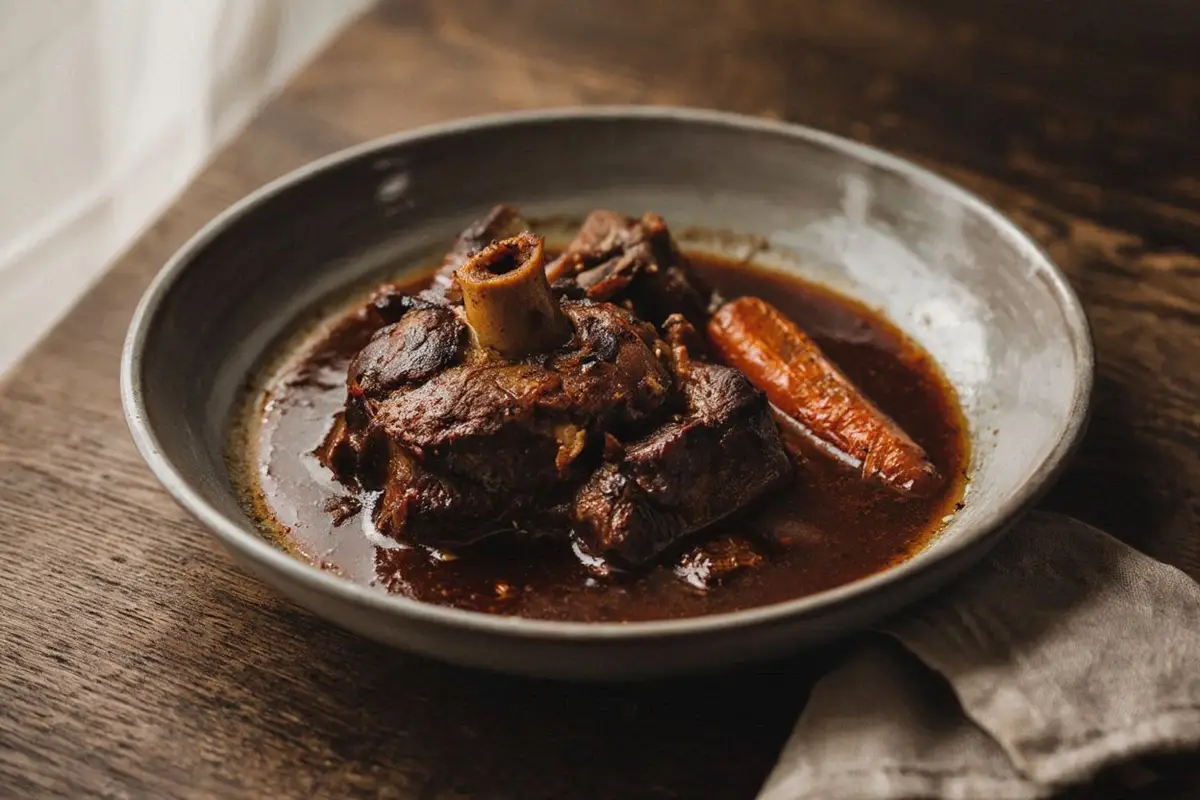
Beef Tail in Red Wine Sauce
Slow-braised oxtail in a rich red wine broth with carrots, lemon zest, and a silky roux-thickened sauce. A forgotten Central European classic.