Hunter's Schnitzels with Raw Onion
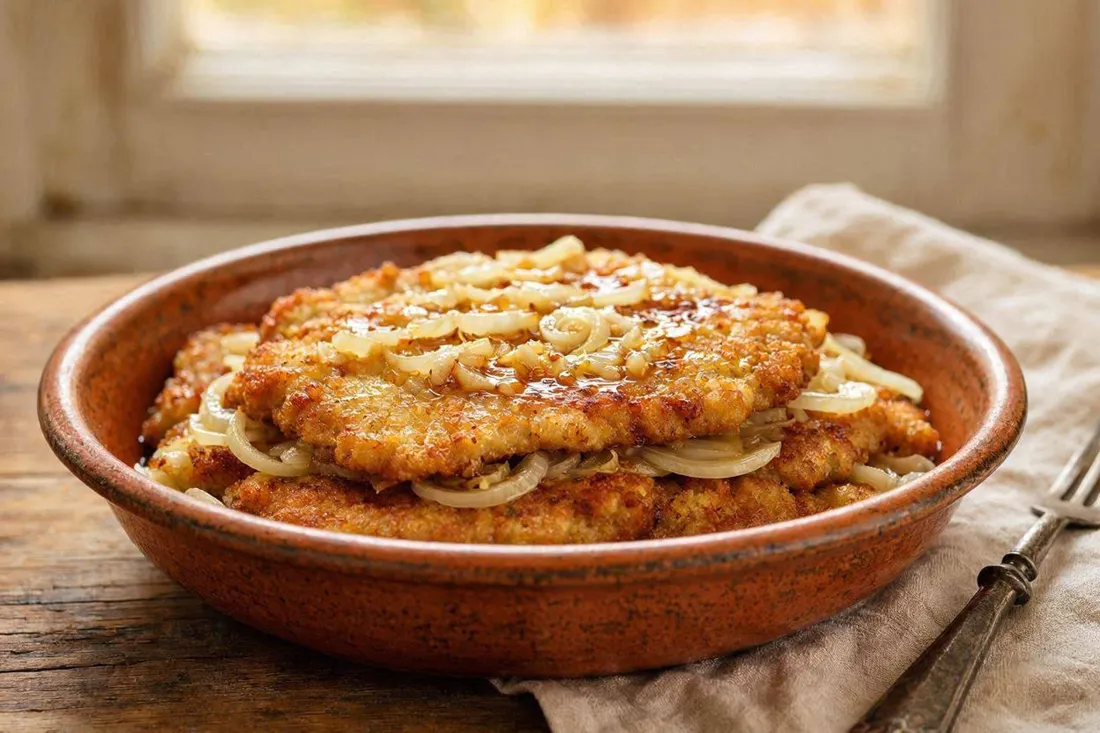
Fried schnitzels layered with raw sliced onion and doused in the frying fat, then rested covered so the onion wilts and infuses the meat.
Quick Summary
Beef or pork schnitzels, fried and layered with raw sliced onion, then doused in the same fat they were fried in and rested covered for 10 minutes so the onion wilts and takes on flavor. About 50 minutes active time. Served straight from the dish it rests in.
Historical recipe
Modernised adaptation of an early 20th‑century source. Not independently kitchen-tested by Attic Recipes. Quantities, temperatures, and food safety guidance have been updated for a contemporary kitchen — results may vary and errors may exist. Nutritional values, where provided, are estimates only and have not been laboratory tested. Always follow current food safety guidelines for your region. If you have a health condition, allergy, or dietary requirement, consult a qualified professional before preparing this recipe.
Use of this recipe is entirely at your own risk and subject to our Terms of Service and Privacy Policy. Attic Recipes accepts no liability for any adverse outcome.
Additional notes
-
Warning
Frying in hot fat can cause splattering and burns. Keep a safe distance from the pan and use a splatter guard if available.
-
Caution
Make sure the schnitzels are fully cooked through, with no pink remaining, before layering them into the dish.
-
Note
This dish is very high in saturated fat per serving, since the fat used for frying is poured over and eaten with the finished dish rather than left in the pan — worth keeping in mind if you're managing saturated fat intake.
- 1
Cut the meat into thin schnitzels and pound to an even thickness. Season with the salt for the meat and let rest at room temperature for about 20 minutes.
- 2
Peel and finely slice the onion, the same way you would for a paprikash. Season with the salt and pepper for the onion. Do not cook the onion — it stays raw at this stage.
- 3
Heat plenty of lard or oil in a pan until quite hot, around 170-180°C (340-350°F).
Tip Frying in hot fat can splatter — keep a safe distance and use a splatter guard if you have one. - 4
Fry the schnitzels in the hot fat until golden and cooked through, working in batches if needed so the pan isn't crowded. Remove with a slotted spatula and set aside, reserving the frying fat.
Tip Check that the meat is fully cooked through with no pink remaining before removing it from the fat. - 5
In a deep dish, layer a row of the raw sliced onion, then a row of fried schnitzels on top. Repeat, alternating onion and schnitzels, until everything is used, finishing with a top layer of onion.
- 6
Pour the reserved frying fat evenly over the layered dish.
- 7
Cover the dish and let it sit at the edge of the stove, off direct heat, for 10 minutes. This keeps the schnitzels warm and lets the onion wilt slightly and take on flavor from the hot fat, without being separately cooked.
- 8
Bring the dish to the table as is and serve directly from it.
Nutrition Information per 1 portion (approx 440g)
Nutritional values are approximate estimates and may vary based on specific ingredients used, preparation methods, and portion sizes.
Serving Suggestions
Serve straight from the dish it rested in, with crusty bread or boiled potatoes.
About This Recipe
This is a schnitzel dish built on a small trick: the onion never touches the pan. It’s sliced raw, layered with the freshly fried meat, and then doused in the very fat the schnitzels cooked in. A short covered rest off the heat does the rest — the onion softens just enough and takes on a rich, savory perfume from the hot fat, while the meat stays warm without drying out under a second round of cooking.
It’s a dish meant to travel straight from stovetop to table in the same vessel, no plating required.
Why It Works
Keeping the onion raw and relying on residual heat, rather than sautéing it separately, means it stays sharp and a little crisp at the edges rather than turning fully soft — a different texture than a cooked onion topping. Pouring the frying fat over the layered dish and covering it traps just enough heat and moisture to gently wilt the onion from the outside in, while keeping the schnitzels from cooling off before serving.
Modern Kitchen Tips
Don’t skip the resting step — it’s doing real work here, not just keeping things warm. If you’d rather not pour all the frying fat over the dish, a partial pour still gives the onion plenty of flavor with a lighter result.
A classic of early 20th century home cooking, preserved and adapted for the modern kitchen.
The Story Behind This Recipe
Historical Context
Home cooks of the period made this dish with either beef or pork, whichever was on hand, and used a generous number of onion heads left raw rather than cooked. The technique relied on the residual heat of the frying fat, poured over the layered dish and left covered for a short rest, to soften the onion just enough and let it perfume the meat — rather than sautéing the onion separately.
Modern Kitchen Adaptation
The resting time for the salted meat, the salt and pepper quantities for the onion, the amount of frying fat, and the frying temperature were not specified in the traditional method and have been estimated for a standard four-portion recipe. Because the reserved frying fat is poured directly over the finished dish and eaten with it, this is a rich preparation; for a lighter version, some of the frying fat can be left in the pan rather than poured over in full, though this changes the original technique.
This recipe is an independent modern adaptation developed from historical sources in the public domain. It is provided for informational and educational purposes only and does not constitute professional dietary, nutritional, or medical advice. Food preparation involves inherent risks. The reader assumes full responsibility for safe food handling, ingredient sourcing, and adherence to current local food safety guidelines. The site operator accepts no liability for outcomes resulting from the preparation or consumption of this recipe.
One recipe.
Every week.
You Might Also Like
More recipes you'll enjoy
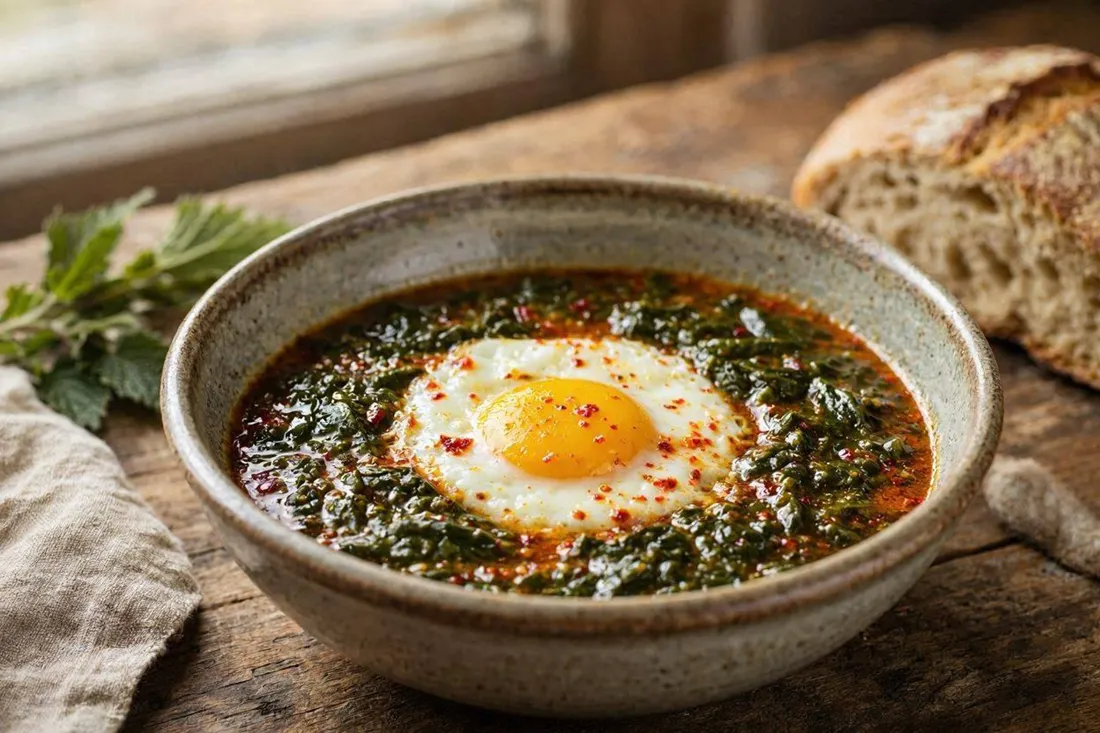
Nettle Stew with Cheese and Eggs
Young nettles simmered into a paprika roux, enriched with aged cheese and eggs, served with a fried egg on top.
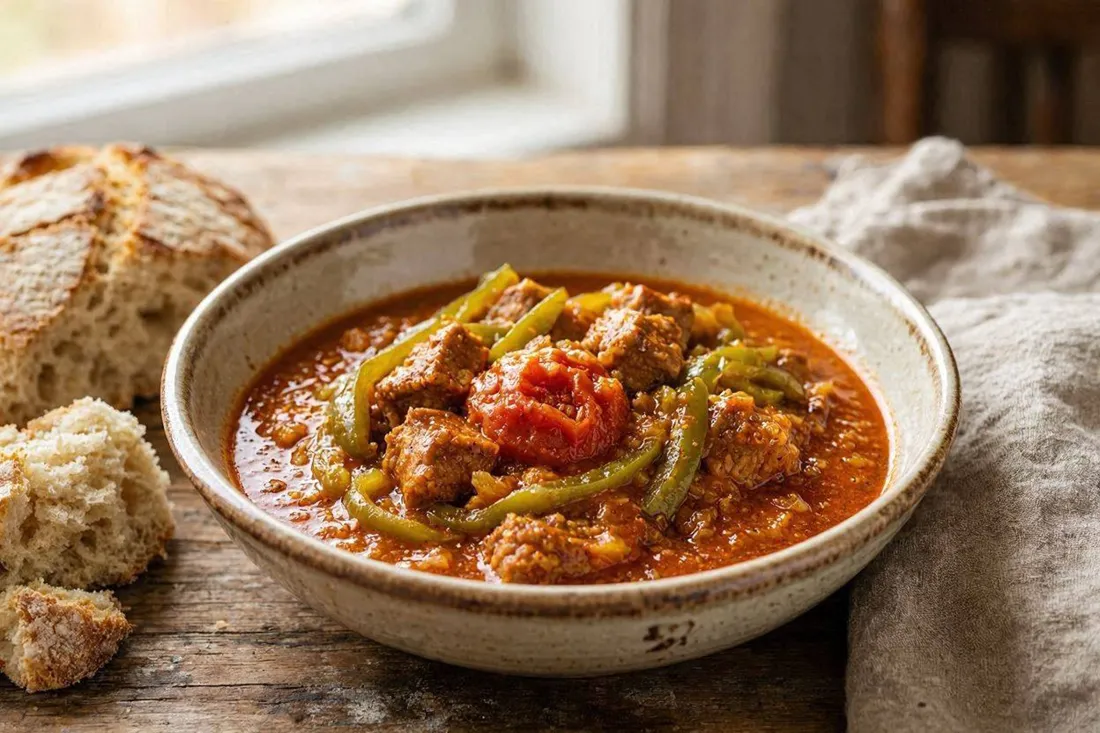
Quick Pork Paprikash
Cubed pork simmered with onion, peppers, and tomato until the liquid reduces, finished with a generous hit of paprika. Quick and simple.
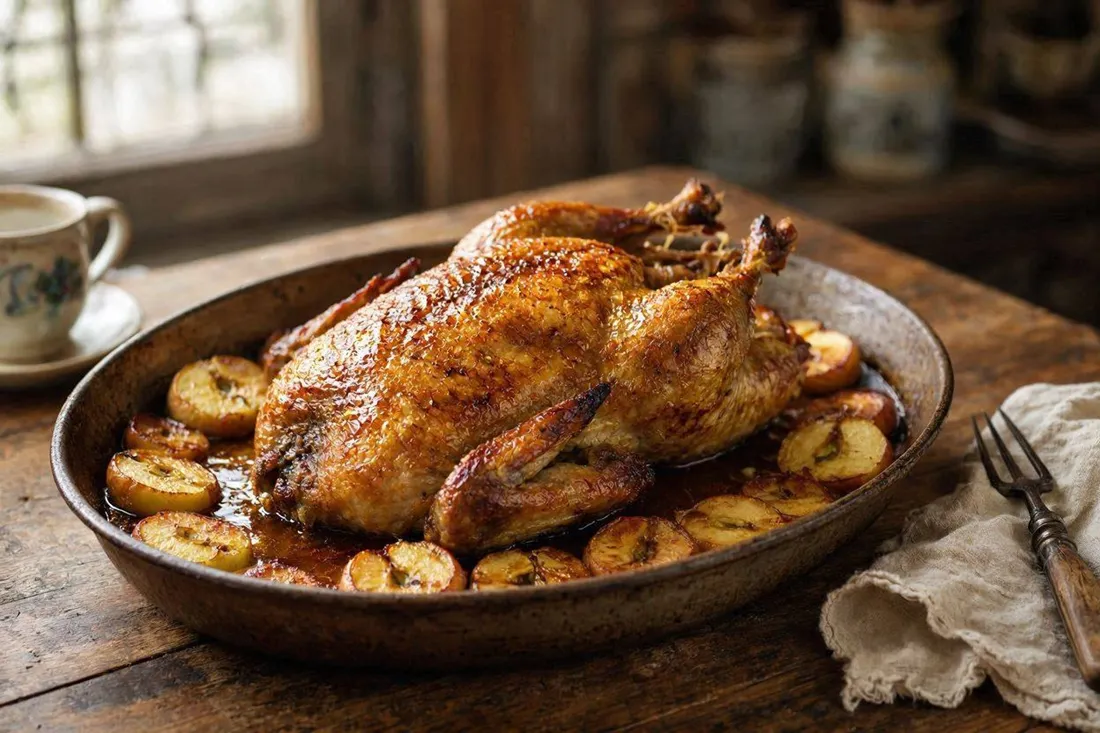
Roast Goose with Apples
A whole goose stuffed with tart apples and surrounded by more apples in the pan, roasted slowly and basted with pan juices until golden.