Nettle Stew with Cheese and Eggs
Young nettles simmered into a paprika roux, enriched with aged cheese and eggs, served with a fried egg on top.
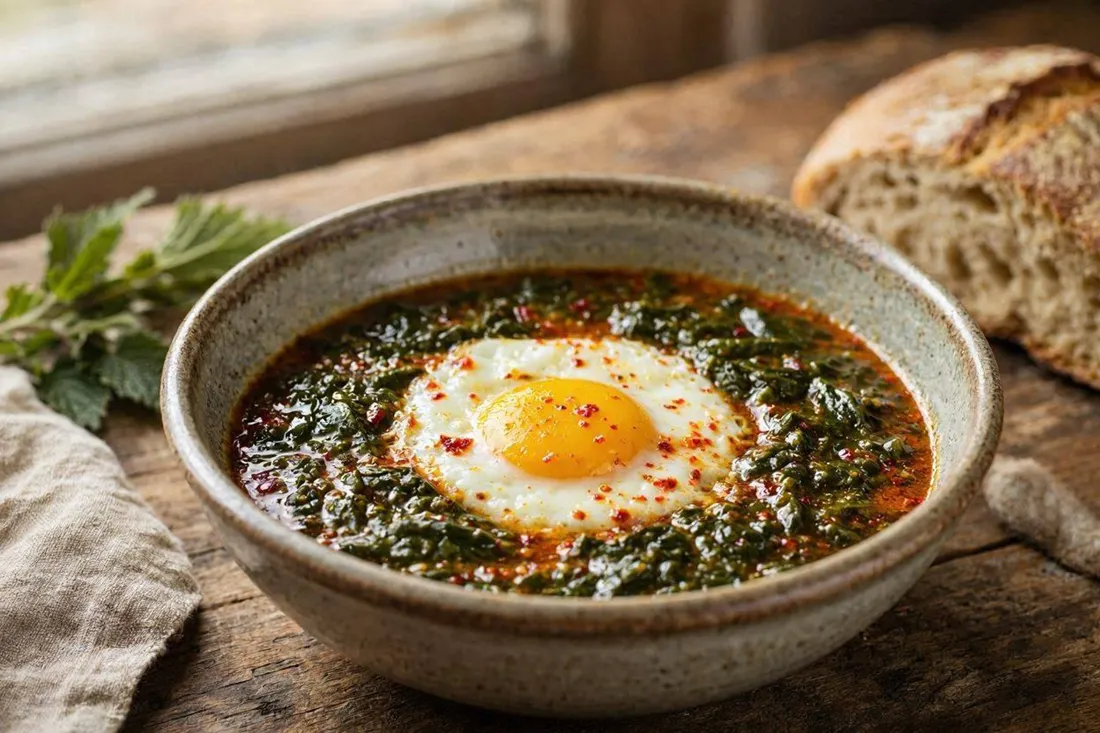
Quick Summary
A rustic stew of young nettles cooked down, folded into a paprika roux, and enriched with aged cheese and beaten eggs, traditionally served with a fried egg on top. About 85 minutes total. A substantial, savory main course rooted in spring foraging traditions.
Historical recipe
Modernised adaptation of an early 20th‑century source. Not independently kitchen-tested by Attic Recipes. Quantities, temperatures, and food safety guidance have been updated for a contemporary kitchen — results may vary and errors may exist. Nutritional values, where provided, are estimates only and have not been laboratory tested. Always follow current food safety guidelines for your region. If you have a health condition, allergy, or dietary requirement, consult a qualified professional before preparing this recipe.
Use of this recipe is entirely at your own risk and subject to our Terms of Service and Privacy Policy. Attic Recipes accepts no liability for any adverse outcome.
- Eggs
- Dairy
- Gluten
Additional notes
-
Caution
Fresh nettles have stinging hairs on the leaves and stems. Handle raw, uncooked nettles with gloves — cooking neutralizes the sting completely.
-
Warning
This stew is enriched with a raw egg and cheese mixture that is cooked into the hot liquid. The mixture must reach at least 74°C (165°F) to be safe, especially for pregnant women, young children, the elderly, and anyone immunocompromised.
Always temper the egg mixture with hot liquid before adding it to the pot, and confirm the stew has returned to a simmer before serving.
-
Warning
The fried egg served on top is traditionally left soft. Soft or runny egg yolks carry a higher risk of foodborne illness for pregnant women, young children, the elderly, and anyone immunocompromised.
For sensitive groups, fry the egg until the yolk is fully set rather than soft.
-
Note
This dish is higher in saturated fat per serving due to the lard, aged cheese, and eggs — worth keeping in mind if you're watching saturated fat intake.
- 1
Clean the nettles of their stems, the same way you would clean spinach. Wash them through several changes of water.
Tip Wear gloves when handling raw nettles — they sting until cooked. Once boiled, they are completely safe to handle and eat. - 2
Put the nettles in a pot with the 2L water, add the salt, and bring to a boil. Cook for 30 minutes.
- 3
Remove the boiled nettles from the pot, draining them but not pressing or mashing them. Reserve the cooking liquid. Finely chop the nettles with a knife, or purée them.
- 4
In a separate pot, melt the lard over medium heat. Add the finely chopped onion and sauté until about half-softened.
Tip Watch the onion closely — it should soften but not brown before the flour goes in. - 5
Add the flour to the onion and cook, stirring, until the onion is fully softened and the roux is lightly golden.
- 6
Remove from the heat briefly and stir in the paprika, then add the chopped nettles. Return to low heat and cook slowly for 15 minutes, stirring occasionally so the roux doesn't catch.
- 7
Pour in the reserved nettle cooking liquid. Season with the second addition of salt and the black pepper. Continue simmering for about 10 minutes to let the flavors combine.
- 8
In a bowl, mash or purée the aged cheese until smooth. Beat in the eggs until well combined.
Tip Temper the mixture before adding it to the pot: stir in a ladleful of the hot stew liquid first, then pour the tempered mixture back into the pot. This prevents the eggs from scrambling. - 9
Stir the tempered cheese and egg mixture into the stew. Simmer for 5 minutes, until the eggs are fully set and the stew has thickened slightly. Do not boil hard, or the mixture may separate.
Tip The stew should reach at least 74°C (165°F) at this stage to ensure the eggs are safely cooked through. - 10
Just before serving, fry the eggs for topping — one per portion — in a separate pan.
- 11
Ladle the stew into bowls and top each portion with a fried egg.
Nutrition Information per 1 portion (approx 540g, including fried egg)
Nutritional values are approximate estimates and may vary based on specific ingredients used, preparation methods, and portion sizes.
Serving Suggestions
Serve hot, straight from the pot, with a slice of crusty bread. The fried egg on top is traditional and adds richness — break the yolk into the stew just before eating.
About This Recipe
This is a stew built around one of the earliest signs of spring: young stinging nettles, gathered before they toughen and before most garden vegetables have caught up. The technique is simple but layered — the nettles are boiled first, then finely chopped and slow-cooked into a paprika roux, and finally enriched with a mixture of aged cheese and beaten eggs that thickens the whole pot into something closer to a savory custard-stew hybrid.
Topping it with a fried egg is what turns this from a side dish into a full, satisfying main course — a practical way early 20th century households made a foraged green stretch into a real meal.
Why It Works
Boiling the nettles first neutralizes their sting completely and softens them enough to chop or purée. Cooking the chopped nettles slowly into the roux — rather than just stirring them in at the end — lets the paprika and onion flavor fully penetrate the greens before the liquid goes back in. The cheese and egg mixture, added last and tempered carefully, thickens the stew gently without needing more flour, and adds the protein that makes this a main course rather than a side.
Modern Kitchen Tips
Always handle raw nettles with gloves — the sting is real until they’re cooked, at which point they’re completely safe. When adding the cheese and egg mixture, take it slow: a ladleful of hot stew stirred into the eggs first (tempering) is what keeps the mixture silky instead of scrambled.
A classic of early 20th century home cooking, preserved and adapted for the modern kitchen.
The Story Behind This Recipe
Historical Context
Early 20th century recipes for this dish made use of young spring nettles, gathered and prepared much like spinach. Home cooks of the period thickened the stew with a paprika roux and enriched it with aged cheese and eggs — a way of stretching a foraged green into a filling, protein-rich main course. The traditional approach did not specify exact quantities for the salt, pepper, and paprika, leaving these to the cook's taste.
Modern Kitchen Adaptation
Quantities for the second salt addition, black pepper, paprika, and the fried eggs for serving were not precisely specified in the traditional method and have been estimated based on standard practice for a stew of this size. The cheese and egg mixture is tempered with hot stew liquid before being fully incorporated, and the stew is brought to at least 74°C after adding it — a food safety step to ensure the eggs are properly cooked, rather than left barely warmed through as older methods sometimes assumed. For pregnant women, young children, the elderly, or anyone immunocompromised, the fried egg served on top should be cooked until the yolk is fully set rather than left runny.
This recipe is an independent modern adaptation developed from historical sources in the public domain. It is provided for informational and educational purposes only and does not constitute professional dietary, nutritional, or medical advice. Food preparation involves inherent risks. The reader assumes full responsibility for safe food handling, ingredient sourcing, and adherence to current local food safety guidelines. The site operator accepts no liability for outcomes resulting from the preparation or consumption of this recipe.
One recipe.
Every week.
You Might Also Like
More recipes you'll enjoy
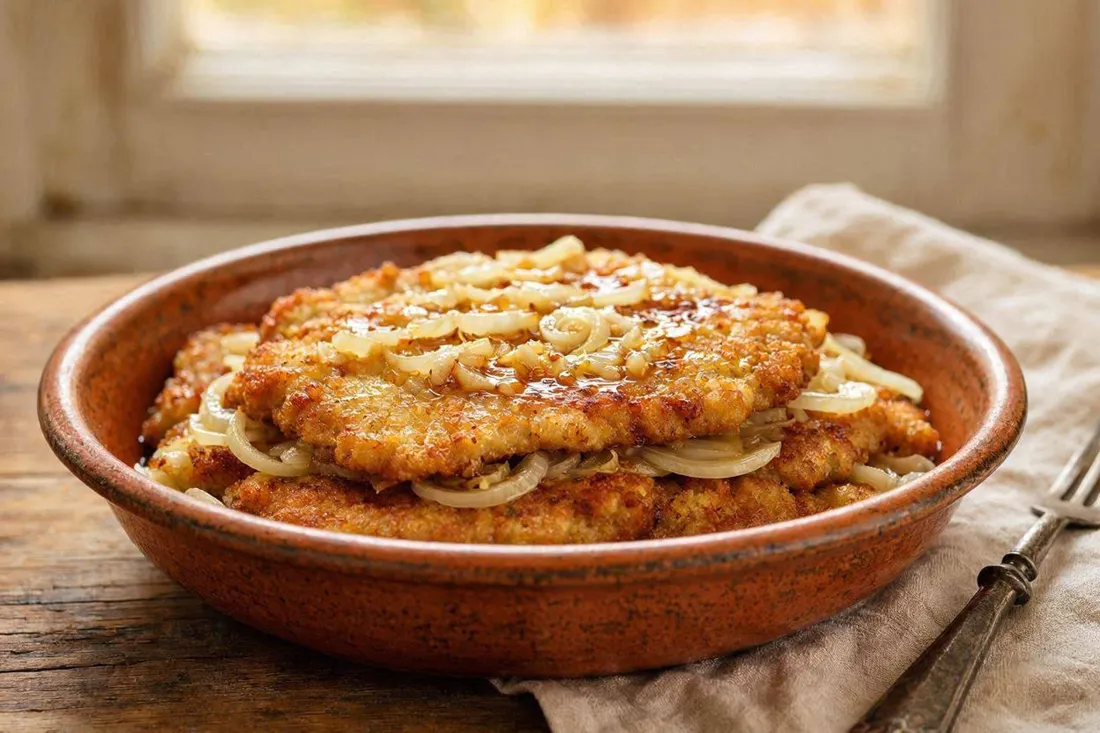
Hunter's Schnitzels with Raw Onion
Fried schnitzels layered with raw sliced onion and doused in the frying fat, then rested covered so the onion wilts and infuses the meat.
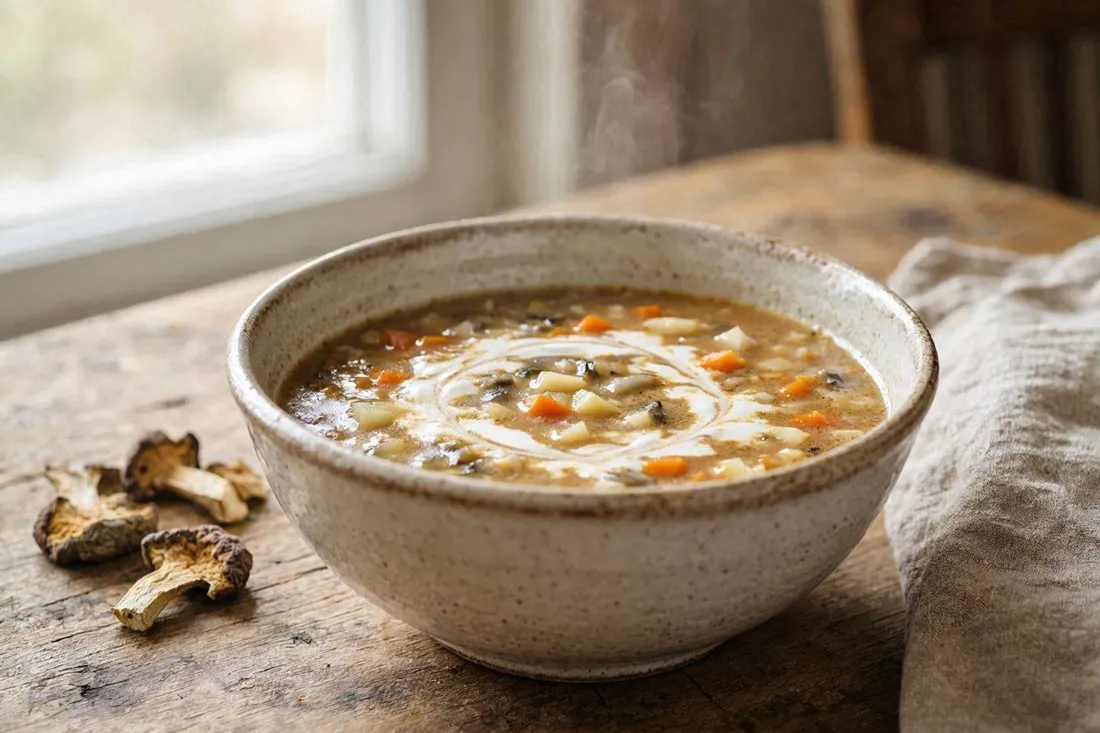
Mushroom Soup with Sour Cream
Dried mushrooms simmered with soup vegetables and finished with a sour cream and flour thickener — a simple, deeply flavored home-style soup.

Apple and Orange Bonbons
Grated tart apple cooked with sugar and orange until thick, mixed with sliced almonds, shaped into bonbons, and rolled in crystal sugar.