Roast Goose with Apples
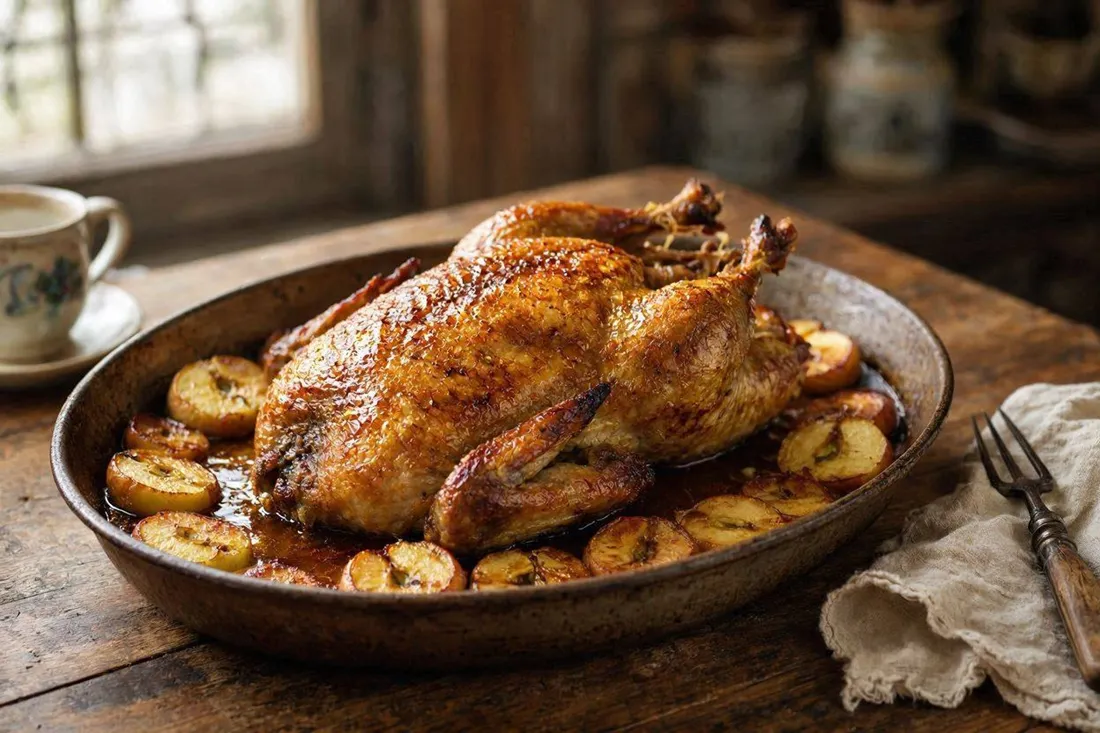
A whole goose stuffed with tart apples and surrounded by more apples in the pan, roasted slowly and basted with pan juices until golden.
Quick Summary
A whole goose, cavity stuffed with tart apples and more apples added to the pan partway through roasting, basted continuously with its own juices. About 4 hours total, mostly hands-off. A rich, festive roast traditionally brought whole to the table, apples and all.
Historical recipe
Modernised adaptation of an early 20th‑century source. Not independently kitchen-tested by Attic Recipes. Quantities, temperatures, and food safety guidance have been updated for a contemporary kitchen — results may vary and errors may exist. Nutritional values, where provided, are estimates only and have not been laboratory tested. Always follow current food safety guidelines for your region. If you have a health condition, allergy, or dietary requirement, consult a qualified professional before preparing this recipe.
Use of this recipe is entirely at your own risk and subject to our Terms of Service and Privacy Policy. Attic Recipes accepts no liability for any adverse outcome.
Additional notes
-
Warning
Goose, like all poultry, must reach a minimum internal temperature of 74°C (165°F) in the thickest part of the thigh, not touching bone, before serving.
-
Caution
Basting with hot rendered fat can cause splattering. Use a long-handled spoon or baster and keep a safe distance from the pan.
-
Note
This dish is very high in saturated fat and sodium per serving, due to the naturally fatty nature of goose and the amount of salt used on the skin and cavity — worth keeping in mind if you're managing intake of either.
- 1
Wash the goose well, inside and out, and pat it dry. Season the cavity and the skin generously with the salt.
- 2
Stuff the cavity, where the giblets were, with the washed apples for stuffing, left whole.
- 3
Rub the lard over the goose skin.
- 4
Place the goose in a roasting pan and roast in a preheated oven at the higher temperature for the first 20 minutes, to help the skin start browning.
- 5
Reduce the oven to the lower temperature. Continue roasting, basting the goose regularly with the juices it releases into the pan.
- 6
Once the goose has lightly browned, add the remaining apples to the pan, arranged one next to another around the goose. Continue roasting and basting both the goose and the apples with the pan juices.
Tip The apples added to the pan and inside the cavity are meant to roast whole and be brought to the table whole — choose apples small enough to hold their shape through the full roasting time. - 7
Continue roasting, basting every 20-30 minutes, until the skin is deeply golden and the thickest part of the thigh (not touching bone) reaches at least 74°C (165°F) — about 3 to 3.5 hours total roasting time for a 4kg goose.
Tip Watch for hot rendered fat when basting — it can splatter. Use a long-handled spoon or baster and keep a safe distance. - 8
Let the goose rest for 15-20 minutes before carving. Serve with the roasted apples alongside, and the apples from the cavity spooned out.
Nutrition Information per 1 portion (based on 7 servings from a 4kg goose)
Nutritional values are approximate estimates and may vary based on specific ingredients used, preparation methods, and portion sizes.
Serving Suggestions
Serve hot, carved at the table, with the roasted apples alongside. The dish can also be served cold, as noted in the traditional method.
About This Recipe
This is a whole roast built around one simple idea: let the goose’s own fat and juices do the work. The cavity gets stuffed with tart apples, more apples go into the pan partway through roasting, and the whole thing is basted again and again with the drippings until the skin turns deeply golden. The apples aren’t a garnish added at the end — they roast the entire time alongside the bird and come to the table whole, right in the pan.
The method translates directly to duck or other poultry, as noted in the original approach, making this less a single recipe than a technique for roasting a whole fatty bird with fruit.
Why It Works
Basting constantly with the goose’s own rendered fat and juices is what builds the deep color and flavor on the skin — goose renders an enormous amount of fat as it roasts, and that fat becomes the basting liquid instead of anything added separately. Choosing small, tart apples keeps them from collapsing into mush over the long roasting time; they hold their shape and pick up flavor from the same drippings basting the bird.
Modern Kitchen Tips
Start with the oven a bit hotter to kick off browning, then drop the temperature for the long stretch — goose has enough fat that a slow, steady roast renders it properly without drying out the meat. Keep a close eye on basting: the rendered fat gets very hot and can splatter.
A classic of early 20th century home cooking, preserved and adapted for the modern kitchen.
The Story Behind This Recipe
Historical Context
Home cooks of the period prepared goose this way for special occasions, stuffing the cavity with tart apples and adding more apples to the pan partway through roasting so they would roast whole and come to the table intact alongside the bird. The same method was used for duck or other poultry, and the finished dish could be served either hot or cold.
Modern Kitchen Adaptation
The goose weight, number of apples, salt, and roasting temperature and time were not specified in the traditional method and have been estimated for a standard 4kg goose. A two-stage oven temperature has been used: a brief higher heat at the start to help the skin brown, followed by a lower, steadier temperature for the long roast — a technique consistent with how a whole fatty bird like goose was likely roasted, even though the original only describes cooking until browned. The internal temperature target of 74°C (165°F) reflects modern poultry food safety guidance.
This recipe is an independent modern adaptation developed from historical sources in the public domain. It is provided for informational and educational purposes only and does not constitute professional dietary, nutritional, or medical advice. Food preparation involves inherent risks. The reader assumes full responsibility for safe food handling, ingredient sourcing, and adherence to current local food safety guidelines. The site operator accepts no liability for outcomes resulting from the preparation or consumption of this recipe.
One recipe.
Every week.
You Might Also Like
More recipes you'll enjoy
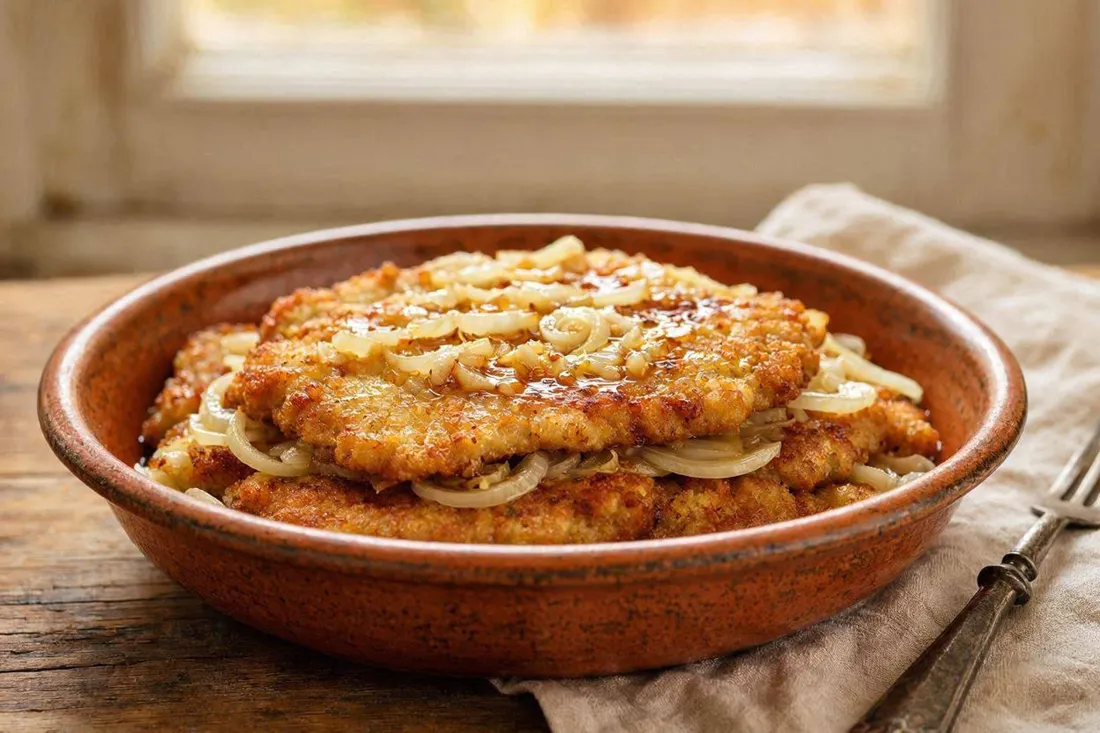
Hunter's Schnitzels with Raw Onion
Fried schnitzels layered with raw sliced onion and doused in the frying fat, then rested covered so the onion wilts and infuses the meat.
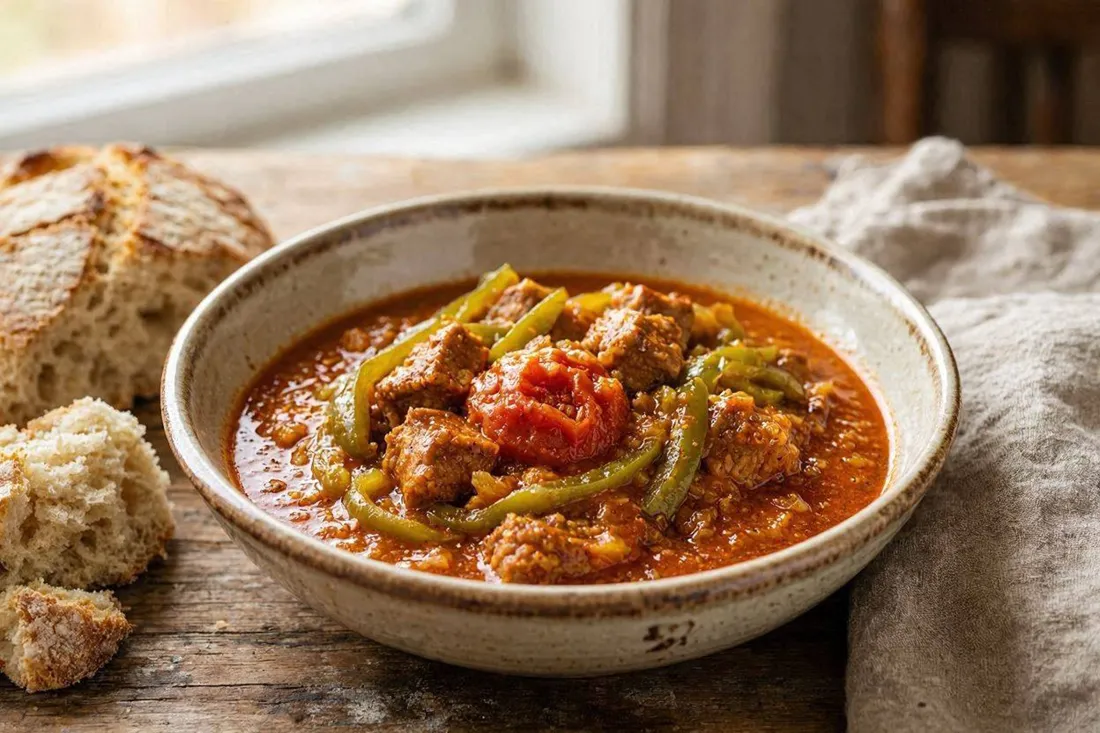
Quick Pork Paprikash
Cubed pork simmered with onion, peppers, and tomato until the liquid reduces, finished with a generous hit of paprika. Quick and simple.
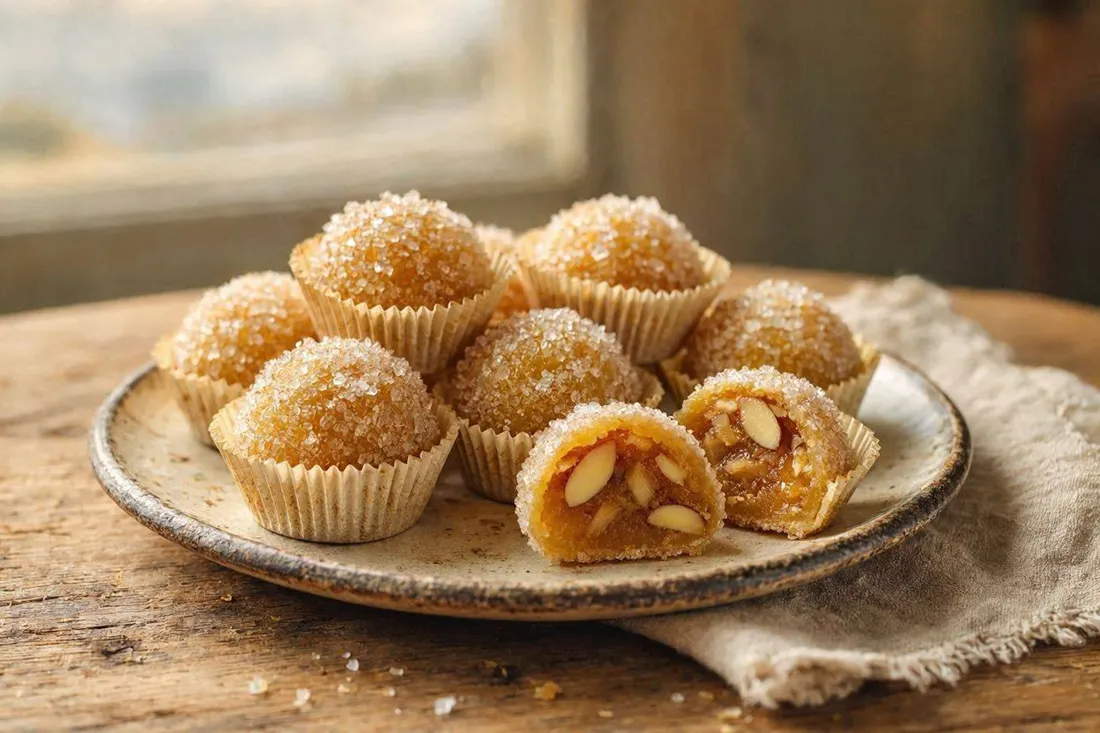
Apple and Orange Bonbons
Grated tart apple cooked with sugar and orange until thick, mixed with sliced almonds, shaped into bonbons, and rolled in crystal sugar.