Quick Pork Paprikash
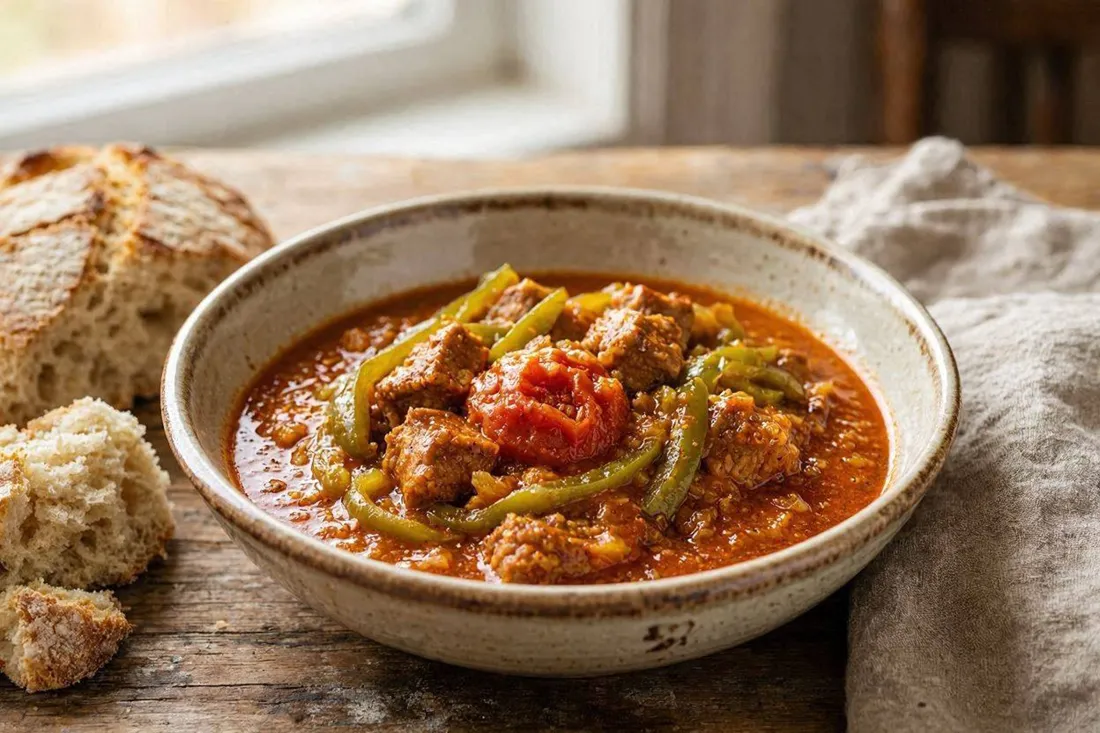
Cubed pork simmered with onion, peppers, and tomato until the liquid reduces, finished with a generous hit of paprika. Quick and simple.
Quick Summary
A fast, simple pork paprikash — cubed pork browned and simmered with onion, peppers, and tomato until the sauce reduces, finished with paprika. About an hour start to finish, with a summer version using fresh vegetables and a winter version using pickled ones.
Historical recipe
Modernised adaptation of an early 20th‑century source. Not independently kitchen-tested by Attic Recipes. Quantities, temperatures, and food safety guidance have been updated for a contemporary kitchen — results may vary and errors may exist. Nutritional values, where provided, are estimates only and have not been laboratory tested. Always follow current food safety guidelines for your region. If you have a health condition, allergy, or dietary requirement, consult a qualified professional before preparing this recipe.
Use of this recipe is entirely at your own risk and subject to our Terms of Service and Privacy Policy. Attic Recipes accepts no liability for any adverse outcome.
Additional notes
-
Caution
This dish uses cubed raw pork cooked in the pot with the vegetables. Make sure the pork is fully cooked through — no pink remaining, juices running clear — before serving.
- 1
Cut the pork into cubes. Heat the lard in a large heavy pot until well hot.
- 2
Add the pork and fry lightly, just until it starts to color on the outside.
- 3
Add the sliced onion on top of the meat and let it fry together with the pork, stirring occasionally.
- 4
Add the sliced peppers. Cook for 2-3 minutes.
- 5
Add the sliced tomato and the salt. Stir constantly from this point on so the dish doesn't catch or burn.
Tip This is a fairly dry-cooking method with little added liquid — frequent stirring matters more here than in a wetter stew. - 6
Continue cooking, uncovered, until there is no more visible liquid in the pot and the sauce has reduced down around the meat and vegetables — about 30-35 minutes total from when the tomato went in.
- 7
Once the liquid has cooked off, stir in the paprika and mix well. Cook a minute or two more, then serve immediately while hot.
- 8
Check that the pork is fully cooked through — no pink remaining and juices running clear — before serving.
Tip Because the meat is cut small and simmered for a while, it should be well past the safe point by the time the liquid has reduced, but always confirm doneness rather than going by time alone.
Nutrition Information per 1 portion (approx 400g)
Nutritional values are approximate estimates and may vary based on specific ingredients used, preparation methods, and portion sizes.
Serving Suggestions
Serve hot with crusty bread, or over boiled potatoes or egg noodles to soak up the concentrated sauce.
About This Recipe
This is a paprikash built for speed rather than for a long simmer. The meat is cut small, the vegetables go in almost immediately, and the whole thing cooks down fast, dry, and concentrated rather than stretching into a slow-braised stew. It’s the kind of dish designed to come together after a long day, using a modest amount of meat and whatever tomato and pepper the season offered.
The original recognized both a summer and a winter version of the same recipe — fresh tomato and pepper in warmer months, pickled versions from the pantry once the growing season ended — without changing the technique at all.
Why It Works
Cooking the sauce until nearly all the liquid has evaporated concentrates the flavor of the tomato, pepper, and onion around the meat instead of leaving them diluted in a thin broth. Adding the paprika only at the very end, once the pan is nearly dry, keeps its flavor and color bright rather than letting it cook out over a long simmer.
Modern Kitchen Tips
Keep the heat attentive once the tomato goes in — with so little liquid in the pot, this is closer to a reduction than a stew, and it can catch on the bottom if left unstirred for too long. If using the winter version with pickled tomato and peppers, taste before adding the full amount of salt, since pickled vegetables often carry salt of their own.
A classic of early 20th century home cooking, preserved and adapted for the modern kitchen.
The Story Behind This Recipe
Historical Context
Home cooks of the period made this dish with whatever tomato and pepper were on hand for the season: fresh in summer, and pickled or jarred in winter — the technique stayed the same either way. It was valued as a dish that came together quickly, used modest amounts of meat, and had a strong, concentrated flavor from cooking the sauce down until it was nearly dry rather than leaving it brothy.
Modern Kitchen Adaptation
The lard quantity was illegible on the original page and has been estimated based on comparable recipes of the same type. Salt was not specified and has been added at a standard seasoning level. This version uses fresh tomato and fresh green peppers as the primary ingredients, with the traditional winter substitution — pickled or jarred tomato and pickled sour peppers — noted as an alternative for cooler months. Either version works with the same method and timing.
This recipe is an independent modern adaptation developed from historical sources in the public domain. It is provided for informational and educational purposes only and does not constitute professional dietary, nutritional, or medical advice. Food preparation involves inherent risks. The reader assumes full responsibility for safe food handling, ingredient sourcing, and adherence to current local food safety guidelines. The site operator accepts no liability for outcomes resulting from the preparation or consumption of this recipe.
One recipe.
Every week.
You Might Also Like
More recipes you'll enjoy
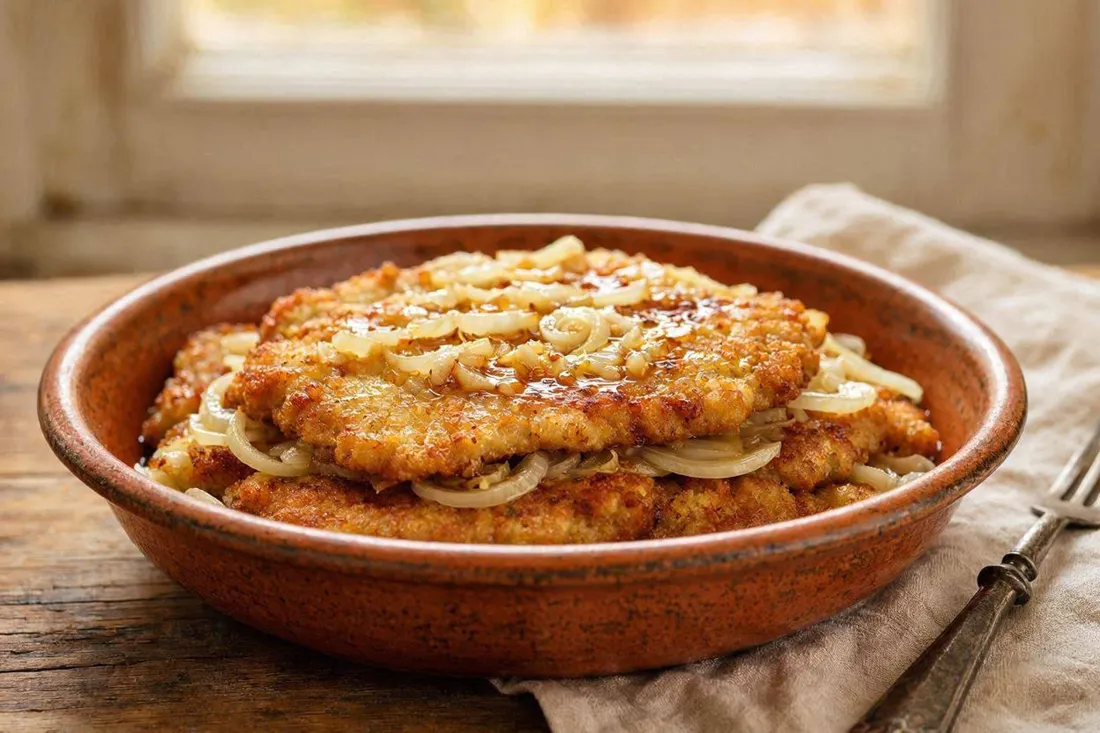
Hunter's Schnitzels with Raw Onion
Fried schnitzels layered with raw sliced onion and doused in the frying fat, then rested covered so the onion wilts and infuses the meat.
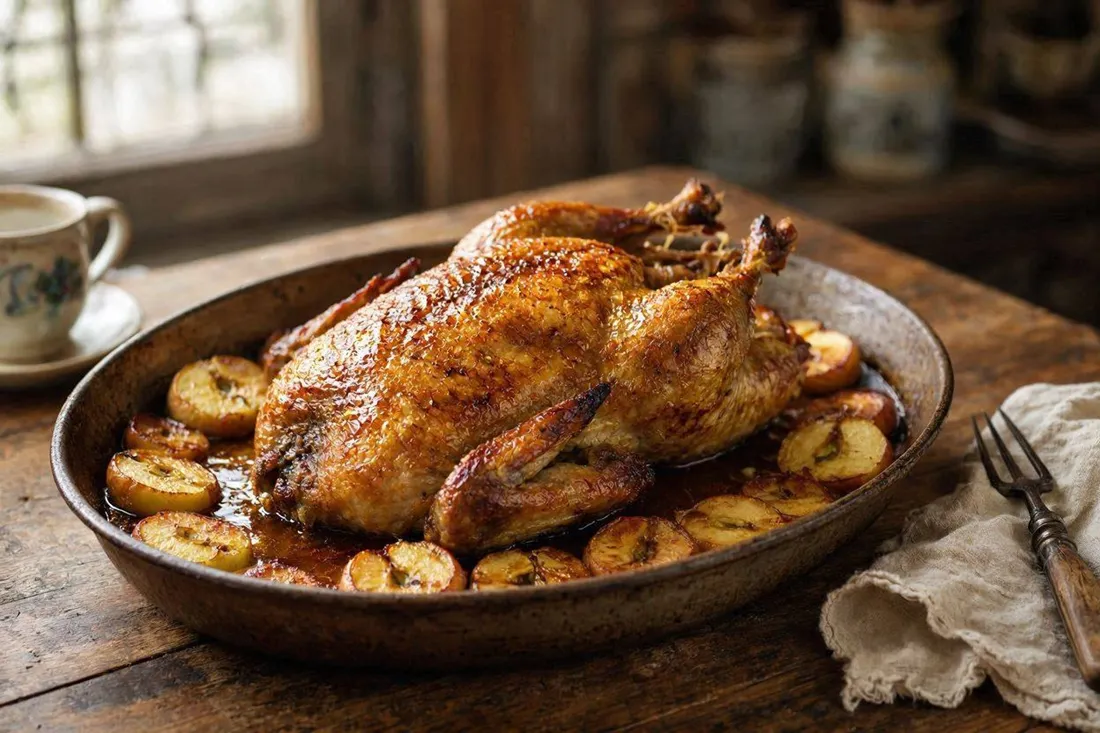
Roast Goose with Apples
A whole goose stuffed with tart apples and surrounded by more apples in the pan, roasted slowly and basted with pan juices until golden.
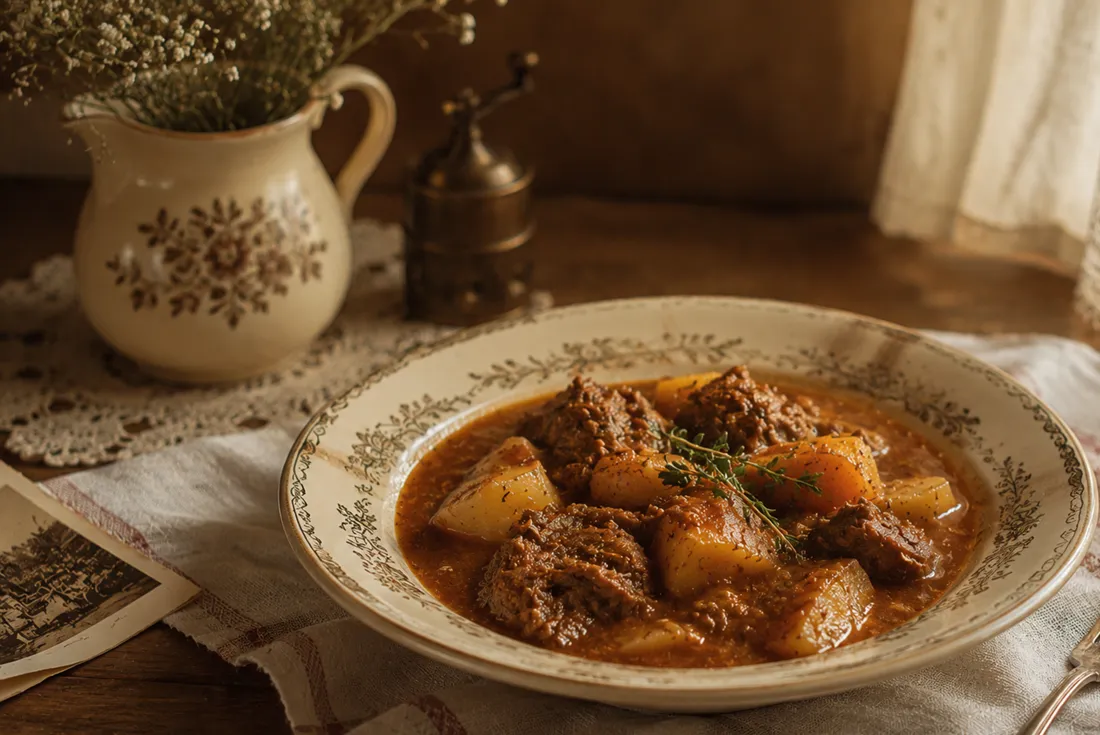
Mutton and Potato Stew
Mutton shoulder and breast seared in lard, thickened with a light roux, and simmered with potatoes, herbs, and bay leaf until tender and rich.