Veal and Parmesan Soup Quenelles (Minestra)
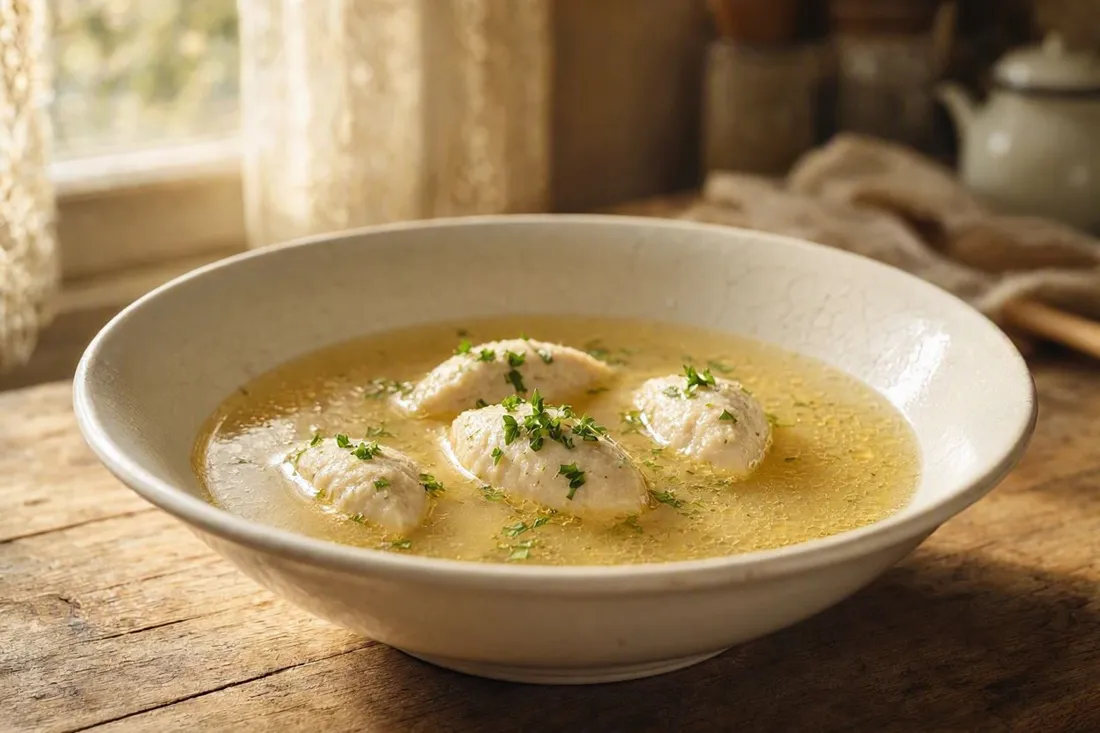
Finely puréed veal and ham, enriched with Parmesan and a soft bread paste, formed into small dumplings and poached in hot broth for an elegant soup course.
Quick Summary
Lean veal and ham are minced, pounded, and pushed through a sieve into a silky purée, then mixed with egg, Parmesan, and a soft bread paste. Small quenelles of this mixture are poached directly in hot broth, making a refined, Italian-influenced soup course.
Historical recipe
Modernised adaptation of an early 20th‑century source. Not independently kitchen-tested by Attic Recipes. Quantities, temperatures, and food safety guidance have been updated for a contemporary kitchen — results may vary and errors may exist. Nutritional values, where provided, are estimates only and have not been laboratory tested. Always follow current food safety guidelines for your region. If you have a health condition, allergy, or dietary requirement, consult a qualified professional before preparing this recipe.
Use of this recipe is entirely at your own risk and subject to our Terms of Service and Privacy Policy. Attic Recipes accepts no liability for any adverse outcome.
- Eggs
- Dairy
- Gluten
Additional notes
-
Warning
The quenelle mixture contains raw egg mixed into ground meat. Ensure each quenelle is fully cooked - opaque throughout, floating, and reaching at least 71°C (160°F) at the center - particularly important for pregnant women, young children, older adults, and immunocompromised individuals.
- 1
Finely chop the veal and ham together, first with a knife and then with a cleaver, until very finely minced.
- 2
Pound the minced mixture in a mortar, then pass it through a fine sieve to purée it completely.
Tip This step is what gives the finished quenelles their smooth, delicate texture - don't skip the sieving. - 3
Make the bread paste: soak the bread crumb in the water, then mash it together with the butter until smooth.
- 4
Combine the puréed meat with the egg, the bread paste, the grated Parmesan, and the salt into a smooth, well-mixed batter.
- 5
Bring the broth to a rolling boil.
- 6
Using a spoon, drop small dumplings (quenelles) of the meat mixture into the boiling broth.
- 7
Simmer gently until the quenelles are cooked through and rise to the surface, about 5 to 8 minutes.
Tip Cut one open to check - it should be opaque throughout with no pink remaining, and should reach at least 71°C (160°F) at the center. - 8
For a larger, 12-serving version: dice slightly stale white bread into small cubes and fry quickly in plenty of butter or lard until golden, just before serving.
- 9
For the larger version, place the fried bread cubes into the serving tureen and ladle the finished quenelle soup over them just before bringing it to the table.
Nutrition Information per 1 serving (approx 350ml with broth)
Nutritional values are approximate estimates and may vary based on specific ingredients used, preparation methods, and portion sizes.
Serving Suggestions
Serve hot, straight from the pot, as an elegant first course. For a larger gathering, follow the bread-cube variation described above to stretch the same batch of quenelles to serve up to 12.
About This Recipe
These small quenelles turn ordinary veal and ham into something far more refined than a simple meatball - pounded, sieved, and enriched with Parmesan and a soft bread paste until the mixture is silky rather than coarse. Poached directly in hot broth, they cook through in minutes and rise to the surface when ready, making them one of the quicker special-occasion soup courses in this collection despite the careful prep work behind them.
The dish also comes with a built-in way to stretch it: rather than doubling the meat to serve more people, the original method calls for frying small cubes of slightly stale bread and pouring the same batch of quenelle soup over them in the serving tureen - a practical trick for turning a dish meant for four or five into one that can serve a dozen.
Why It Works
Pounding the meat and pushing it through a sieve breaks down the muscle fibers far more thoroughly than simple chopping, which is what gives quenelles their characteristically smooth, almost mousse-like texture rather than a coarse, meatball-like bite. The bread paste and egg both help bind the purée and keep it tender once poached, while the Parmesan adds savoriness without needing much additional salt. Poaching gently in already-boiling broth, rather than starting the quenelles in cold liquid, is what lets them hold their shape as they firm up.
Modern Kitchen Tips
Two spoons dipped in the hot broth make quick, neat quenelles - scoop with one spoon and shape with the other as you drop each dumpling in. If you’re making the 12-serving version, fry the bread cubes at the very last minute so they stay crisp under the hot broth rather than going soft while you wait to serve.
A classic of early 20th century home cooking, preserved and adapted for the modern kitchen.
The Story Behind This Recipe
Historical Context
This dish reflects Italian culinary influence on Central European kitchens of the period - the technique of pounding and sieving meat into a fine purée, enriched with Parmesan, and poaching it as delicate dumplings in broth, was a refined touch borrowed from Italian cooking and adapted into the home kitchen repertoire. Stretching a small batch of quenelles to serve more people by adding fried bread cubes to the tureen was a practical way to extend a special-occasion dish without needing more meat.
Modern Kitchen Adaptation
The bread paste proportions and the salt quantity were not given precisely in the original and have been estimated here, along with the broth quantity and the bread cube quantity for the 12-serving variation. Fatty ham can be substituted with pancetta or a thick-cut bacon if that's more readily available. Because the quenelle mixture contains raw egg, make sure each dumpling is fully cooked through - opaque with no pink remaining, and at least 71°C (160°F) at the center - before serving.
This recipe is an independent modern adaptation developed from historical sources in the public domain. It is provided for informational and educational purposes only and does not constitute professional dietary, nutritional, or medical advice. Food preparation involves inherent risks. The reader assumes full responsibility for safe food handling, ingredient sourcing, and adherence to current local food safety guidelines. The site operator accepts no liability for outcomes resulting from the preparation or consumption of this recipe.
One recipe.
Every week.
You Might Also Like
More recipes you'll enjoy
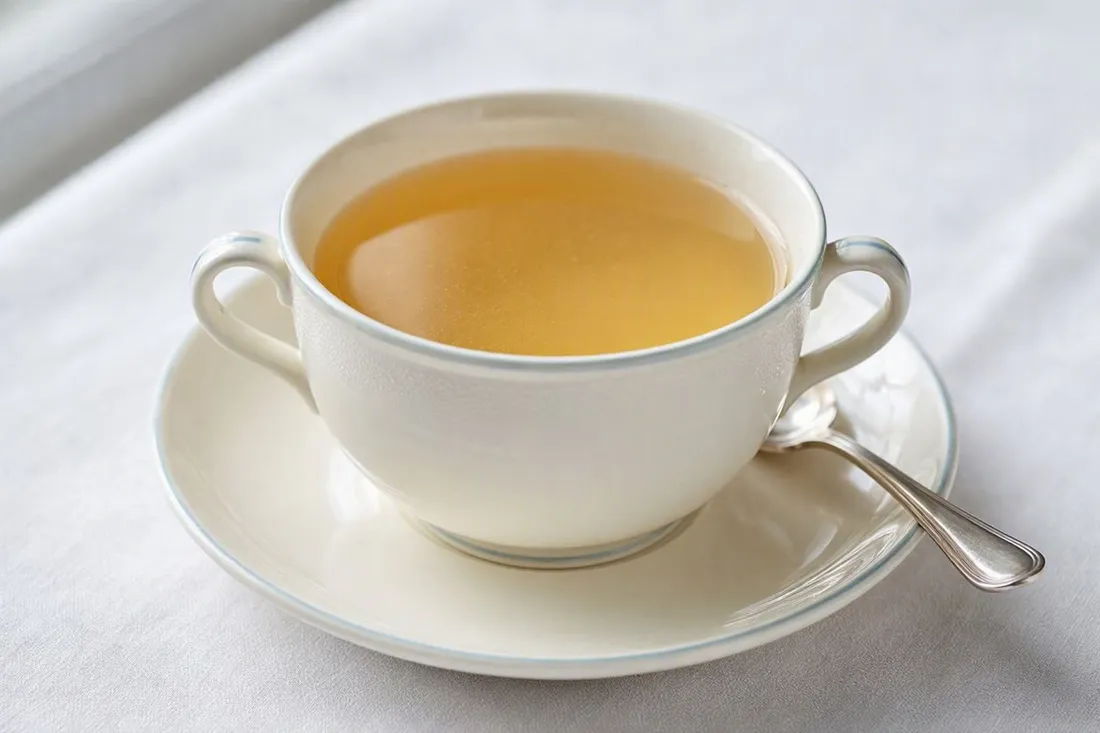
Cold Beef Consommé
A fully clarified beef and chicken broth, simmered for hours and clarified with egg whites, then served ice-cold in cups without any garnish.
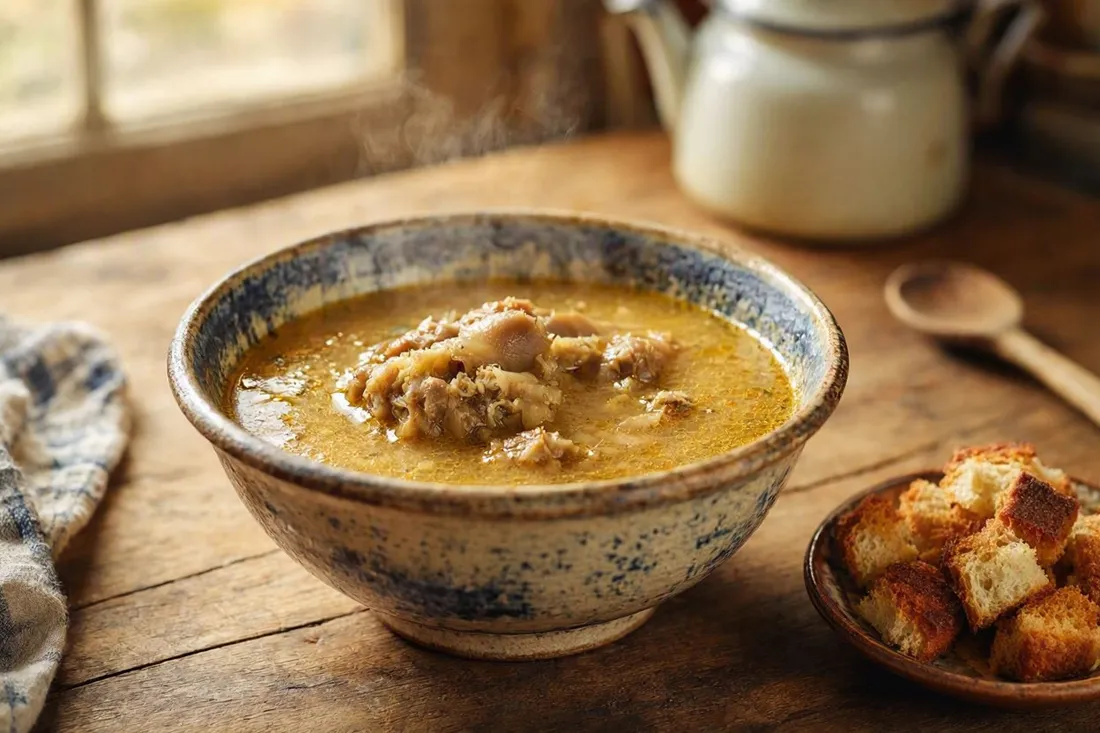
Veal Trotter Soup with Egg and Vinegar Finish
A rich, collagen-thickened soup made from slow-simmered veal trotters, finished with a tangy egg and wine vinegar mixture and served with toasted bread cubes.
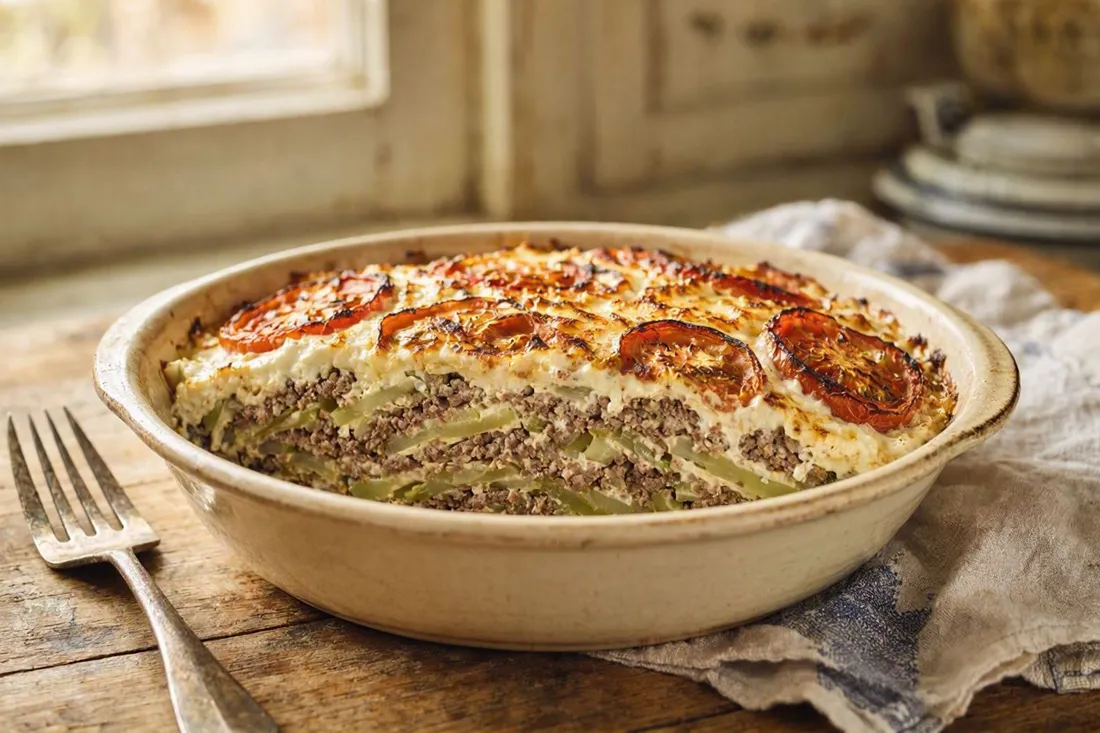
Kohlrabi and Veal Musaka
A layered casserole of braised kohlrabi and seasoned ground veal, baked under sour cream and tomato - a comforting vintage Central European dish.