Veal Trotter Soup with Egg and Vinegar Finish
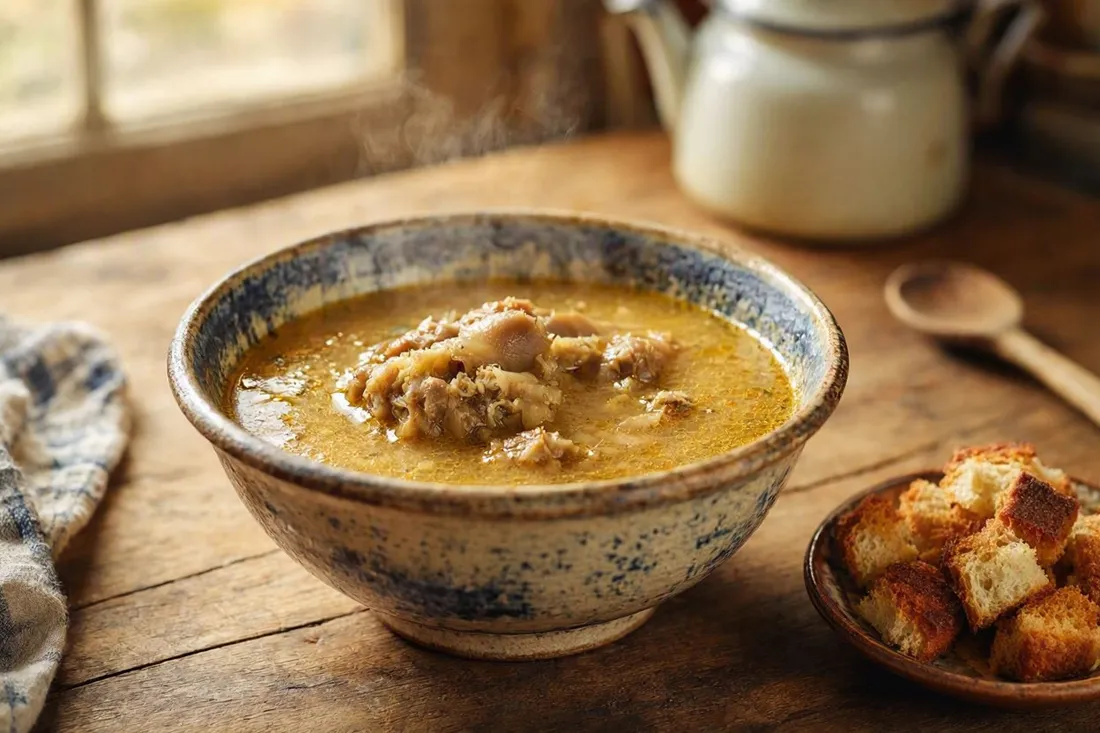
A rich, collagen-thickened soup made from slow-simmered veal trotters, finished with a tangy egg and wine vinegar mixture and served with toasted bread cubes.
Quick Summary
Veal trotters are simmered until tender, then their meat is stirred into a paprika-flecked roux made from the same cooking broth. Finished off the heat with egg and wine vinegar for a rich, tangy edge, this hearty soup is served with toasted bread cubes.
This recipe uses How Veal Was Divided: A Guide to Traditional Butchery Cuts — prepare it in advance if you haven't already.
Historical recipe
Modernised adaptation of an early 20th‑century source. Not independently kitchen-tested by Attic Recipes. Quantities, temperatures, and food safety guidance have been updated for a contemporary kitchen — results may vary and errors may exist. Nutritional values, where provided, are estimates only and have not been laboratory tested. Always follow current food safety guidelines for your region. If you have a health condition, allergy, or dietary requirement, consult a qualified professional before preparing this recipe.
Use of this recipe is entirely at your own risk and subject to our Terms of Service and Privacy Policy. Attic Recipes accepts no liability for any adverse outcome.
- Eggs
- Dairy
- Gluten
Additional notes
-
Warning
Eggs are whisked into this soup off the heat, relying on residual heat to cook them through. Make sure the soup is still very hot when the eggs are added and stir constantly, particularly for pregnant women, young children, older adults, and immunocompromised individuals.
- 1
Wash the veal trotters and place them in a pot of salted water with the black pepper. Bring to a boil.
Tip Salting and seasoning the cooking water at this stage seasons the trotters and the broth they release, since the original doesn't specify a separate step for the pepper. - 2
Simmer until the trotters are fully cooked and tender, about 2 hours.
- 3
Remove the trotters from the broth. Once cool enough to handle, cut the meat off the bone into small pieces and discard the bones. Reserve the cooking broth.
- 4
Separately, melt the butter and cook the finely chopped onion until softened.
- 5
Add the flour to the onion and butter, followed by the sweet paprika.
Tip Add the paprika off the heat or over low heat - it burns easily and turns bitter if it scorches in hot fat. - 6
Gradually thin the roux with the reserved veal trotter broth, stirring until smooth.
- 7
Let it simmer for 10 to 15 minutes, then add the cut trotter meat back into the pot.
- 8
Add the chopped parsley.
- 9
Remove the pot from the heat. Whisk the eggs with a little of the hot soup to temper them, then stir the tempered eggs and the wine vinegar back into the pot.
Tip The soup should still be quite hot at this stage so the egg cooks through as it's stirred in - just don't return the pot to direct heat, or the egg may curdle instead of thickening smoothly. - 10
Serve hot, with the toasted bread cubes on the side or scattered over the top.
Nutrition Information per 1 bowl (approx 350ml)
Nutritional values are approximate estimates and may vary based on specific ingredients used, preparation methods, and portion sizes.
Serving Suggestions
Serve hot in deep bowls, with the toasted bread cubes added just before eating so they stay crisp against the hot broth.
About This Recipe
Veal trotters make a soup with real body - hours of gentle simmering pull enough natural gelatin out of the bone and connective tissue to thicken the broth on their own, well before the small roux even comes into play. This is nose-to-tail cooking in its most straightforward form: a cut that isn’t much use on its own becomes the foundation of a genuinely rich, satisfying soup.
What makes it distinctive is the finish. Instead of cream or a simple flour thickener, the hot soup gets a swirl of beaten egg and wine vinegar stirred in right at the end, off the heat - a technique that adds richness and a gentle tang without ever needing to touch dairy. Toasted bread cubes served alongside round the dish out into a full, hearty meal.
Why It Works
Trotters are almost entirely connective tissue and bone, which is exactly what makes them so effective in a long-simmered soup - the collagen breaks down into gelatin over hours of gentle heat, giving the finished broth a silky, substantial texture that leaner cuts simply can’t produce. The egg-and-vinegar finish works on the same principle as tempering a custard: residual heat is enough to set the egg into the broth as a light, velvety enrichment, while the vinegar’s acidity balances the richness of both the egg and the gelatin.
Modern Kitchen Tips
If your trotters came split or in pieces from the butcher, cooking time may run shorter than two hours - start checking for tenderness around the 90-minute mark. Save any strained fat that rises to the top of the broth; it’s excellent for browning onions in another dish.
A classic of early 20th century home cooking, preserved and adapted for the modern kitchen.
The Story Behind This Recipe
Historical Context
Trotters were a practical cut for a slow-simmered soup, releasing enough natural gelatin during cooking to give the finished dish real body without any added thickener beyond a small roux. Finishing a hot soup with beaten egg and vinegar off the heat, rather than cream, was a common way to add richness and a tangy edge to a broth-based dish in period kitchens.
Modern Kitchen Adaptation
The ingredient list calls for 2 eggs, though the instructions mention only 'one egg' at the finishing step - this appears to be an inconsistency in the original text, and this recipe follows the ingredient list's 2 eggs, which give the finished soup a noticeably richer, more velvety body. Salt, pepper, sweet paprika, wine vinegar, parsley, and the bread quantity were not given precisely and have been estimated here. Because the eggs are added raw and only gently cooked by residual heat off the stove, make sure the soup is still very hot when they're whisked in, and stir constantly - this is similar in principle to tempering eggs into a custard, and undercooking at this stage leaves the eggs less than fully set.
This recipe is an independent modern adaptation developed from historical sources in the public domain. It is provided for informational and educational purposes only and does not constitute professional dietary, nutritional, or medical advice. Food preparation involves inherent risks. The reader assumes full responsibility for safe food handling, ingredient sourcing, and adherence to current local food safety guidelines. The site operator accepts no liability for outcomes resulting from the preparation or consumption of this recipe.
One recipe.
Every week.
You Might Also Like
More recipes you'll enjoy
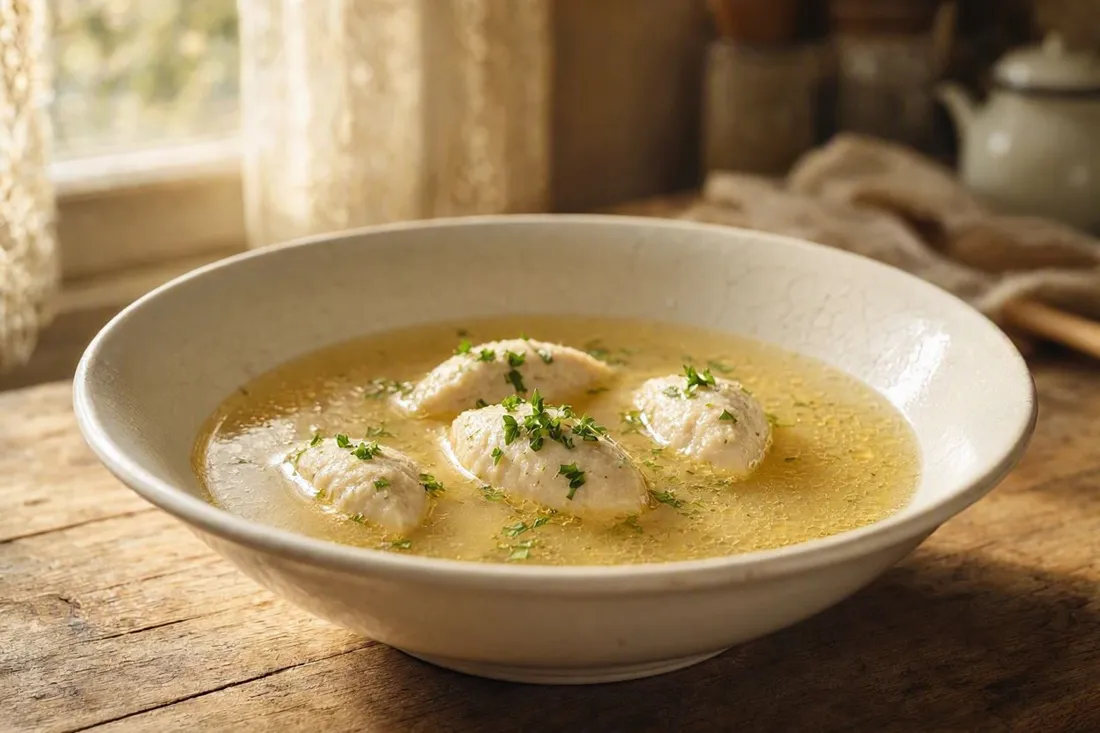
Veal and Parmesan Soup Quenelles (Minestra)
Finely puréed veal and ham, enriched with Parmesan and a soft bread paste, formed into small dumplings and poached in hot broth for an elegant soup course.
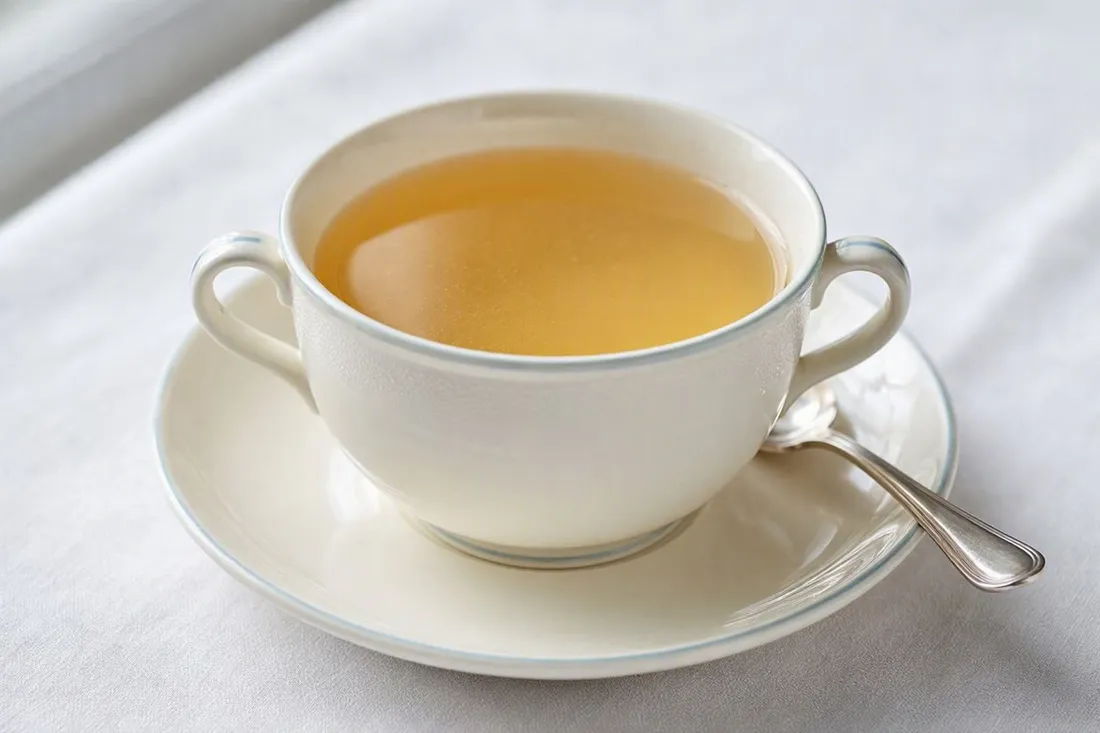
Cold Beef Consommé
A fully clarified beef and chicken broth, simmered for hours and clarified with egg whites, then served ice-cold in cups without any garnish.
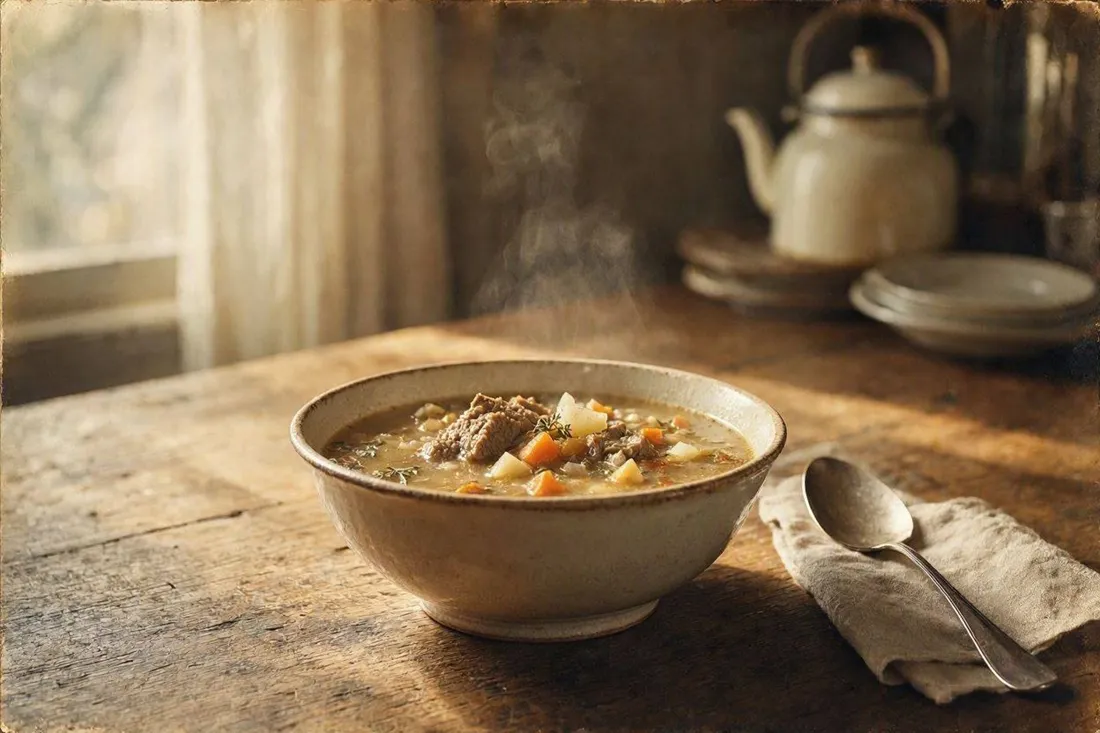
Veal Soup with Egg and Buttermilk Enrichment
A veal and root vegetable soup thickened with a roux, enriched with egg yolk and buttermilk, and finished with a touch of vinegar.