Cold Beef Consommé
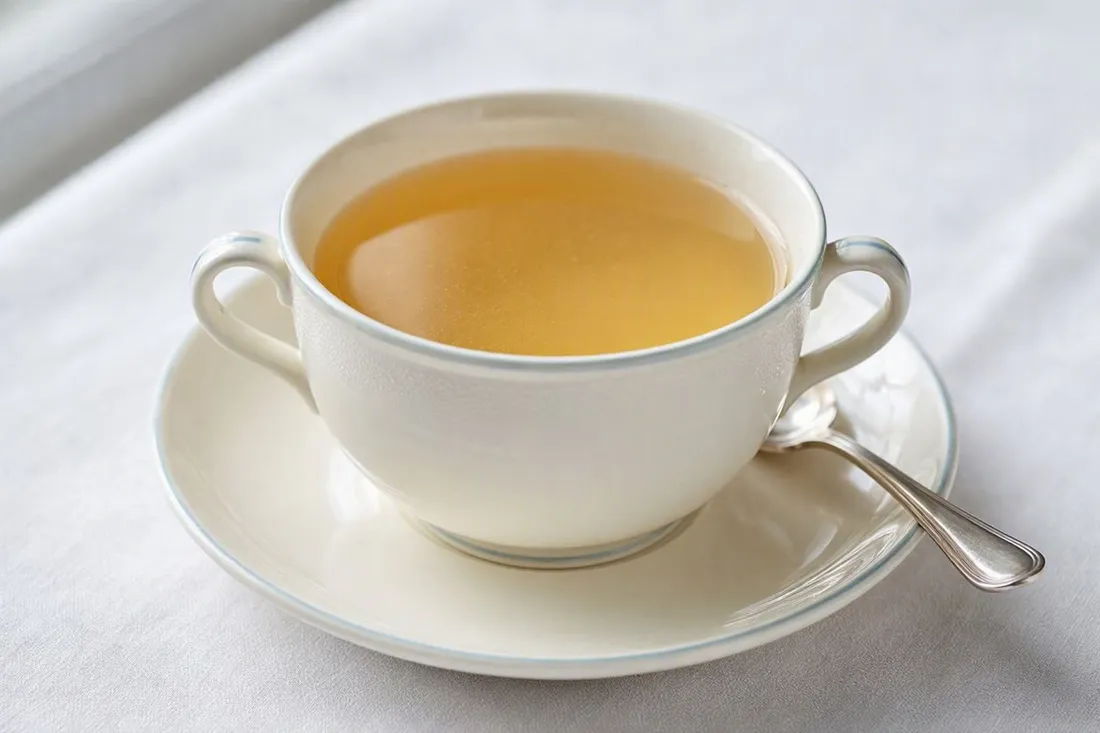
A fully clarified beef and chicken broth, simmered for hours and clarified with egg whites, then served ice-cold in cups without any garnish.
Quick Summary
This clarified beef and chicken broth is simmered for hours, then cleared with egg whites and skimmed of all fat until perfectly transparent. Served ice-cold in cups, it's a classic starter with no garnish - just the clean flavor of the broth itself.
This recipe uses How Veal Was Divided: A Guide to Traditional Butchery Cuts — prepare it in advance if you haven't already.
Historical recipe
Modernised adaptation of an early 20th‑century source. Not independently kitchen-tested by Attic Recipes. Quantities, temperatures, and food safety guidance have been updated for a contemporary kitchen — results may vary and errors may exist. Nutritional values, where provided, are estimates only and have not been laboratory tested. Always follow current food safety guidelines for your region. If you have a health condition, allergy, or dietary requirement, consult a qualified professional before preparing this recipe.
Use of this recipe is entirely at your own risk and subject to our Terms of Service and Privacy Policy. Attic Recipes accepts no liability for any adverse outcome.
- Eggs
Additional notes
-
Warning
This broth is made with both beef and chicken and goes through multiple cooling and reheating cycles before serving cold. Cool it quickly in shallow containers, refrigerate promptly, and bring it to a full boil each time it is reheated. This is especially important for pregnant women, young children, older adults, and immunocompromised individuals.
-
Note
This broth is clarified with egg whites, which are removed during straining, but trace egg protein may remain in the finished broth - relevant for those with an egg allergy.
- 1
Wash the beef leg together with the attached eye of round, then crack the bone in several places with a cleaver.
- 2
Place the beef in a large pot, cover with the cold water, and add the whole cleaned chicken.
- 3
Cook as you would any soup: add the mixed root vegetables, the leek, the whole peppercorns, and the salt, along with the charred onion.
- 4
Simmer on low heat for 5 to 6 hours.
- 5
Remove the pot from the heat and let the broth settle completely.
- 6
Strain the broth through a fine sieve into a clean pot, keeping only the clear liquid.
- 7
Bring the strained broth back to a boil, then add the 2 egg whites.
Tip The egg whites will coagulate and absorb the remaining foam and fine particles suspended in the broth as it simmers - this is the clarifying step. - 8
Skim out the cooked egg whites with a slotted spoon.
- 9
Let the broth settle again, remove from the heat, strain a second time through cheesecloth, and let it cool completely so the fat rises to the surface.
Tip For food safety, cool the broth quickly - divide it into shallow containers and refrigerate rather than leaving it at room temperature to cool. - 10
Skim off all the fat from the surface of the cooled broth.
- 11
Reheat the broth on the stove and strain it a second time through cheesecloth.
- 12
Let the reheated broth cool slightly, then set it on ice to chill.
Tip Bring the broth to a full boil during this reheating step before chilling it again, to ensure food safety after the earlier cooling stage. - 13
Once cold, pour into cups and serve well-chilled, without any garnish.
Nutrition Information per 1 cup (approx 200ml)
Nutritional values are approximate estimates and may vary based on specific ingredients used, preparation methods, and portion sizes.
Serving Suggestions
Serve very well chilled in small bouillon cups, exactly as intended - unaccompanied. A thin twist of lemon peel on the side is a modern touch that doesn't compete with the clarity of the broth.
About This Recipe
A true consommé is less about ingredients and more about patience - a long, slow simmer followed by a careful clarifying process that turns an ordinary pot of broth into something completely transparent. This version combines beef leg and eye of round with a whole chicken, simmered for hours with root vegetables and a charred onion for depth, then cleared with egg whites until it’s glass-clear.
What sets it apart from a typical soup is the finishing: served ice-cold in small cups, with absolutely nothing added. No noodles, no vegetables floating in it, no garnish at all. The broth has to stand entirely on its own flavor and clarity, which is exactly what all the straining and skimming is working toward.
This is a project recipe rather than a weeknight one - most of the active work is short, but the process unfolds in stages across several hours, with real waiting time built into nearly every step.
Why It Works
Egg whites clarify broth through a simple mechanism: as they heat and coagulate, the proteins form a loose net that traps the tiny suspended particles responsible for cloudiness, dragging them together into a mass that can be skimmed or strained out. Cooling the broth completely between straining steps is just as important as the egg whites - it lets the remaining fat solidify on the surface, where it can be lifted off cleanly rather than blended back through the liquid.
Modern Kitchen Tips
Work in stages rather than trying to finish this in one sitting. Simmer and strain the first time on one day, then handle the clarifying and final chill the next - the broth actually benefits from a full night in the refrigerator between stages, since the fat solidifies more completely when given time to fully chill.
A classic of early 20th century home cooking, preserved and adapted for the modern kitchen.
The Story Behind This Recipe
Historical Context
Clarifying broth with egg whites was a standard technique in more formal Central European kitchens of the early 20th century, used to turn an ordinary meat stock into a completely transparent consommé suitable for serving on its own. Serving it ice-cold, without any garnish, was a deliberate choice meant to showcase the clarity and flavor of the broth itself.
Modern Kitchen Adaptation
The quantity of water, mixed root vegetables, leek, peppercorns, and salt were not given precisely in the original and have been estimated here. The chicken weight was also not specified; a standard whole chicken (around 1.3-1.5kg) works well. Because this broth involves multiple cooling and reheating stages with both beef and poultry, modern food safety practice calls for cooling it quickly in shallow containers rather than leaving it out to cool slowly, refrigerating promptly between stages, and bringing it back to a full boil each time it is reheated. This recipe can comfortably be made over two days, with the initial simmering and first cooling done on day one, and the clarifying, second cooling, and final chilling done on day two.
This recipe is an independent modern adaptation developed from historical sources in the public domain. It is provided for informational and educational purposes only and does not constitute professional dietary, nutritional, or medical advice. Food preparation involves inherent risks. The reader assumes full responsibility for safe food handling, ingredient sourcing, and adherence to current local food safety guidelines. The site operator accepts no liability for outcomes resulting from the preparation or consumption of this recipe.
One recipe.
Every week.
You Might Also Like
More recipes you'll enjoy
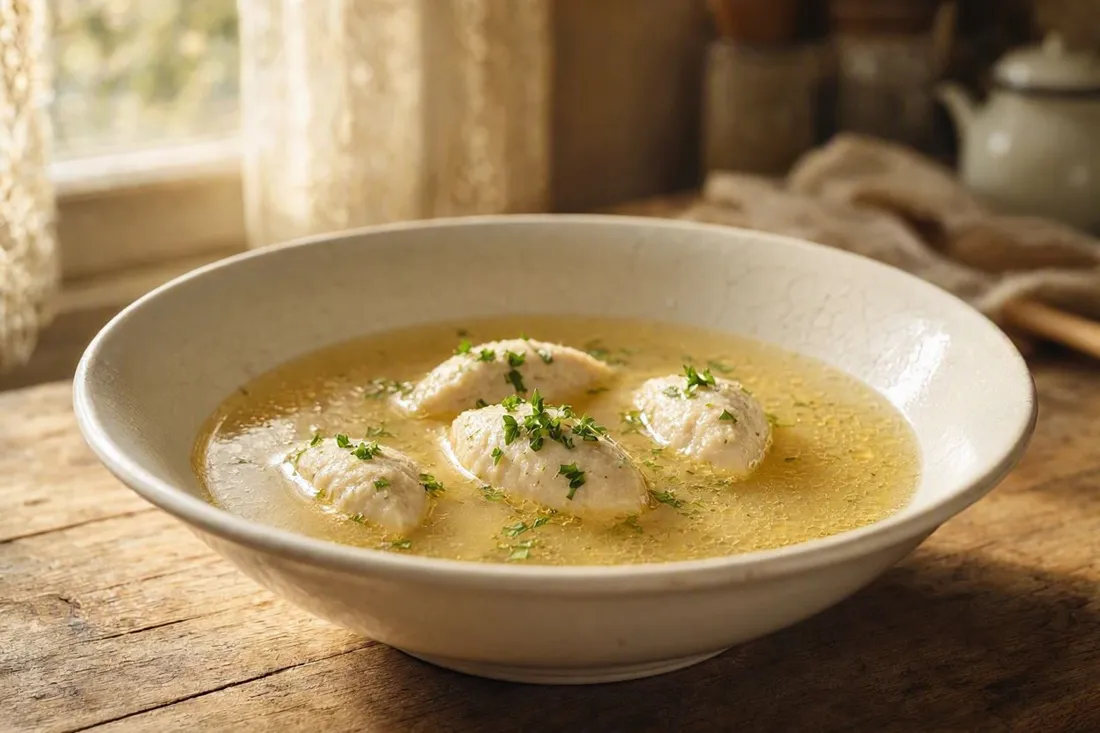
Veal and Parmesan Soup Quenelles (Minestra)
Finely puréed veal and ham, enriched with Parmesan and a soft bread paste, formed into small dumplings and poached in hot broth for an elegant soup course.
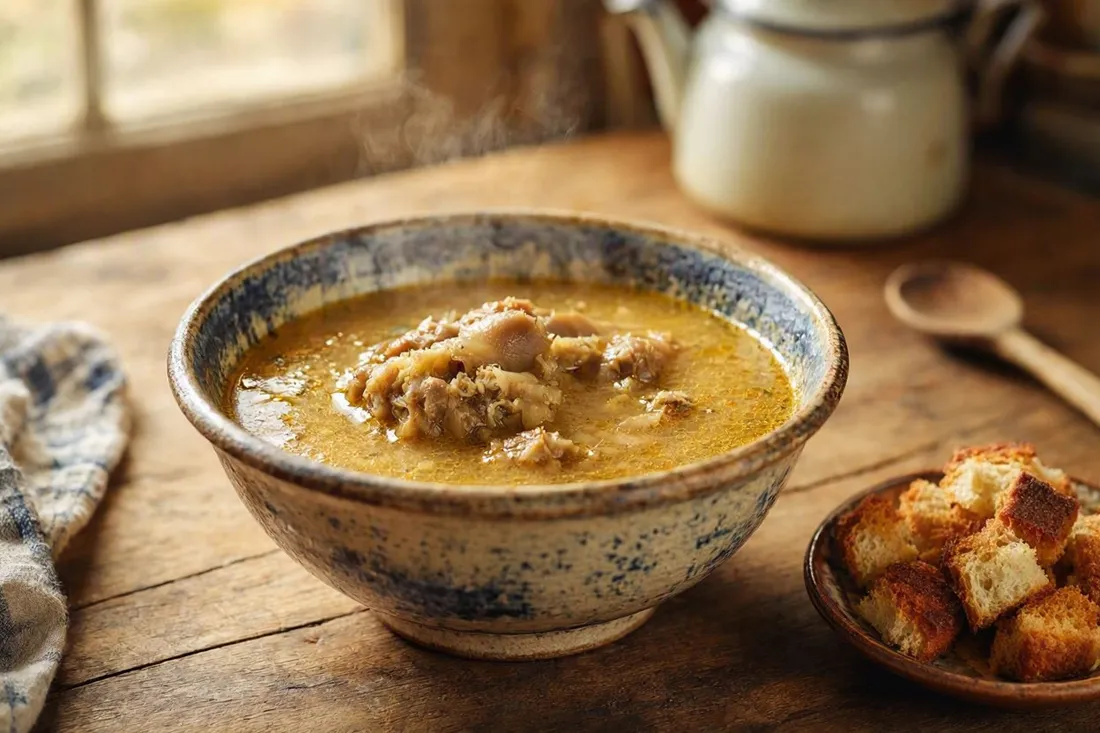
Veal Trotter Soup with Egg and Vinegar Finish
A rich, collagen-thickened soup made from slow-simmered veal trotters, finished with a tangy egg and wine vinegar mixture and served with toasted bread cubes.
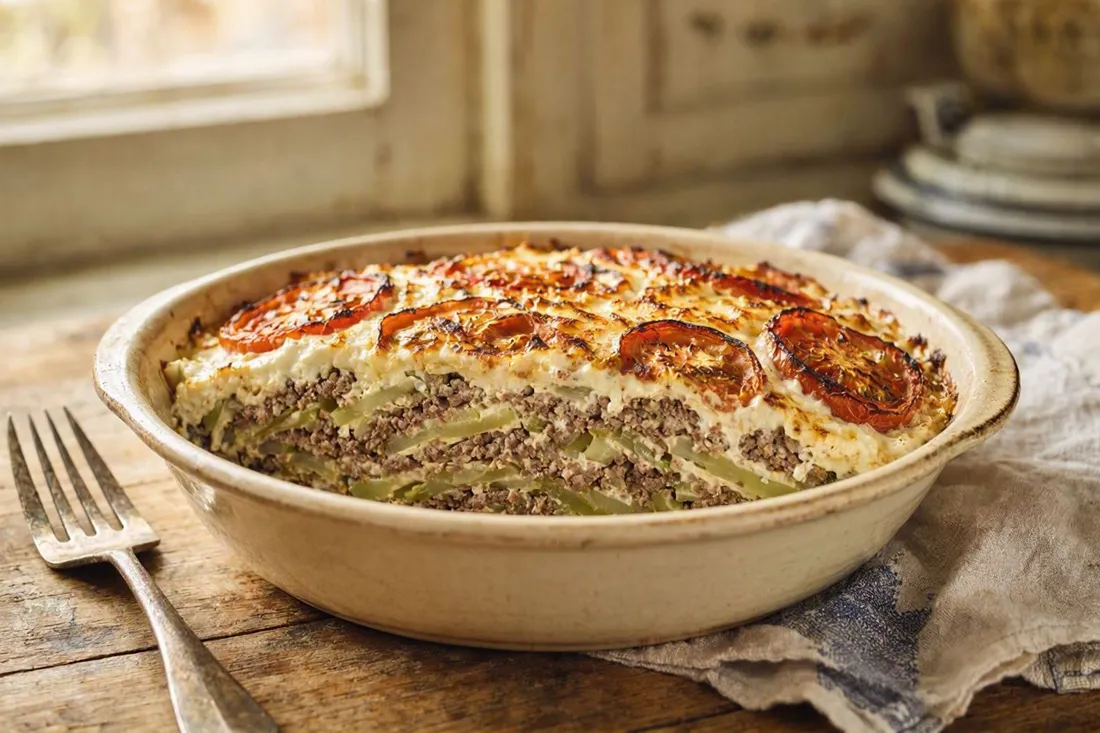
Kohlrabi and Veal Musaka
A layered casserole of braised kohlrabi and seasoned ground veal, baked under sour cream and tomato - a comforting vintage Central European dish.