Traditional Roast Turkey with Pan Juices
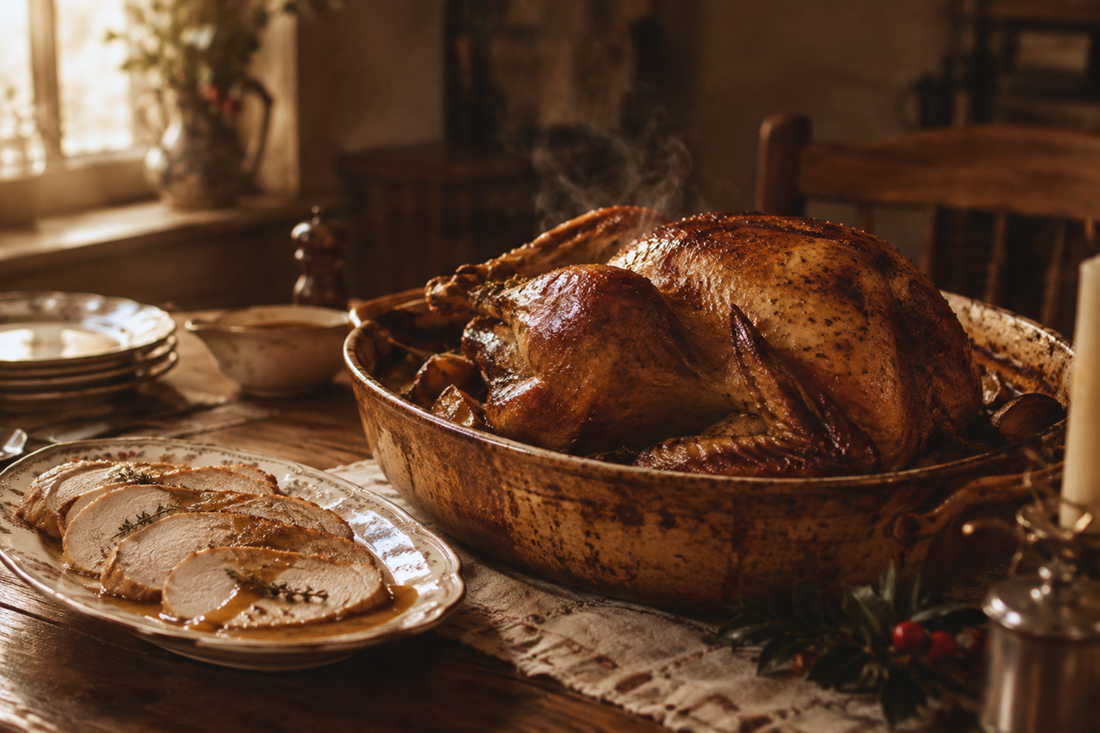
A whole turkey salted the day before, roasted until golden, and basted throughout with its own pan drippings.
Quick Summary
A whole turkey is salted a day ahead, then roasted covered, basted every 15 minutes in its own juices until golden and tender. Sliced white meat is served with pan juices spooned over. Active time is modest; overnight salting plus a two-hour roast.
Historical recipe
Modernised adaptation of an early 20th‑century source. Not independently kitchen-tested by Attic Recipes. Quantities, temperatures, and food safety guidance have been updated for a contemporary kitchen — results may vary and errors may exist. Nutritional values, where provided, are estimates only and have not been laboratory tested. Always follow current food safety guidelines for your region. If you have a health condition, allergy, or dietary requirement, consult a qualified professional before preparing this recipe.
Use of this recipe is entirely at your own risk and subject to our Terms of Service and Privacy Policy. Attic Recipes accepts no liability for any adverse outcome.
- Dairy
Additional notes
-
Warning
Verify the turkey has reached a safe internal temperature of at least 74°C (165°F) at the thickest part of the thigh using a meat thermometer — do not rely on roasting time or skin color alone. Pregnant women, young children, older adults, and immunocompromised individuals should take extra care to ensure poultry is fully cooked.
-
Caution
If soaking a fresh, unplucked turkey overnight, keep it refrigerated or in a consistently cold place rather than at room temperature to prevent bacterial growth.
-
Note
This dish is relatively high in saturated fat and sodium per serving due to the generous salting and skin-on roasting. Those managing blood pressure, cholesterol, or heart health may wish to reduce the added salt, remove the skin, or use a lighter hand with the butter.
- 1
The day before roasting, place the whole, unplucked turkey into a large pot of cold water and let it soak overnight in the refrigerator or another consistently cold place.
Tip Soaking overnight in cold water loosens the feathers for plucking and firms the flesh before cleaning. - 2
The next day, remove the turkey from the cold water, pour boiling water over it, then pluck the feathers and clean out the innards thoroughly.
- 3
Season the turkey generously with 2 tbsp coarse salt, inside and out, and rub the skin with 2 tbsp softened butter. Let it rest for 1 hour before roasting.
Tip Historically, lard (svinjska mast) was rubbed on instead of butter — either works. - 4
Place the turkey into a covered roasting pan, transfer to the oven, and roast until the skin turns golden brown.
- 5
Once browned, add the 250ml water to the roasting pan and baste the turkey with the pan juices every 15 minutes.
- 6
Roast a young, well-fed turkey for about 2 hours in a moderate oven, or until a meat thermometer inserted into the thickest part of the thigh reads at least 74°C (165°F).
Tip Roasting time varies with the size of the bird — always confirm doneness with a thermometer rather than relying on time or color alone. - 7
Once roasted, remove the turkey from the pan and carve it. Separate the white meat, slice it thinly, arrange on a separate platter, and pour the pan juices over it.
- 8
Serve the remaining dark meat separately.
Nutrition Information per 1 serving (approx 280g roasted turkey with pan juices)
Nutritional values are approximate estimates and may vary based on specific ingredients used, preparation methods, and portion sizes.
Serving Suggestions
Serve the sliced white meat with its pan juices as the centerpiece, alongside the dark meat, roasted root vegetables, and a simple cranberry or plum compote for contrast.
About This Recipe
This roast turkey relies on a technique rather than a long ingredient list: a well-fed bird is salted a full day ahead, then roasted slowly and basted again and again with its own pan juices until the skin turns deep gold and the meat stays moist all the way through. There’s no stuffing, no elaborate seasoning blend — just salt, a little fat, and patience with the basting spoon.
It’s a dish built around timing more than technique difficulty. The overnight salting firms the meat and seasons it through, while the frequent basting during roasting does the real work of keeping a large bird from drying out over a two-hour cook. Served simply — sliced white meat topped with its own juices, dark meat set alongside — it’s a straightforward centerpiece roast rather than a fussy one.
Why It Works
Repeated basting with the turkey’s own rendered fat and juices, thinned slightly with water, keeps the surface of the meat moist and encourages even, deep browning without needing a wet brine or a stuffing to hold in moisture. Salting well ahead of roasting gives the salt time to penetrate past the surface, seasoning the meat itself rather than just the skin — the same principle behind a dry brine, applied here as a straightforward overnight salt.
Modern Kitchen Tips
Use a meat thermometer rather than judging doneness by time or color alone — a 4-5 kg bird can vary in actual roasting time depending on your oven and whether it’s stuffed with anything in the cavity. If the skin is browning too quickly before the interior is done, tent it loosely with foil partway through roasting and continue basting as usual.
A classic of early 20th century home cooking, preserved and adapted for the modern kitchen.
The Story Behind This Recipe
Historical Context
Well-fed turkeys were traditionally slaughtered the day before roasting and left to soak overnight in cold water — a step that helped loosen feathers for plucking and firmed the flesh before cooking. Home cooks judged doneness by color and time rather than a thermometer, relying on frequent basting with pan drippings to keep the meat moist through a long, steady roast. This self-basting method, using the turkey's own rendered juices thinned with a little water, was the main way to add richness and prevent the meat from drying out in ovens with uneven heat.
Modern Kitchen Adaptation
The original method calls for an unplucked, freshly slaughtered turkey soaked overnight in cold water before cleaning; most cooks today will start with an already cleaned, plucked bird, so this step can be skipped entirely — if a fresh, unplucked bird is soaked, keep it refrigerated or in a consistently cold place rather than at room temperature. The recipe's ambiguous 'mast' for rubbing the skin is interpreted here as butter, following the standing convention for unspecified fat, with lard noted as the historical alternative. Salt and fat quantities, basting water, and oven temperature are all estimated, since the original gives no amounts or degrees. Roasting a whole turkey by time and color alone is no longer considered reliable for food safety — always confirm doneness with a meat thermometer reading at least 74°C (165°F) in the thickest part of the thigh rather than relying on the two-hour estimate or browning alone. The dish is naturally high in sodium and saturated fat given the generous salting and skin-on roasting; salt can be reduced to taste, and removing the skin before serving will lower the fat content.
This recipe is an independent modern adaptation developed from historical sources in the public domain. It is provided for informational and educational purposes only and does not constitute professional dietary, nutritional, or medical advice. Food preparation involves inherent risks. The reader assumes full responsibility for safe food handling, ingredient sourcing, and adherence to current local food safety guidelines. The site operator accepts no liability for outcomes resulting from the preparation or consumption of this recipe.
One recipe.
Every week.
You Might Also Like
More recipes you'll enjoy
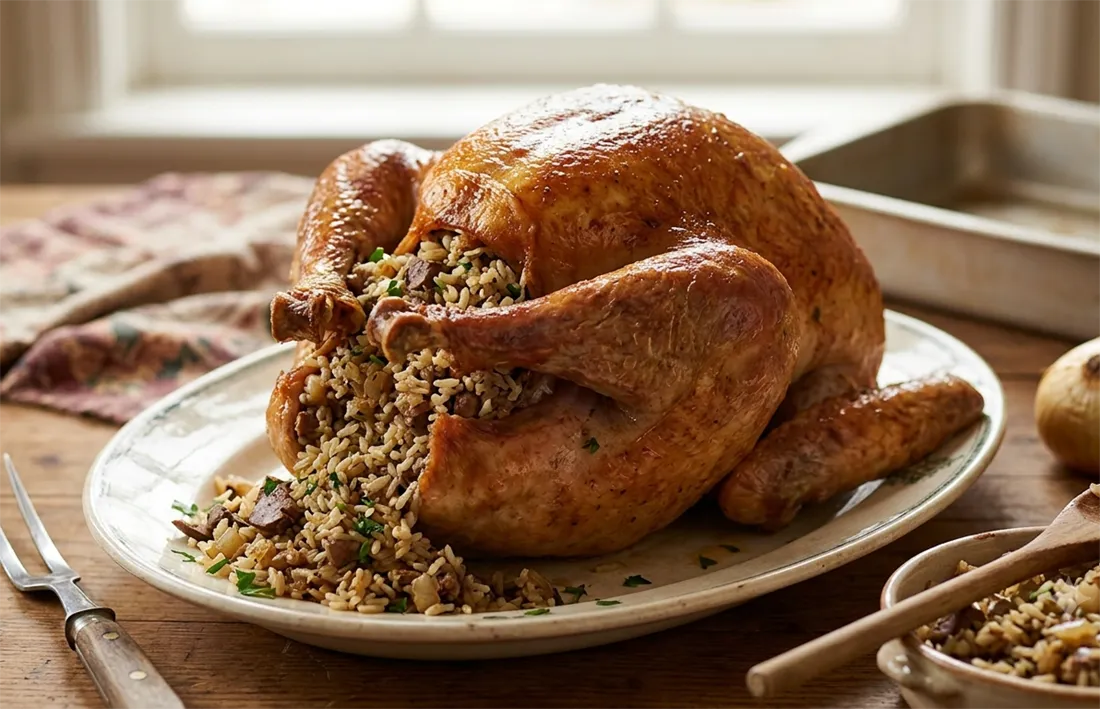
Roast Turkey Stuffed with Rice, Liver, and Gizzard
A whole turkey stuffed with a savory rice, onion, liver, and gizzard filling, slow-roasted and basted until golden and tender.
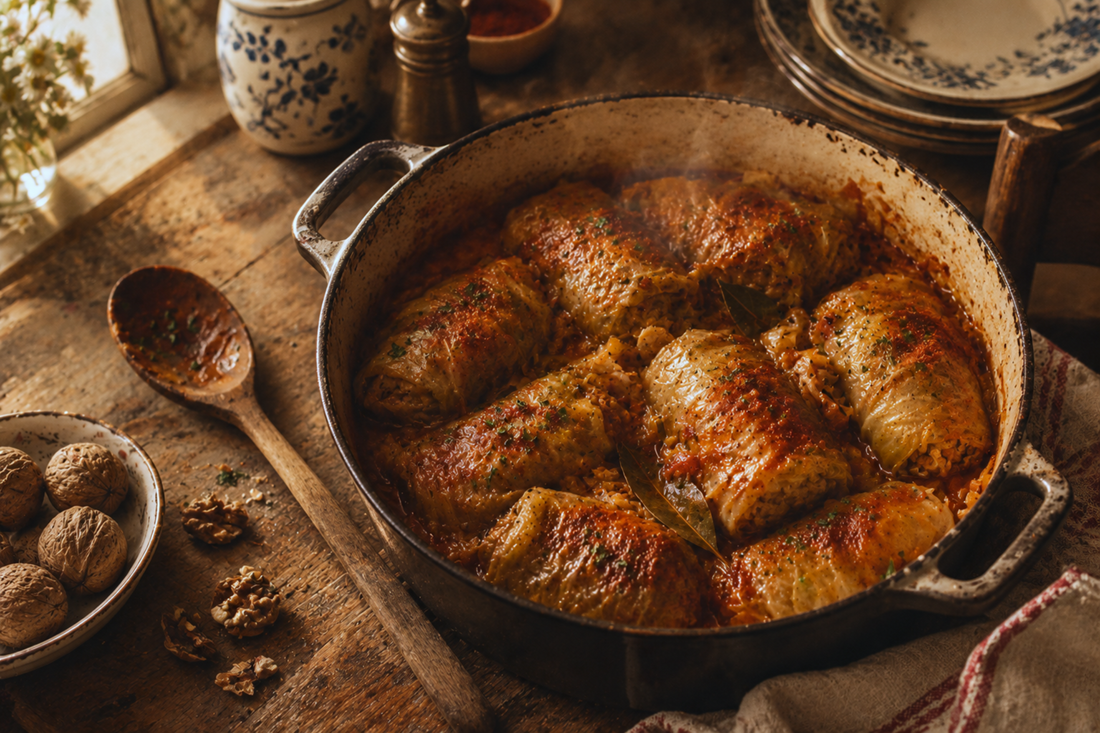
Vegan Cabbage Rolls with Rice and Walnuts (Sarma)
Vegan stuffed cabbage rolls filled with rice, onion, and walnuts, simmered slowly in a paprika roux — no meat, no dairy.
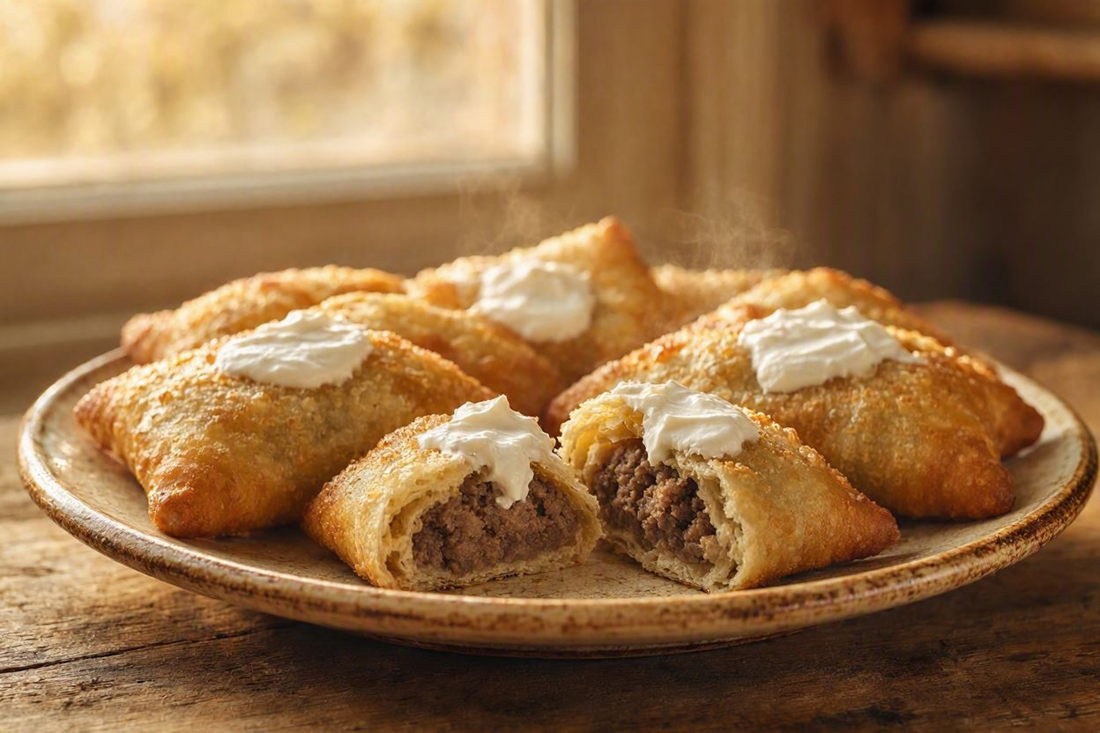
Golden Fried Meat Pastries Baked in Sour Cream
Crispy egg-pasta pockets filled with savory pork, fried golden, then baked under a blanket of sour cream.