Golden Fried Meat Pastries Baked in Sour Cream
Crispy egg-pasta pockets filled with savory pork, fried golden, then baked under a blanket of sour cream.
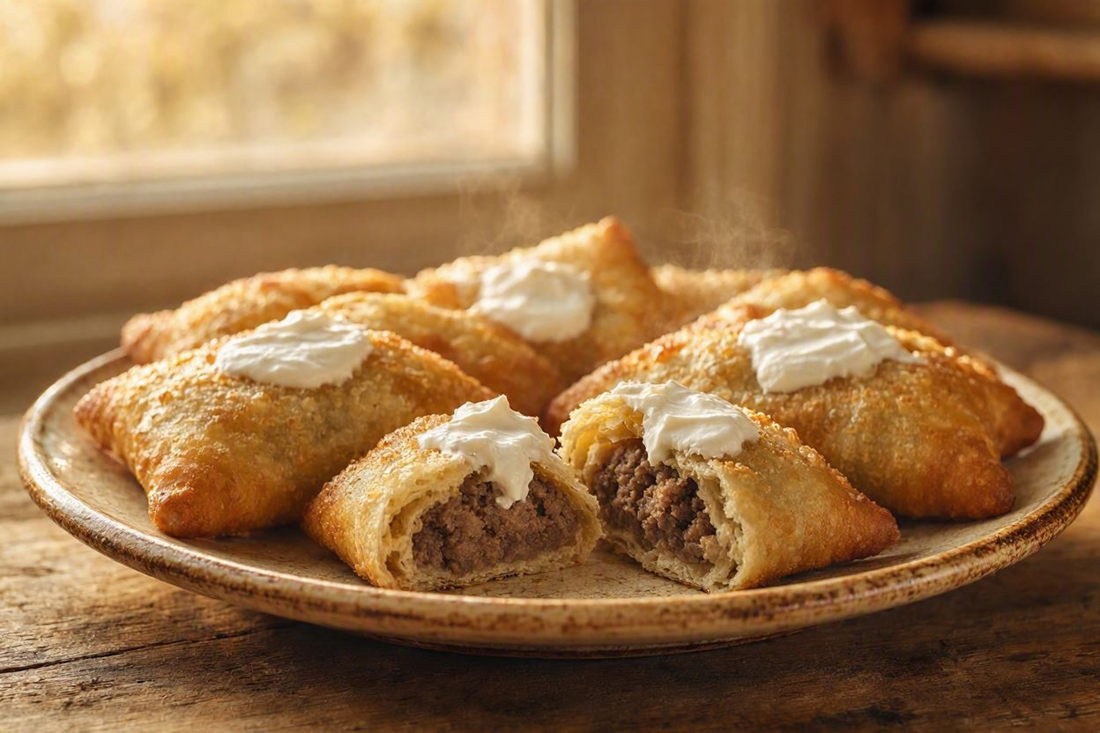
Quick Summary
Squares of egg pasta are filled with pan-fried ground pork and onion, sealed, then deep-fried until golden. The pastries are finished in the oven under a layer of sour cream. Total time runs about ninety minutes, yielding a soft filling inside a crisp, tender pasta shell.
Historical recipe
Modernised adaptation of an early 20th‑century source. Not independently kitchen-tested by Attic Recipes. Quantities, temperatures, and food safety guidance have been updated for a contemporary kitchen — results may vary and errors may exist. Nutritional values, where provided, are estimates only and have not been laboratory tested. Always follow current food safety guidelines for your region. If you have a health condition, allergy, or dietary requirement, consult a qualified professional before preparing this recipe.
Use of this recipe is entirely at your own risk and subject to our Terms of Service and Privacy Policy. Attic Recipes accepts no liability for any adverse outcome.
- Gluten
- Eggs
- Dairy
Additional notes
-
Warning
This recipe involves deep-frying in hot oil — use caution to avoid burns and oil splatter, and keep children away from the stove during frying.
-
Warning
Ensure the ground pork filling is cooked to a safe internal temperature (71°C / 160°F) before frying is complete. Pregnant women, young children, older adults, and immunocompromised individuals should take extra care with thoroughly cooked meat.
- 1
Combine 500g sifted flour, 4 large eggs, 1 tbsp butter, and 1/2 tsp salt on a work surface or in a large bowl. Add the water gradually, kneading until a smooth, firm dough forms — add more water only if needed to bring it together.
Tip Historically, lard (svinjska mast) was used in place of butter here — either works, though butter gives a lighter flavor. - 2
Roll the dough out with a rolling pin to about 0.5cm (¼ inch) thickness, then cut it into squares.
- 3
Grind 500g pork into a coarse mince using a meat grinder or food processor.
- 4
In a pot, melt 1 tbsp butter and sauté the 2 finely chopped onions over medium heat until softened and lightly golden.
- 5
Add the ground pork to the pot and fry, stirring frequently, until fully cooked through with no pink remaining.
Tip Cook the pork thoroughly to a safe internal temperature (71°C / 160°F) before removing from heat. - 6
Remove the meat mixture from the heat and stir in 1 large egg, 1 tsp salt, and 1/4 tsp black pepper. Let the filling cool completely before assembling.
- 7
Cut the rolled dough into rectangular pieces. Place a portion of the cooled filling on one half of each rectangle, fold the other half of the dough over the filling, and press the edges together, sealing with the beaten egg white.
- 8
Heat 500ml neutral oil in a deep pot to about 170-180°C (340-355°F) and fry the pastries in batches until golden brown on all sides.
Tip Avoid overcrowding the pot — fry in small batches to keep the oil temperature steady and prevent splattering. - 9
Remove the fried pastries with a slotted spoon, arrange in a single layer in a baking dish, and pour the 250ml sour cream evenly over the top while still warm.
- 10
Bake at 180°C (350°F) / 160°C fan for about 10 minutes, until the sour cream is warmed through and lightly set. Serve immediately.
Nutrition Information per 1 piece (approx 95g)
Nutritional values are approximate estimates and may vary based on specific ingredients used, preparation methods, and portion sizes.
Serving Suggestions
Serve warm as a main course with a simple cucumber or cabbage salad to cut through the richness, or alongside pickled vegetables.
About This Recipe
These fried pastries take a simple square of egg pasta dough and turn it into a satisfying main course by filling it with pan-fried ground pork and onion, sealing it shut, and frying it until golden. What makes the dish distinctive is what happens next: instead of serving the pastries straight from the fryer, they’re arranged in a baking dish, doused in sour cream, and finished briefly in the oven — softening the fried edges and infusing the whole dish with a rich, tangy top layer.
It’s an economical dish at heart. A modest amount of ground pork goes a long way once it’s wrapped in dough, and the combination of frying followed by a short bake means the filling stays juicy without drying out. The result sits somewhere between a fried dumpling and a savory pastry, best served hot, straight from the baking dish.
Why It Works
Frying the pastries first creates a sturdy, golden shell that holds its shape once it hits the sour cream and oven heat — a plain baked or boiled dough wouldn’t hold up the same way to the second cooking step. The brief bake afterward isn’t about cooking the filling further (that’s already done before frying); it’s about warming the sour cream through and letting it slightly reduce and cling to the pastry, rather than sitting as a thin, watery layer on top.
Modern Kitchen Tips
Roll the dough thin and even — around half a centimeter — so it cooks through fully during frying without the filling staying cold in the center. If the dough feels stiff or springs back while rolling, let it rest, covered, for 15–20 minutes before continuing; this isn’t in the original method but makes rolling noticeably easier. Fry in small batches and let the oil come back up to temperature between batches, since overcrowding drops the oil temperature and leads to greasy, pale pastries instead of a crisp, golden shell.
A classic of early 20th century home cooking, preserved and adapted for the modern kitchen.
The Story Behind This Recipe
Historical Context
Early 20th century home cooks often stretched a modest amount of ground meat by wrapping it in a simple egg-based dough, frying the sealed pastries in rendered fat, and finishing them with a rich dairy topping before a short bake. This fry-then-bake method was a practical way to add richness and keep the pastries moist without requiring long oven time, and reflects a broader central European habit of pairing pasta-style dough with savory fillings for a filling, economical main course.
Modern Kitchen Adaptation
The original recipe calls simply for 'mast' (fat) without specifying type or amount at several points; butter is used here for the dough and for sautéing the onion, following the convention of defaulting to butter when the fat type is unspecified — lard remains the historical alternative and can be substituted directly. For the deep-frying step, a neutral oil such as sunflower or vegetable oil replaces the traditional lard, since a modern kitchen more commonly keeps oil on hand for submersion frying; lard can still be used for a more traditional flavor and higher smoke point. Salt, pepper, water, and egg white quantities, along with the oven temperature and all prep and cook times, are estimated, since the original recipe does not specify them — adjust water as needed for dough consistency and rely on visual and temperature cues rather than exact timing. Ground pork must be cooked through both when browning the filling and again during frying to ensure food safety.
This recipe is an independent modern adaptation developed from historical sources in the public domain. It is provided for informational and educational purposes only and does not constitute professional dietary, nutritional, or medical advice. Food preparation involves inherent risks. The reader assumes full responsibility for safe food handling, ingredient sourcing, and adherence to current local food safety guidelines. The site operator accepts no liability for outcomes resulting from the preparation or consumption of this recipe.
One recipe.
Every week.
You Might Also Like
More recipes you'll enjoy
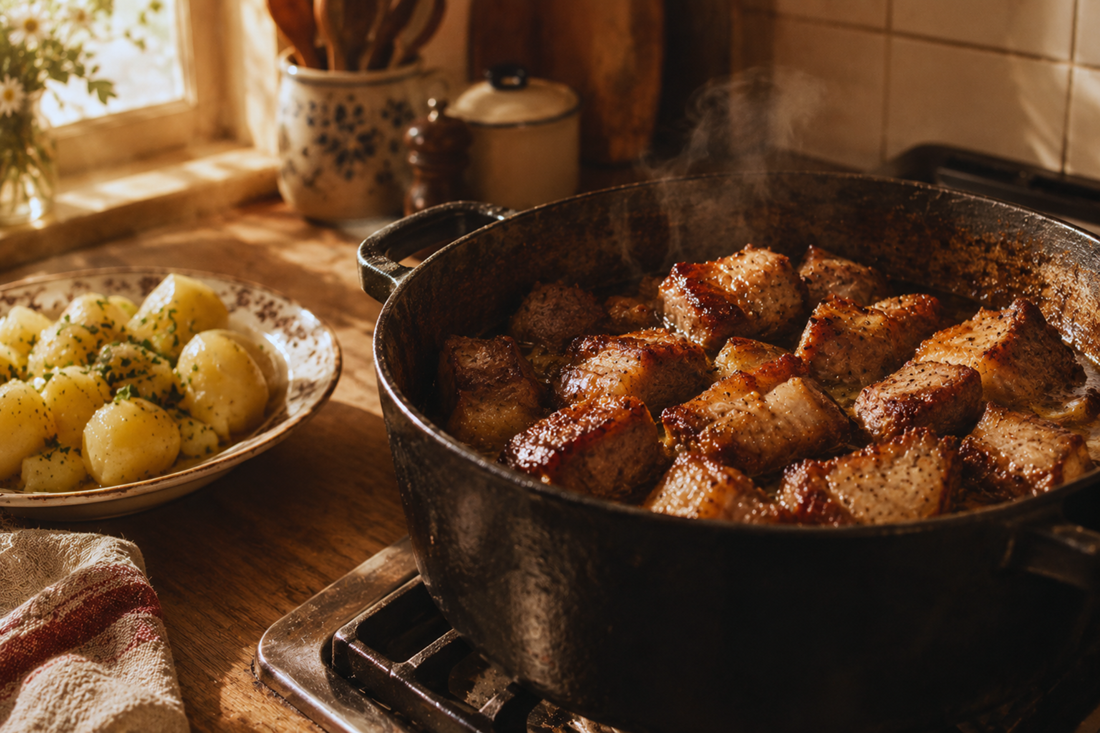
Pork Cubes Braised and Fried in Their Own Fat
Pork cubes simmered until tender, then fried golden in their own rendered fat with paprika, pepper, and salt.
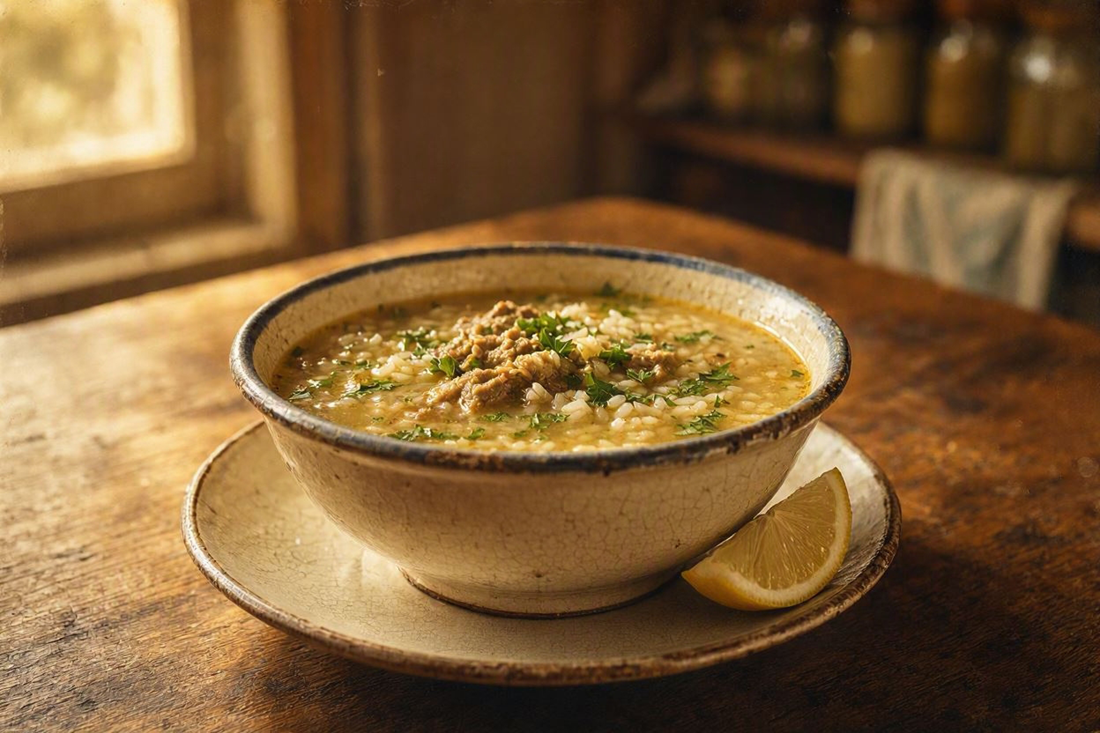
Lamb Soup with Egg and Lemon
A hearty lamb broth simmered with rice and onion, finished either with a silky egg-and-lemon enrichment or a sharper wine vinegar variation.
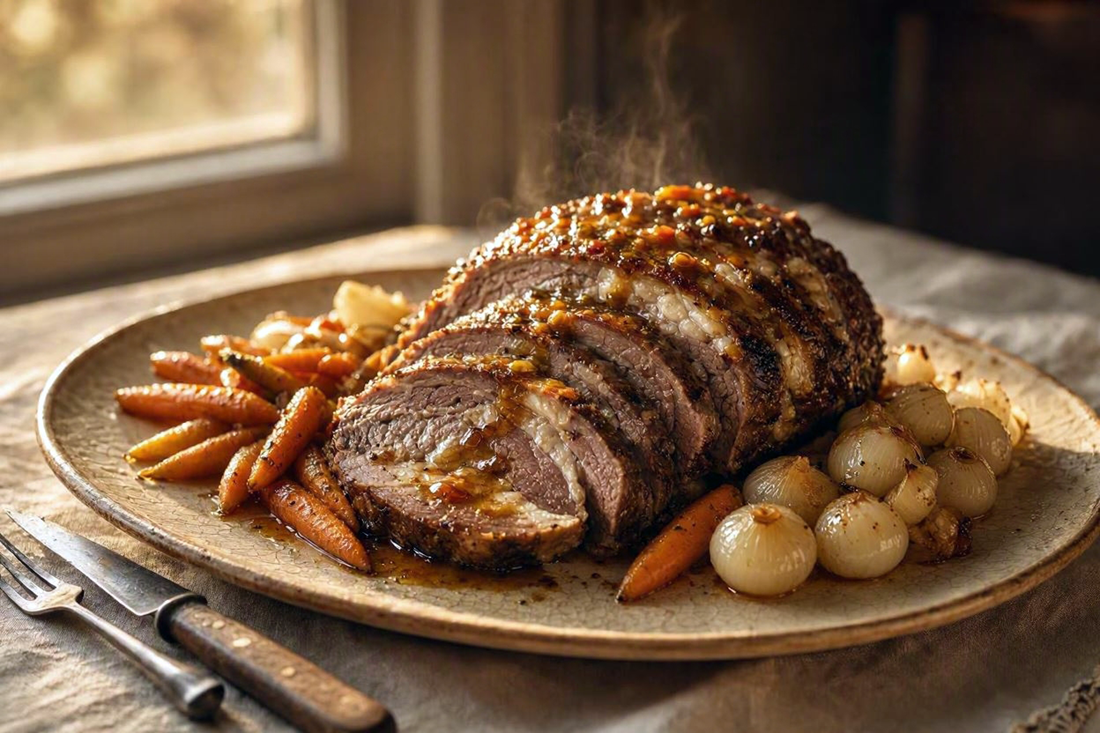
Larded Beef Roast with Pearl Onions and Wine Sauce
A larded, wine-marinated beef roast braised low and slow with veal feet for natural body in the sauce, finished with pearl onions and carrots.