Roast Turkey Stuffed with Rice, Liver, and Gizzard
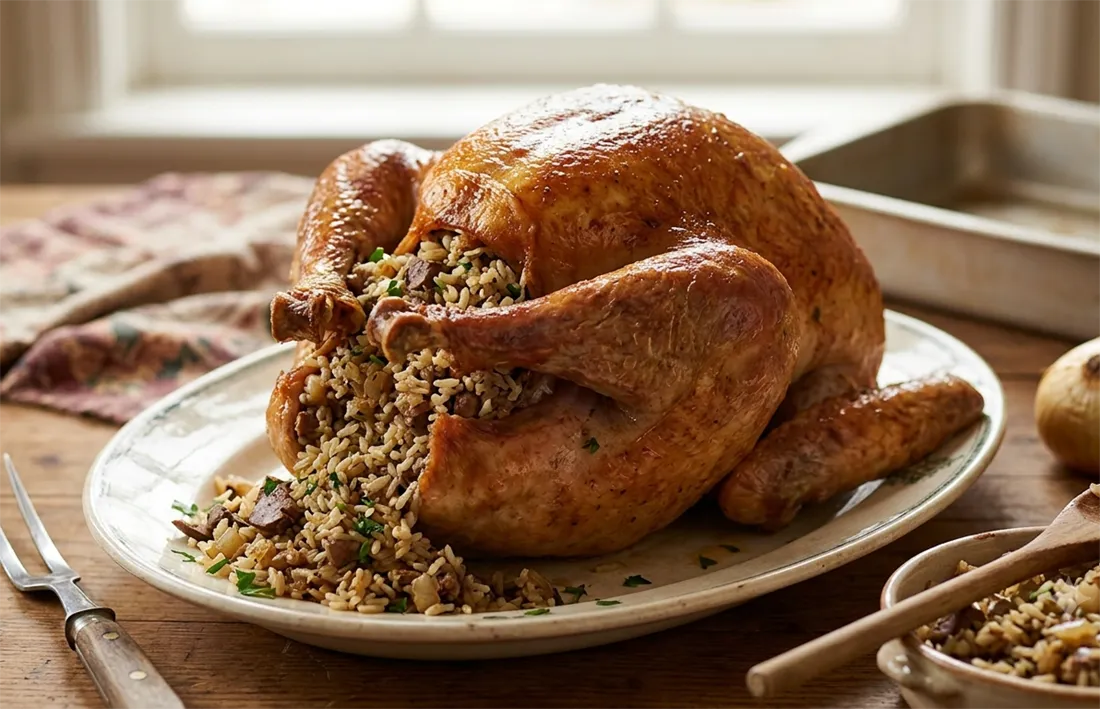
A whole turkey stuffed with a savory rice, onion, liver, and gizzard filling, slow-roasted and basted until golden and tender.
Quick Summary
A whole roast turkey is stuffed with rice, onion, liver, and gizzard. This Central European dish takes about 4.5 hours from prep to finish. It stands out for using the bird’s own organ meats, infusing the rice with a deep, rich flavor.
Historical recipe
Modernised adaptation of an early 20th‑century source. Not independently kitchen-tested by Attic Recipes. Quantities, temperatures, and food safety guidance have been updated for a contemporary kitchen — results may vary and errors may exist. Nutritional values, where provided, are estimates only and have not been laboratory tested. Always follow current food safety guidelines for your region. If you have a health condition, allergy, or dietary requirement, consult a qualified professional before preparing this recipe.
Use of this recipe is entirely at your own risk and subject to our Terms of Service and Privacy Policy. Attic Recipes accepts no liability for any adverse outcome.
- Eggs
Additional notes
-
Warning
Stuffed poultry must be checked for doneness in two separate places: the meat (thigh, without touching bone) and the center of the stuffing, both must reach 74°C (165°F). Stuffing that has not reached this temperature poses a food poisoning risk even if the meat appears done. This is especially important for pregnant women, children under 18, the elderly, and immunocompromised individuals.
-
Note
This recipe includes turkey liver and gizzard. Organ meats are high in cholesterol; those managing dietary cholesterol intake may wish to adjust portion size.
- 1
Rub the cleaned turkey with 12g salt, inside and out. Set aside.
- 2
Rinse the 250g rice and parboil it in water until about halfway cooked, roughly 8-10 minutes. Drain and let cool.
- 3
Melt 30g lard in a pan. Add the 450g chopped onion and cook until softened, then stir in the 15g chopped parsley.
- 4
Add the chopped turkey gizzard to the pan with the onion and cook, stirring, until it starts to brown.
- 5
Once the onion mixture is about halfway cooked through, add the chopped turkey liver and cook everything together a few minutes more.
Tip The liver cooks quickly — add it toward the end to avoid overcooking it before it is mixed into the raw rice. - 6
In a large bowl, combine the cooled parboiled rice with the onion, gizzard, and liver mixture. Season with 9g salt and 2.5g black pepper, then mix in the 2 whole eggs until fully combined.
- 7
Preheat the oven to 160°C (325°F) / 150°C fan.
- 8
Stuff the turkey breast cavity (where the crop was removed) with the filling, then fill the main body cavity with the remaining stuffing.
- 9
Close the neck opening by tying the loose skin with kitchen twine or white cotton thread to keep the stuffing in place.
- 10
Coat the whole turkey with the 30g lard, then place it in a roasting pan or Dutch oven. Add the 250ml water to the pan and cover with the lid.
- 11
Roast for approximately 3 to 3.5 hours, basting with the reserved 90g lard every 30-40 minutes.
Tip Regular basting keeps the skin from drying out and is essential to how the finished turkey turns out. - 12
Check doneness with a meat thermometer in two places: the thickest part of the thigh (without touching bone) must read 74°C (165°F), and the center of the stuffing inside the cavity must also read 74°C (165°F).
Tip Stuffed poultry is one of the most common sources of foodborne illness because the stuffing can lag behind the meat in temperature — always check both separately before serving. - 13
Remove the turkey from the oven and let it rest until cooled enough to handle safely.
- 14
Carve into pieces, keeping the stuffed breast sliced together with its filling. The remaining stuffing can be served alongside or underneath the carved turkey.
Serving Suggestions
Serve warm, carved into pieces with the stuffing alongside. Pan drippings can be used to make a simple gravy.
About This Recipe
This whole roast turkey is stuffed with a rice filling built from the bird’s own liver and gizzard, a practice that made the most of every part of the animal. The onion is sautéed until soft before the organs go in, then everything is folded into parboiled rice with a couple of eggs to bind it. The result is a stuffing that tastes distinctly of the bird itself, rather than a separate side dish that happens to sit inside it.
Slow, basted roasting was the standard technique for a large stuffed bird long before precise oven thermostats existed. The steady application of fat during cooking kept the meat from drying out over a multi-hour roast, and it remains one of the most reliable ways to finish a whole turkey today.
Why It Works
Parboiling the rice partway before it goes into the stuffing means it finishes cooking gently inside the bird rather than absorbing all its moisture from the surrounding meat, which would leave the turkey dry. Sautéing the onion and organs separately before combining develops flavor that raw stuffing ingredients would not have on their own. Basting throughout the long roast keeps the skin from drying and bastes flavor back into the meat as the fat renders and drips.
Modern Kitchen Tips
- A meat thermometer is not optional here — checking the stuffing temperature separately from the meat is the single most important food safety step in this recipe.
- If the turkey skin is browning too quickly before the internal temperature is reached, loosely tent it with foil for the remainder of the roast.
- Any extra stuffing that does not fit inside the bird should be baked separately in a covered dish, not inside the turkey, and checked to the same 74°C (165°F) target.
A classic of early 20th century home cooking, preserved and adapted for the modern kitchen.
The Story Behind This Recipe
Historical Context
Early 20th century recipes for stuffed poultry typically did not specify a bird weight, oven temperature, or roasting time, relying instead on continuous basting and the cook's judgment of doneness. Rice stuffings enriched with the bird's own liver and gizzard were a common way to use the whole animal without waste.
Modern Kitchen Adaptation
No turkey weight, oven temperature, or roasting time was specified in the period approach; all have been estimated for a standard 4.5kg bird using current food safety guidance. Lard remains the historically accurate fat for basting and can be kept for the most authentic result, or substituted with an equal amount of softened butter or a neutral oil for a lighter finish. The most significant modernization is the doneness check: rather than judging by appearance, both the meat and the stuffing must be checked separately with a thermometer, since stuffing inside a cavity heats more slowly than the surrounding meat and is a common cause of undercooked poultry dishes.
This recipe is an independent modern adaptation developed from historical sources in the public domain. It is provided for informational and educational purposes only and does not constitute professional dietary, nutritional, or medical advice. Food preparation involves inherent risks. The reader assumes full responsibility for safe food handling, ingredient sourcing, and adherence to current local food safety guidelines. The site operator accepts no liability for outcomes resulting from the preparation or consumption of this recipe.
One recipe.
Every week.
You Might Also Like
More recipes you'll enjoy
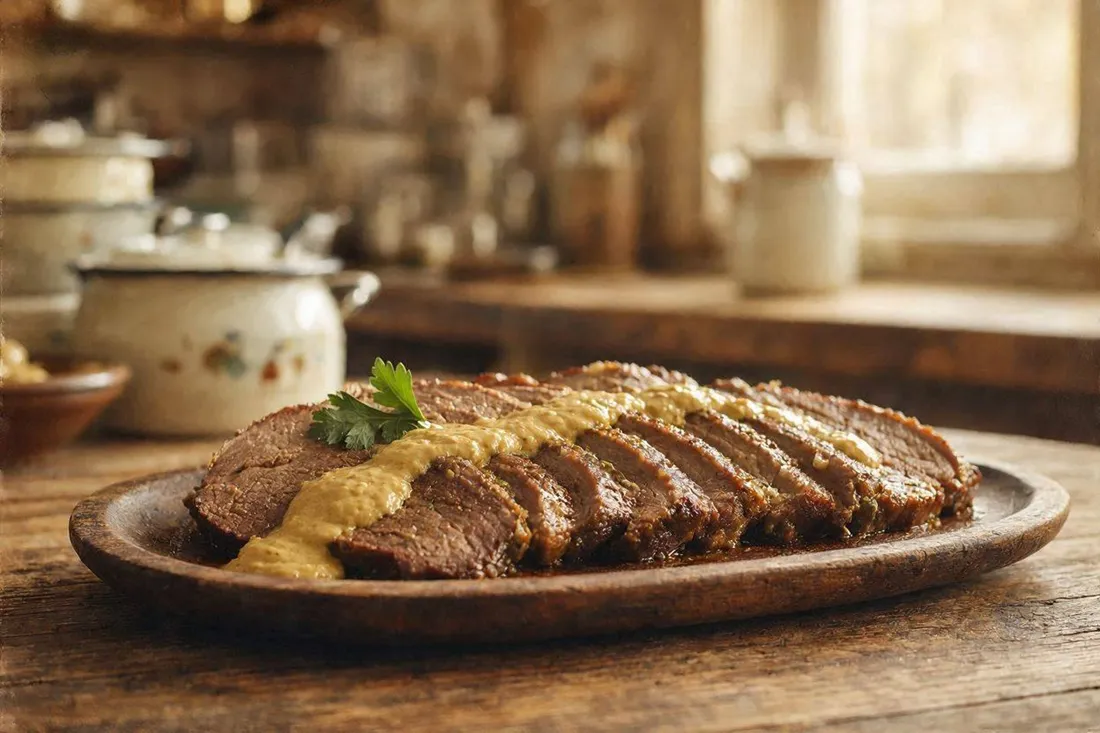
Braised Beef Topside in Mustard Sauce
A lean cut from the leg, slow-braised with onion, garlic, and bacon, then sliced and served in a smooth mustard and lemon sauce.
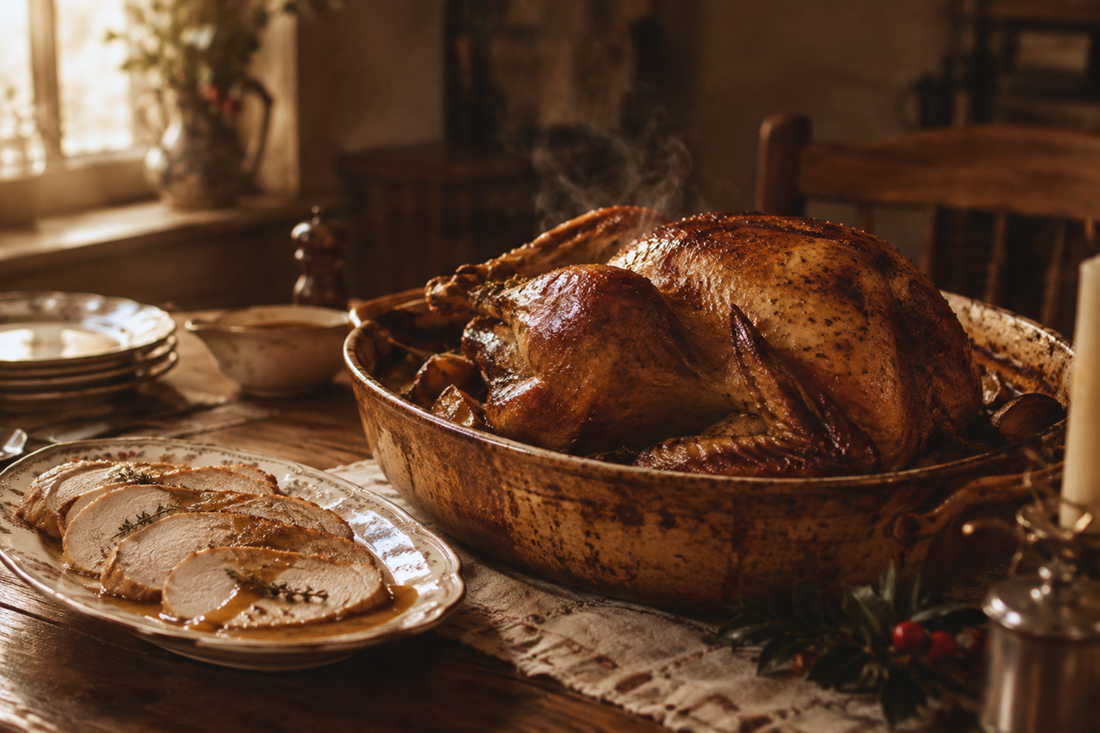
Traditional Roast Turkey with Pan Juices
A whole turkey salted the day before, roasted until golden, and basted throughout with its own pan drippings.
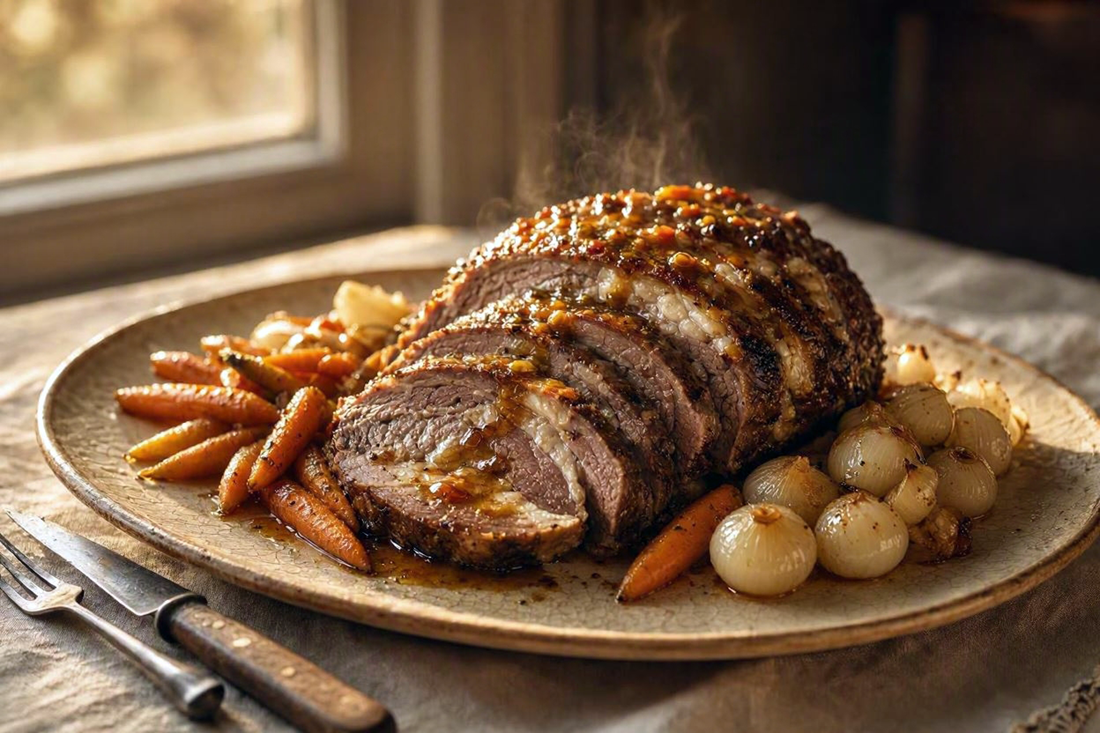
Larded Beef Roast with Pearl Onions and Wine Sauce
A larded, wine-marinated beef roast braised low and slow with veal feet for natural body in the sauce, finished with pearl onions and carrots.