Fish Baked Over Onions
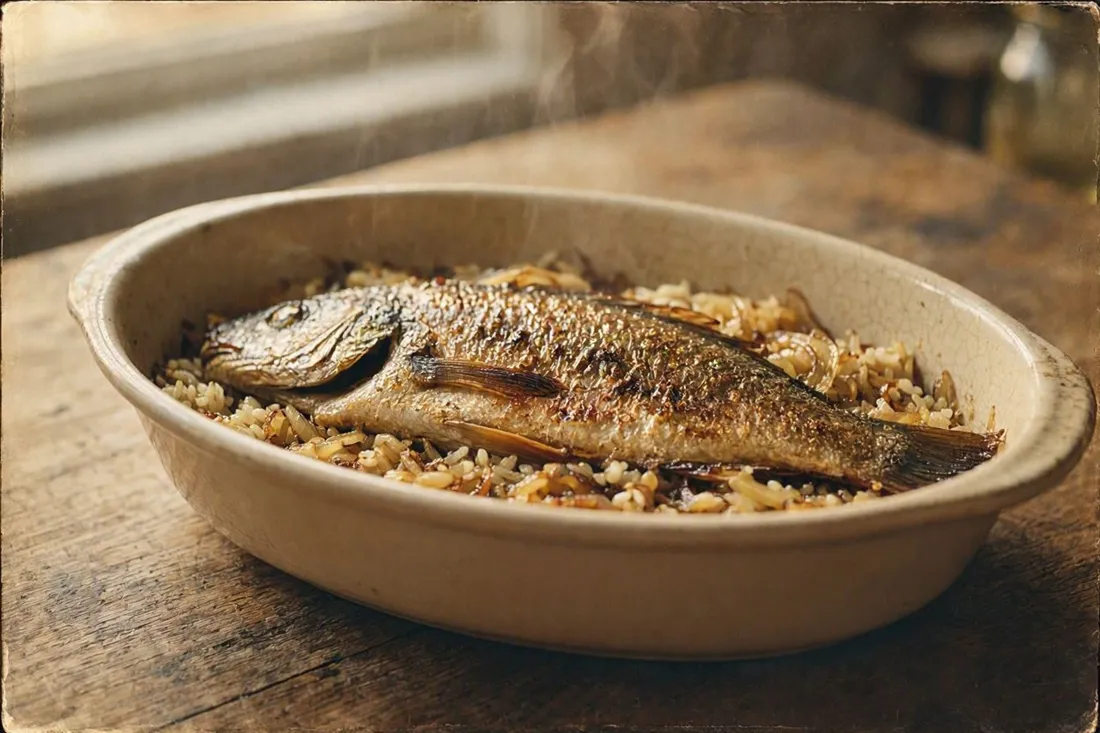
Whole fish baked over a thick bed of paprika onions and rice — a rustic, one-pan Central European dish traditionally served with potato or green salad.
Quick Summary
A whole freshwater fish bakes atop a slow-cooked bed of onions, paprika, and rice until the onions turn soft and syrupy. An early 20th century Central European technique using pantry staples and a single pan. Ready in under 1.5 hours, no marinating needed.
Historical recipe
Modernised adaptation of an early 20th‑century source. Not independently kitchen-tested by Attic Recipes. Quantities, temperatures, and food safety guidance have been updated for a contemporary kitchen — results may vary and errors may exist. Nutritional values, where provided, are estimates only and have not been laboratory tested. Always follow current food safety guidelines for your region. If you have a health condition, allergy, or dietary requirement, consult a qualified professional before preparing this recipe.
Use of this recipe is entirely at your own risk and subject to our Terms of Service and Privacy Policy. Attic Recipes accepts no liability for any adverse outcome.
- Fish
- Gluten
- 1
Clean the fish inside and out. Salt it and score it 2–3 times on each side. Set aside.
Tip Scoring lets the salt and glaze penetrate and helps the fish cook evenly. - 2
Heat half the oil in a skillet and fry the sliced onions until golden.
- 3
Stir in the sweet paprika, then transfer the onions to a large baking dish.
- 4
Add the rinsed rice to the onions, season with salt and pepper, and mix evenly through the onion bed.
- 5
Nestle the fish into the onion and rice mixture in a natural swimming position.
- 6
Pour the hot water and remaining oil around the fish, so the onions stay moist and saucy.
- 7
In a small bowl, whisk together the glaze oil, paprika, and flour, then brush this mixture over the outside of the fish.
Tip This glaze forms a light coating as it bakes and helps color the skin. - 8
Bake at 190°C (375°F) / 170°C fan until the onions have absorbed most of their liquid and the fish is cooked through, about 50–55 minutes.
- 9
Serve the fish directly from the baking dish, or plate it separately with the onions and rice alongside.
Nutrition Information per 1 portion (approx 380g)
Nutritional values are approximate estimates and may vary based on specific ingredients used, preparation methods, and portion sizes.
Serving Suggestions
Serve with a simple potato salad or a green salad, as traditionally paired with this dish.
About This Recipe
This dish comes from a tradition of stretching a single fish into a full family meal by building an entire vegetable and grain base underneath and around it. Carp was the fish of choice in early 20th century Central European kitchens — affordable, widely farmed in freshwater ponds, and sturdy enough to hold up to a long bake. Even the roe wasn’t wasted: home cooks set it aside separately for soup or a cold appetizer.
What makes the method notable is how little it asks of the cook. There’s no separate sauce to build — the onions themselves, cooked down slowly first and then baked alongside the fish, become the sauce, thickening as their moisture reduces in the oven.
Why It Works
Frying the onions before baking pulls out their sweetness and starts breaking down their structure, so that by the time they finish in the oven they’ve collapsed into something closer to a soft, jammy base than a raw vegetable. The rice mixed through them absorbs the released liquid as it cooks, while the thin flour-and-paprika glaze brushed over the fish sets into a light, colored coating rather than a thick crust — enough to protect the fish’s surface without steaming it.
Modern Kitchen Tips
Choose a fish with firm, moist flesh that can withstand the longer bake — trout, catfish, and tilapia all work well. Keep an eye on the onions in the final 10–15 minutes; if they look like they’re catching before the fish is fully cooked, tent the dish loosely with foil.
A classic of early 20th century home cooking, preserved and adapted for the modern kitchen.
The Story Behind This Recipe
Historical Context
Early 20th century recipes for this dish called for carp, then a widely available freshwater fish in Central European households. Any roe found inside the fish was traditionally set aside for soup or a cold appetizer rather than discarded. The technique of baking fish directly over a thick bed of slow-fried onions and rice was a practical way to produce a full meal in a single pan.
Modern Kitchen Adaptation
Carp is difficult to source and rarely sold for eating outside Central Europe. This version calls for a widely available freshwater fish such as trout, catfish, or tilapia instead. Quantities for the paprika, oil, salt, and rice were not given in the original method and have been standardized here based on typical proportions for this style of onion-baked dish. Oven temperature and cooking time were also not specified and have been estimated for a home oven.
This recipe is an independent modern adaptation developed from historical sources in the public domain. It is provided for informational and educational purposes only and does not constitute professional dietary, nutritional, or medical advice. Food preparation involves inherent risks. The reader assumes full responsibility for safe food handling, ingredient sourcing, and adherence to current local food safety guidelines. The site operator accepts no liability for outcomes resulting from the preparation or consumption of this recipe.
One recipe.
Every week.
You Might Also Like
More recipes you'll enjoy
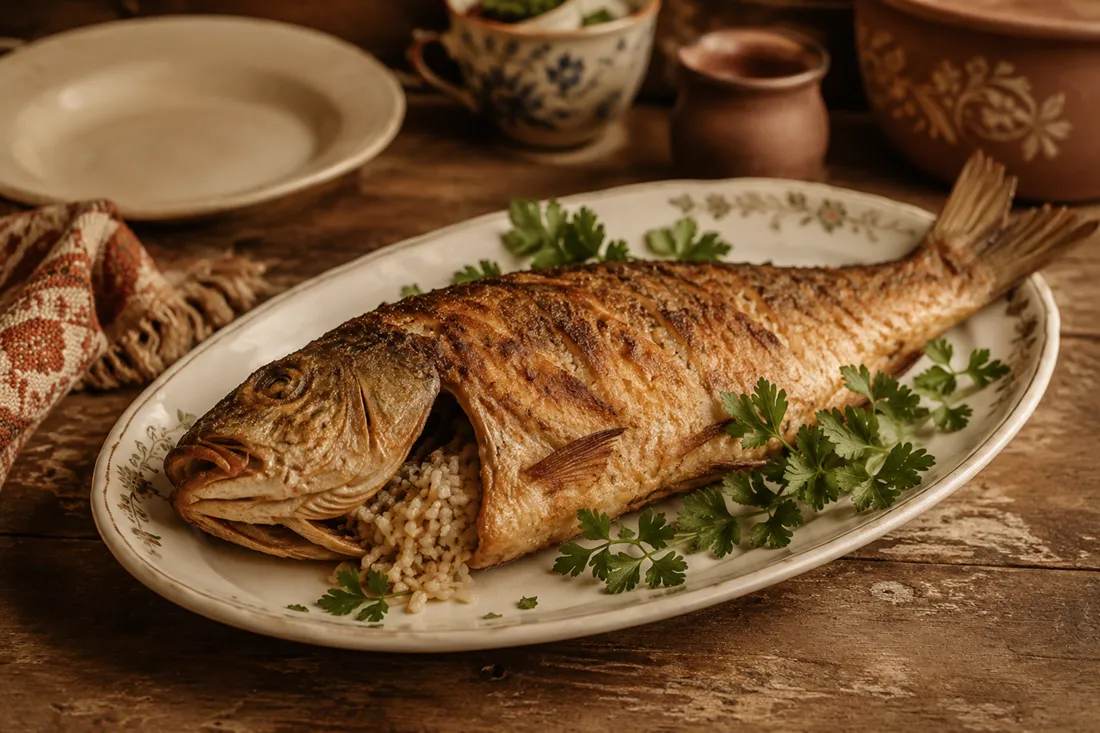
Fried Stuffed Whole Fish with Rice Filling
A whole fish stuffed with a seasoned rice, onion, parsley, and paprika filling, sewn shut, dredged in flour, pan-fried, and finished in the oven.
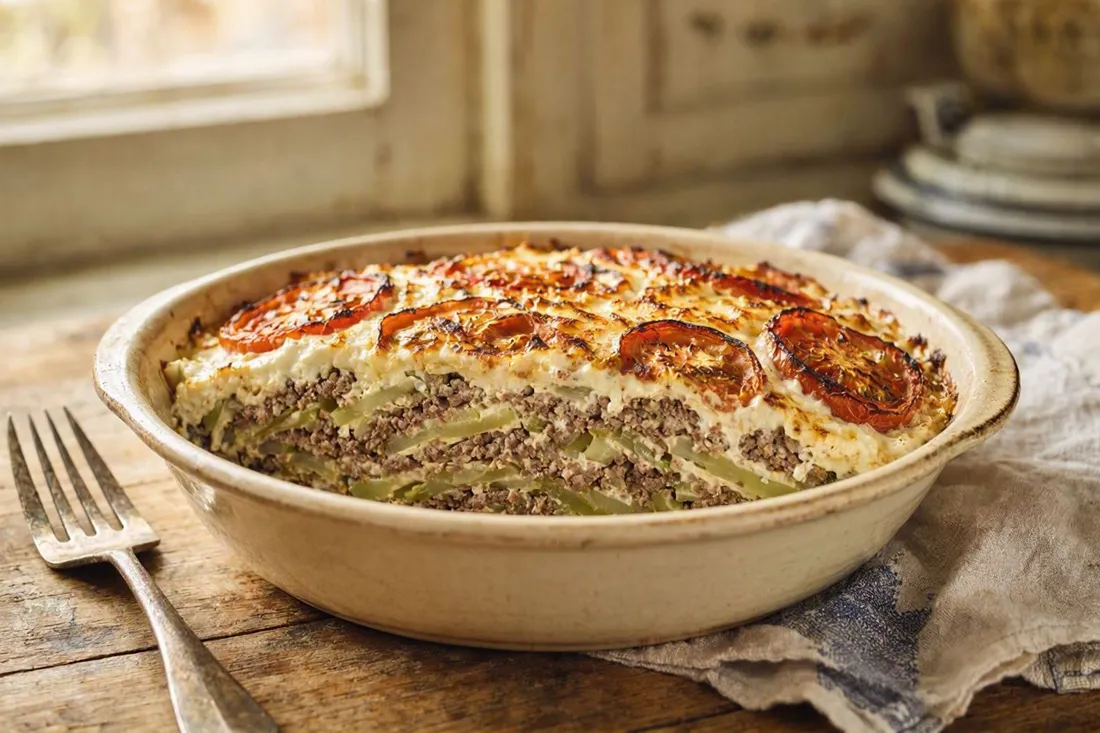
Kohlrabi and Veal Musaka
A layered casserole of braised kohlrabi and seasoned ground veal, baked under sour cream and tomato - a comforting vintage Central European dish.
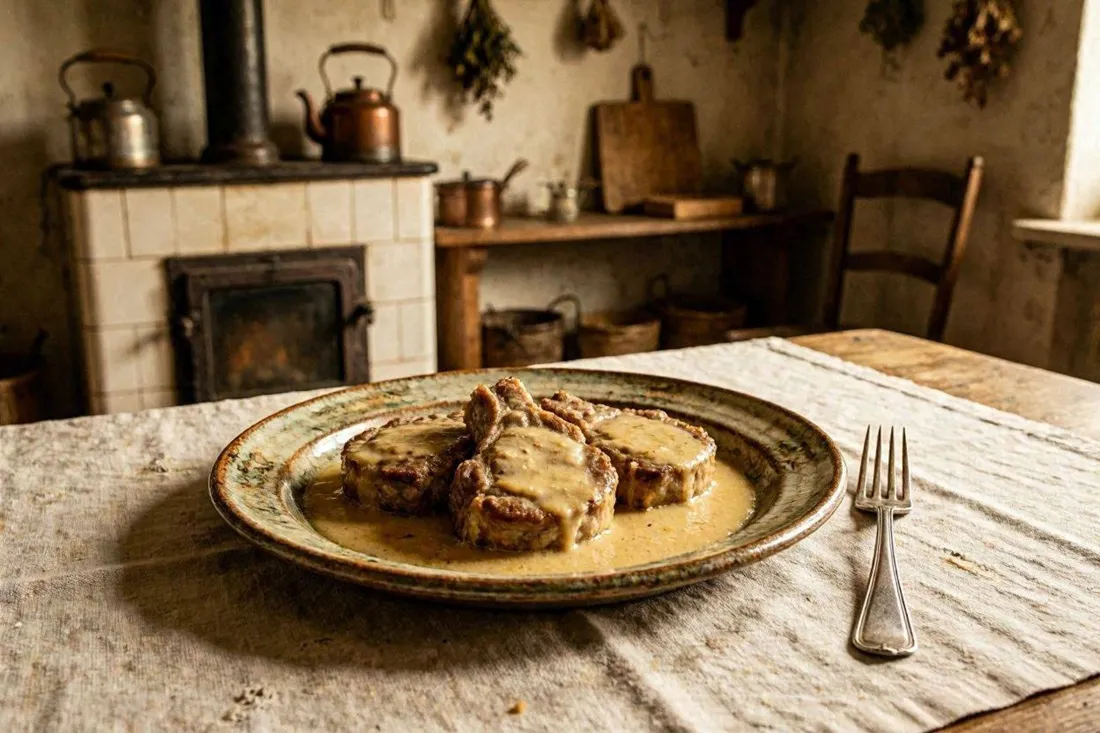
Braised Pork Chops in White Wine and Sour Cream Sauce
Pork loin chops braised with onion, carrot, parsley root, and celery root in white wine, then finished with a strained sour cream sauce.