Bola (New Year's Wine and Fruit Punch)
A festive New Year's punch of oranges, pineapple, and peaches macerated in sugar, then mixed with white wine, cognac, and maraschino liqueur
Quick Summary
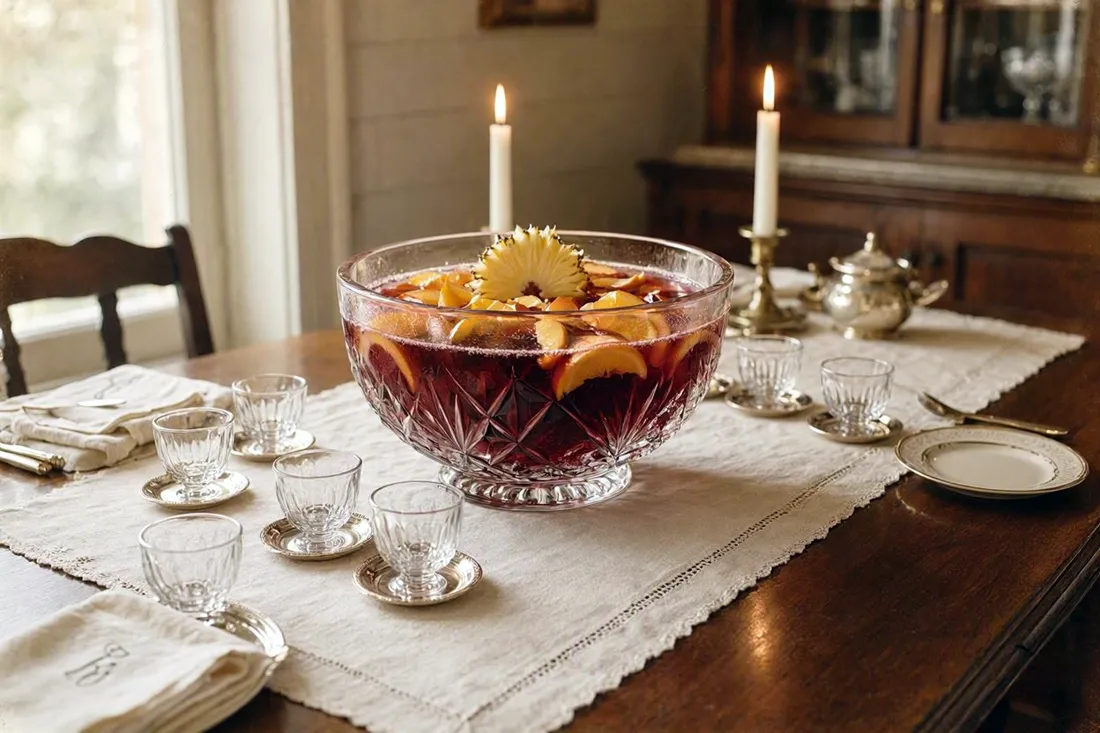
Bola is a festive Central European fruit and wine punch featuring oranges, pineapple, and peaches macerated in sugar. Built with white wine or champagne, cognac, and maraschino liqueur, this classic party drink requires no cooking and takes 20 minutes to prepare.
Historical recipe
Modernised adaptation of an early 20th‑century source. Not independently kitchen-tested by Attic Recipes. Quantities, temperatures, and food safety guidance have been updated for a contemporary kitchen — results may vary and errors may exist. Nutritional values, where provided, are estimates only and have not been laboratory tested. Always follow current food safety guidelines for your region. If you have a health condition, allergy, or dietary requirement, consult a qualified professional before preparing this recipe.
Use of this recipe is entirely at your own risk and subject to our Terms of Service and Privacy Policy. Attic Recipes accepts no liability for any adverse outcome.
- Sulphites
Additional notes
-
Note
This punch is strongly alcoholic, combining wine, cognac, and maraschino liqueur. It is not suitable for pregnant women or anyone under 18, and those who are sensitive to alcohol should be mindful of serving size.
- 1
Peel the oranges, peel and core the pineapple, and drain the canned peaches. Slice all the fruit so that the combined weight is about 1kg.
- 2
Place the sliced fruit in a deep porcelain or glass bowl.
- 3
Sprinkle the sugar over the fruit and let it sit until the sugar has fully dissolved into the fruit's juices.
Tip This takes roughly an hour. The fruit will release liquid as the sugar draws it out - this becomes part of the punch base. - 4
Pour the dissolved sugar and fruit mixture together with the white wine (or champagne).
- 5
Add the cognac and the maraschino liqueur, and mix everything together well.
- 6
Transfer to a round punch bowl and place in a cool spot to chill.
- 7
Bring it out at midnight and serve.
Nutrition Information per 1 cup (approx 220ml)
Nutritional values are approximate estimates and may vary based on specific ingredients used, preparation methods, and portion sizes.
Serving Suggestions
Ladle into small punch cups and serve well chilled. A proper bola service - matching bowl, ladle, and cups - is a nice traditional touch if you have one, but any large punch bowl works.
About This Recipe
Bola is a fruit-and-wine punch built around a simple idea: macerate fruit in sugar until it releases its juice, then build the punch on top of that sweetened base with wine and a couple of spirits. It’s a festive, communal drink, traditionally ladled out from a dedicated punch bowl rather than mixed individually - the kind of thing set out on the table as the centerpiece of a New Year’s gathering.
The winter version, meant for New Year’s Eve, leans on canned peaches alongside fresh oranges and pineapple, since fresh peaches simply weren’t available at that time of year. A summer version of the same drink could be made with entirely fresh fruit instead, following the same basic method.
Why It Works
Macerating the fruit in sugar before adding any liquid does two things at once: it draws out the fruit’s own juice to sweeten and flavor the base, and it lets the sugar fully dissolve without needing any heat. Once that base is built, the wine, cognac, and maraschino liqueur are simply stirred in - there’s no cooking involved, so the punch relies entirely on the quality of the wine and fruit used.
Modern Kitchen Tips
If serving a crowd, taste and adjust sweetness before chilling - fruit ripeness and the sweetness of the wine used can vary quite a bit. A ladle of sparkling water or extra champagne on the side lets guests lighten their own glass if the punch turns out on the stronger side.
A classic of early 20th century home cooking, preserved and adapted for the modern kitchen.
The Story Behind This Recipe
Historical Context
Bola was a festive punch served to welcome the New Year in Central European households, and could also be made in summer using entirely fresh fruit. For a winter New Year's version, canned peaches stood in for fresh ones, combined with fresh oranges and pineapple. Serving it from a dedicated punch bowl and ladle, with matching cups, was considered part of the presentation.
Modern Kitchen Adaptation
The original describes the fruit only by total weight rather than exact amounts for each type, so the split between oranges, pineapple, and canned peaches given here is an estimate. The serving count has also been estimated based on the total volume of wine, spirits, and fruit. This punch is strongly alcoholic between the wine, cognac, and maraschino liqueur, and is not suitable for pregnant women or anyone under 18; serve and offer a non-alcoholic alternative accordingly.
This recipe is an independent modern adaptation developed from historical sources in the public domain. It is provided for informational and educational purposes only and does not constitute professional dietary, nutritional, or medical advice. Food preparation involves inherent risks. The reader assumes full responsibility for safe food handling, ingredient sourcing, and adherence to current local food safety guidelines. The site operator accepts no liability for outcomes resulting from the preparation or consumption of this recipe.
One recipe.
Every week.
You Might Also Like
More recipes you'll enjoy
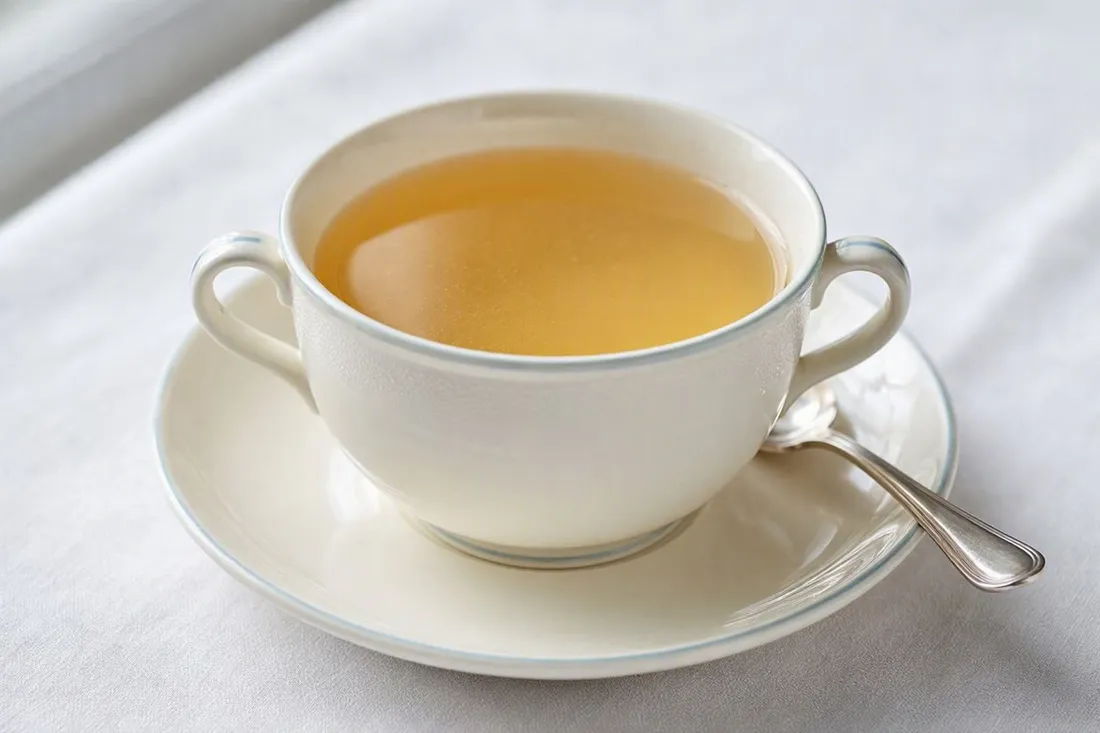
Cold Beef Consommé
A fully clarified beef and chicken broth, simmered for hours and clarified with egg whites, then served ice-cold in cups without any garnish.
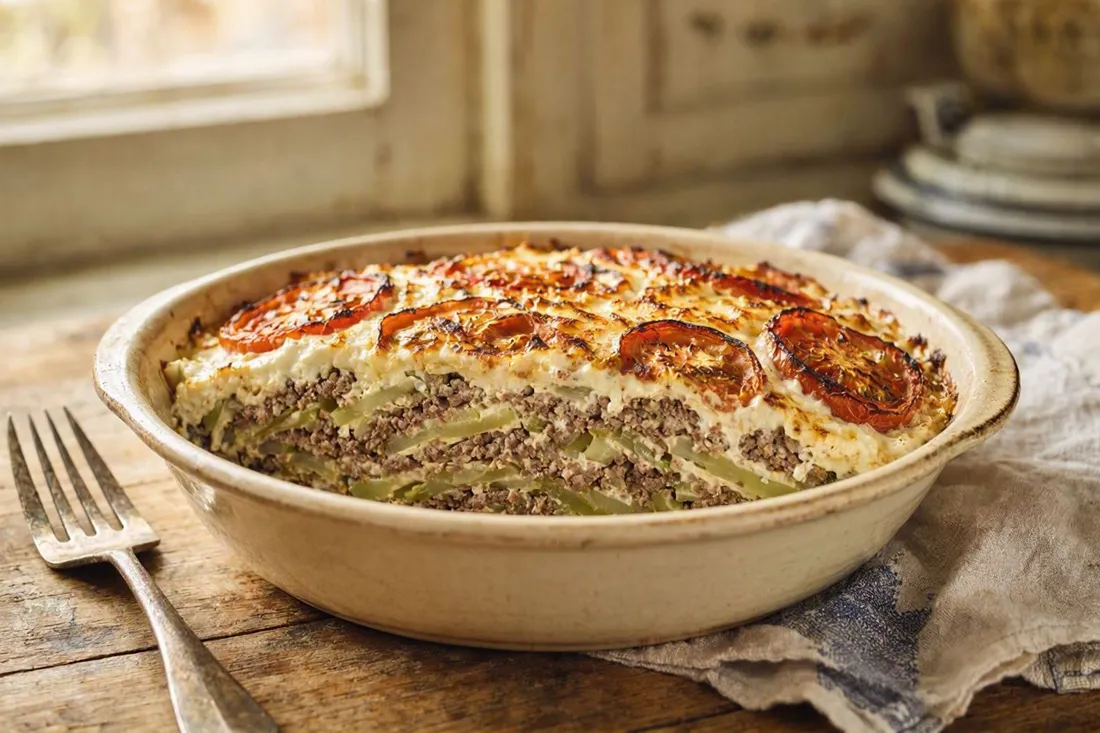
Kohlrabi and Veal Musaka
A layered casserole of braised kohlrabi and seasoned ground veal, baked under sour cream and tomato - a comforting vintage Central European dish.
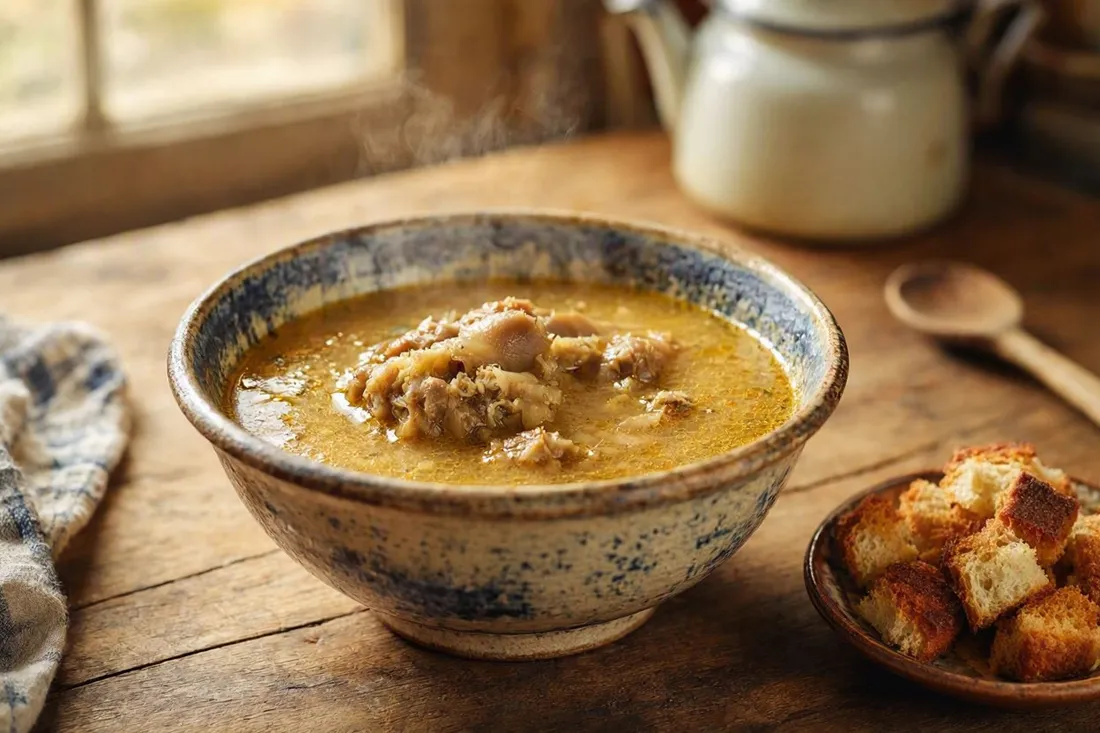
Veal Trotter Soup with Egg and Vinegar Finish
A rich, collagen-thickened soup made from slow-simmered veal trotters, finished with a tangy egg and wine vinegar mixture and served with toasted bread cubes.