Baked Noodles in Roast Pan Drippings
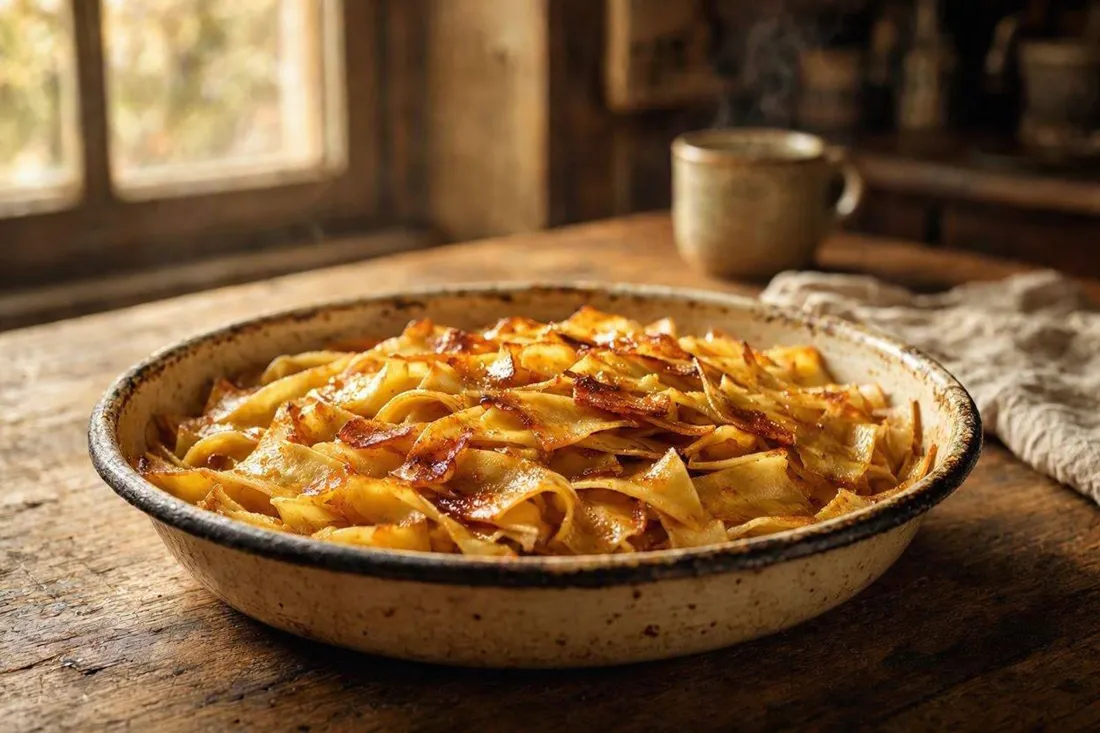
Homemade wide egg noodles are blanched, then finished in the same pan used to roast meat, soaking up the leftover drippings before a short bake.
Quick Summary
Homemade egg noodles are boiled until tender, then tossed directly in the leftover drippings from a roast and baked until the edges turn golden. Works with the pan juices from any roast — a simple way to stretch a roast dinner into a fuller meal without dirtying a second pan.
Historical recipe
Modernised adaptation of an early 20th‑century source. Not independently kitchen-tested by Attic Recipes. Quantities, temperatures, and food safety guidance have been updated for a contemporary kitchen — results may vary and errors may exist. Nutritional values, where provided, are estimates only and have not been laboratory tested. Always follow current food safety guidelines for your region. If you have a health condition, allergy, or dietary requirement, consult a qualified professional before preparing this recipe.
Use of this recipe is entirely at your own risk and subject to our Terms of Service and Privacy Policy. Attic Recipes accepts no liability for any adverse outcome.
- Gluten
- Eggs
- 1
Combine the flour, eggs, and salt. Mix, adding water a little at a time, until you have a firm dough.
- 2
Roll the dough out into a thin sheet and let it rest until the surface is no longer wet to the touch.
Tip This brief drying step firms up the sheet, which makes it much easier to cut into clean noodles. - 3
Cut the sheet into wide noodles.
- 4
Bring a pot of salted water to a boil. Add the noodles and blanch until just tender.
- 5
Drain the noodles and rinse them under cold water.
- 6
Add the blanched noodles to the same pan used to roast the meat, making sure there are still drippings in it. Shake the pan a few times to coat the noodles evenly.
- 7
Bake at 200°C (400°F) / 180°C fan for 15-20 minutes, until the noodle edges turn golden.
- 8
Serve alongside the roast.
Nutrition Information per 1 serving (about 1/6 of the batch)
Nutritional values are approximate estimates and may vary based on specific ingredients used, preparation methods, and portion sizes.
Serving Suggestions
This dish is meant to be paired with whatever roast produced the drippings used to finish it — it isn't intended to stand on its own. Works with any roast meat that leaves enough pan juices behind, from a simple pot roast to a caraway-crusted veal roast.
About This Recipe
This is less a standalone recipe than a habit worth reviving: instead of scraping a roasting pan clean and starting fresh for a side dish, homemade noodles go straight into whatever drippings are left, and finish cooking right there. The noodles pick up all the flavor the roast left behind, and a second pan never gets dirty.
It’s a small, practical technique that made sense in a kitchen where nothing useful went to waste — and it still holds up today as a simple way to turn a roast dinner into something a little more complete.
Why It Works
Blanching the noodles first means they’re already tender before they ever meet the pan drippings, so the short bake that follows is really about absorption and browning rather than cooking them through. Tossing the noodles in the drippings while both are still warm helps the fat coat every strand evenly, and the brief time in a hot oven crisps the edges just enough to add texture against the softer noodles underneath.
Modern Kitchen Tips
Don’t rinse the noodles too thoroughly after blanching — a light rinse to stop the cooking is enough. Rinsing away too much of the surface starch can make it harder for the drippings to cling to the noodles in the pan. If your drippings are on the thin side, a splash of the roast’s reserved sauce (if you have one) works just as well.
A classic of early 20th century home cooking, preserved and adapted for the modern kitchen.
The Story Behind This Recipe
Historical Context
Home cooks of the period built this dish directly around whatever roast was already being served for dinner, using the same pan and whatever drippings remained rather than making a separate sauce. It's less a fixed recipe than a technique for using pan drippings fully rather than discarding them, and it works equally well with the drippings from any roasted meat.
Modern Kitchen Adaptation
Salt quantities, the amount of water needed for the dough, oven temperature, and the quantity of drippings were not specified in the original and are estimated here based on standard proportions for a noodle dough of this size and a typical amount of pan drippings left after roasting.
This recipe is an independent modern adaptation developed from historical sources in the public domain. It is provided for informational and educational purposes only and does not constitute professional dietary, nutritional, or medical advice. Food preparation involves inherent risks. The reader assumes full responsibility for safe food handling, ingredient sourcing, and adherence to current local food safety guidelines. The site operator accepts no liability for outcomes resulting from the preparation or consumption of this recipe.
One recipe.
Every week.
You Might Also Like
More recipes you'll enjoy
Creamy Bacon, Mushroom and Vegetable Sauce
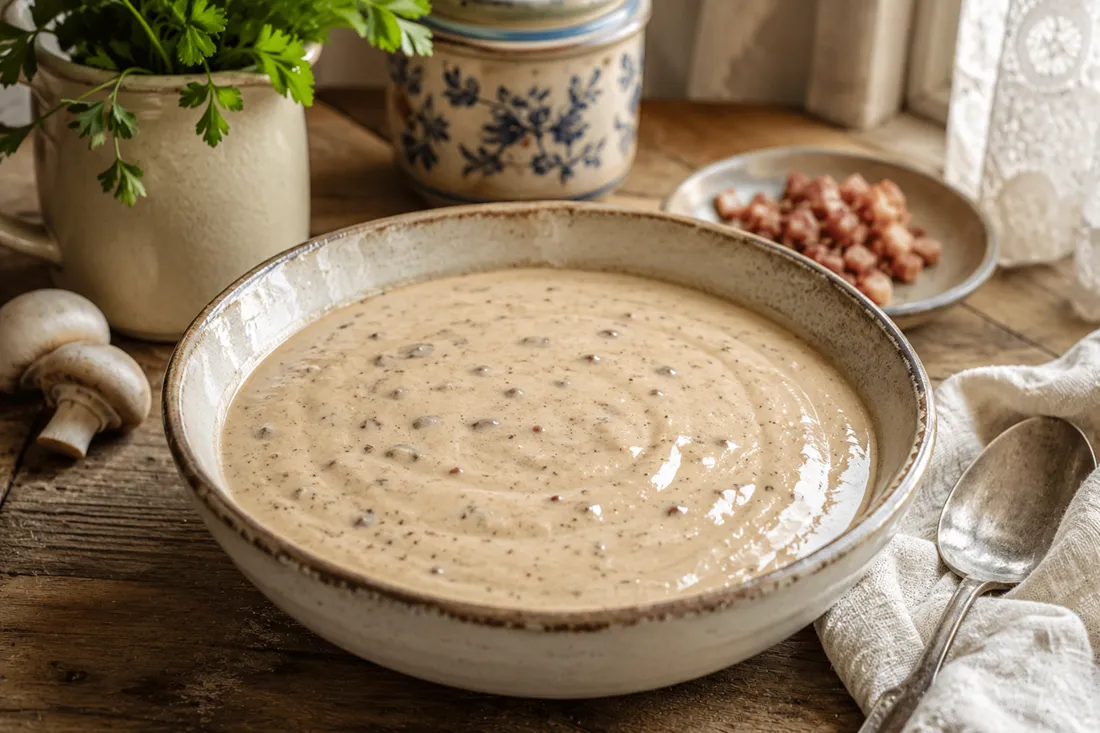
Bacon, onion, carrot, and mushrooms are browned, then simmered in a butter-and-flour milk sauce and puréed until smooth and creamy.
Roast Veal with Caraway and Sour Cream Sauce
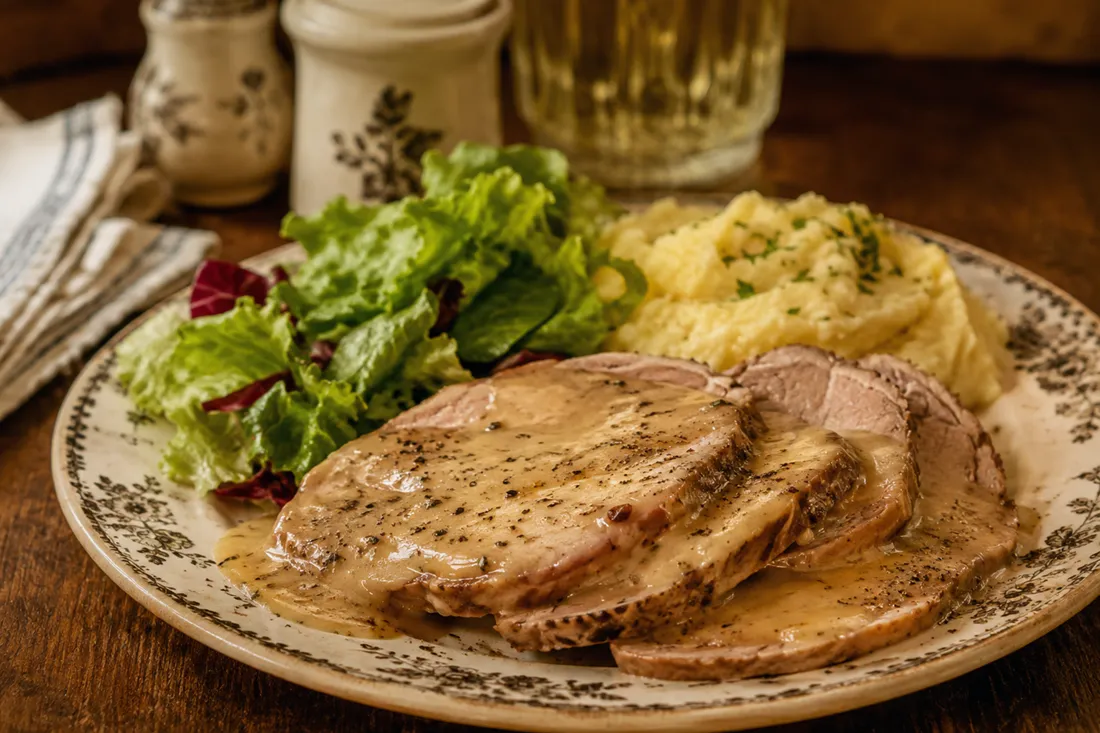
Veal loin is blanched, roasted with hot lard and caraway until browned, then deboned and finished in a sauce of reduced pan juices and sour cream.
Slow-Baked Veal and Onion Casserole
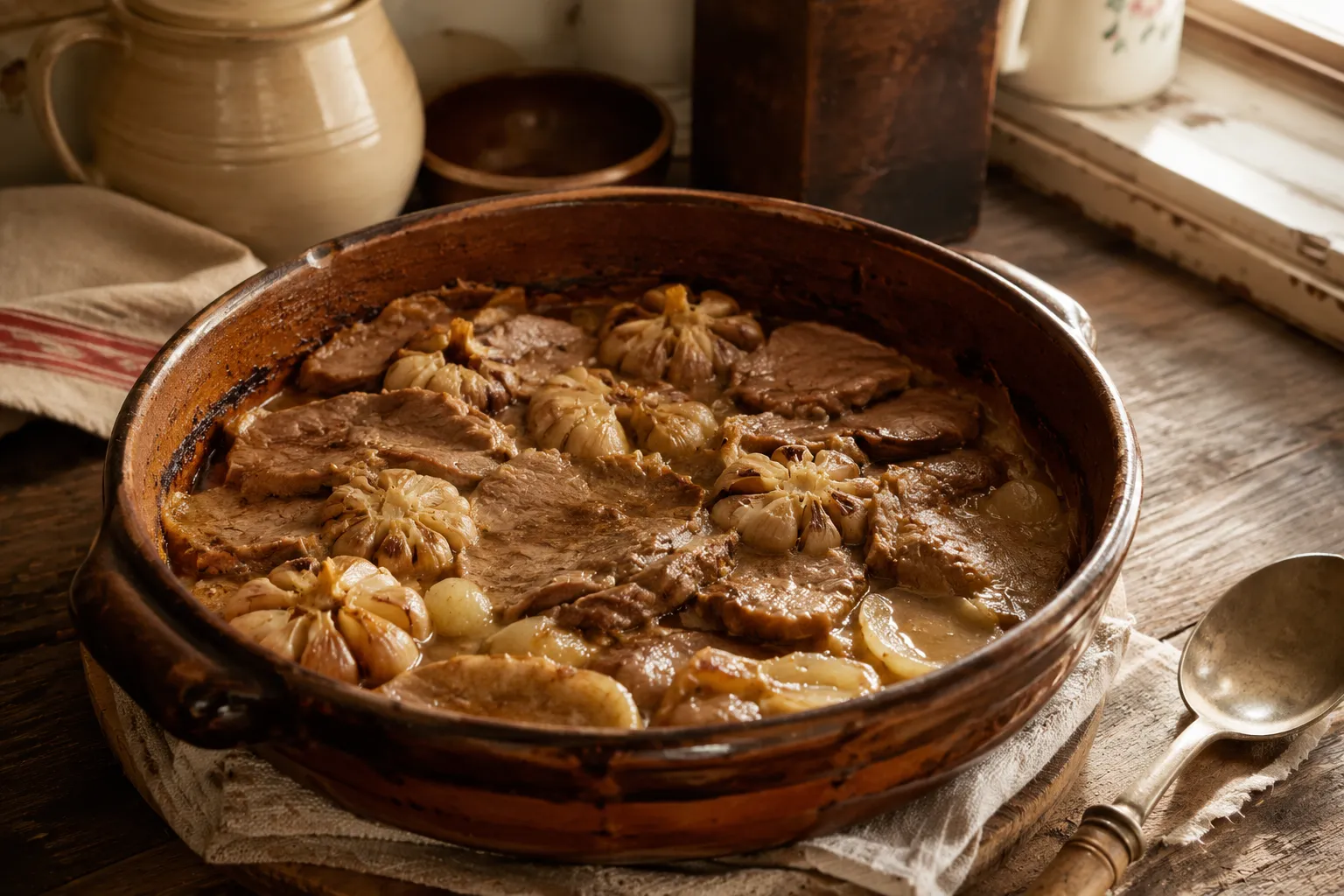
Veal, small onions, and whole garlic heads layered in a pot, covered in a light vinegar-water mixture, and cooked low and slow until fork-tender.