Slow-Baked Veal and Onion Casserole
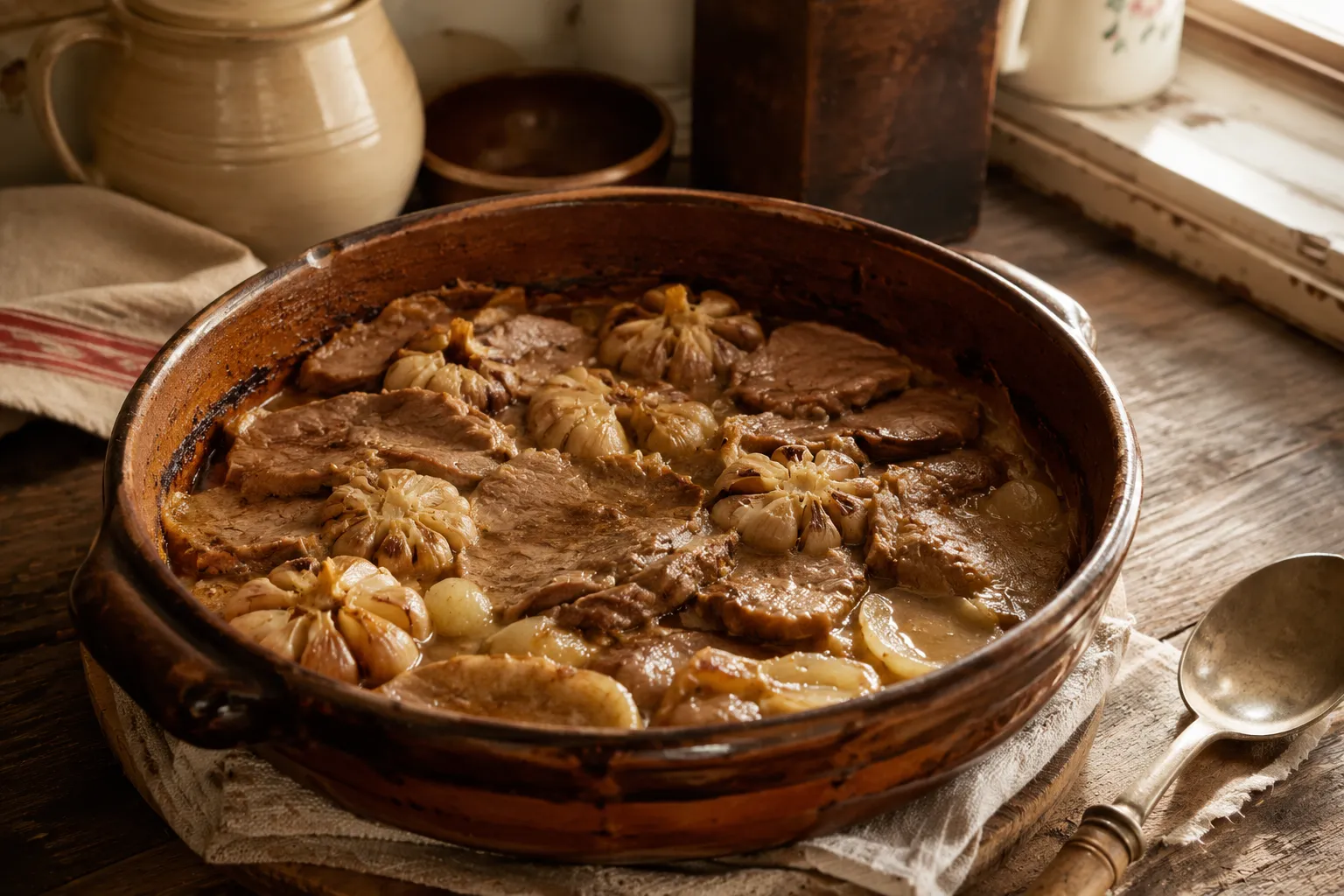
Veal, small onions, and whole garlic heads layered in a pot, covered in a light vinegar-water mixture, and cooked low and slow until fork-tender.
Quick Summary
Layers of veal and small onions, studded with whole garlic heads, braise for 3-4 hours in a light vinegar broth until tender. Also known as chomlek (comlek), from the Turkish çömlek, meaning clay pot — reflecting Ottoman-era influence on Central European kitchens.
Historical recipe
Modernised adaptation of an early 20th‑century source. Not independently kitchen-tested by Attic Recipes. Quantities, temperatures, and food safety guidance have been updated for a contemporary kitchen — results may vary and errors may exist. Nutritional values, where provided, are estimates only and have not been laboratory tested. Always follow current food safety guidelines for your region. If you have a health condition, allergy, or dietary requirement, consult a qualified professional before preparing this recipe.
Use of this recipe is entirely at your own risk and subject to our Terms of Service and Privacy Policy. Attic Recipes accepts no liability for any adverse outcome.
- 1
Peel the onions and garlic heads. Wash the veal and cut it into pieces roughly the size of an onion.
- 2
In your pot, layer a row of onions with a few garlic heads tucked in among them. Season with salt and pepper, and dot with a little of the lard.
- 3
Layer veal pieces over the onions. Repeat the layering — onion and garlic, seasoning, lard, then meat — until everything is used.
Tip Don't stir once the layers are built. Keeping them intact is part of what gives the finished dish its structure. - 4
Mix the water and vinegar together, then pour over the layers so the food is soaked through by the liquid without being fully submerged.
- 5
Cover the pot tightly with its lid.
- 6
Oven method: bake at 150°C (300°F) / 130°C fan for 3-4 hours, until the veal is fork-tender.
Tip Check once or twice during cooking — the layers should stay moist. If the pot looks dry, add a splash more of the water-vinegar mix. - 7
Stovetop method (closer to the original technique): place the covered pot over the lowest heat setting on your stove — around level 1-2 on a typical 1-5 dial — and cook for 3-4 hours.
Tip Gently shake the pot from time to time rather than stirring, to prevent the bottom from scorching without disturbing the layers. - 8
Serve hot, straight from the pot.
Nutrition Information per 1 serving (about 1/6 of the casserole)
Nutritional values are approximate estimates and may vary based on specific ingredients used, preparation methods, and portion sizes.
Serving Suggestions
Serve hot with crusty bread to soak up the vinegar-onion braising liquid. A simple side of plain rice also works well against the richness of the dish.
About This Recipe
This is a dish built almost entirely on patience: veal and onion, layered again and again with whole heads of garlic tucked between them, then left to cook low and slow until the onions collapse into the meat and the whole pot turns tender and deeply savory. There’s no browning step, no sauce to build separately — just layers, a light vinegar-water soak, and time.
It’s known in some places by the name chomlek, or comlek — a name that comes directly from the clay pot it was traditionally cooked in, and a technique that made its way into Central European home kitchens generations ago. The method has stayed remarkably unchanged since: seal the pot, keep the heat low, and let it work on its own for the better part of an afternoon.
Why It Works
The long, low cook does two things at once. The onions break down slowly into the braising liquid, turning sweet and almost jam-like, while the vinegar in the liquid gently tenderizes the veal over the hours it takes to cook through. Because the pot stays covered and the layers are never stirred, the meat essentially poaches in the onion-and-garlic liquid it creates as it cooks, rather than simmering loose in a thin broth — which is why the texture ends up so much richer than the short ingredient list would suggest.
Modern Kitchen Tips
Resist the urge to stir — shaking the pot gently is enough to prevent scorching without breaking down the layers you built. If you’re using the stovetop method, a heavy-bottomed pot matters more here than almost anywhere else in slow cooking, since thin cookware is far more likely to scorch on the bottom over such a long, low cook.
A classic of early 20th century home cooking, preserved and adapted for the modern kitchen.
The Story Behind This Recipe
Historical Context
This dish is also known by the name chomlek (comlek), from the Turkish çömlek, meaning clay pot — the name itself describes the traditional cooking vessel. It entered Central European kitchens during the centuries of Ottoman presence in the region, and the layering-and-slow-cooking method it's built around remained a fixture of home cooking well into the 20th century. Home cooks of the period cooked it directly on the stovetop over very low heat for several hours, sealing the pot to hold in moisture and checking periodically to prevent scorching.
Modern Kitchen Adaptation
Salt, pepper, fat quantity, and the total volume of the water-vinegar mixture were not specified in the original and are estimated here based on the proportions of meat, onion, and garlic. Lard is kept as the historically correct fat; a neutral oil or butter works as a substitute in equal quantity. The most significant adaptation is moving the primary method to the oven: the original relied entirely on very low stovetop heat for 3-4 hours, which requires close attention to avoid scorching. Baking at a low, steady oven temperature achieves the same slow, even cook with far less risk. The stovetop method is included as an alternative for those who prefer it or don't have an oven-safe pot.
This recipe is an independent modern adaptation developed from historical sources in the public domain. It is provided for informational and educational purposes only and does not constitute professional dietary, nutritional, or medical advice. Food preparation involves inherent risks. The reader assumes full responsibility for safe food handling, ingredient sourcing, and adherence to current local food safety guidelines. The site operator accepts no liability for outcomes resulting from the preparation or consumption of this recipe.
One recipe.
Every week.
You Might Also Like
More recipes you'll enjoy
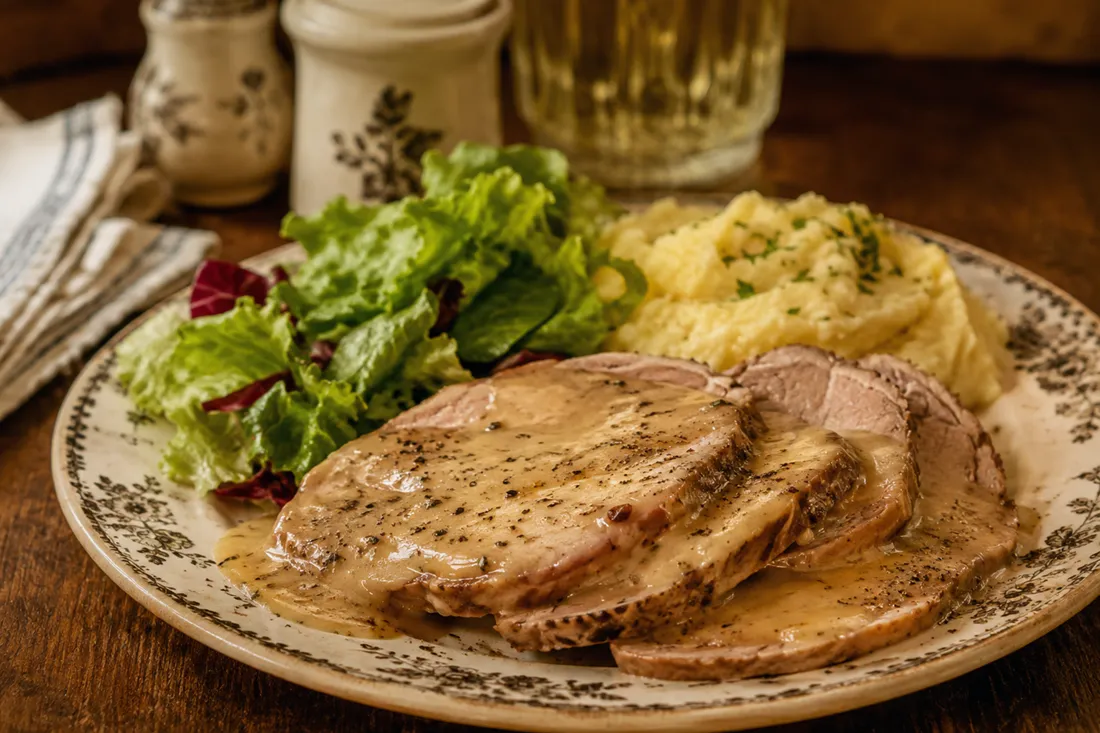
Roast Veal with Caraway and Sour Cream Sauce
Veal loin is blanched, roasted with hot lard and caraway until browned, then deboned and finished in a sauce of reduced pan juices and sour cream.
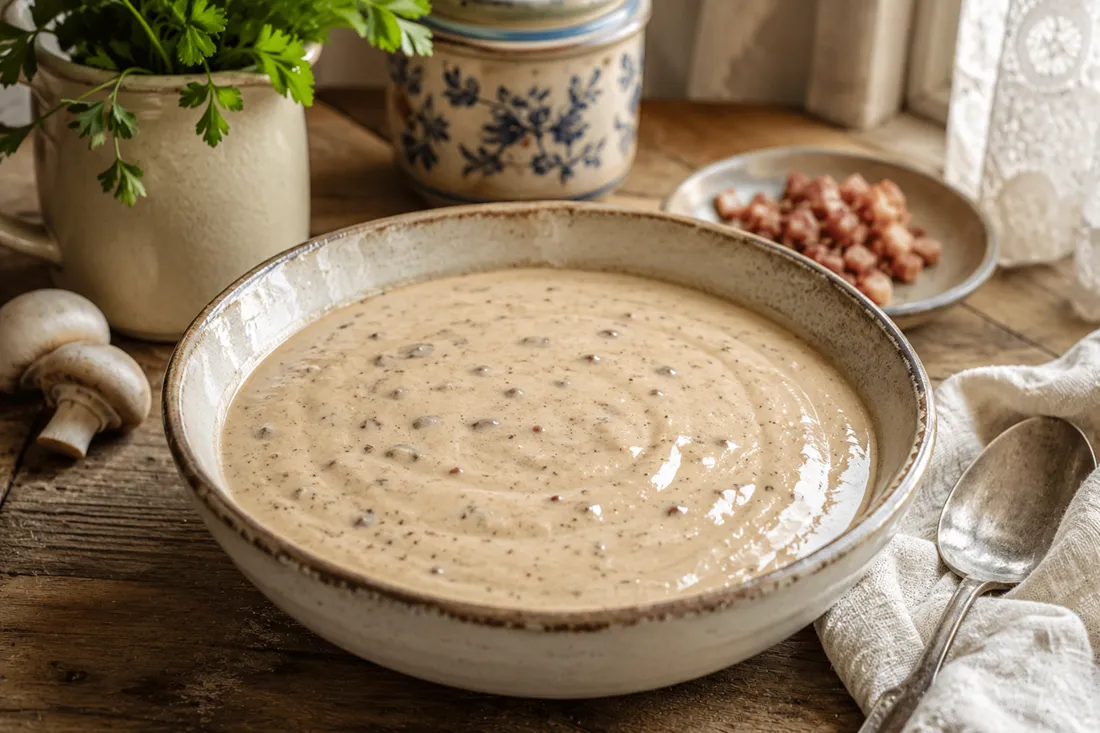
Creamy Bacon, Mushroom and Vegetable Sauce
Bacon, onion, carrot, and mushrooms are browned, then simmered in a butter-and-flour milk sauce and puréed until smooth and creamy.
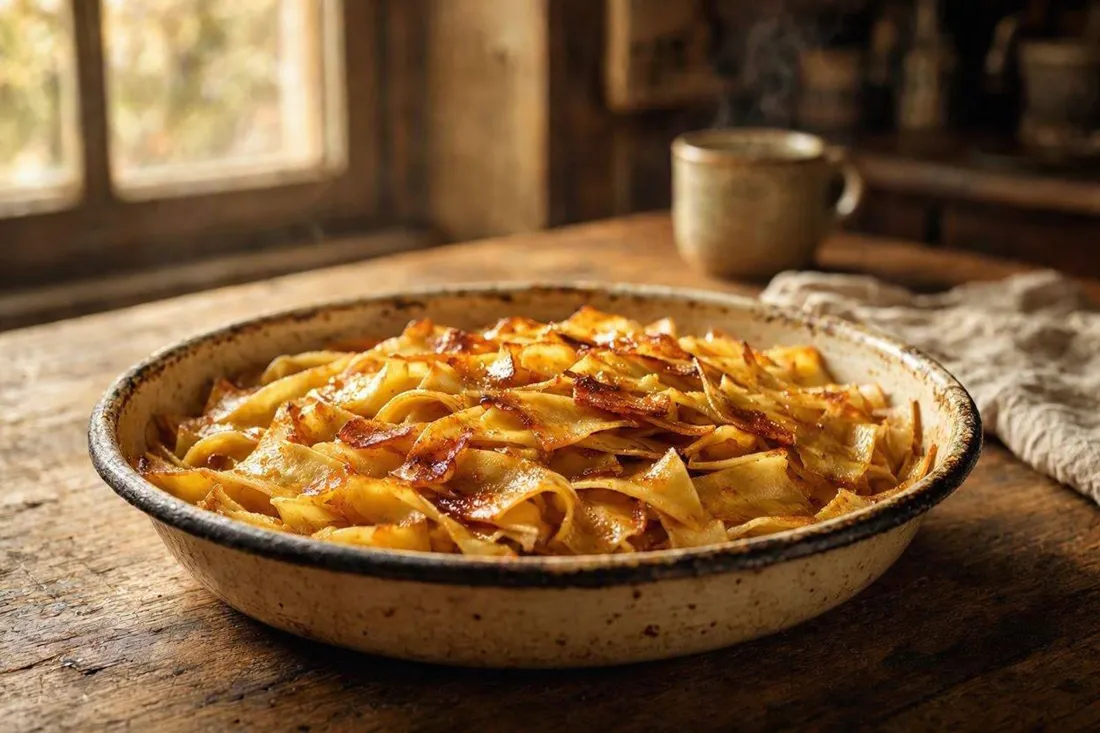
Baked Noodles in Roast Pan Drippings
Homemade wide egg noodles are blanched, then finished in the same pan used to roast meat, soaking up the leftover drippings before a short bake.