Roast Veal with Caraway and Sour Cream Sauce
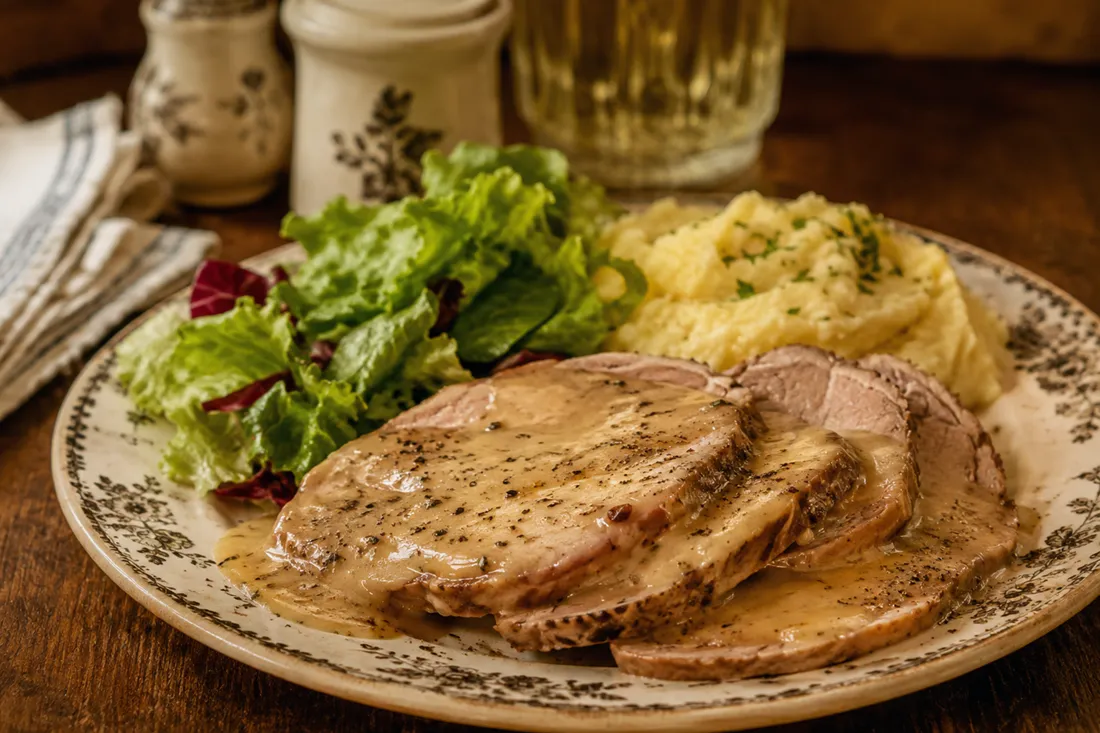
Veal loin is blanched, roasted with hot lard and caraway until browned, then deboned and finished in a sauce of reduced pan juices and sour cream.
Quick Summary
Veal loin (bubrežnjak) is blanched, roasted under hot lard and caraway until browned, then deboned and simmered in a sauce of reduced pan juices and sour cream. Served with salad and puree, it's a two-stage technique — roast, then braise briefly in its own sauce.
This recipe uses How Veal Was Divided: A Guide to Traditional Butchery Cuts — prepare it in advance if you haven't already.
Historical recipe
Modernised adaptation of an early 20th‑century source. Not independently kitchen-tested by Attic Recipes. Quantities, temperatures, and food safety guidance have been updated for a contemporary kitchen — results may vary and errors may exist. Nutritional values, where provided, are estimates only and have not been laboratory tested. Always follow current food safety guidelines for your region. If you have a health condition, allergy, or dietary requirement, consult a qualified professional before preparing this recipe.
Use of this recipe is entirely at your own risk and subject to our Terms of Service and Privacy Policy. Attic Recipes accepts no liability for any adverse outcome.
- Dairy
Additional notes
-
Note
This dish is high in saturated fat, from both the lard used in roasting and the sour cream in the sauce — worth keeping in mind if you're watching saturated fat intake.
- 1
Blanch the veal briefly in hot water, then pat completely dry with a towel.
- 2
Season with the salt and place in a roasting pan.
- 3
Pour the hot melted lard (30g) over the meat and sprinkle with the caraway seeds.
- 4
Roast at 180°C (350°F) / 160°C fan for about 75-90 minutes, until richly browned, adding the reserved water and lard a little at a time as needed to keep the pan from drying out.
Tip Keep the oven at a gentle, steady heat rather than high heat — the goal is an even, deep brown crust, not a fast sear. - 5
Remove the meat from the oven and wipe the caraway seeds off the surface.
- 6
Stir the tablespoon of water into the pan juices, then strain them into a small saucepan. Simmer until the water evaporates and the juices reduce and concentrate.
- 7
Move the meat to a cutting board, remove it from the bone, and cut into pieces about 3-4cm.
- 8
Return the meat pieces to the reduced pan juices, stir in the sour cream, and bring back to a boil once more.
- 9
Arrange on a serving dish and serve with salad and a puree.
Nutrition Information per 1 serving (about 1/4 of the roast with sauce)
Nutritional values are approximate estimates and may vary based on specific ingredients used, preparation methods, and portion sizes.
Serving Suggestions
Serve with a simple green salad and a potato or root vegetable puree, as suggested in the original — the puree is especially good for soaking up the sour cream sauce.
About This Recipe
This is a roast that doesn’t stop being cooked once it comes out of the oven. Veal loin is blanched, roasted under hot lard and a dusting of caraway until the outside turns deeply browned, then — after the meat comes off the bone — everything goes back together one more time: the meat, the reduced pan juices, and a generous spoon of sour cream, simmered briefly into a tangy, clinging sauce.
It’s a two-stage technique that early 20th century cooks used often — roast first for flavor and structure, then finish gently in a sauce built from what the roast itself produced. Nothing from the pan goes to waste.
Why It Works
Blanching the veal before roasting tightens the surface slightly and helps it brown more evenly once it hits the hot lard. Roasting low and slow, with small additions of water and fat along the way, builds a deep crust without drying out the meat underneath. The real payoff comes after: reducing the pan juices concentrates everything the roast released during cooking, and finishing the deboned meat in that reduction with sour cream turns what would otherwise be a simple roast into something closer to a braise — tender, coated, and considerably richer than the roast alone.
Modern Kitchen Tips
Don’t skip wiping the caraway off the meat before making the sauce — left on, the seeds can turn slightly bitter once simmered a second time in the sour cream. Reduce the pan juices over medium-low heat rather than high heat; you’re aiming for concentration, not a hard boil that could scorch the fond stuck to the pan.
A classic of early 20th century home cooking, preserved and adapted for the modern kitchen.
The Story Behind This Recipe
Historical Context
The original recipe specifies bubrežnjak — the kidney-adjacent section of the veal loin, known in English simply as veal loin — as the preferred cut for this dish, prized for staying tender through the roast-then-braise technique. Home cooks of the period roasted the meat under hot lard and caraway, then made a point of using every part of the cooking process: the crust for flavor, the pan juices for the sauce, and a final simmer in sour cream to bring it all together. For more on identifying this and other traditional veal cuts, see our companion guide on veal butchery.
Modern Kitchen Adaptation
Oven temperature, roasting time, the quantities of salt, caraway, lard, and water used during roasting were not specified in the original and are estimated here based on standard practice for a 1kg veal roast. The technique itself — roast, reduce the juices, then finish the deboned meat in a sour cream sauce — is kept exactly as described, since it's what gives the dish its character.
This recipe is an independent modern adaptation developed from historical sources in the public domain. It is provided for informational and educational purposes only and does not constitute professional dietary, nutritional, or medical advice. Food preparation involves inherent risks. The reader assumes full responsibility for safe food handling, ingredient sourcing, and adherence to current local food safety guidelines. The site operator accepts no liability for outcomes resulting from the preparation or consumption of this recipe.
One recipe.
Every week.
You Might Also Like
More recipes you'll enjoy
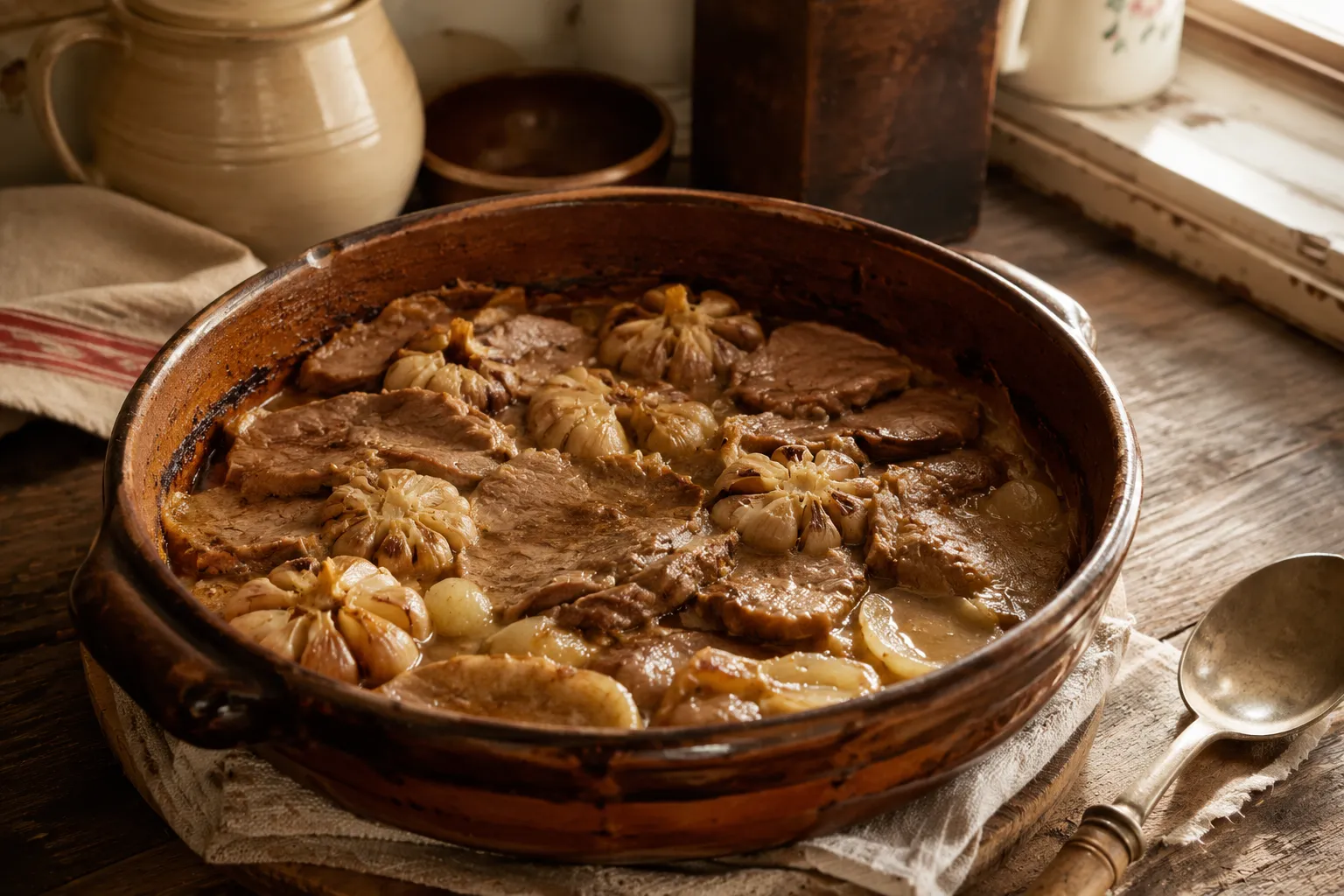
Slow-Baked Veal and Onion Casserole
Veal, small onions, and whole garlic heads layered in a pot, covered in a light vinegar-water mixture, and cooked low and slow until fork-tender.
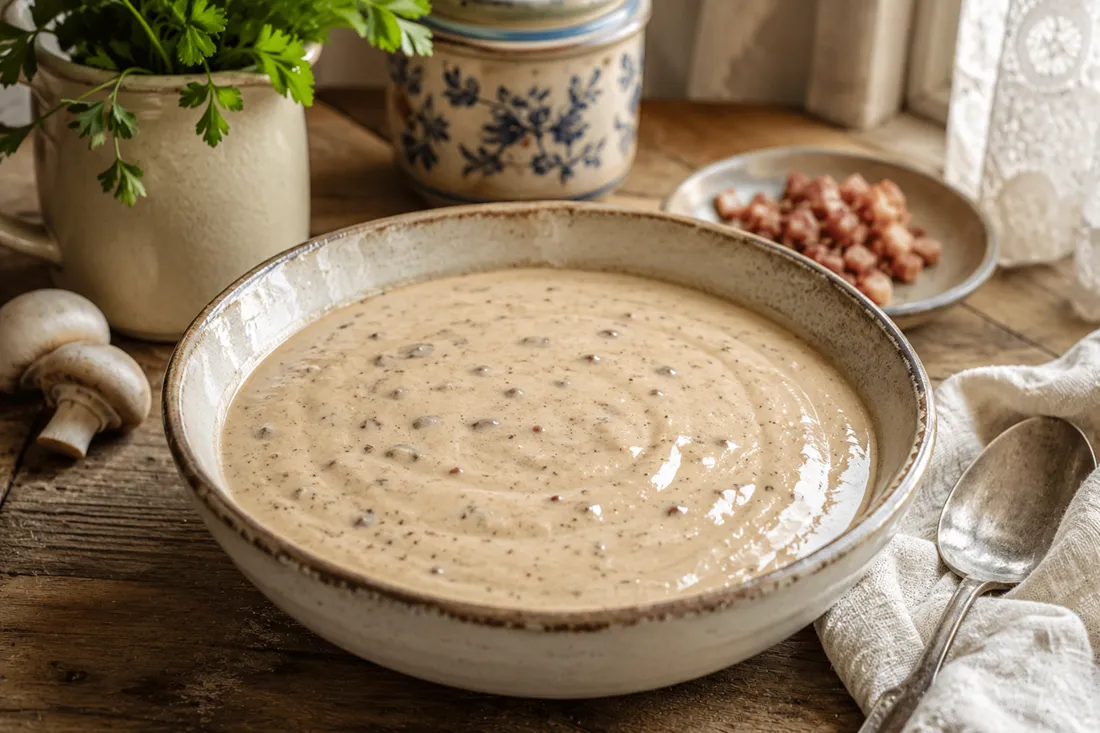
Creamy Bacon, Mushroom and Vegetable Sauce
Bacon, onion, carrot, and mushrooms are browned, then simmered in a butter-and-flour milk sauce and puréed until smooth and creamy.
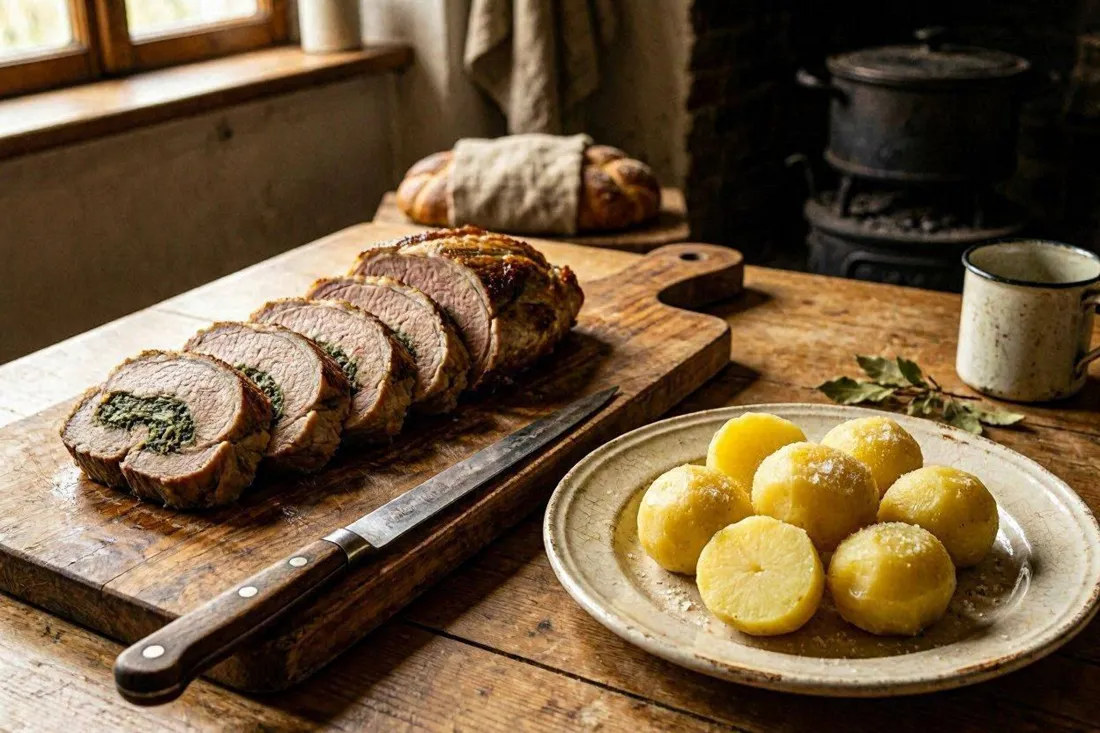
Veal Breast Stuffed with Spinach
Boned veal breast stuffed with spinach folded into a white roux sauce and sour cream, sewn closed and roasted until golden and tender.