Creamy Bacon, Mushroom and Vegetable Sauce
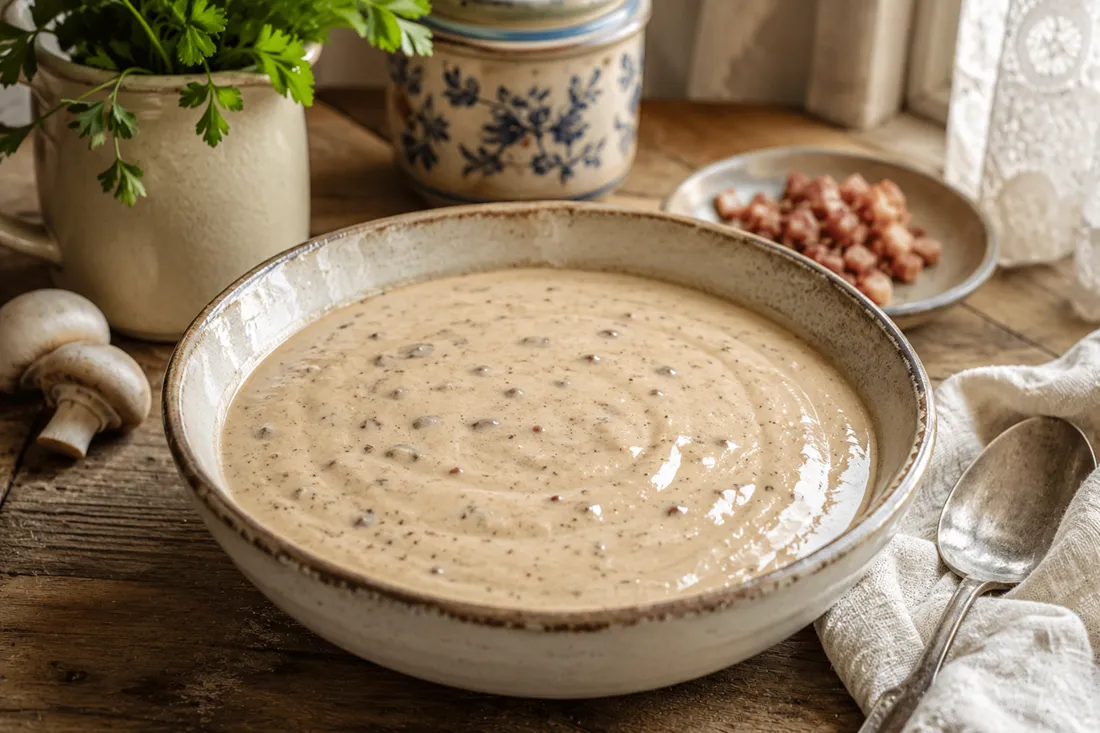
Bacon, onion, carrot, and mushrooms are browned, then simmered in a butter-and-flour milk sauce and puréed until smooth and creamy.
Quick Summary
Diced bacon, onion, carrot, and mushrooms are browned, then simmered 20 minutes in a roux-and-milk sauce and puréed smooth. The result is a rich, vegetable-forward cream sauce closer to a velouté than a plain béchamel.
Historical recipe
Modernised adaptation of an early 20th‑century source. Not independently kitchen-tested by Attic Recipes. Quantities, temperatures, and food safety guidance have been updated for a contemporary kitchen — results may vary and errors may exist. Nutritional values, where provided, are estimates only and have not been laboratory tested. Always follow current food safety guidelines for your region. If you have a health condition, allergy, or dietary requirement, consult a qualified professional before preparing this recipe.
Use of this recipe is entirely at your own risk and subject to our Terms of Service and Privacy Policy. Attic Recipes accepts no liability for any adverse outcome.
- Dairy
- Gluten
- 1
In a pot, cook the bacon until it renders its fat.
- 2
Add the onion, carrot, and mushrooms and cook together until softened.
- 3
Stir in the parsley, salt, and pepper, then transfer the mixture to a plate and set aside.
- 4
In the same pot, add the butter and flour. Cook for about 2 minutes, stirring constantly, until lightly golden but not browned — this is your roux.
Tip A darker roux will change the color and flavor of the finished sauce, so keep the heat moderate here. - 5
Pour in the milk gradually, whisking continuously to prevent lumps, until the sauce is smooth.
- 6
Once the sauce begins to simmer, return the bacon and vegetable mixture to the pot.
- 7
Simmer for 20 minutes, watching closely and stirring occasionally to prevent scorching on the bottom.
- 8
Purée the sauce until completely smooth.
- 9
Reheat thoroughly and serve.
Nutrition Information per 1 serving (about 1/6 of the sauce)
Nutritional values are approximate estimates and may vary based on specific ingredients used, preparation methods, and portion sizes.
Serving Suggestions
Serve over roasted or boiled meat, poured over rice or noodles, or as a rich base for a baked vegetable gratin.
About This Recipe
Don’t let the name fool you — this isn’t the plain butter-flour-milk sauce that “béchamel” usually brings to mind. Bacon, onion, carrot, and mushrooms are browned first, then simmered directly in a classic roux-and-milk sauce until everything softens together, and the whole thing is puréed smooth at the end. What comes out is rich, faintly smoky from the bacon, and considerably more complex than its name in the original suggests.
It’s a good example of how loosely the term was used in home kitchens of the period — any milk sauce built on a butter-and-flour base could earn the name, regardless of what else went into the pot.
Why It Works
Browning the bacon and vegetables before they ever meet the sauce builds a layer of flavor that a plain roux-and-milk base doesn’t have on its own — the fond left in the pot after that step feeds directly into the roux made right after. Simmering the vegetables in the sauce for a full 20 minutes softens them enough that puréeing turns the whole thing silky rather than just thick, and the flour keeps the finished sauce stable and glossy instead of separating once blended.
Modern Kitchen Tips
An immersion blender makes the puréeing step far easier than transferring hot sauce to a stand blender in batches — just be sure to blend thoroughly, since any unblended vegetable pieces will stand out against the otherwise smooth texture. For an extra-silky finish, pass the puréed sauce through a fine sieve or food mill afterward to catch any remaining bits of bacon — not essential, but worth it if texture matters to you. If the sauce feels too thick after puréeing, thin it with a splash of warm milk rather than water, to keep the flavor from diluting.+
A classic of early 20th century home cooking, preserved and adapted for the modern kitchen.
The Story Behind This Recipe
Historical Context
This dish is named besamel umak — béchamel sauce — in the original, though it goes well beyond the classic French mother sauce that English-speaking cooks typically associate with that name: butter, flour, and milk alone, with no vegetables left in the finished sauce. Home cooks of the period used the term more loosely, applying it to any sauce built on a roux-and-milk base, even one enriched with bacon, vegetables, and mushrooms and then puréed smooth. The result sits closer to what English-language kitchens would call a velouté-style purée than a plain béchamel, though the roux-and-milk technique underneath it is the same.
Modern Kitchen Adaptation
Salt, pepper, parsley quantity, and the roux cooking time were not specified in the original and are estimated here based on standard proportions for a sauce of this size. 'suva slanina' is translated as dry-cured bacon, the closest widely available equivalent in English-speaking kitchens; pancetta is a reasonable substitute if you prefer a milder cure.
This recipe is an independent modern adaptation developed from historical sources in the public domain. It is provided for informational and educational purposes only and does not constitute professional dietary, nutritional, or medical advice. Food preparation involves inherent risks. The reader assumes full responsibility for safe food handling, ingredient sourcing, and adherence to current local food safety guidelines. The site operator accepts no liability for outcomes resulting from the preparation or consumption of this recipe.
One recipe.
Every week.
You Might Also Like
More recipes you'll enjoy
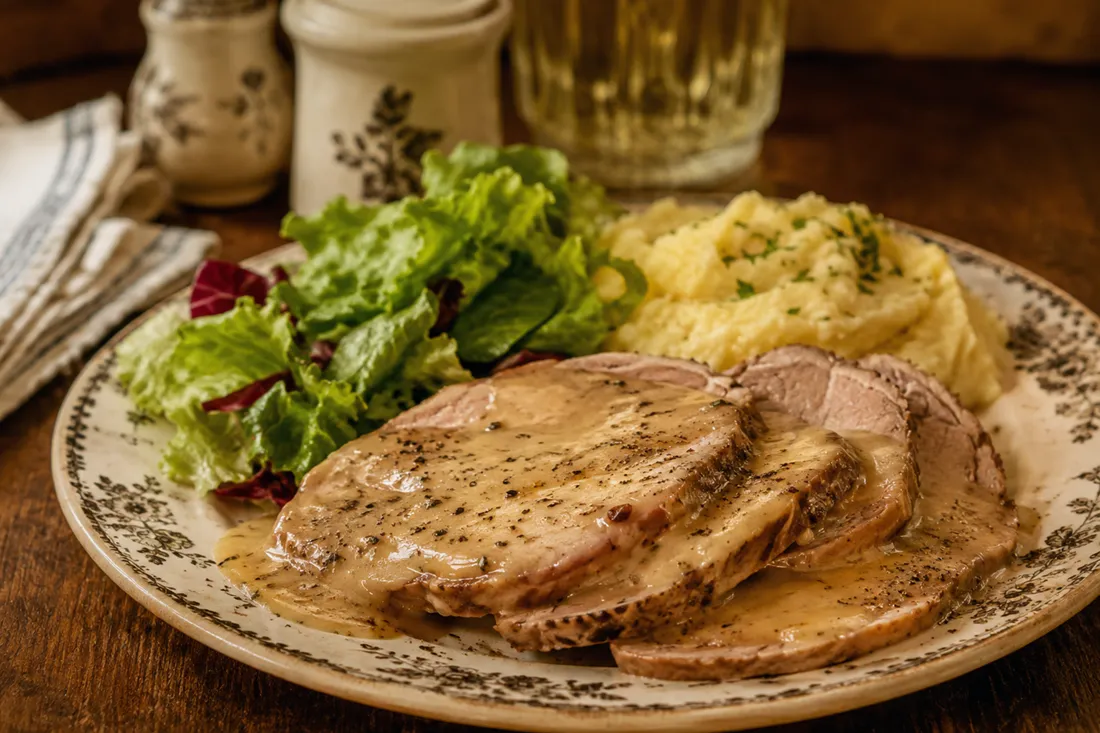
Roast Veal with Caraway and Sour Cream Sauce
Veal loin is blanched, roasted with hot lard and caraway until browned, then deboned and finished in a sauce of reduced pan juices and sour cream.
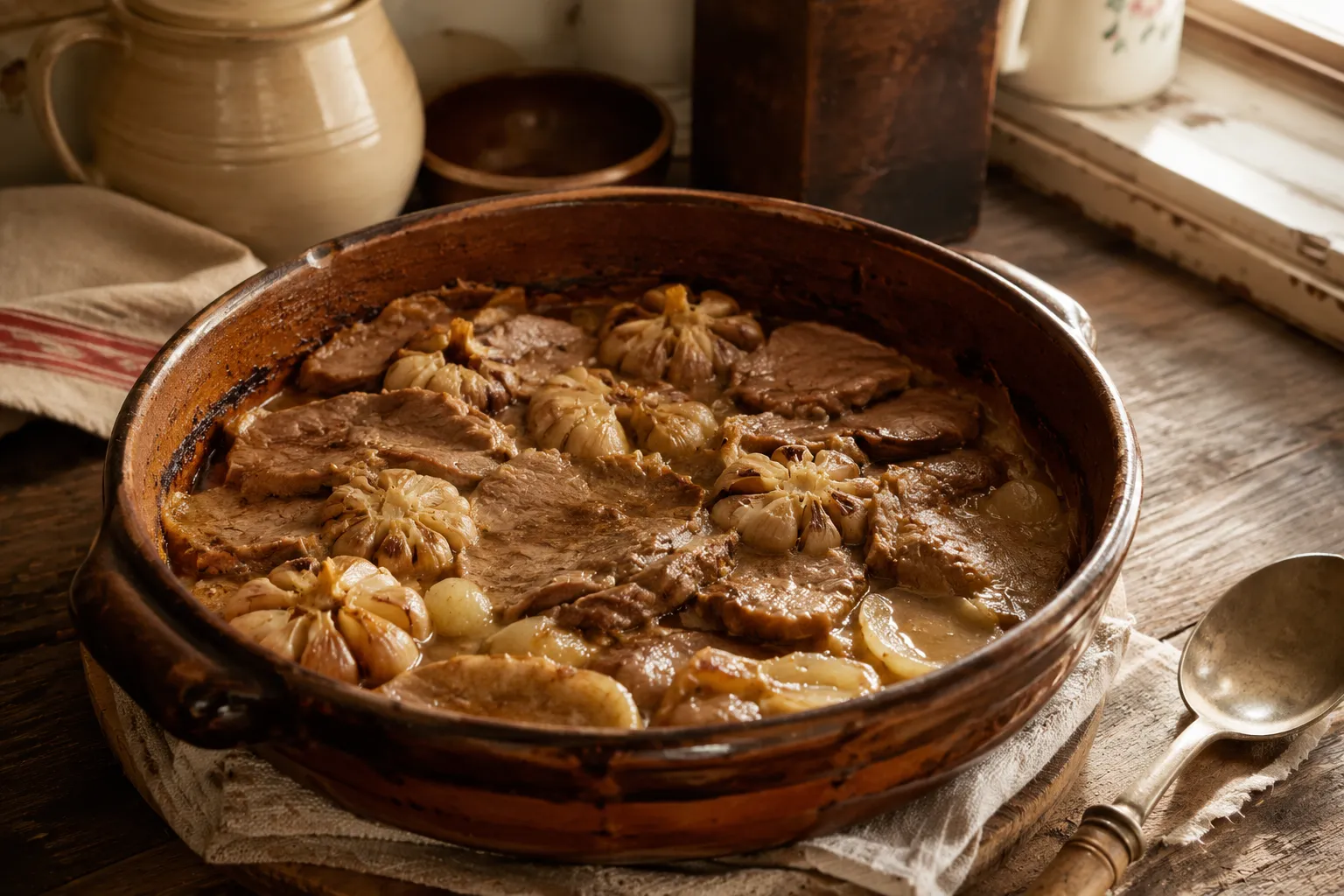
Slow-Baked Veal and Onion Casserole
Veal, small onions, and whole garlic heads layered in a pot, covered in a light vinegar-water mixture, and cooked low and slow until fork-tender.
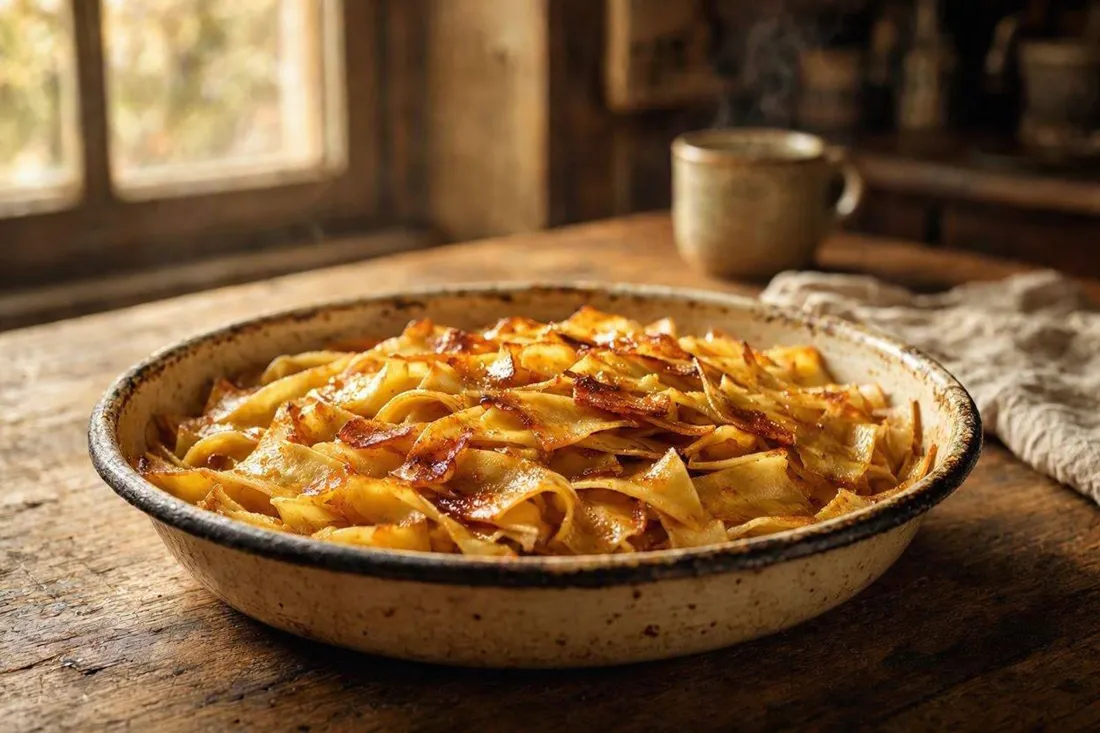
Baked Noodles in Roast Pan Drippings
Homemade wide egg noodles are blanched, then finished in the same pan used to roast meat, soaking up the leftover drippings before a short bake.