Pickled Baby Peppers with Garlic and Celery Root
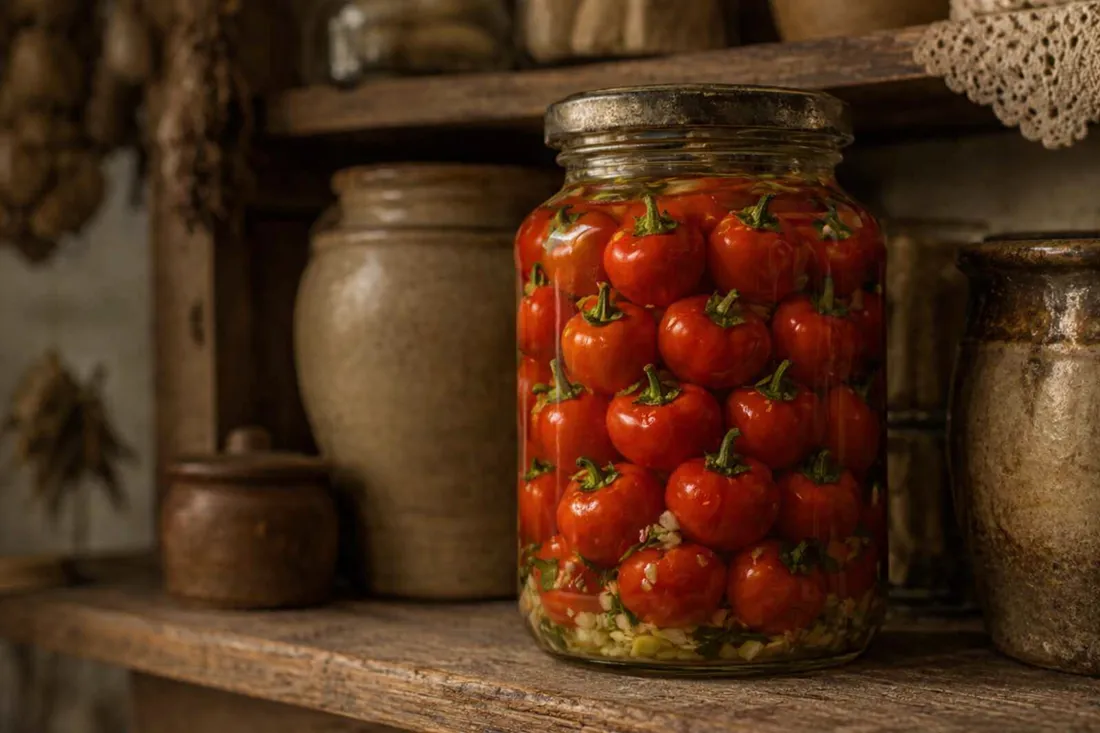
Blanched baby sweet peppers layered in jars with a vinegar, oil, garlic, parsley, and celery dressing, topped off with vinegar and refrigerated.
Quick Summary
This Central European side dish features blanched baby sweet peppers layered with garlic, parsley, and celery root dressing. Ready in about 45 minutes, it stands out as celery root adds savory, herbal depth instead of a sharp vinegary bite.
Historical recipe
Modernised adaptation of an early 20th‑century source. Not independently kitchen-tested by Attic Recipes. Quantities, temperatures, and food safety guidance have been updated for a contemporary kitchen — results may vary and errors may exist. Nutritional values, where provided, are estimates only and have not been laboratory tested. Always follow current food safety guidelines for your region. If you have a health condition, allergy, or dietary requirement, consult a qualified professional before preparing this recipe.
Use of this recipe is entirely at your own risk and subject to our Terms of Service and Privacy Policy. Attic Recipes accepts no liability for any adverse outcome.
- Celery
Additional notes
-
Warning
This preserve combines oil, garlic, and low-acid vegetables and has not been processed with validated shelf-stable canning methods. Store in the refrigerator at all times, keep peppers fully submerged in vinegar, and use within 3-4 weeks. This precaution is especially important for pregnant women, children under 18, the elderly, and immunocompromised individuals, who are more vulnerable to foodborne illness.
- 1
Bring a pot of water to a boil. Add the 18 peppers and blanch for 3 minutes.
- 2
Remove the peppers from the water, cut off the stems, and remove the seeds. Place on a sieve or colander to drain thoroughly while you prepare the dressing.
- 3
In a bowl, combine the 25ml vinegar, 25ml oil, minced garlic, chopped parsley leaf, chopped celery leaf, and sliced celery root. Mix well.
- 4
Sterilize glass jars and lids in a boiling water bath for 10 minutes, or in a low oven, and let them air-dry before filling.
- 5
Layer the drained peppers and the herb-garlic dressing in the prepared jars, spooning the dressing between layers so it coats the peppers generously.
- 6
Top off each jar with the reserved 350ml vinegar until the peppers are fully submerged to the top.
- 7
Seal the jars and refrigerate. Let rest for at least 24 hours before serving for the best flavor.
Tip Keep peppers fully submerged under the vinegar at all times, and always use a clean utensil to remove them from the jar.
Nutrition Information per 1 portion, about 3 peppers (approx 90g)
Nutritional values are approximate estimates and may vary based on specific ingredients used, preparation methods, and portion sizes.
Serving Suggestions
Serve as a relish alongside cured meats, cheese, and bread, or as a tangy accompaniment to roasted meats.
About This Recipe
These are small, sweet peppers blanched briefly, seeded, and layered in jars with a bright dressing of vinegar, oil, garlic, and fresh herbs, then topped off with more vinegar so every pepper stays fully submerged. Celery root, sliced thin, threads through the jars alongside chopped parsley and celery leaf, giving the whole preserve a savory, herbal backbone rather than a purely sharp, vinegary bite.
Unlike a long-cooked preserve, nothing here is simmered or reduced — the peppers stay tender-crisp from their brief blanch, and the dressing does all the work of flavoring them as they sit.
Why It Works
Blanching the peppers for a few minutes softens their skins just enough to let them absorb the dressing without turning fully soft or losing their shape. Layering the peppers with the herb-garlic mixture, rather than stirring everything together loosely, means the aromatics stay distributed evenly through the jar instead of settling at the bottom.
Modern Kitchen Tips
Use a jar just large enough to hold your peppers snugly — a jar that’s too roomy will need more vinegar to keep everything submerged, diluting the concentration of the dressing. If you like a bit of heat, a small hot pepper or a few chili flakes added to the dressing is a natural variation on this recipe.
A classic of early 20th century home cooking, preserved and adapted for the modern kitchen.
The Story Behind This Recipe
Historical Context
Early 20th century recipes for peppers preserved this way were typically part of a household's larger seasonal preserving, made in bulk and stored in a cool pantry or cellar for the winter, with jars simply tied closed with parchment paper rather than sealed. The amount of vinegar used to top off the jars was left to the cook's judgment, adjusted according to how many peppers were being preserved, with the key requirement being that the peppers stayed fully covered by liquid.
Modern Kitchen Adaptation
This recipe has been scaled down from a large winter-preserving batch to a more practical quantity for home cooking. Because this preserve combines oil, garlic, and low-acid vegetables without a validated shelf-stable canning process, it is prepared here as a refrigerator preserve rather than a pantry-stable one — a combination like this stored at room temperature without proper pressure or water-bath canning can pose a botulism risk. Store in the refrigerator and use within 3-4 weeks, keeping the peppers fully submerged in the vinegar at all times. 'Sirće od esencije' has been interpreted as standard bottled white vinegar at 9% acidity, the typical household strength, rather than concentrated vinegar essence.
This recipe is an independent modern adaptation developed from historical sources in the public domain. It is provided for informational and educational purposes only and does not constitute professional dietary, nutritional, or medical advice. Food preparation involves inherent risks. The reader assumes full responsibility for safe food handling, ingredient sourcing, and adherence to current local food safety guidelines. The site operator accepts no liability for outcomes resulting from the preparation or consumption of this recipe.
One recipe.
Every week.
You Might Also Like
More recipes you'll enjoy
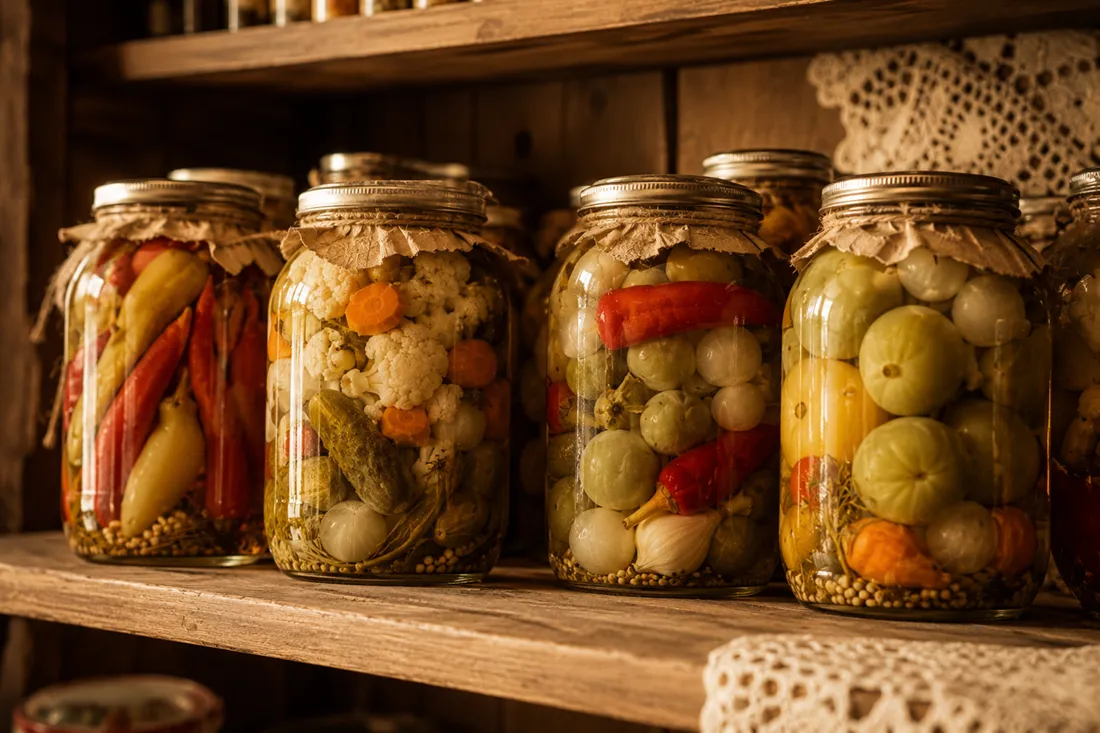
Piquant Mixed Vegetable Pickle
A colorful mix of blanched vegetables, gherkins, green tomatoes, and hot peppers is packed into jars and covered with a tangy vinegar brine.
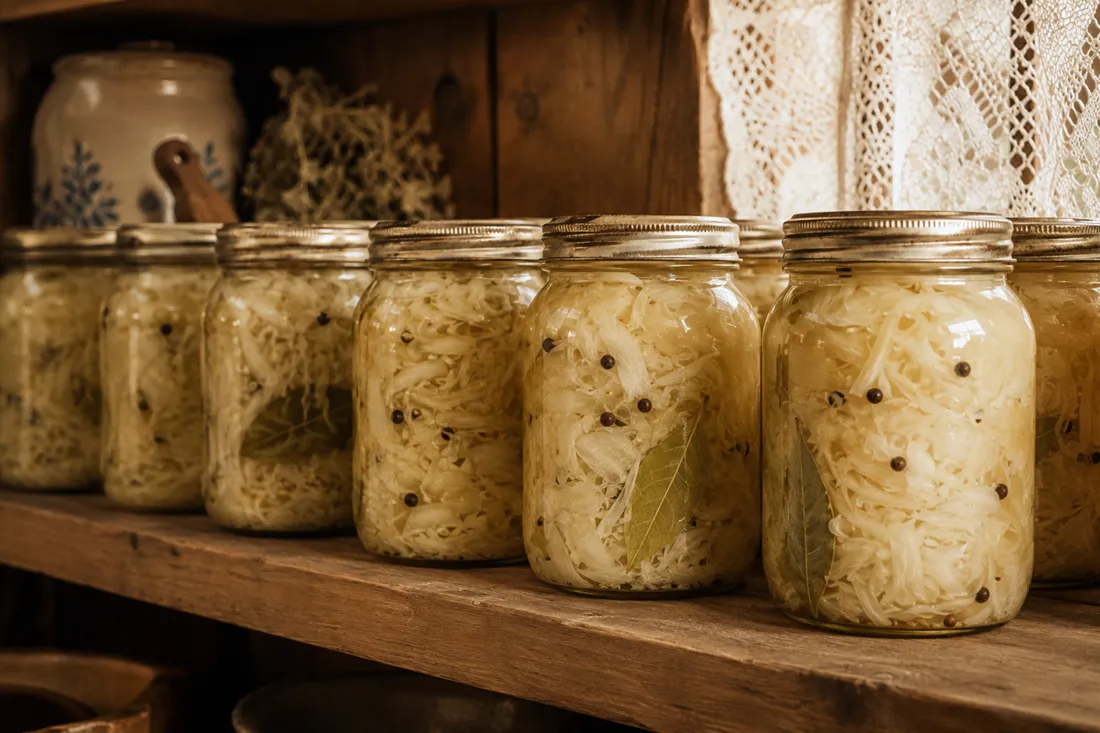
Marinated Cabbage in Vinegar Brine
Shredded cabbage is salted, drained, and packed into jars, then covered with a cooled wine vinegar brine flavored with bay leaf and allspice.
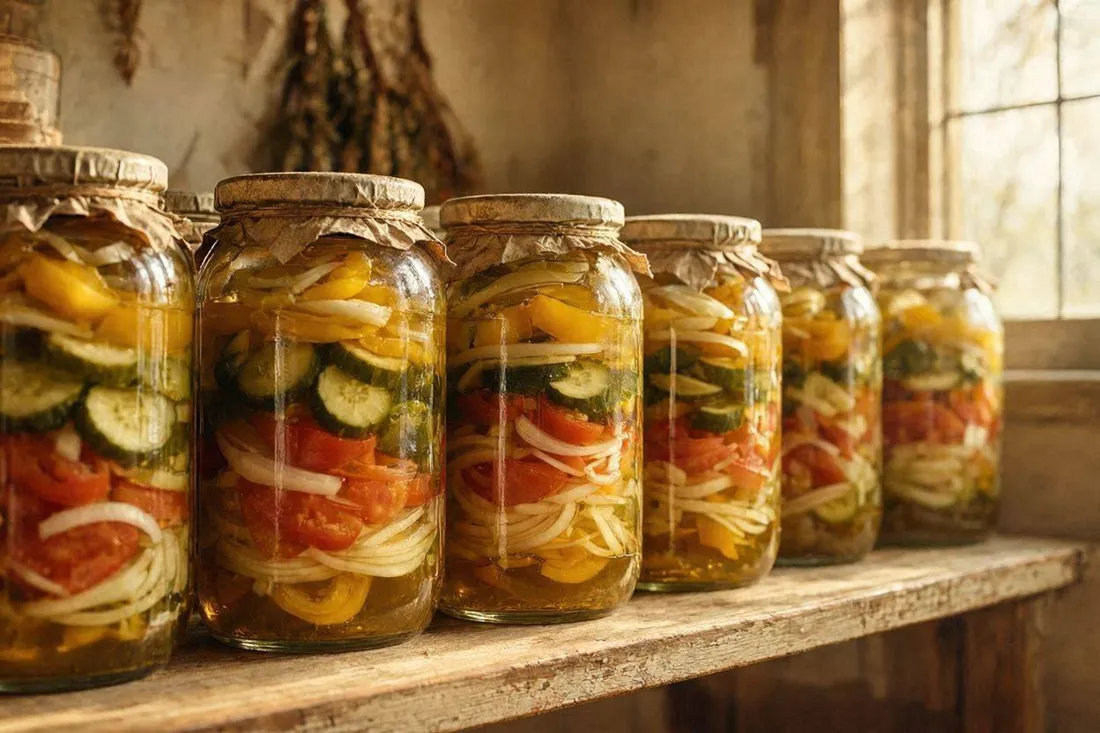
Mixed Vegetable Preserve in Sweet-Sour Brine
A mix of onion, green tomato, cucumber, and bell pepper in a sweet-sour vinegar brine, canned for winter storage — a Central European preserving classic.