Mixed Vegetable Preserve in Sweet-Sour Brine
A mix of onion, green tomato, cucumber, and bell pepper in a sweet-sour vinegar brine, canned for winter storage — a Central European preserving classic.
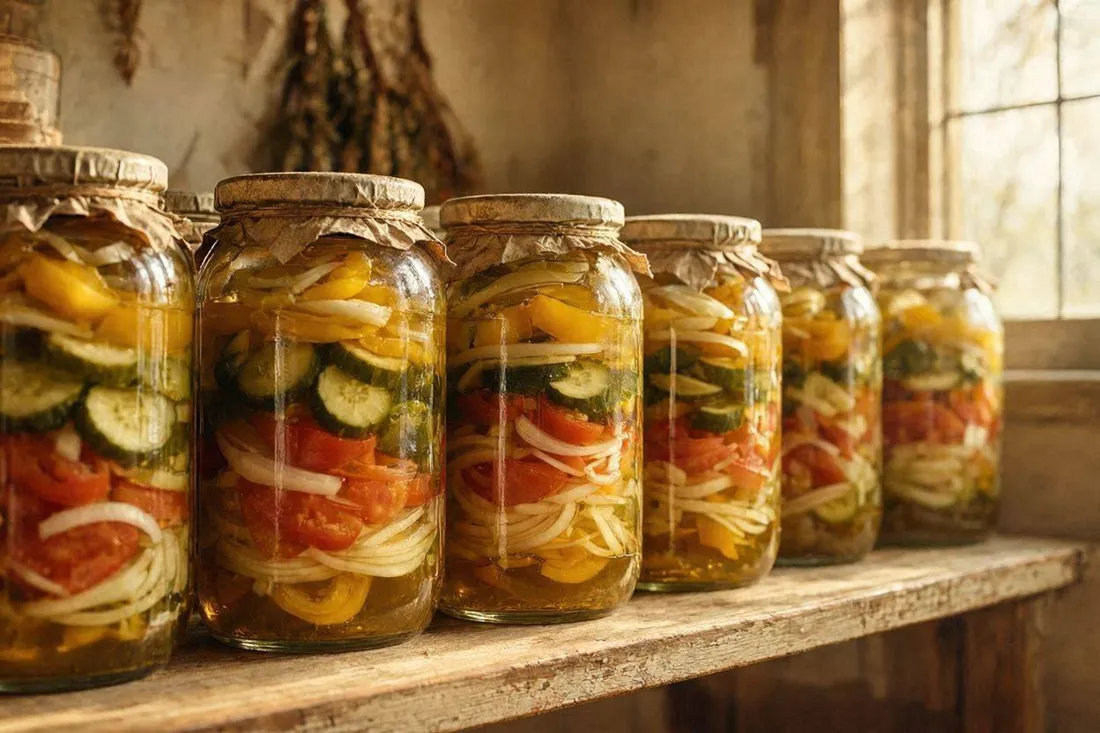
Quick Summary
A mix of onion, green tomato, cucumber, and bell pepper sliced thin, briefly cooked in a sweet-sour vinegar brine, then sealed in jars for winter storage. A cool, dark storage spot is essential for safe keeping.
Historical recipe
Modernised adaptation of an early 20th‑century source. Not independently kitchen-tested by Attic Recipes. Quantities, temperatures, and food safety guidance have been updated for a contemporary kitchen — results may vary and errors may exist. Nutritional values, where provided, are estimates only and have not been laboratory tested. Always follow current food safety guidelines for your region. If you have a health condition, allergy, or dietary requirement, consult a qualified professional before preparing this recipe.
Use of this recipe is entirely at your own risk and subject to our Terms of Service and Privacy Policy. Attic Recipes accepts no liability for any adverse outcome.
Additional notes
-
Warning
This is a sealed jar preserve intended for long-term storage. Jars and lids must be properly sterilized, and the filled, sealed jars must be processed in a boiling water bath for the full time given, to make the preserve safe for room-temperature storage. Do not skip this step.
-
Caution
Sealed jars must be stored in a genuinely cool, dark place, such as a cellar or unheated pantry, for the winter storage period this recipe is intended for. Warm storage conditions can allow spoilage even in a properly processed jar.
-
Note
This preserve is high in sodium (339mg per 2-tablespoon serving) due to the amount of salt used in the brine. Those managing sodium intake may want to enjoy it in smaller portions or rinse briefly before serving.
- 1
Wash all the vegetables. Peel and thinly slice the onions; thinly slice the green tomatoes, cucumbers, and bell peppers into rounds.
- 2
In a large pot, combine the 3L wine vinegar, 500ml oil, 400g sugar, 350g salt, and 28g whole peppercorns. Bring to a boil over medium-high heat.
- 3
Once the liquid is boiling, add all the sliced vegetables to the pot and cook for 3 minutes.
- 4
Remove the pot from the heat and let the mixture cool completely, about 90 minutes, before packing into jars.
- 5
While the vegetables cool, sterilize the jars and lids by boiling them in water for at least 10 minutes. Keep them hot until ready to fill.
Tip Proper sterilization and processing are essential here — this recipe is meant to be stored at room temperature over the winter, and skipping this step creates a real food safety risk. - 6
Once the vegetable mixture is completely cool, pack the vegetables and their liquid into the sterilized jars, leaving about 1cm of headspace, and seal with the lids.
- 7
Process the filled, sealed jars in a boiling water bath for 15-20 minutes to make them shelf-stable.
- 8
Remove the jars carefully and let them cool completely on a towel-lined surface, undisturbed. Check that each lid has sealed properly (the center should be pulled down and not flex when pressed) before storing.
- 9
Store sealed jars in a cool, dark place. Once opened, refrigerate and use within a few weeks.
Nutrition Information per 2 tbsp (approx 30g)
Nutritional values are approximate estimates and may vary based on specific ingredients used, preparation methods, and portion sizes.
Serving Suggestions
Serve cold or at room temperature, straight from the jar, as a side to grilled or roasted meats. As the traditional approach notes, this preserve is meant to be enjoyed on its own, without any further additions or dressing.
About This Recipe
This is a preserve built for volume — eight kilograms of vegetables between four kinds, cooked briefly in a sweet-sour vinegar brine and sealed away for the colder months. It’s less a recipe for a single meal and more a project for a weekend, the kind of thing a household would put up in late summer when green tomatoes, cucumbers, and peppers were all available at once, to be opened jar by jar once fresh vegetables became scarce.
The short cooking time — just three minutes once the brine boils — keeps the vegetables from turning fully soft, so what comes out of the jar months later still has some bite to it, closer to a pickle than a cooked relish.
Why It Works
The vinegar in the brine does most of the preservation work by lowering the pH of the finished product enough to inhibit the growth of most spoilage organisms, while the salt and sugar both help draw moisture out of the vegetables and further discourage bacterial growth. Cooking the vegetables only briefly, just three minutes, keeps them from breaking down completely, so they hold their shape and some crunch through months of storage rather than turning mushy. Cooling the mixture fully before jarring, rather than packing it in hot, prevents the vegetables from continuing to soften from residual heat while sealed.
Modern Kitchen Tips
Slice the vegetables as evenly as possible — a mandoline speeds this up considerably given the volume involved here. Layer the different vegetables somewhat evenly across jars rather than filling one jar with mostly onion and another with mostly pepper, so each jar gives a balanced mix when opened. Label jars with the date before storing; a preserve like this is best used within about a year.
A classic of early 20th century home preserving, updated for safe modern storage.
The Story Behind This Recipe
Historical Context
Early 20th century recipes for this kind of winter preserve relied on vinegar, salt, and sugar for preservation, with the vegetables briefly cooked in the boiling brine before jarring. The traditional approach did not describe sterilizing the jars or processing them after sealing — a home cellar's naturally cool, stable temperature, combined with the acidity of the vinegar, was relied upon to keep the preserve safe through the winter months.
Modern Kitchen Adaptation
Jar and lid sterilization, along with a boiling water bath processing step after sealing, have been added to this recipe. These were not part of the traditional approach, but they are necessary for safe, reliable long-term storage at room temperature by modern food safety standards, regardless of how acidic the brine is. This preserve still requires storage in a genuinely cool, dark location, such as a cellar or unheated pantry, for the full winter storage period the recipe describes — it is not suited to being kept in a warm kitchen cupboard or a small apartment without a cool storage space. The peppercorn quantity and jar yield are estimated, since the traditional approach measured pepper by its cost rather than its weight.
This recipe is an independent modern adaptation developed from historical sources in the public domain. It is provided for informational and educational purposes only and does not constitute professional dietary, nutritional, or medical advice. Food preparation involves inherent risks. The reader assumes full responsibility for safe food handling, ingredient sourcing, and adherence to current local food safety guidelines. The site operator accepts no liability for outcomes resulting from the preparation or consumption of this recipe.
One recipe.
Every week.
You Might Also Like
More recipes you'll enjoy
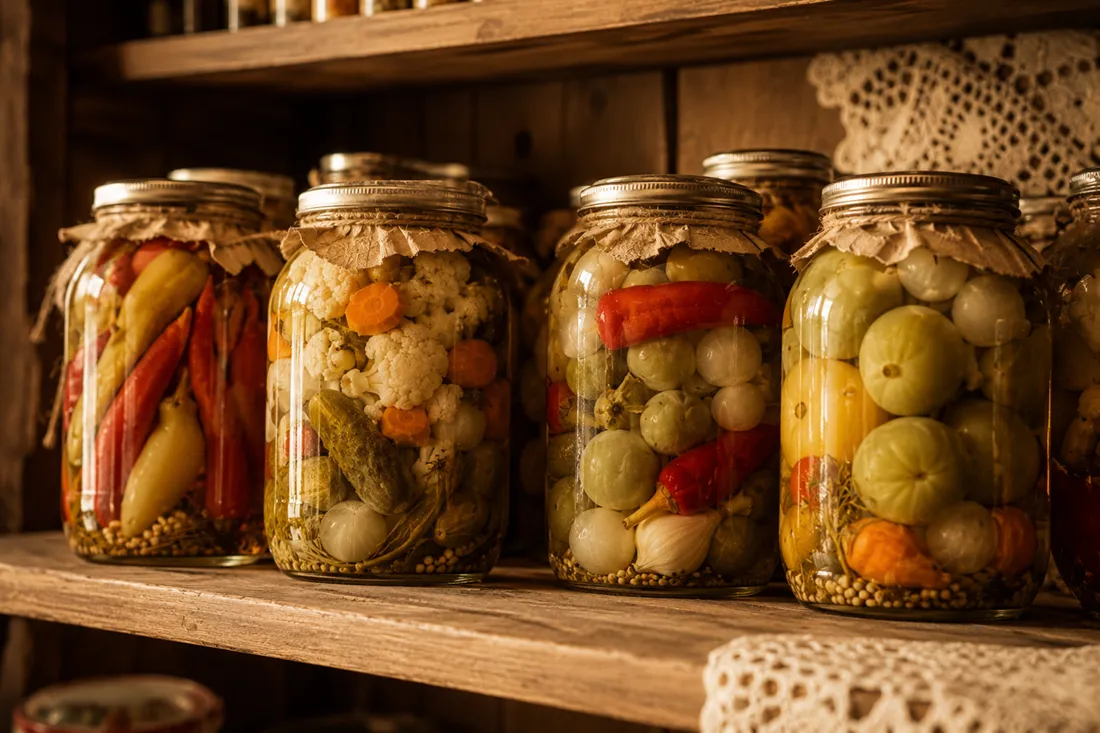
Piquant Mixed Vegetable Pickle
A colorful mix of blanched vegetables, gherkins, green tomatoes, and hot peppers is packed into jars and covered with a tangy vinegar brine.
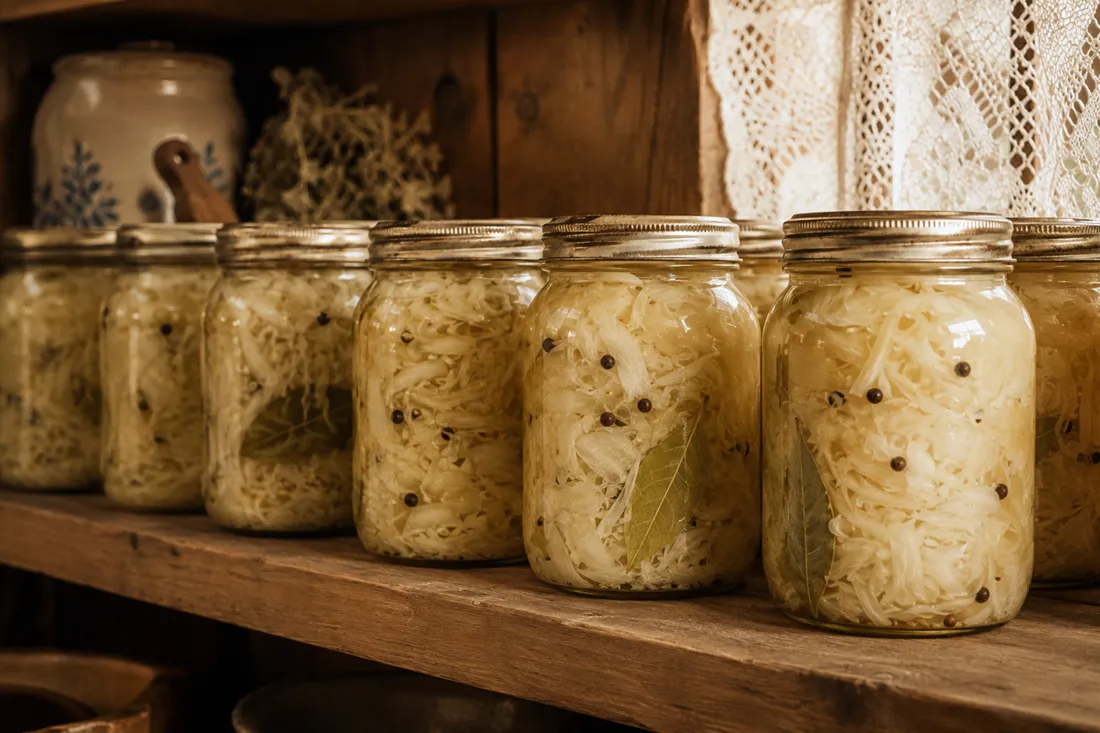
Marinated Cabbage in Vinegar Brine
Shredded cabbage is salted, drained, and packed into jars, then covered with a cooled wine vinegar brine flavored with bay leaf and allspice.
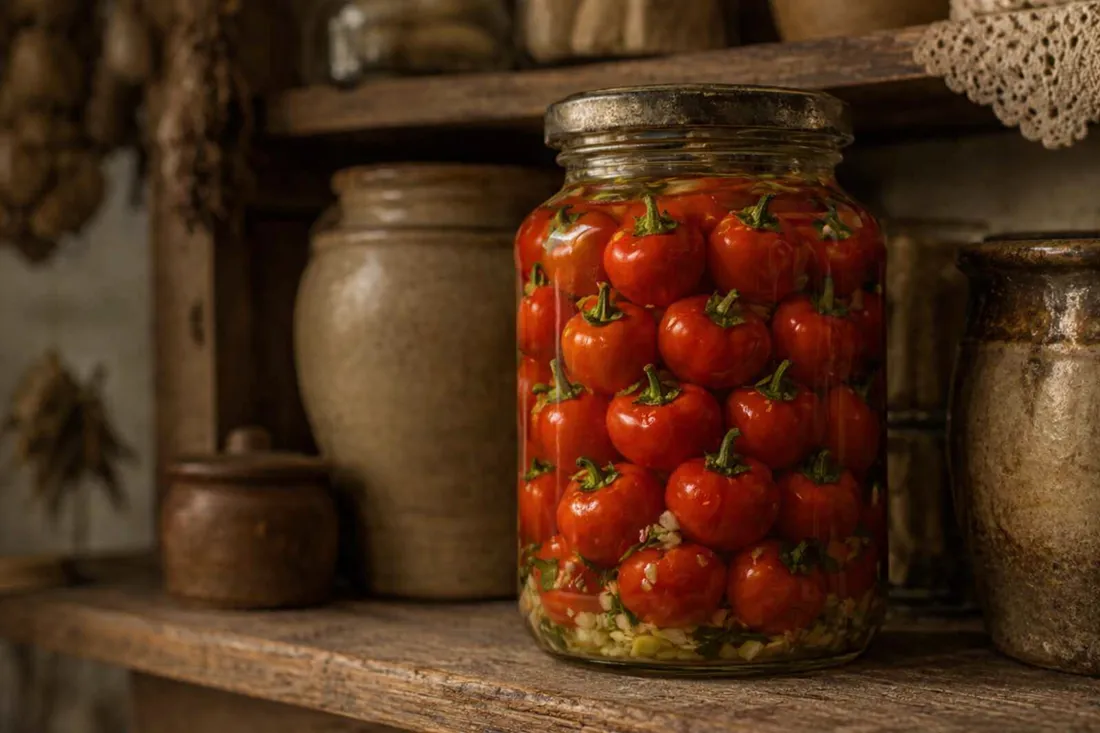
Pickled Baby Peppers with Garlic and Celery Root
Blanched baby sweet peppers layered in jars with a vinegar, oil, garlic, parsley, and celery dressing, topped off with vinegar and refrigerated.