Marinated Cabbage in Vinegar Brine
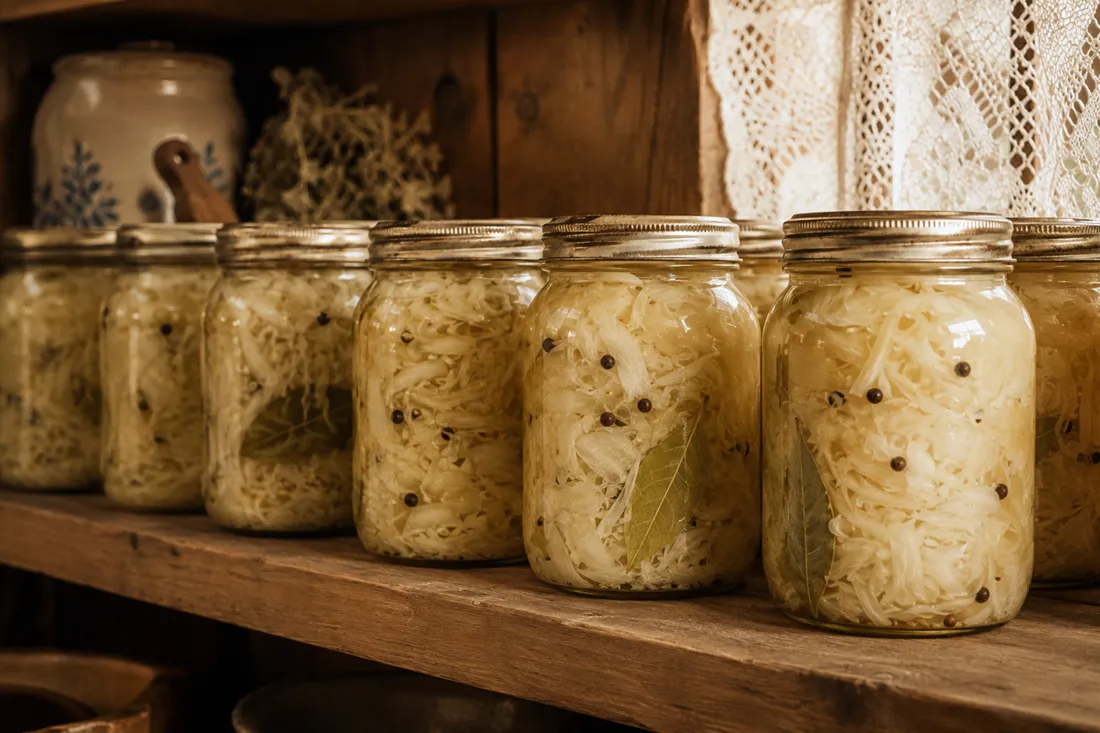
Shredded cabbage is salted, drained, and packed into jars, then covered with a cooled wine vinegar brine flavored with bay leaf and allspice.
Quick Summary
Shredded cabbage is salted and pressed to release its liquid, then packed into jars and covered with a cooled brine of wine vinegar, water, sugar, bay leaf, and allspice. A tangy, sweet-and-sour preserved cabbage meant for winter storage.
Historical recipe
Modernised adaptation of an early 20th‑century source. Not independently kitchen-tested by Attic Recipes. Quantities, temperatures, and food safety guidance have been updated for a contemporary kitchen — results may vary and errors may exist. Nutritional values, where provided, are estimates only and have not been laboratory tested. Always follow current food safety guidelines for your region. If you have a health condition, allergy, or dietary requirement, consult a qualified professional before preparing this recipe.
Use of this recipe is entirely at your own risk and subject to our Terms of Service and Privacy Policy. Attic Recipes accepts no liability for any adverse outcome.
- Sulphites
Additional notes
-
Warning
This cabbage is preserved in jars with a poured, unprocessed vinegar brine rather than a fully sealed and boiling-water-processed canning method. Store it in the refrigerator rather than at room temperature to avoid the risk of spoilage or foodborne illness, particularly for pregnant women, young children, older adults, and immunocompromised individuals.
- 1
Remove and discard the outer leaves of the cabbage.
- 2
Shred the cabbage finely, using a cabbage shredder or a sharp knife.
- 3
Salt the shredded cabbage, place it in a colander, and press it firmly with your hands. Let it drain until most of its liquid has released.
Tip The more thoroughly the cabbage drains, the better it will absorb the brine later on. - 4
Wash the jars in hot, soapy water, then sterilize them by boiling in a large pot of water for 10 minutes or running them through a hot dishwasher cycle. Let them air-dry completely before filling.
Tip This step isn't in the original recipe but is a standard modern food-safety measure whenever cabbage or other vegetables are packed into jars for storage. - 5
Pack the well-drained cabbage tightly into the sterilized jars.
- 6
In a pot, combine the vinegar, water, sugar, bay leaves, and allspice. Bring to a boil, then remove immediately from the heat.
- 7
Let the brine cool completely, then pour it over the packed cabbage so the cabbage is fully submerged.
- 8
Seal the jars and store in a cool, dark place. Let the cabbage marinate for at least a day or two before eating, and refrigerate once a jar has been opened.
Nutrition Information per 100g
Nutritional values are approximate estimates and may vary based on specific ingredients used, preparation methods, and portion sizes.
Serving Suggestions
Serve as a tangy side with roasted or grilled meats, or alongside heartier stews and bean dishes to cut through the richness.
About This Recipe
This is cabbage preserved the direct way: salted and pressed to drive out its own water, packed tightly into jars, then covered with a boiled brine of vinegar, water, sugar, and warm spices once it’s cooled. There’s no waiting for natural fermentation here — the vinegar does the preserving work on its own, which means the cabbage is ready to eat much sooner than a traditional sauerkraut, while still keeping for months once properly stored.
Made in a large batch, this was clearly meant to fill several jars at once for the winter months, the kind of preserve that would have sat alongside jams and pickled vegetables in a cold cellar or pantry.
Why It Works
Salting the shredded cabbage and pressing out its liquid before it ever meets the brine matters more than it might seem — cabbage that’s still full of its own water will dilute the vinegar brine and slow down how well it seasons the vegetable. Draining it well means the cabbage can properly absorb the sweet-tart brine instead of sitting in a watered-down version of it. Letting the brine cool before pouring it over the cabbage also keeps the vegetable from cooking or going limp, so it stays crisp rather than turning soft and mushy.
Modern Kitchen Tips
Use a mandoline or the fine slicing blade of a food processor if you don’t have a dedicated cabbage shredder — the goal is thin, even shreds that pack tightly into the jar. Taste the brine before pouring it over the cabbage and adjust the sugar or vinegar slightly if you prefer it sweeter or sharper. Since this version isn’t processed in a boiling water bath, keep the jars refrigerated rather than storing them at room temperature, and use clean utensils each time you take some out to keep the rest fresh longer.
A classic of early 20th century home cooking, preserved and adapted for the modern kitchen.
The Story Behind This Recipe
Historical Context
Salting and pressing shredded cabbage before packing it into jars removed excess water so the vegetable could absorb the vinegar brine fully rather than diluting it. Unlike naturally fermented sauerkraut, this method relies entirely on a boiled vinegar, sugar, and spice brine poured over the cabbage while still warm from cooling — a faster route to a tangy, shelf-ready preserve, made in large batches to last through the winter months.
Modern Kitchen Adaptation
The source gives no quantities for the salt used on the cabbage or for the bay leaf and allspice in the brine — all three are estimated here and can be adjusted to taste. A jar sterilization step (step 4) has been added, since packing raw, unprocessed vegetables into jars carries a real risk of spoilage or, in low-acid conditions, botulism; sterilizing the jars is now considered a baseline safety step regardless of what a historical source specifies. Because this brine is poured over the cabbage without further boiling-water processing of the sealed jars, the jars should be treated as a refrigerator pickle rather than a shelf-stable canned good — store them in the refrigerator, or process them in a boiling water bath if long-term pantry storage is needed.
This recipe is an independent modern adaptation developed from historical sources in the public domain. It is provided for informational and educational purposes only and does not constitute professional dietary, nutritional, or medical advice. Food preparation involves inherent risks. The reader assumes full responsibility for safe food handling, ingredient sourcing, and adherence to current local food safety guidelines. The site operator accepts no liability for outcomes resulting from the preparation or consumption of this recipe.
One recipe.
Every week.
You Might Also Like
More recipes you'll enjoy
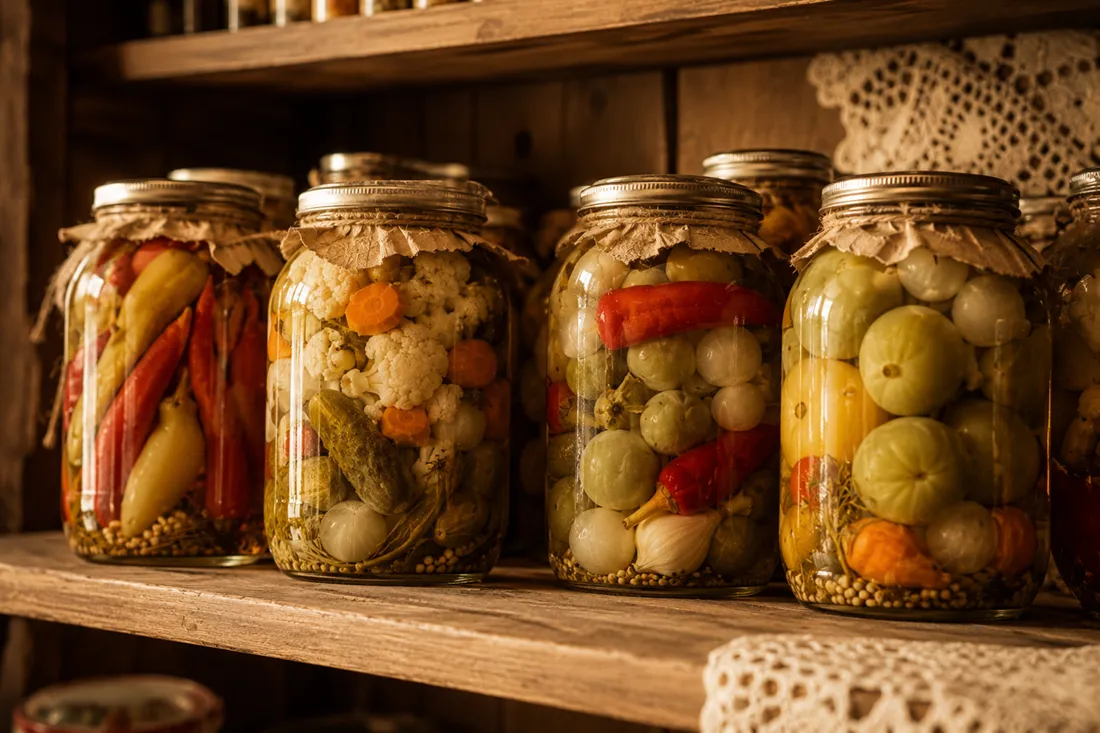
Piquant Mixed Vegetable Pickle
A colorful mix of blanched vegetables, gherkins, green tomatoes, and hot peppers is packed into jars and covered with a tangy vinegar brine.
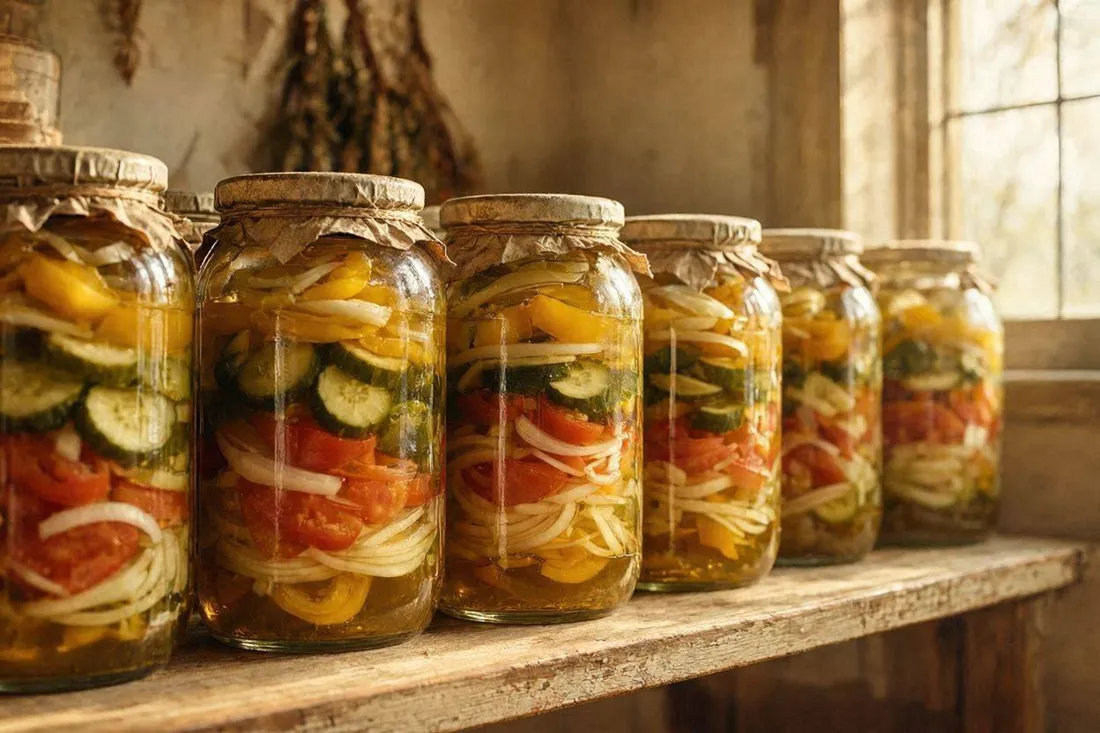
Mixed Vegetable Preserve in Sweet-Sour Brine
A mix of onion, green tomato, cucumber, and bell pepper in a sweet-sour vinegar brine, canned for winter storage — a Central European preserving classic.
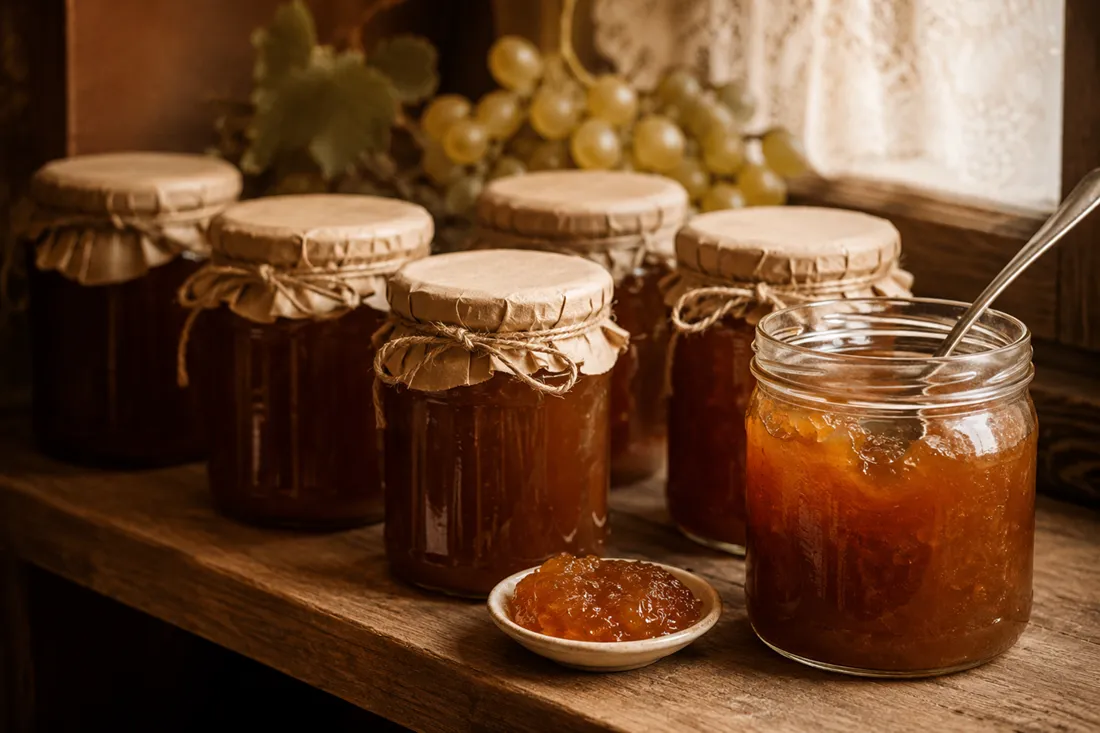
Grape and Quince Jam
White grape juice and pureed quince are simmered with sugar into a thick, spreadable jam, then jarred for keeping through the winter.