Grape and Quince Jam
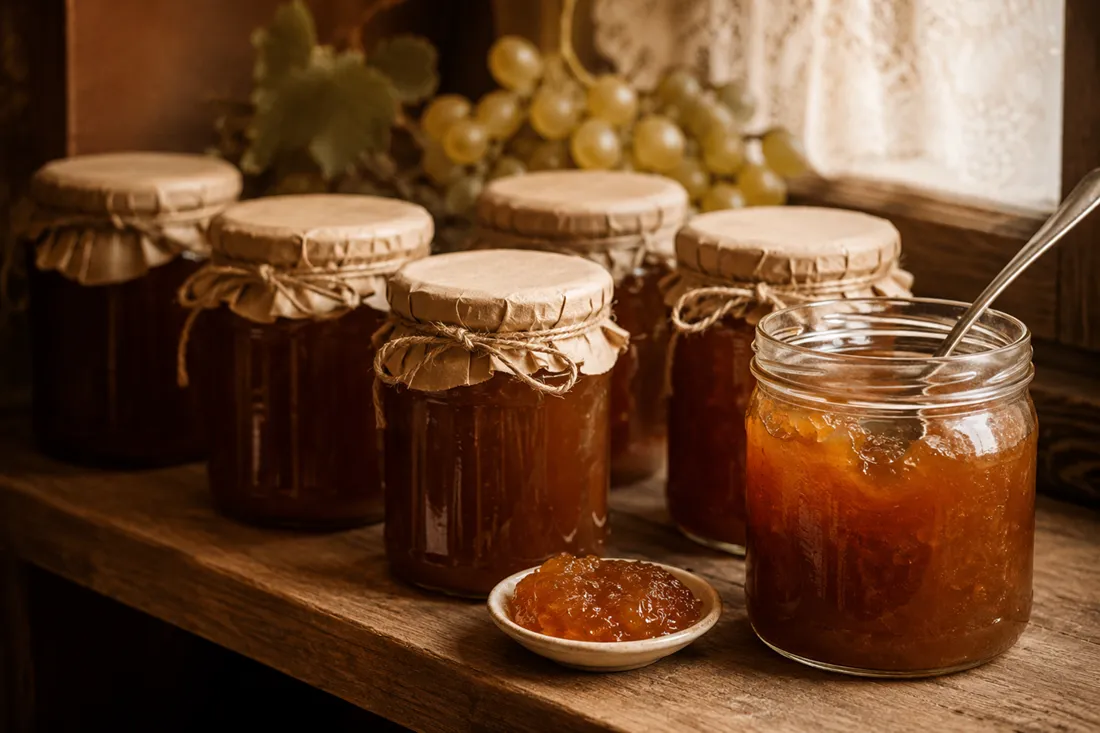
White grape juice and pureed quince are simmered with sugar into a thick, spreadable jam, then jarred for keeping through the winter.
Quick Summary
White grapes are simmered and pressed for their juice, then combined with pureed cooked quince and sugar and slowly reduced into a thick jam. A naturally sweet fruit preserve, jarred for winter and gentle enough to be a favorite with children.
Historical recipe
Modernised adaptation of an early 20th‑century source. Not independently kitchen-tested by Attic Recipes. Quantities, temperatures, and food safety guidance have been updated for a contemporary kitchen — results may vary and errors may exist. Nutritional values, where provided, are estimates only and have not been laboratory tested. Always follow current food safety guidelines for your region. If you have a health condition, allergy, or dietary requirement, consult a qualified professional before preparing this recipe.
Use of this recipe is entirely at your own risk and subject to our Terms of Service and Privacy Policy. Attic Recipes accepts no liability for any adverse outcome.
Additional notes
-
Warning
This jam uses less added sugar than many modern preserving guides recommend, relying on long reduction rather than a high sugar content for safe keeping. Make sure the mixture passes the spoon-trail test before jarring, and refrigerate opened jars or freeze extra jars rather than relying on long-term pantry storage if you're unsure it's reduced enough.
-
Note
Like most jams, this preserve is high in natural and added sugar per serving; those managing diabetes or watching sugar intake may want to enjoy it in moderation.
- 1
Wash the grapes and remove the berries from their stems. Put them in a pot and simmer gently for about 15 minutes.
- 2
Remove from the heat. Pass the cooked grapes through a fine sieve or cheesecloth to extract the juice, discarding the skins and seeds. Transfer the juice to a clean container.
- 3
Wash, peel, core, and quarter the quinces. Simmer them with the water until fully softened.
- 4
Pass the cooked quinces through a sieve as well, to make a smooth purée.
- 5
Combine the quince purée with the grape juice in one large pot, then stir in the sugar.
- 6
Cook the mixture over medium heat, stirring constantly so it doesn't scorch, until it thickens enough that a spoon drawn across the bottom of the pot leaves a visible trail.
Tip This is the classic doneness test for jam — if the trail closes up right away, the jam needs more time; if it holds its shape briefly, it's ready. - 7
While the jam cooks, sterilize your jars: wash them in hot, soapy water, then boil for 10 minutes or run through a hot dishwasher cycle. Warm the jars before filling.
Tip This step isn't in the original recipe but is a standard modern food-safety measure for any preserve going into jars for storage. - 8
Pour the hot jam into the warmed, sterilized jars.
- 9
Place the filled jars in a warm, low oven briefly to let a skin form on top of the jam.
- 10
The next day, seal the jars tightly and store with the rest of your winter preserves. Refrigerate after opening.
Nutrition Information per 1 tablespoon (approx 20g)
Nutritional values are approximate estimates and may vary based on specific ingredients used, preparation methods, and portion sizes.
Serving Suggestions
Spread on bread or toast, stir into plain yogurt, or serve alongside a simple cake or pastry.
About This Recipe
This jam takes two very different fruits and lets each one do what it does best. The grapes are barely cooked before being pressed for their juice, giving the jam its base flavor and natural sweetness without any of the skins or seeds. The quinces, on the other hand, are simmered until soft and pureed whole, contributing body and a firmer set that grape juice alone couldn’t provide. Combined and cooked down slowly with sugar, the two come together into something thicker and more balanced than either fruit would make on its own.
It’s a preserve clearly meant for a full pantry shelf — made in a large batch, meant to last through the winter, and, according to the source, a particular favorite with children.
Why It Works
Cooking the grapes only briefly before straining them keeps their juice bright rather than muddled, since prolonged cooking would extract more bitterness from the skins and seeds along with the color and flavor. The quince, by contrast, needs a longer simmer to soften enough to purée smoothly, and its natural pectin content helps the finished jam set more firmly than grape juice could manage alone. Cooking the combined mixture slowly, with constant stirring, drives off enough moisture that the jam thickens through reduction rather than needing a large amount of added sugar to do the same job.
Modern Kitchen Tips
A wide, heavy-bottomed pot helps the jam reduce evenly and makes scorching less likely than a narrow, deep one. Stir with a flat-edged spoon or spatula that can reach the corners of the pot, since that’s where scorching usually starts first. Don’t rush the final stage of cooking — the spoon-trail test described in the method is the best way to judge doneness, and a jam that looks slightly thin while hot will usually set up more once it’s cooled in the jar.
A classic of early 20th century home cooking, preserved and adapted for the modern kitchen.
The Story Behind This Recipe
Historical Context
This preserve belongs to a style of thick, slow-cooked fruit jam that relies on long reduction over the stove — pressing the cooked fruit through a sieve to remove skins and seeds, then cooking the combined purée down until a trail from a spoon holds its shape — rather than a quick-set method using added pectin. Combining two fruits, one cooked mainly for its juice and the other for its body, gave the finished jam a fuller texture and flavor than either fruit would produce cooking alone.
Modern Kitchen Adaptation
The added sugar here — 1.5kg for a combined 8kg of fruit — is considerably lower than the roughly equal parts fruit and sugar used in many modern jam recipes for shelf stability. This style of jam traditionally leans on long, slow reduction rather than a high sugar content to lower the moisture level enough for safe keeping, so getting the spoon-trail test right in step 6 matters more here than in a quicker, higher-sugar jam. If you're not confident the mixture has reduced enough, refrigerating or freezing the jars is a safer bet than long-term pantry storage. A jar sterilization step (step 7) has also been added, since the source doesn't mention it but it's now considered a baseline safety step for any preserve packed into jars.
This recipe is an independent modern adaptation developed from historical sources in the public domain. It is provided for informational and educational purposes only and does not constitute professional dietary, nutritional, or medical advice. Food preparation involves inherent risks. The reader assumes full responsibility for safe food handling, ingredient sourcing, and adherence to current local food safety guidelines. The site operator accepts no liability for outcomes resulting from the preparation or consumption of this recipe.
One recipe.
Every week.
You Might Also Like
More recipes you'll enjoy
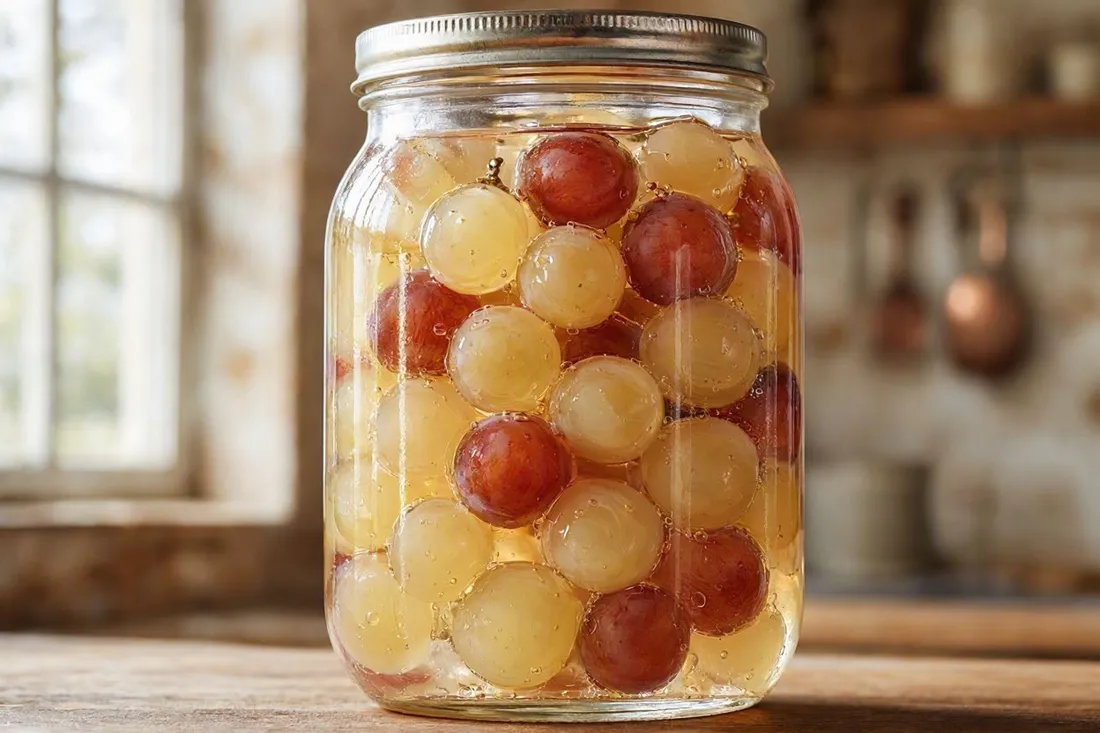
Grape Compote in Syrup
Small clusters of grapes are packed into jars and covered with a light sugar syrup, then home-canned for a stable preserve to enjoy through the colder months.
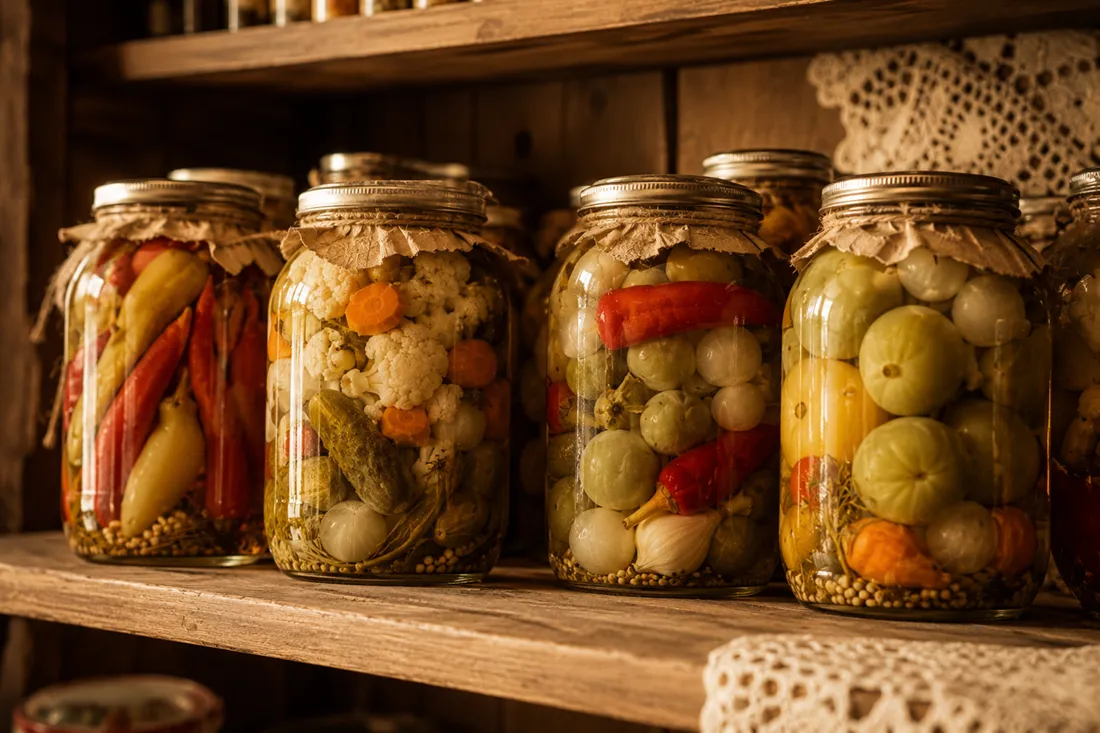
Piquant Mixed Vegetable Pickle
A colorful mix of blanched vegetables, gherkins, green tomatoes, and hot peppers is packed into jars and covered with a tangy vinegar brine.
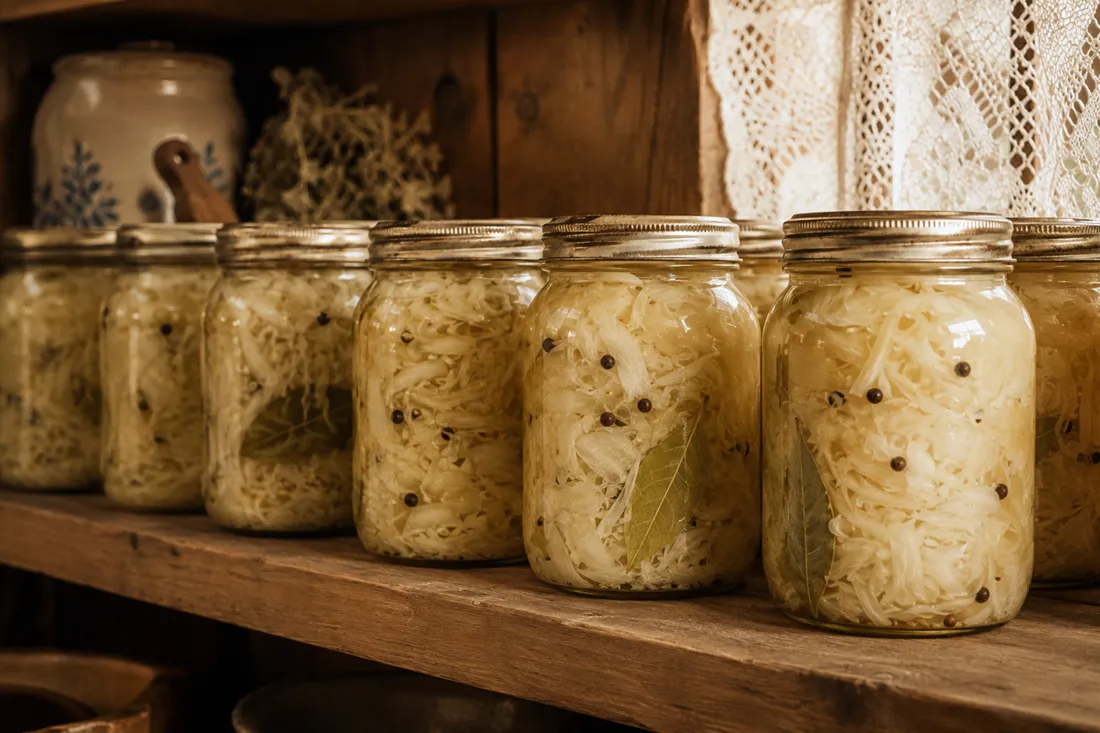
Marinated Cabbage in Vinegar Brine
Shredded cabbage is salted, drained, and packed into jars, then covered with a cooled wine vinegar brine flavored with bay leaf and allspice.