Mixed Salad with Peas
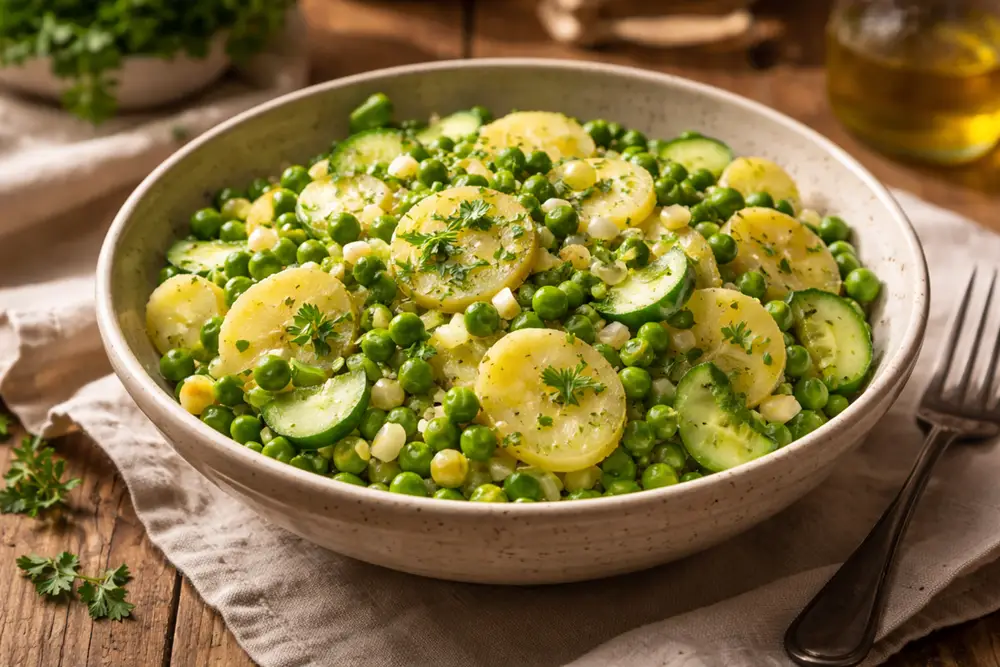
A hearty Central European potato and pea salad with cucumber, onion, and a clean oil-and-vinegar dressing, finished with fresh parsley.
Quick Summary
A hearty Central European potato and pea salad with cucumber, onion, and a clean oil-and-vinegar dressing, finished with fresh parsley.
Historical recipe
Modernised adaptation of an early 20th‑century source. Not independently kitchen-tested by Attic Recipes. Quantities, temperatures, and food safety guidance have been updated for a contemporary kitchen — results may vary and errors may exist. Nutritional values, where provided, are estimates only and have not been laboratory tested. Always follow current food safety guidelines for your region. If you have a health condition, allergy, or dietary requirement, consult a qualified professional before preparing this recipe.
Use of this recipe is entirely at your own risk and subject to our Terms of Service and Privacy Policy. Attic Recipes accepts no liability for any adverse outcome.
- Sulphites
Additional notes
-
Note
If white wine vinegar is used, the dressing contains sulphites. Individuals with sulphite sensitivity should substitute apple cider vinegar or another non-wine-based vinegar.
- 1
Wash the 500g potatoes and place them whole and unpeeled in a pot. Cover with cold water and bring to a boil. Cook for 20–25 minutes until a knife pierces the centre with no resistance. Drain, and while still warm, peel and slice into thin rounds approximately 3–4mm thick.
- 2
While the potatoes cook, bring a second pot of salted water to the boil. Add the 500g green peas and cook until soft, 5–8 minutes for fresh peas or 3–4 minutes for frozen. Drain thoroughly and set aside to cool.
- 3
Place the 400g sliced cucumbers and the finely chopped onion in a colander. Sprinkle with the 1 tsp salt and toss to coat. Leave to drain for 10 minutes, then press gently to expel excess liquid.
- 4
Combine the warm sliced potatoes and cooled peas in a wide salad bowl. Add the drained cucumbers and onion. Pour over the 3 tbsp vinegar and 5 tbsp oil. Toss gently to combine — take care not to break the potato slices.
Tip Add the dressing while the potatoes are still warm; they will absorb it much more evenly than if dressed cold. - 5
Transfer to a serving bowl if needed. Drizzle with the remaining 1 tbsp oil. Scatter the 15g chopped parsley over the top and serve.
Nutrition Information per 1 portion (approx. 280g)
Nutritional values are approximate estimates and may vary based on specific ingredients used, preparation methods, and portion sizes.
Serving Suggestions
Serve at room temperature as a side dish alongside roasted or grilled meat, or as part of a cold spread. The salad can be made up to two hours ahead and kept at room temperature; refrigerating it firms the potatoes and dulls the dressing — if made ahead, bring back to room temperature and refresh with a splash of vinegar and oil before serving.
About This Recipe
This is a salad built on weight rather than delicacy — equal parts potato and peas, dressed while the potatoes are still warm enough to drink in the vinegar and oil. The cucumbers and onion go in salted first, left to drain, so they arrive in the bowl already softened and without the water that would otherwise thin the dressing down to nothing. The result is a salad that is substantial enough to carry a meal on its own on a summer day, or to sit beside something roasted without being overwhelmed by it.
The dressing is oil and vinegar, nothing more. Home cooks of the period adjusted both by eye, which is the right approach — the acidity of vinegar varies considerably, and the balance is something you taste into rather than measure into. Start with the quantities here and adjust at the end.
Parsley goes on last, scattered over the top. It is not mixed in — it is a garnish in the older sense, something added at the point of serving to signal freshness rather than to change the flavour of the whole.
Why It Works
Dressing potatoes while warm is not optional in this recipe — it is the technique. Warm starch absorbs liquid; cold starch resists it. A cold potato dressed in vinaigrette stays coated on the surface; a warm potato dressed in vinaigrette pulls the dressing in, and the result is a coherent salad rather than a pile of separately seasoned things.
Salting and draining the cucumber and onion before they join the bowl removes the surface water that would otherwise pool at the bottom of the salad within minutes of dressing. Ten minutes under salt and a gentle press is enough.
Modern Kitchen Tips
Waxy potatoes — Charlotte, Désirée, new potatoes — hold their shape when sliced warm. Floury varieties like Russet or King Edward will crumble. If only floury potatoes are available, slice them slightly thicker and handle more gently.
Frozen peas work well here and require no advance preparation beyond boiling. Fresh peas in season are better but take longer to shell than to cook.
The salad does not improve with refrigeration. Dress it, serve it, and eat what remains within a few hours.
A classic of early 20th century Central European home cooking, preserved and adapted for the modern kitchen.
The Story Behind This Recipe
Historical Context
Early 20th century recipes for mixed vegetable salads of this type rarely specified quantities for the dressing — vinegar and oil were added by eye, adjusted to the cook's taste and the acidity of the particular vinegar on hand. The salting and draining step for cucumbers and onion before dressing was standard practice in Central European home cooking of the period, preventing the finished salad from becoming watery. Green peas and potatoes in equal weight was a common pairing in seasonal salads of this kind, practical when both were available fresh in summer.
Modern Kitchen Adaptation
Cucumber and onion quantities are estimated at 400g total cucumber (2–3 medium) based on the proportions of the other vegetables; the original specified only a count of 2–3. Dressing quantities — 3 tbsp vinegar and 5 tbsp oil — are estimated for this volume of vegetables and marked accordingly. Olive oil is used here; sunflower oil is equally appropriate and more period-accurate for Central European home cooking of the era. Waxy potatoes are specified over floury varieties, as they hold their shape when sliced warm and dressed.
This recipe is an independent modern adaptation developed from historical sources in the public domain. It is provided for informational and educational purposes only and does not constitute professional dietary, nutritional, or medical advice. Food preparation involves inherent risks. The reader assumes full responsibility for safe food handling, ingredient sourcing, and adherence to current local food safety guidelines. The site operator accepts no liability for outcomes resulting from the preparation or consumption of this recipe.
One recipe.
Every week.
You Might Also Like
More recipes you'll enjoy
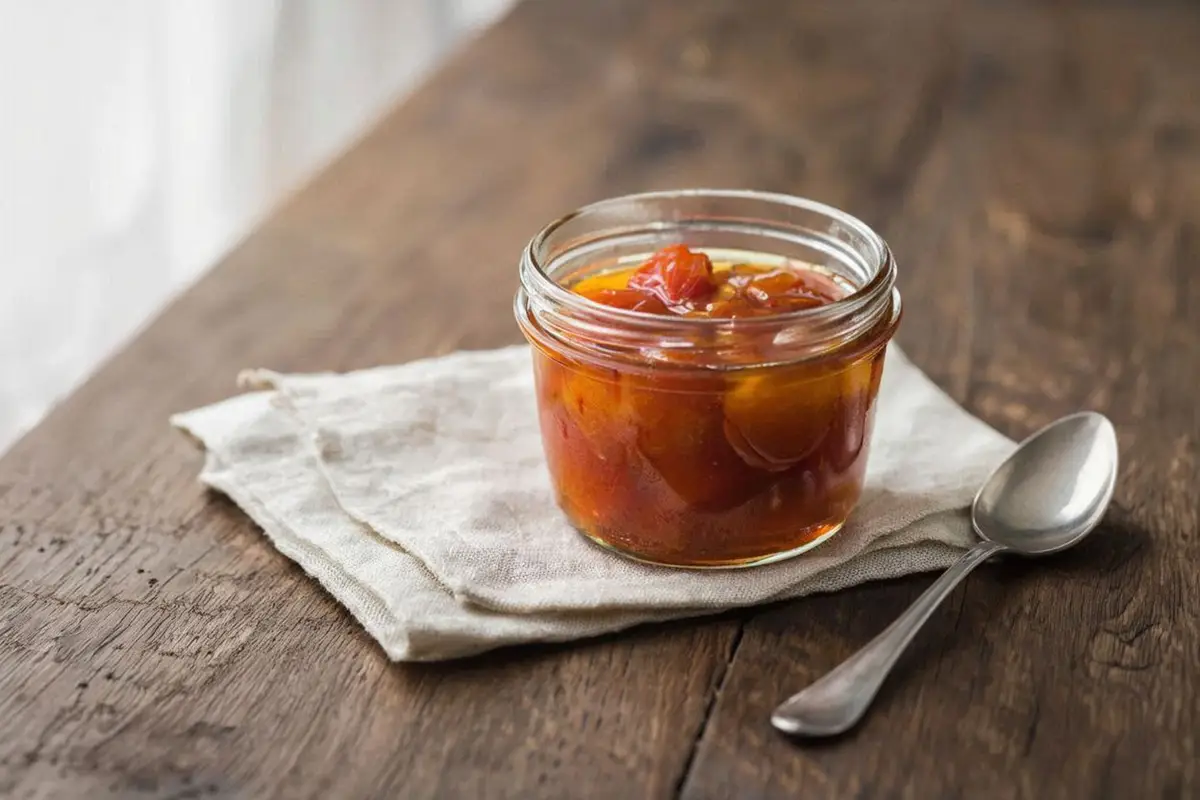
Tomatoes in Sugar (Slatko)
Firm tomato pieces soaked in lime water, then cooked in heavy sugar syrup until glass-clear and translucent.
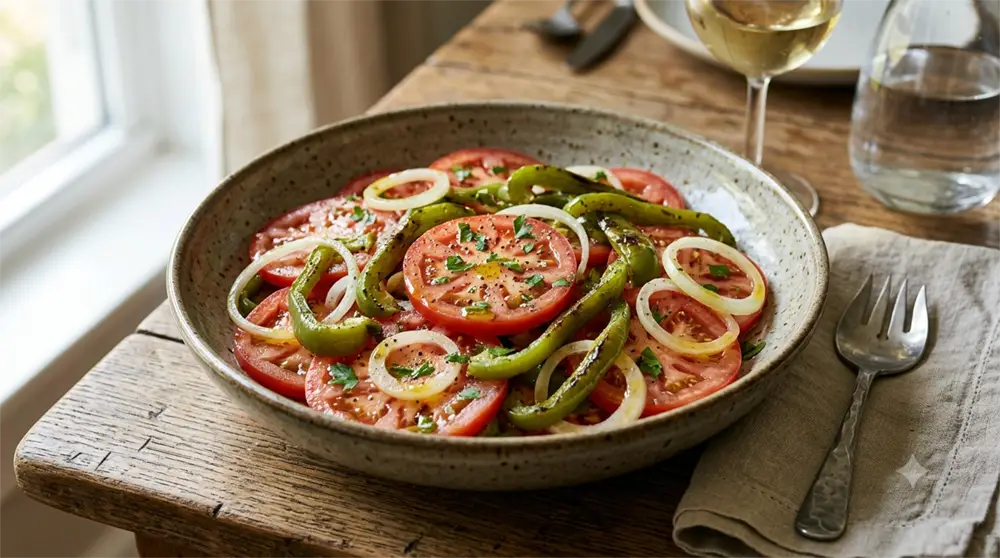
Tomato Salad with Roasted Pepper
Ripe summer tomatoes, peeled and sliced, with roasted green bell pepper strips and onion — dressed only with oil, no vinegar.
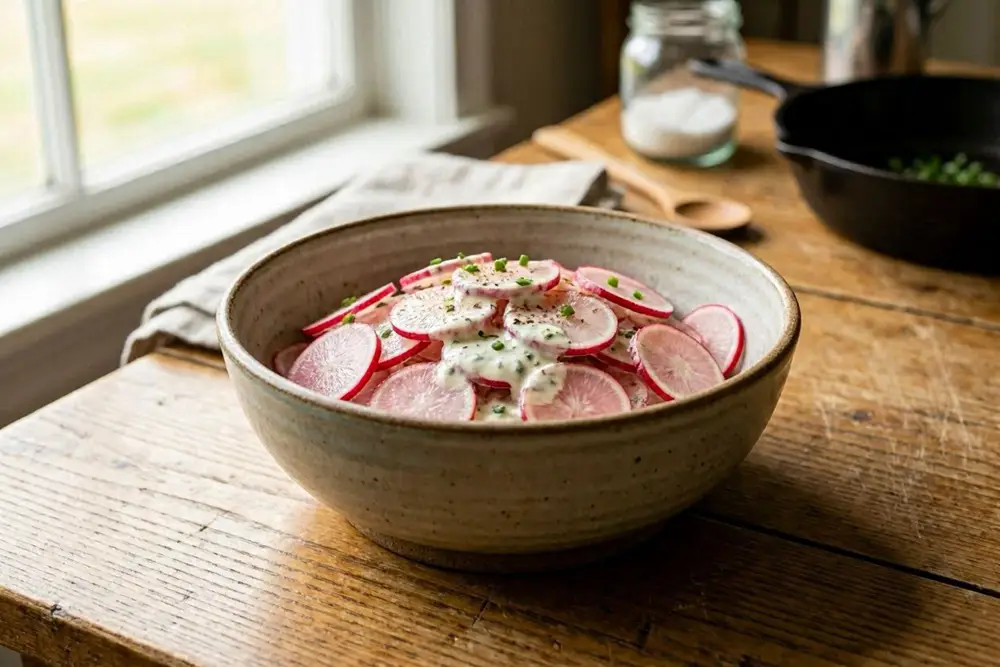
Radish Salad with Sour Cream
Thinly sliced fresh radishes dressed with sour cream and oil, sharpened with lemon and white pepper.