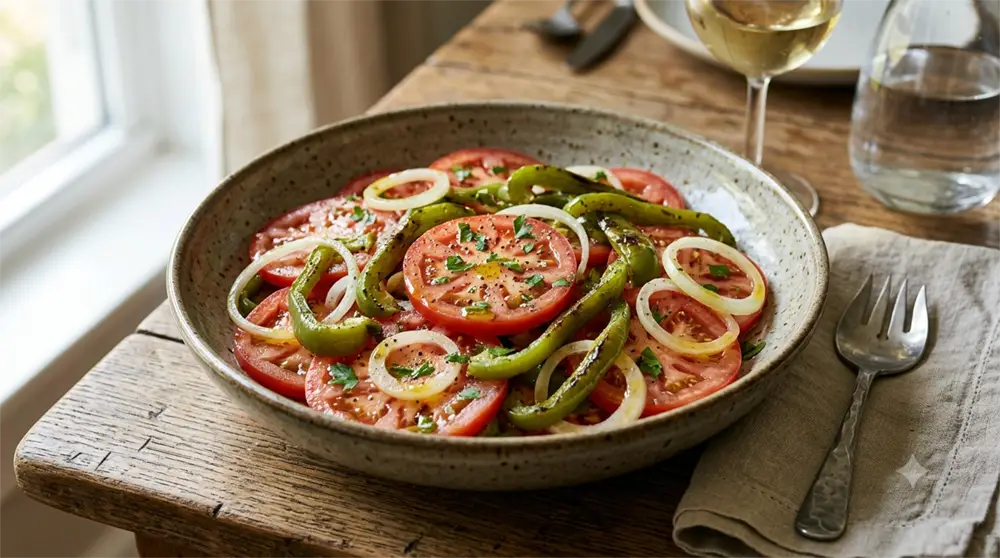
Tomato Salad with Roasted Pepper
Ripe summer tomatoes, peeled and sliced, with roasted green bell pepper strips and onion — dressed only with oil, no vinegar.
Historical recipe
Modernised adaptation of an early 20th‑century source. Not independently kitchen-tested by Attic Recipes. Quantities, temperatures, and food safety guidance have been updated for a contemporary kitchen — results may vary and errors may exist. Nutritional values, where provided, are estimates only and have not been laboratory tested. Always follow current food safety guidelines for your region. If you have a health condition, allergy, or dietary requirement, consult a qualified professional before preparing this recipe.
Use of this recipe is entirely at your own risk and subject to our Terms of Service and Privacy Policy. Attic Recipes accepts no liability for any adverse outcome.
- 1
Place the tomatoes in a deep heatproof bowl. Pour boiling water over them and leave to stand for 1–2 minutes. Lift the tomatoes out — the skins will slip off easily. Peel and discard the skins.
Tip Use tomatoes that are ripe but still firm. Very soft tomatoes collapse when sliced and turn the salad watery. - 2
Cut the peeled tomatoes into thin round slices. Transfer to a deep salad bowl.
- 3
Peel the roasted peppers, remove the seeds and any white membrane, and cut the flesh into thin strips. Add to the tomatoes.
Tip If roasting fresh: char the peppers directly over a gas flame or under a hot grill until blackened on all sides. Place in a covered bowl for 10 minutes to steam, then peel. Jarred roasted peppers, well drained, also work. - 4
Prepare the onion using one of two methods. For a mild result: add the whole onion or halved onion to the salad, mix gently, and remove the pieces before serving — the tomatoes will absorb the flavour without the onion's sharpness. For a stronger result: slice the onion into thin rings and leave in the salad.
- 5
Add the finely chopped parsley, salt, and black pepper. Pour the oil over the salad. Mix gently to combine, taking care not to break up the tomato slices.
- 6
Transfer to a serving bowl. Leave to rest for 10–15 minutes before serving — the tomatoes will release their juice, which combines with the oil to form a natural dressing. Do not add vinegar.
Tip The absence of vinegar is intentional and important. Ripe tomatoes provide enough acidity on their own; vinegar would make the salad harsh.
Nutrition Information per 1 porcija (approx. 180g)
Nutritional values are approximate estimates and may vary based on specific ingredients used, preparation methods, and portion sizes.
Serving Suggestions
Serve alongside roasted or braised meats, grilled fish, or as part of a cold spread. Best at room temperature, not refrigerated — cold dulls the flavour of ripe tomatoes.
About This Recipe
This salad has one rule that sets it apart from almost every other tomato salad in the archive: no vinegar. The instruction is explicit and deliberate — ripe tomatoes carry enough acidity on their own, and vinegar would only sharpen the flavour past the point of balance. The dressing is oil only, and the souring agent is the tomato juice released during the resting time after mixing.
The technique is also worth noting. Blanching the tomatoes in boiling water to loosen the skins before slicing was standard practice in period kitchens for any salad where presentation mattered. A peeled tomato slice holds its shape better, sits flat on the plate, and absorbs dressing more evenly than an unpeeled one.
Roasted green bell peppers — charred, peeled, and cut into strips — add a smoky depth that raw peppers cannot provide. The combination of ripe tomato and roasted pepper is one of the defining flavour pairings of late-summer Central European cooking.
Why It Works
Tomatoes are roughly 94% water. When sliced and salted, they release liquid rapidly — this is why watery tomato salads are so common. The solution here is twofold: use firm tomatoes that release liquid more slowly, and treat the released juice not as a problem but as the dressing base. Oil poured over the tomatoes emulsifies partially with the released juice during the resting period, producing a natural, lightly acidic dressing with no added souring agent required.
Roasting the peppers converts their sharp, green rawness into something softer and sweeter. The charring step adds a faint smokiness that raw peppers lack entirely. Peeling after roasting removes the bitter, leathery skin and leaves only the tender flesh.
Modern Kitchen Tips
Tomato quality matters more here than in any cooked dish. Use tomatoes at peak ripeness — they should smell of tomato through the skin. Out-of-season supermarket tomatoes will produce a flat, watery result regardless of technique.
If roasting peppers fresh, do not skip the steaming step after charring. Ten minutes covered allows the steam to loosen the skin from the inside, making peeling straightforward. Trying to peel hot peppers immediately off the flame is difficult and produces uneven results.
The salad should rest at room temperature for at least 10–15 minutes after dressing. Do not refrigerate before serving — cold suppresses the volatile compounds responsible for tomato flavour.
A classic of early 20th century home cooking, preserved and adapted for the modern kitchen.
The Story Behind This Recipe
Historical Context
Period versions of this salad relied entirely on the tomato's natural acidity as the souring agent — vinegar was explicitly excluded, an unusual instruction for the era when vinegar-dressed salads were the default. The technique of blanching tomatoes in boiling water to loosen the skins before slicing was standard in middle-class Central European kitchens of the period, where presentation and texture were taken seriously even in simple vegetable dishes. The two onion methods — one for flavour without texture, one for both — reflect a level of culinary nuance that goes beyond basic salad preparation.
Modern Kitchen Adaptation
Tomato quantity was not given in the original; 600g (approximately 4 medium tomatoes) is estimated for four servings as a side dish. Pepper quantity was given as 'a few' — standardised to 2 medium bell peppers. Oil quantity was given as 'plenty' — standardised to 4 tablespoons, which is generous for this volume of vegetables and matches period practice of using oil as the primary dressing. Either sunflower oil or a mild olive oil works; a strong extra-virgin olive oil will compete with the tomato flavour.
This recipe is an independent modern adaptation developed from historical sources in the public domain. It is provided for informational and educational purposes only and does not constitute professional dietary, nutritional, or medical advice. Food preparation involves inherent risks. The reader assumes full responsibility for safe food handling, ingredient sourcing, and adherence to current local food safety guidelines. The site operator accepts no liability for outcomes resulting from the preparation or consumption of this recipe.
One recipe.
Every week.
You Might Also Like
More recipes from the same category
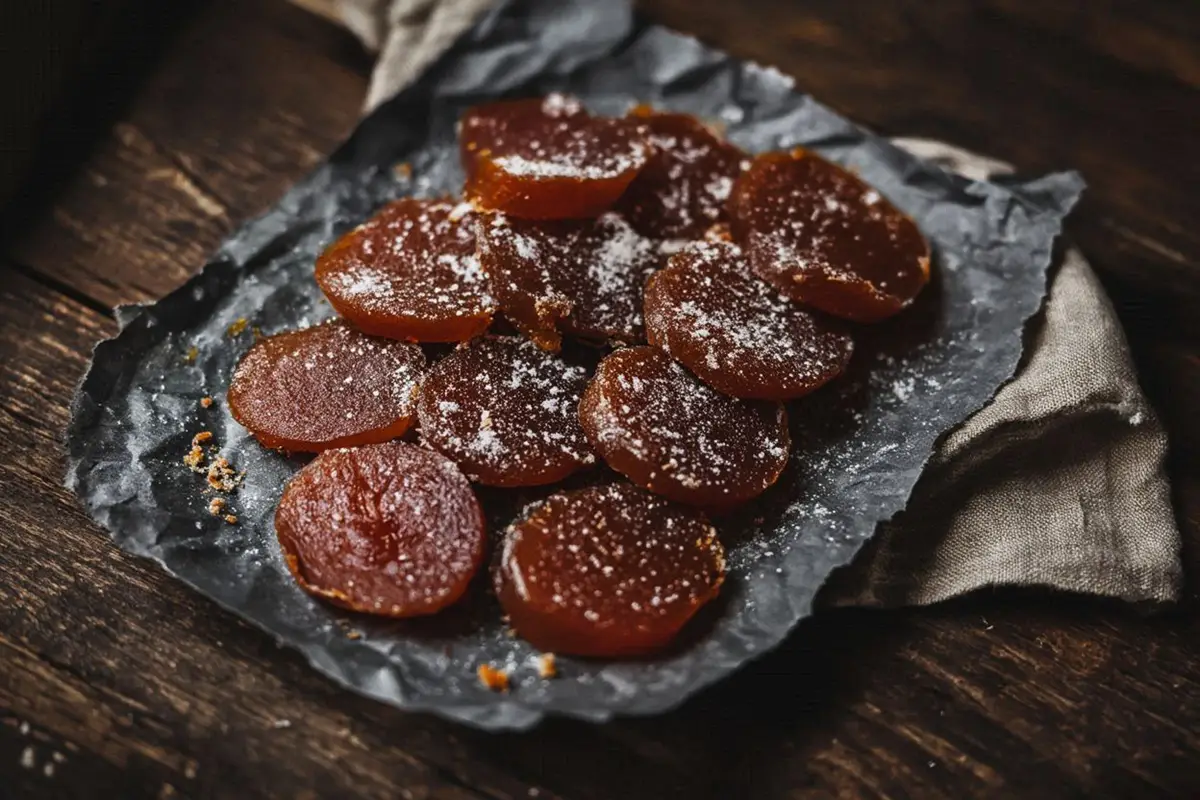
Apricot Fruit Paste
Sieved ripe apricots cooked with equal weight sugar and lemon juice, poured into molds and air-dried — from early 20th century Central European kitchens.
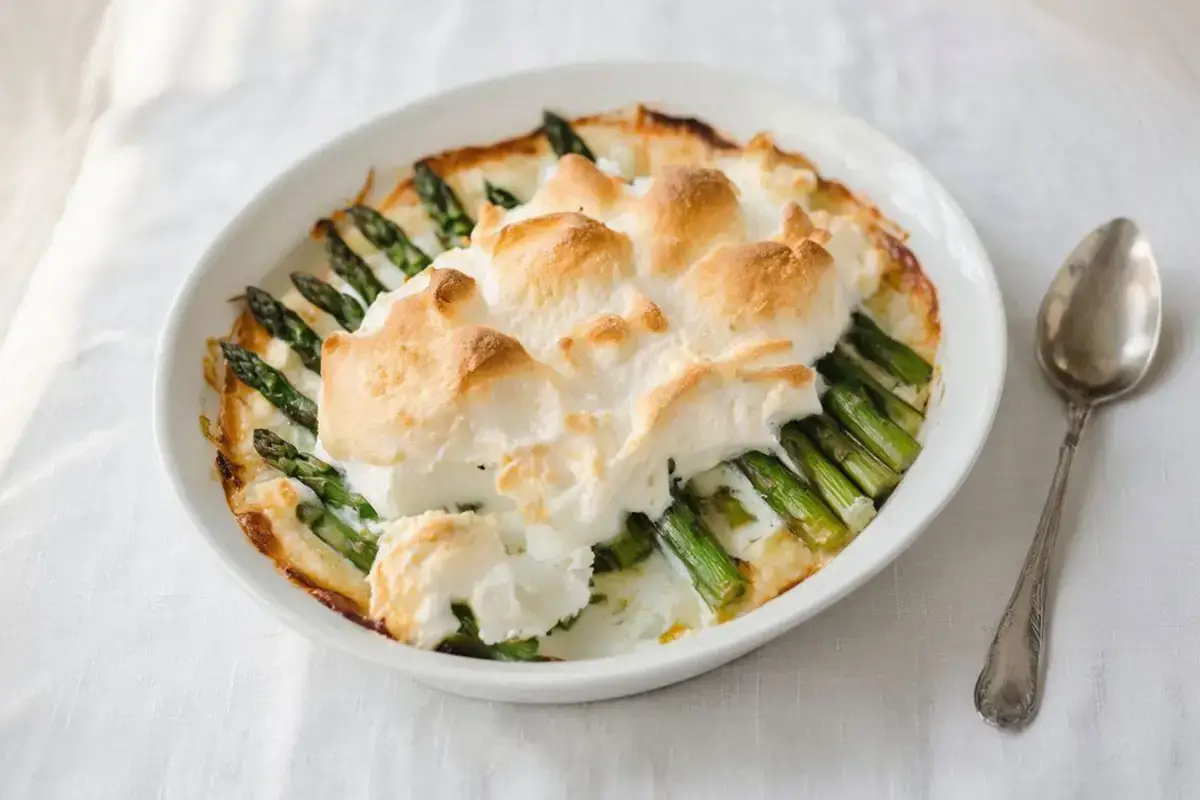
Asparagus Venetian Style
Fresh asparagus baked under a rich egg yolk cream sauce and a golden meringue-cheese topping. An elegant Central European appetizer.
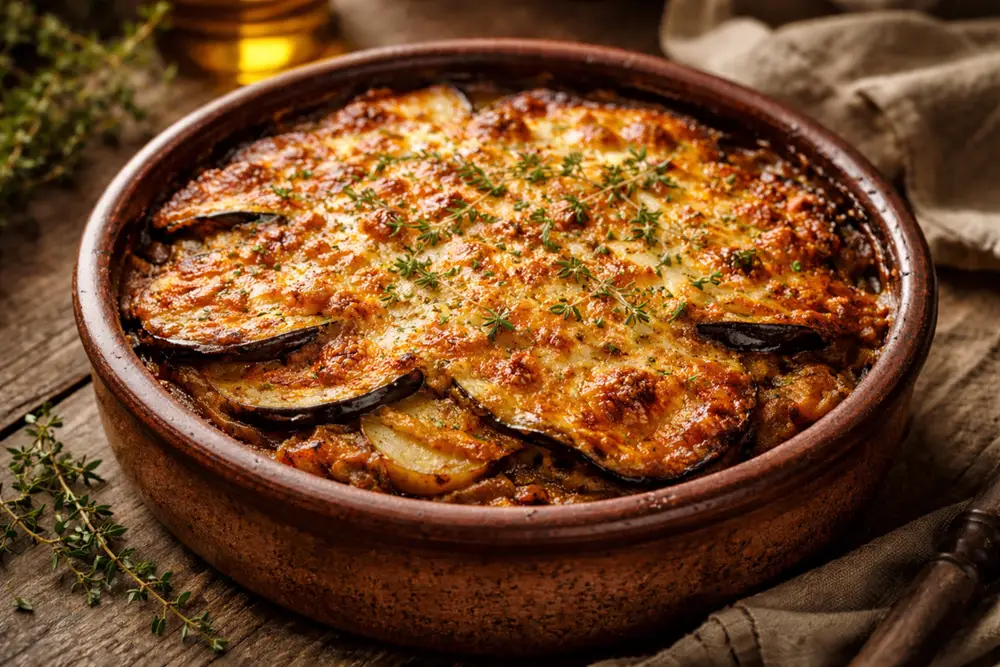
Baked Eggplant with Potatoes
A slow-baked layered casserole of eggplant, parboiled potatoes, golden fried onion, and melted cheese.