Baked Eggplant with Potatoes
A slow-baked layered casserole of eggplant, parboiled potatoes, golden fried onion, and melted cheese.
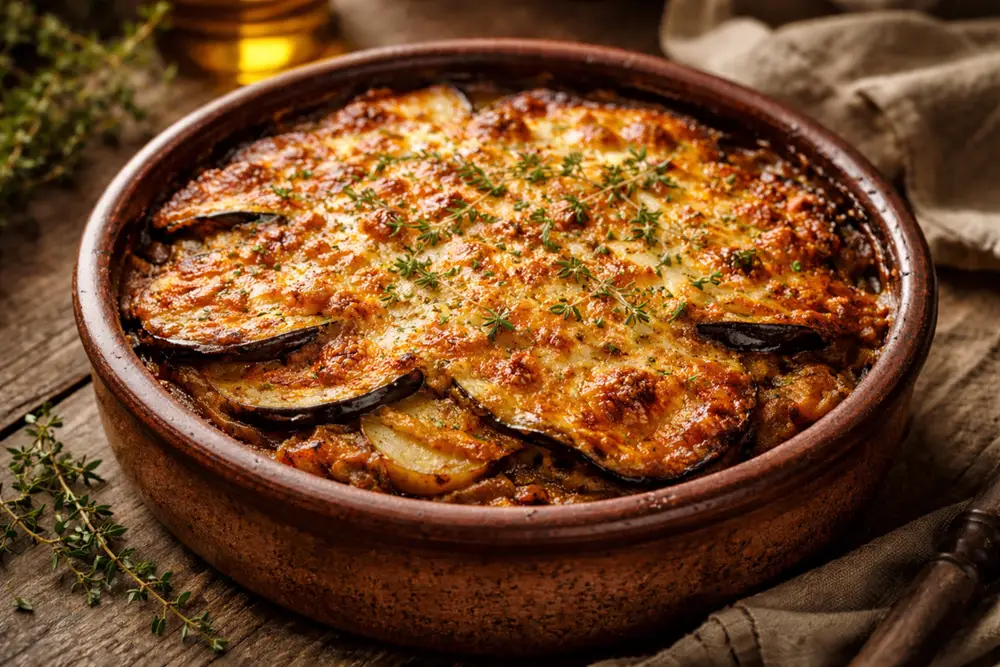
Quick Summary
Baked Eggplant with Potatoes is a Central European casserole of sliced eggplant, parboiled potatoes, fried onions, and melted cheese. It takes about 55 minutes, with layered, salted eggplant creating a tender, self-basting texture without sogginess.
Historical recipe
Modernised adaptation of an early 20th‑century source. Not independently kitchen-tested by Attic Recipes. Quantities, temperatures, and food safety guidance have been updated for a contemporary kitchen — results may vary and errors may exist. Nutritional values, where provided, are estimates only and have not been laboratory tested. Always follow current food safety guidelines for your region. If you have a health condition, allergy, or dietary requirement, consult a qualified professional before preparing this recipe.
Use of this recipe is entirely at your own risk and subject to our Terms of Service and Privacy Policy. Attic Recipes accepts no liability for any adverse outcome.
- Dairy
- 1
Slice the 900g eggplant into 5mm rounds. Arrange on a clean cloth or board and sprinkle with a generous pinch of salt (from the extra salt, not from the measured 1 tsp). Leave for 20 minutes to draw out excess moisture, then pat dry with a clean cloth.
Tip Do not skip this step — undrained eggplant releases water during baking and makes the casserole soggy. - 2
While the eggplant drains, place the 600g peeled potatoes in a pot of cold salted water. Bring to a boil and cook for 8–10 minutes — the potatoes should be partially tender but still hold their shape when pierced. Drain and leave to cool slightly, then slice thinly, approximately 3mm.
- 3
Heat the 80ml olive oil in a large frying pan over medium heat. Add the 300g sliced onion and fry gently, stirring occasionally, until softened and lightly golden — approximately 12–15 minutes. Remove from heat. Reserve the onion together with the infused oil.
- 4
Preheat the oven to 190°C (375°F) / 170°C fan. Spoon a little of the onion oil into the base of the earthenware pot or casserole dish to coat the bottom. Spread a thin layer of fried onion over the base.
- 5
Arrange a layer of eggplant slices over the onion, overlapping slightly. Season lightly with salt and black pepper (using the measured 1 tsp between all layers), and spoon over some of the fried onion.
- 6
Arrange a layer of the parboiled potato slices over the eggplant. Season again lightly with salt and pepper, spoon over more fried onion, and scatter half the 100g grated cheese evenly over the top.
- 7
Add a final layer of eggplant slices. Spoon the remaining fried onion over the top, scatter the roughly chopped 4g thyme, and drizzle with any remaining oil from the pan. Scatter the remaining cheese evenly over the surface.
- 8
Place the casserole in the preheated oven and bake for 30 minutes, until the vegetables are completely tender and the cheese is melted and beginning to colour at the edges.
- 9
Remove from the oven and leave to rest for 5 minutes before serving directly from the dish.
Nutrition Information per 1 portion (approx. 400g)
Nutritional values are approximate estimates and may vary based on specific ingredients used, preparation methods, and portion sizes.
Serving Suggestions
Serve directly from the earthenware pot, warm or at room temperature. Works well as a main course with crusty bread, or as a substantial side alongside roasted or grilled meat. Leftovers reheat well — cover and warm in a 160°C oven for 15 minutes.
About This Recipe
This is the kind of dish that needs almost no explanation once it comes out of the oven. Layers of eggplant and parboiled potato, separated by sweet fried onion and finished with melted cheese — it is straightforward, economical, and deeply satisfying. The earthenware pot is not incidental to the recipe; the material conducts heat gently and evenly, producing a casserole that is tender throughout without the bottom scorching or the top drying out.
Dishes of this structure — alternating layers of two or more vegetables, bound by fat and cheese — appear across Central European home cooking of the early 20th century in various forms. The technique requires little skill but rewards patience: good layering, properly parboiled potatoes, and eggplant that has been salted and drained make the difference between a watery, heavy casserole and one with clean, distinct flavours.
The thyme here is not decorative. Added to the final layer before baking, it infuses the oil as it heats and distributes a dry, slightly floral note through the top of the dish that offsets the richness of the cheese.
Why It Works
Parboiling the potatoes before assembly is the structural key to this recipe. Raw potato slices need significantly more time to cook through than eggplant — if both were placed in the oven raw, the eggplant would be overcooked and collapsed before the potato was edible. Partially cooking the potato first brings the two vegetables into alignment so they finish at the same moment.
The eggplant layers serve two roles: texture and moisture management. Eggplant releases liquid as it cooks, which bastes the potato slices above and below, keeping the interior of the casserole from drying out. This is why the recipe begins and ends with eggplant — it forms a self-basting structure around the more absorbent potato.
Frying the onion slowly before adding it to the casserole is equally deliberate. Raw onion releases steam in the oven and can make the dish watery; fried onion has already lost its excess moisture and contributes sweetness and depth instead.
Modern Kitchen Tips
- Salt the eggplant first, even if you are in a hurry — 20 minutes of draining makes a meaningful difference to the final texture.
- Use a mandoline for the potato if you have one — uniform 3mm slices cook evenly and layer neatly.
- Ceramic or earthenware baking dishes are strongly preferred over metal; they hold heat gently and prevent the base from overcooking.
- Check doneness by inserting a skewer or thin knife through the centre of the casserole — it should pass through with no resistance.
- Rest before serving — 5 minutes out of the oven allows the layers to settle and makes the dish much easier to portion.
A simple layered vegetable casserole from early 20th century Central European home cooking, preserved and adapted for the modern kitchen.
The Story Behind This Recipe
Historical Context
Early 20th century recipes for baked vegetable casseroles of this type typically gave no oven temperature — the instruction was simply to place the dish in a warm oven and bake for half an hour, relying on the cook's familiarity with their particular stove. The layering technique — eggplant, then parboiled potato, then back to eggplant — is characteristic of the period's approach to baked vegetable dishes, where alternating layers of different textures were considered important to the final result. Home cooks of the period understood that the potato needed to be partially cooked before assembly; raw potato slices would not cook through in the time the other vegetables required.
Modern Kitchen Adaptation
The oven temperature of 190°C is estimated — period recipes of this type described only a warm oven without specifying a temperature. The quantities of olive oil, thyme, and onion are estimated from the original proportions; the original text gave no specific measures for these. Salting and draining the eggplant before assembly is a modern technique not mentioned in the original, added here to prevent excess moisture during baking. Kashkaval is the cheese closest in character to the one described in period versions of this dish — a semi-hard, mildly sharp yellow cheese. Gruyère is a widely available alternative with a comparable melt and flavour profile; Pecorino Romano or a mature Gouda also work well.
This recipe is an independent modern adaptation developed from historical sources in the public domain. It is provided for informational and educational purposes only and does not constitute professional dietary, nutritional, or medical advice. Food preparation involves inherent risks. The reader assumes full responsibility for safe food handling, ingredient sourcing, and adherence to current local food safety guidelines. The site operator accepts no liability for outcomes resulting from the preparation or consumption of this recipe.
One recipe.
Every week.
You Might Also Like
More recipes you'll enjoy
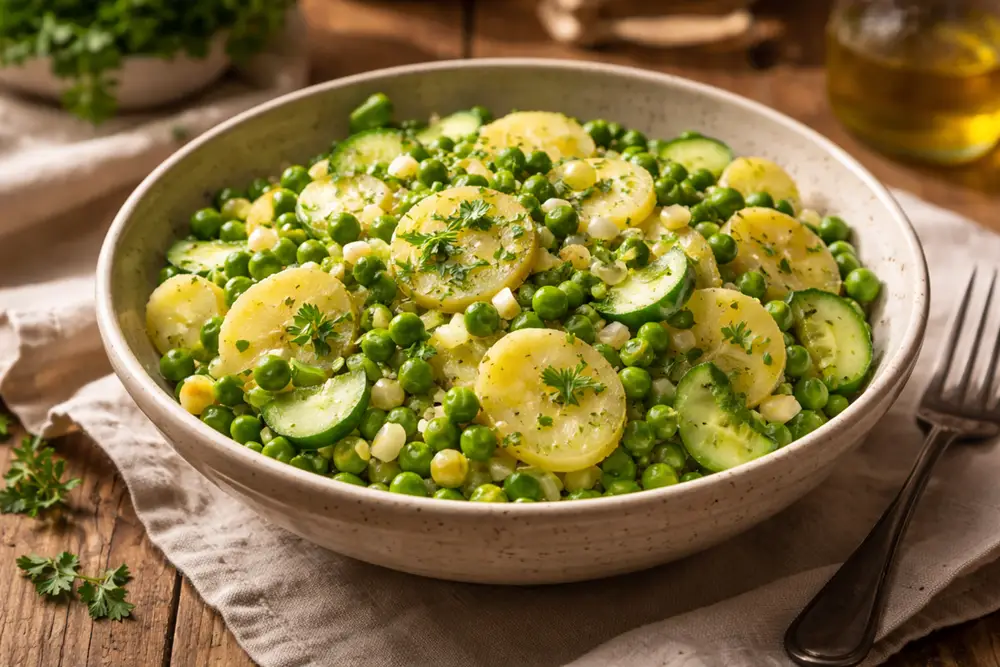
Mixed Salad with Peas
A hearty Central European potato and pea salad with cucumber, onion, and a clean oil-and-vinegar dressing, finished with fresh parsley.
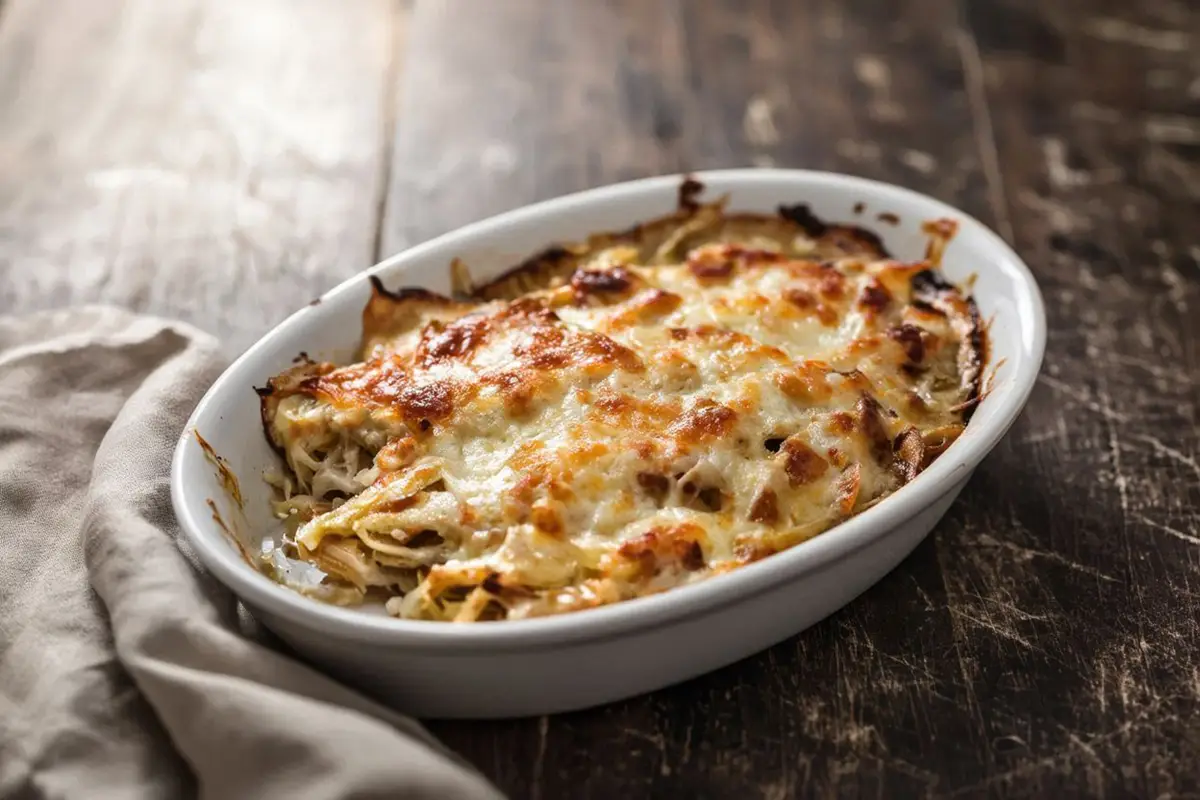
Baked Celeriac with Parmesan
Tender boiled celeriac layered with Parmesan, butter, and breadcrumbs, then baked until golden and bubbling.
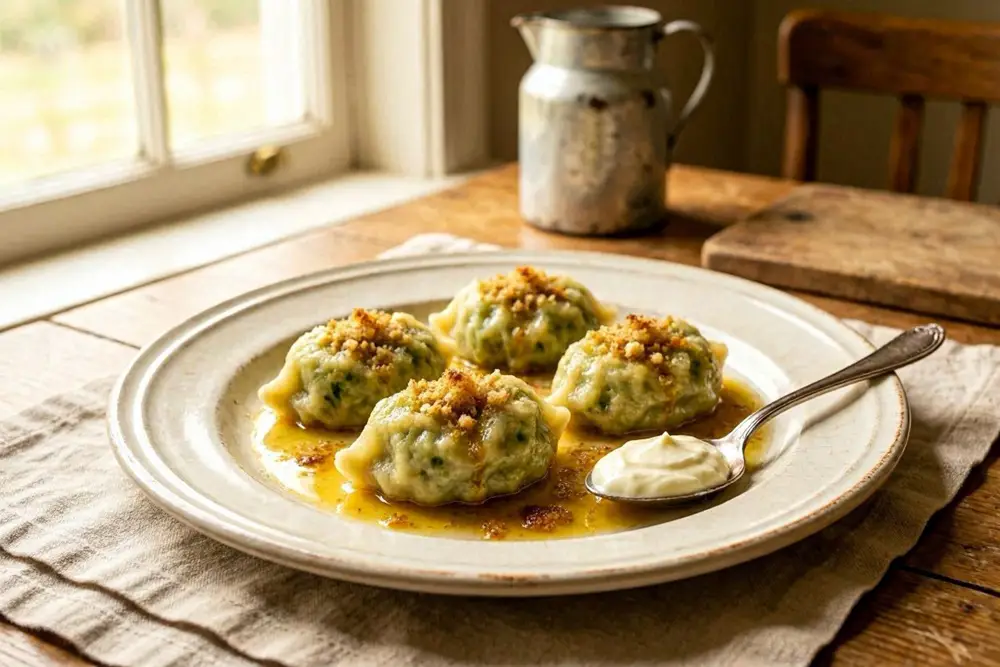
Kale Dumplings with Browned Butter and Sour Cream
Tender boiled kale dumplings bound with semolina and egg, finished with golden breadcrumbs fried in butter and a spoonful of sour cream.