Radish Salad with Sour Cream
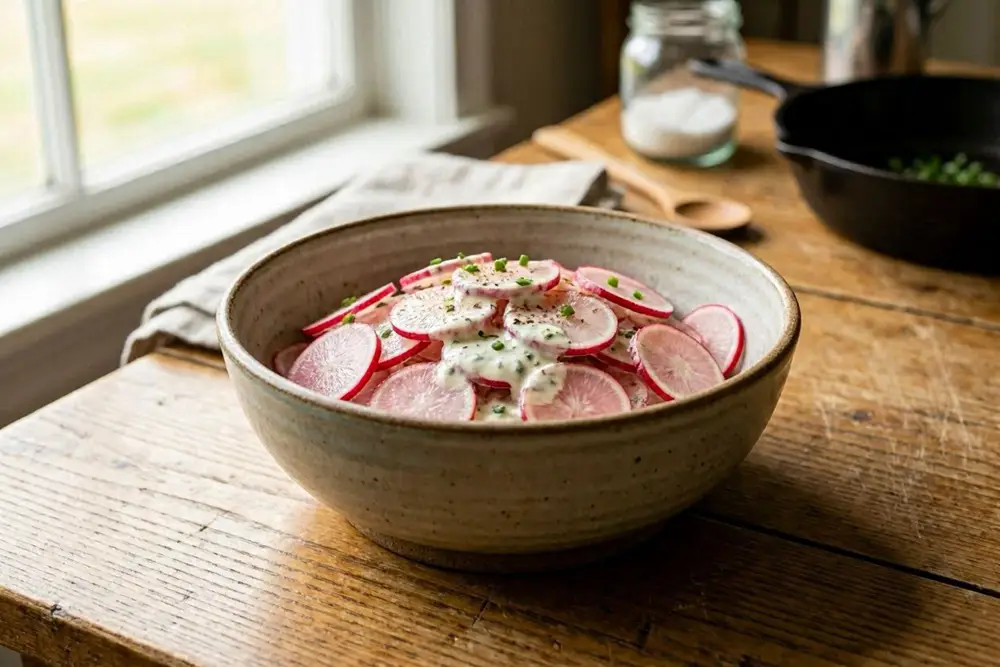
Thinly sliced fresh radishes dressed with sour cream and oil, sharpened with lemon and white pepper.
Historical recipe
Modernised adaptation of an early 20th‑century source. Not independently kitchen-tested by Attic Recipes. Quantities, temperatures, and food safety guidance have been updated for a contemporary kitchen — results may vary and errors may exist. Nutritional values, where provided, are estimates only and have not been laboratory tested. Always follow current food safety guidelines for your region. If you have a health condition, allergy, or dietary requirement, consult a qualified professional before preparing this recipe.
Use of this recipe is entirely at your own risk and subject to our Terms of Service and Privacy Policy. Attic Recipes accepts no liability for any adverse outcome.
- Dairy
Additional notes
-
Note
This salad contains approximately 1177mg of sodium per serving due to the salting of the radishes. The sodium content can be reduced by rinsing the salted radishes under cold water before dressing and reducing the salt in the dressing to taste.
- 1
Wash the radishes thoroughly. Leave them unpeeled and slice very thinly into rounds — aim for 2–3mm thickness.
- 2
Place the sliced radishes in a deep bowl and sprinkle with ½ tsp of fine salt. Toss to coat and leave to rest for 10 minutes. The salt will draw out moisture from the radishes.
- 3
While the radishes rest, prepare the dressing: whisk 125ml of sour cream in a bowl until smooth. Gradually whisk in 60ml of oil in a thin stream until the dressing is creamy and emulsified. Add 1 tsp of lemon juice, ¼ tsp salt, and ⅛ tsp of white pepper. Whisk to combine.
Tip Add the oil gradually — pouring it in all at once can cause the dressing to split. - 4
After resting, drain any liquid that has collected in the bowl. If the radishes have released a lot of moisture, pat them lightly dry with a clean cloth.
- 5
Pour the sour cream dressing over the radish slices and toss gently to coat evenly. Serve immediately.
Nutrition Information per 1 serving (approx. 145g)
Nutritional values are approximate estimates and may vary based on specific ingredients used, preparation methods, and portion sizes.
Serving Suggestions
Serve immediately after dressing — this salad does not hold well once dressed, as the radishes continue to release moisture. Classically paired with fried chicken or roast lamb. Also works well alongside grilled pork.
About This Recipe
This is one of those recipes that exists in every Central European kitchen without anyone writing it down — sliced radishes, sour cream, a little oil, salt, and white pepper. The version here comes from the period when a coffee cup was a perfectly acceptable unit of measurement and bunches were bought from market stalls rather than weighed. It is the kind of salad that appears on the table in ten minutes alongside whatever is frying in the pan.
The dressing is not a vinaigrette. Sour cream beaten with oil produces something closer to a light crème fraîche — mild, slightly tangy, with enough body to cling to the radish slices without drowning them. White pepper rather than black keeps the heat gentle and the colour clean.
Why It Works
Salting the radishes first is the key step. Left undressed, raw radishes release water slowly; salted, they release it within minutes. Draining that liquid before adding the dressing means the sour cream stays thick and the flavour stays concentrated rather than watered down by the time the salad reaches the table.
The oil is whisked into the sour cream gradually, which creates a loose emulsion — more stable than sour cream alone and with a slightly silkier texture on the palate. Lemon juice sharpens the acidity without the harshness of vinegar, which would compete with the natural pepperiness of the radishes.
Modern Kitchen Tips
A mandoline or the slicing disc of a food processor makes quick work of 400g of radishes and ensures uniform thickness, which matters for even salting and a consistent texture in the finished salad.
Serve this salad within 10–15 minutes of dressing. Unlike grain or legume salads, it does not improve with time — the radishes continue to soften and the dressing thins as they release more moisture.
A classic of early 20th century home cooking, preserved and adapted for the modern kitchen.
The Story Behind This Recipe
Historical Context
Early twentieth century Central European households commonly dressed raw vegetables with sour cream rather than vinaigrette, producing salads that were richer and milder in acidity than their Western European counterparts. The coffee cup was the standard volume measure for oil in period recipes of this type — approximately 60ml by modern measurement. Radish salads of this kind were typically served alongside fried or roasted meats, particularly chicken and lamb, as a cooling counterpoint to the richness of the main dish.
Modern Kitchen Adaptation
The original recipe gave no precise quantities for salt, pepper, or lemon juice — the amounts here are estimated based on the volume of dressing and standard seasoning ratios for sour cream dressings. The instruction to salt the radishes and allow them to rest before dressing is implied by the original method but not explicitly stated as a separate step; it has been made explicit here to prevent a watery dressing. The original specified no oil type; neutral sunflower oil is recommended to keep the dressing mild and allow the radish flavour to come through.
This recipe is an independent modern adaptation developed from historical sources in the public domain. It is provided for informational and educational purposes only and does not constitute professional dietary, nutritional, or medical advice. Food preparation involves inherent risks. The reader assumes full responsibility for safe food handling, ingredient sourcing, and adherence to current local food safety guidelines. The site operator accepts no liability for outcomes resulting from the preparation or consumption of this recipe.
One recipe.
Every week.
You Might Also Like
More recipes from the same category

Asparagus Venetian Style
Fresh asparagus baked under a rich egg yolk cream sauce and a golden meringue-cheese topping. An elegant Central European appetizer.

Apricot Fruit Paste
Sieved ripe apricots cooked with equal weight sugar and lemon juice, poured into molds and air-dried — from early 20th century Central European kitchens.

Bean Moussaka Without Meat
A hearty Central European vegetarian moussaka of pureed white beans layered with hard-boiled eggs, kashkaval cheese, and a sour cream custard topping.