Kadaif with Almonds and Lemon Syrup
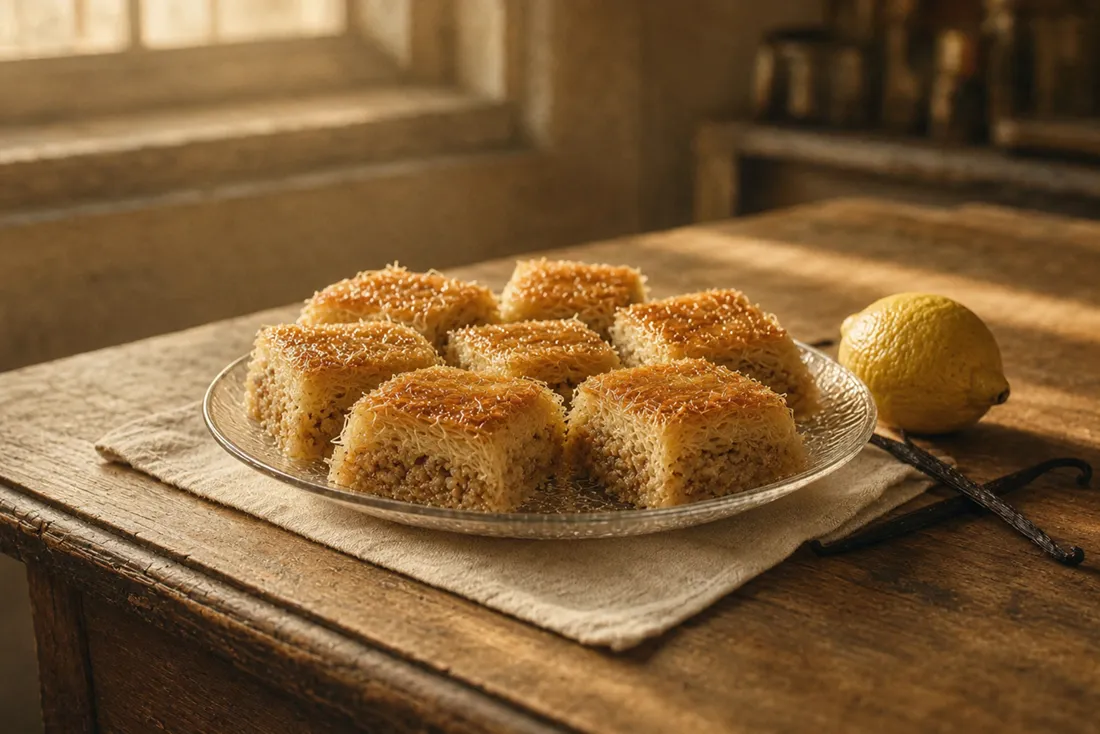
Fine egg-yolk noodle dough is layered with ground almonds, butter, and sugar, baked, then soaked in a lemon and vanilla syrup.
Quick Summary
A layered kadaif made from scratch — hand-cut noodle dough layered with almonds, butter, and sugar, baked, then soaked in lemon-vanilla syrup. Active time is under an hour, but the pastry rests overnight before serving, which is when the flavor really comes together.
This recipe uses How to Blanch Almonds: The Technique Behind the White Kernel — prepare it in advance if you haven't already.
Historical recipe
Modernised adaptation of an early 20th‑century source. Not independently kitchen-tested by Attic Recipes. Quantities, temperatures, and food safety guidance have been updated for a contemporary kitchen — results may vary and errors may exist. Nutritional values, where provided, are estimates only and have not been laboratory tested. Always follow current food safety guidelines for your region. If you have a health condition, allergy, or dietary requirement, consult a qualified professional before preparing this recipe.
Use of this recipe is entirely at your own risk and subject to our Terms of Service and Privacy Policy. Attic Recipes accepts no liability for any adverse outcome.
- Eggs
- Dairy
- Gluten
- Tree Nuts
Additional notes
-
Note
This dessert is high in saturated fat and sugar per serving. Best enjoyed in moderation, particularly by anyone monitoring saturated fat intake.
- 1
Combine the egg yolks and whole egg in a bowl. Gradually work in the flour until you have a firm, non-sticky dough, using no water.
Tip This dough should feel like a stiff pasta dough — dry to the touch, not tacky. - 2
Roll the dough out as thin as possible into a sheet. Let it air-dry for 10-15 minutes until it's no longer tacky, then loosely roll it up like a tube and slice it into the thinnest strands you can manage.
- 3
Spread the cut noodles out on a clean towel, separating the strands with your fingers, and let them dry further while you prepare the other layers.
- 4
Preheat the oven to 180°C (350°F). Grease a baking dish generously with butter.
- 5
Layer the dish: a layer of noodles, a layer of ground almonds, a layer of butter in small pieces, a layer of powdered sugar. Repeat, using the full amounts of almonds, butter, and sugar, ending with a layer of noodles on top.
- 6
Bake until about half-cooked, roughly 25-30 minutes.
Tip It should look pale gold and set, but not yet fully browned — it finishes baking after the syrup goes on. - 7
While it bakes, make the syrup: combine the sugar, water, and vanilla pod in a saucepan. Bring to a boil and cook until it reaches a syrup consistency similar to a fruit preserve, about 15 minutes. Near the end, add the lemon rounds and let them simmer briefly in the syrup.
- 8
Remove the half-baked kadaif from the oven and slowly pour the hot syrup evenly over it.
- 9
Return the dish to the oven and bake until fully golden, another 15-20 minutes.
- 10
Remove from the oven and let it rest in the same dish at room temperature until the next day — the flavor and texture improve with resting.
- 11
The next day, cut into squares directly in the dish and arrange on a serving plate.
Nutrition Information per 1 square (about 125g)
Nutritional values are approximate estimates and may vary based on specific ingredients used, preparation methods, and portion sizes.
Serving Suggestions
Serve at room temperature, plain or with a spoonful of unsweetened whipped cream to balance the sweetness.
About This Recipe
Kadaif belongs to a family of syrup-soaked layered pastries that spread widely across Central and Southeastern Europe, and this version builds its own noodle-like pastry from scratch rather than relying on ready-made shredded dough. It’s a project more than a quick bake — the dough has to be rolled, dried, and hand-cut into strands before it’s even layered — but the payoff is a rich, almond-studded pastry that only gets better with a day’s rest.
Patience matters twice here: once while the noodles dry, and again overnight after baking, when the syrup fully settles into every layer.
Why It Works
Baking the pastry only halfway before pouring on the hot syrup lets the syrup soak evenly into every layer while there’s still enough structure left to hold together, rather than sitting on top of a fully set crust. Finishing the bake afterward sets the top layer while the syrup continues working its way through. The overnight rest matters for the same reason — syrup-soaked pastries need time for the liquid to distribute evenly rather than pooling at the bottom.
Modern Kitchen Tips
If your kitchen runs warm, dry the cut noodle strands in a very low oven (around 80°C/175°F) with the door propped open, rather than leaving them out at room temperature — it’s faster and more consistent. A serrated knife makes cleaner cuts through the syrup-soaked layers than a straight-edged one.
A classic of early 20th century home cooking, preserved and adapted for the modern kitchen.
The Story Behind This Recipe
Historical Context
Kadaif is a shredded pastry dessert that entered Central European kitchens during the centuries of Ottoman presence in the region, and home cooks of the era folded it into their own repertoire alongside other borrowed sweets. This version builds the noodle-like pastry from a rich egg-yolk dough rather than the pulled shredded dough more commonly used further south, layering it with almonds and butter before soaking it in a lemon-scented syrup.
Modern Kitchen Adaptation
The original recipe didn't specify a flour quantity, oven temperature, or baking times — all have been estimated here based on the ratios and technique described, and are marked accordingly. Store-bought shredded kadaif (kataifi) pastry is a reasonable modern shortcut in place of hand-cutting the noodle dough, if you'd rather skip that step.
This recipe is an independent modern adaptation developed from historical sources in the public domain. It is provided for informational and educational purposes only and does not constitute professional dietary, nutritional, or medical advice. Food preparation involves inherent risks. The reader assumes full responsibility for safe food handling, ingredient sourcing, and adherence to current local food safety guidelines. The site operator accepts no liability for outcomes resulting from the preparation or consumption of this recipe.
One recipe.
Every week.
You Might Also Like
More recipes you'll enjoy
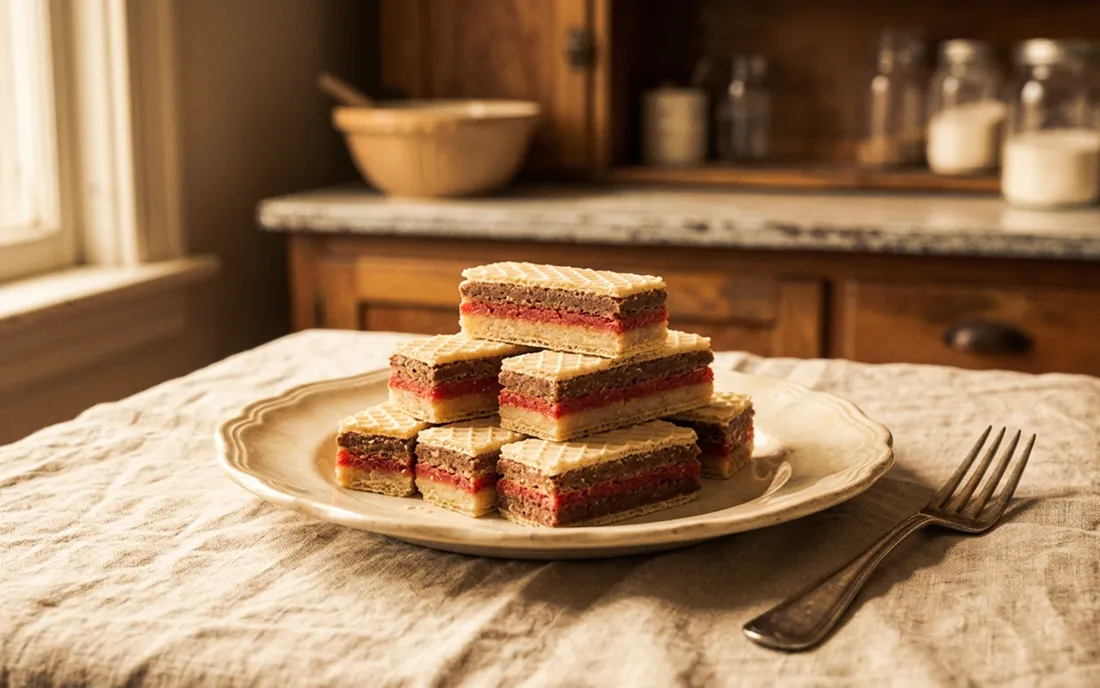
Vegan Almond Wafer Bars (Three-Layer)
Dairy-free, egg-free almond wafer bars in three colorful layers — a no-bake Lenten dessert built from almond paste and crisp wafer sheets.
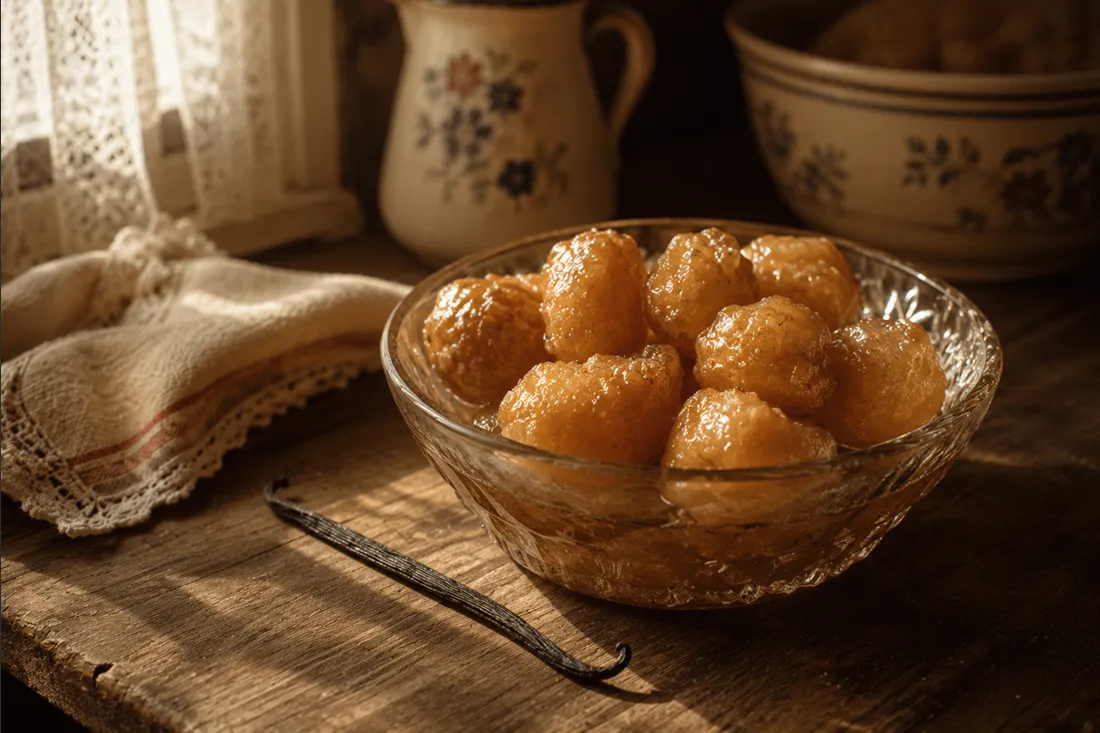
Fried Meringue Dumplings in Vanilla Syrup (Đulnari)
Whipped egg whites, lightly stabilized with cornstarch, are fried into golden dumplings and soaked in a vanilla sugar syrup.
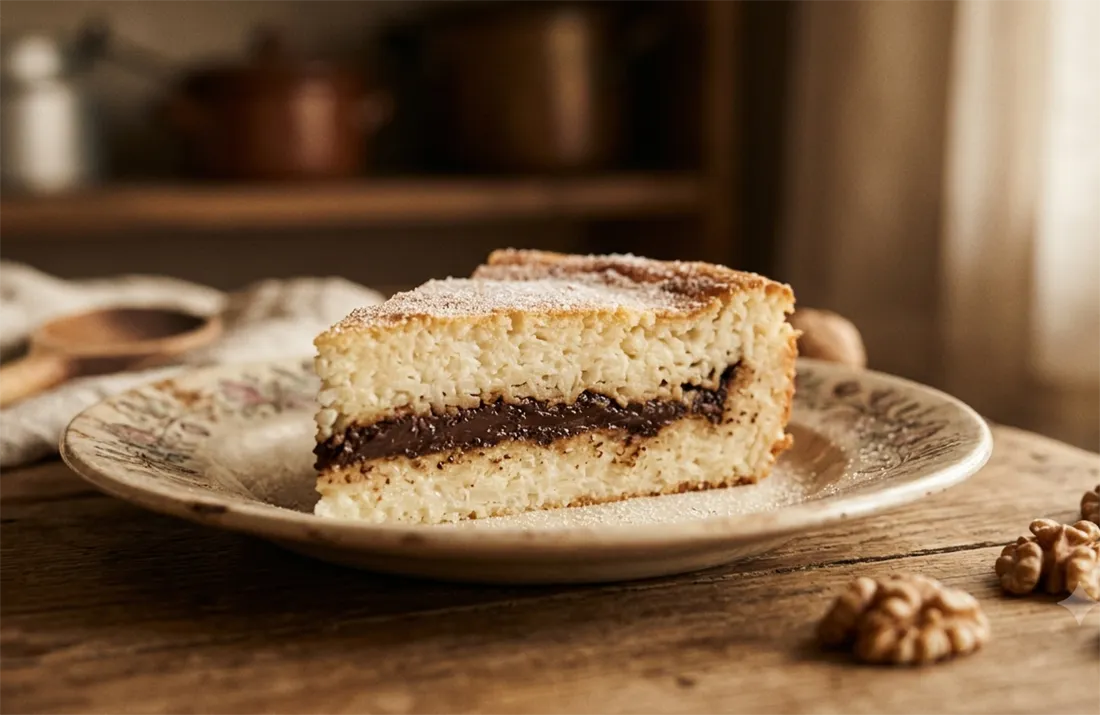
Baked Rice Pudding with Rum and Chocolate
Rice cooked in a citrus-rum syrup, layered with walnuts and grated chocolate, then baked under a golden egg white glaze.