Fried Meringue Dumplings in Vanilla Syrup (Đulnari)
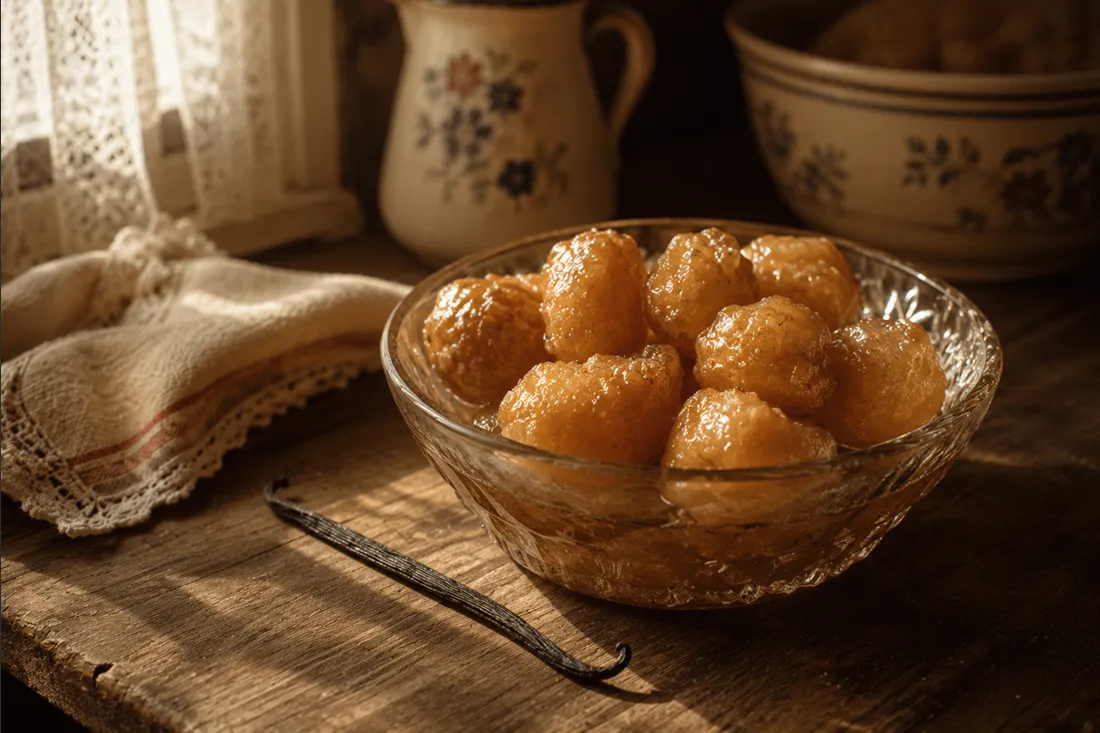
Whipped egg whites, lightly stabilized with cornstarch, are fried into golden dumplings and soaked in a vanilla sugar syrup.
Quick Summary
Đulnari are small fried meringue dumplings, golden on the outside and airy within, soaked in a vanilla sugar syrup while still warm. The whole dessert comes together in well under an hour, mostly hands-on time at the stove.
Historical recipe
Modernised adaptation of an early 20th‑century source. Not independently kitchen-tested by Attic Recipes. Quantities, temperatures, and food safety guidance have been updated for a contemporary kitchen — results may vary and errors may exist. Nutritional values, where provided, are estimates only and have not been laboratory tested. Always follow current food safety guidelines for your region. If you have a health condition, allergy, or dietary requirement, consult a qualified professional before preparing this recipe.
Use of this recipe is entirely at your own risk and subject to our Terms of Service and Privacy Policy. Attic Recipes accepts no liability for any adverse outcome.
- Eggs
- Dairy
Additional notes
-
Warning
Frying in hot fat carries a burn and splatter risk. Add the meringue spoonfuls gently to avoid splashing, and keep children away from the pot while frying.
- 1
Whip the egg whites to stiff, glossy peaks.
- 2
Gently fold the cornstarch into the whipped egg whites until just combined.
- 3
In a deep, heavy pot, melt the clarified butter or ghee and heat it to about 175°C (350°F).
Tip See the tip above for testing readiness without a thermometer. - 4
Drop spoonfuls of the meringue mixture into the hot fat, frying until golden brown on all sides, turning as needed. Work in batches so the dumplings aren't crowded.
Tip They puff and firm up quickly — watch closely so they don't over-brown. - 5
Remove the dumplings with a slotted spoon and drain briefly on paper towels.
- 6
Meanwhile, combine the sugar, water, and vanilla pod in a saucepan. Bring to a boil and cook until thickened into a syrup, about 10-15 minutes.
- 7
Add the fried dumplings to the hot syrup and let them cool together so they soak up the syrup.
- 8
Serve at room temperature, spooning extra syrup over each portion.
Nutrition Information per 1 dumpling (about 25g)
Nutritional values are approximate estimates and may vary based on specific ingredients used, preparation methods, and portion sizes.
Serving Suggestions
Serve chilled or at room temperature as a light dessert, or alongside strong coffee.
About This Recipe
Đulnari are a lighter counterpart to the region’s more elaborate syrup-soaked pastries — no dough, no layering, just whipped egg whites fried into small golden dumplings and left to soak in a warm vanilla syrup. They’re closer in spirit to a fritter than to cake, airy inside with a faintly crisp exterior once fried.
The technique is unusual enough to be worth trying at least once: frying a spoonful of stabilized meringue behaves differently than frying a batter, puffing and setting almost immediately in the hot fat.
Why It Works
A small amount of cornstarch folded into the whipped egg whites gives the meringue just enough structure to hold its shape when it hits hot fat, without weighing it down the way a starch-heavy batter would. The high heat sets the outside almost instantly, trapping air inside so the dumplings stay light rather than turning dense. Frying and syrup-soaking are done as two separate steps — fry first, syrup after — so the exterior has a chance to set and brown before it’s saturated with liquid.
Modern Kitchen Tips
Fry a single test spoonful first to check both the temperature and the texture before committing the whole batch — meringue that’s under-whipped will spread instead of holding its shape in the fat. If the dumplings brown too quickly before cooking through, lower the heat slightly for the remaining batches.
A classic of early 20th century home cooking, preserved and adapted for the modern kitchen.
The Story Behind This Recipe
Historical Context
Đulnari take their name from the Turkish gülnar, meaning pomegranate flower, a reference to the rounded, faintly ruffled shape the fried meringue takes on. Like kadaif, they entered Central European kitchens during the Ottoman period and were adapted into a lighter, syrup-soaked treat using whipped egg whites in place of a heavier dough.
Modern Kitchen Adaptation
Clarified butter or ghee replaces the plain butter called for in the original, since plain butter has a lower smoke point and is prone to burning or smoking at frying temperature; a neutral high-heat oil works as well if you'd rather not use clarified butter. The frying temperature and syrup cooking time weren't given in the original and have been estimated here. The water quantity has been converted from the original's 'two glasses' to a standard measure.
This recipe is an independent modern adaptation developed from historical sources in the public domain. It is provided for informational and educational purposes only and does not constitute professional dietary, nutritional, or medical advice. Food preparation involves inherent risks. The reader assumes full responsibility for safe food handling, ingredient sourcing, and adherence to current local food safety guidelines. The site operator accepts no liability for outcomes resulting from the preparation or consumption of this recipe.
One recipe.
Every week.
You Might Also Like
More recipes you'll enjoy
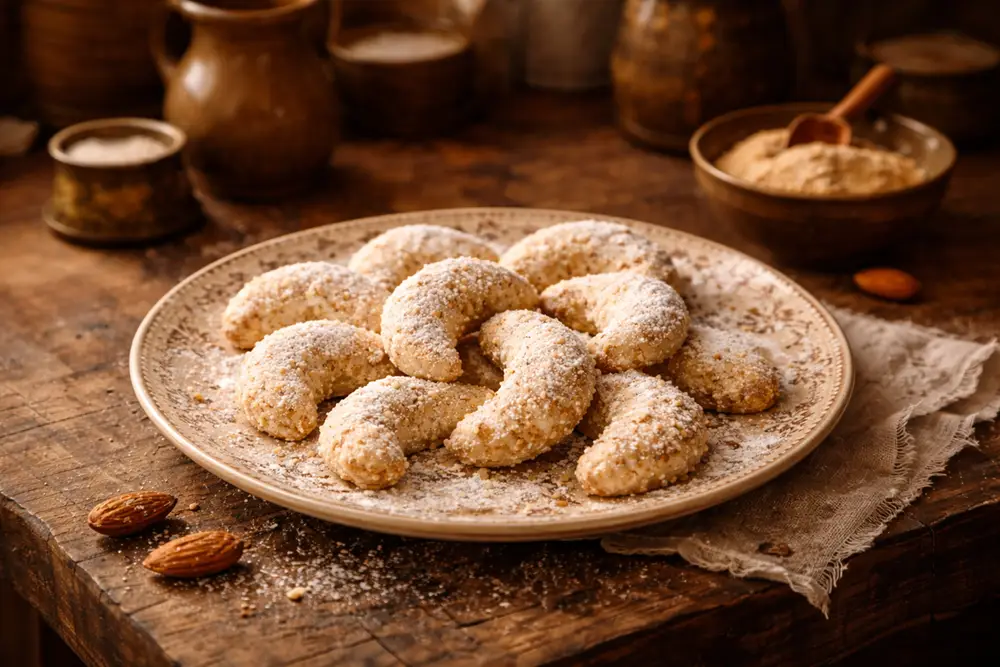
Almond Meringue Crescents
Crisp Central European confections of Swiss meringue shaped into crescents, coated in ground almonds, oven-dried until white and firm.
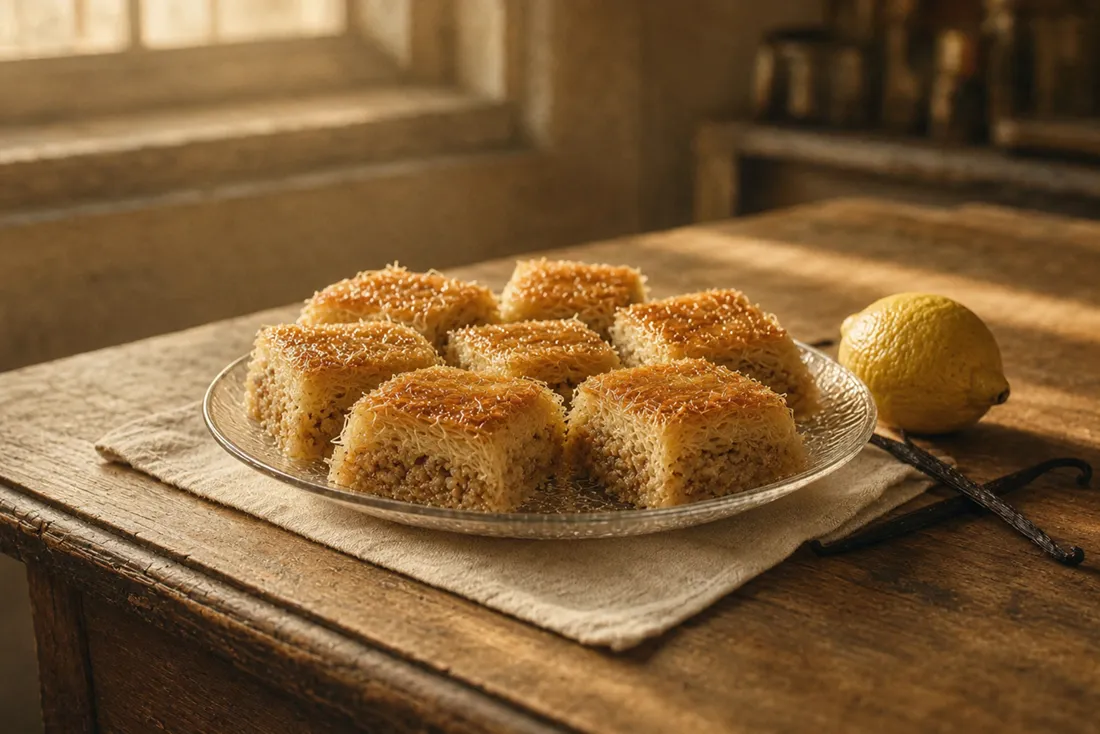
Kadaif with Almonds and Lemon Syrup
Fine egg-yolk noodle dough is layered with ground almonds, butter, and sugar, baked, then soaked in a lemon and vanilla syrup.
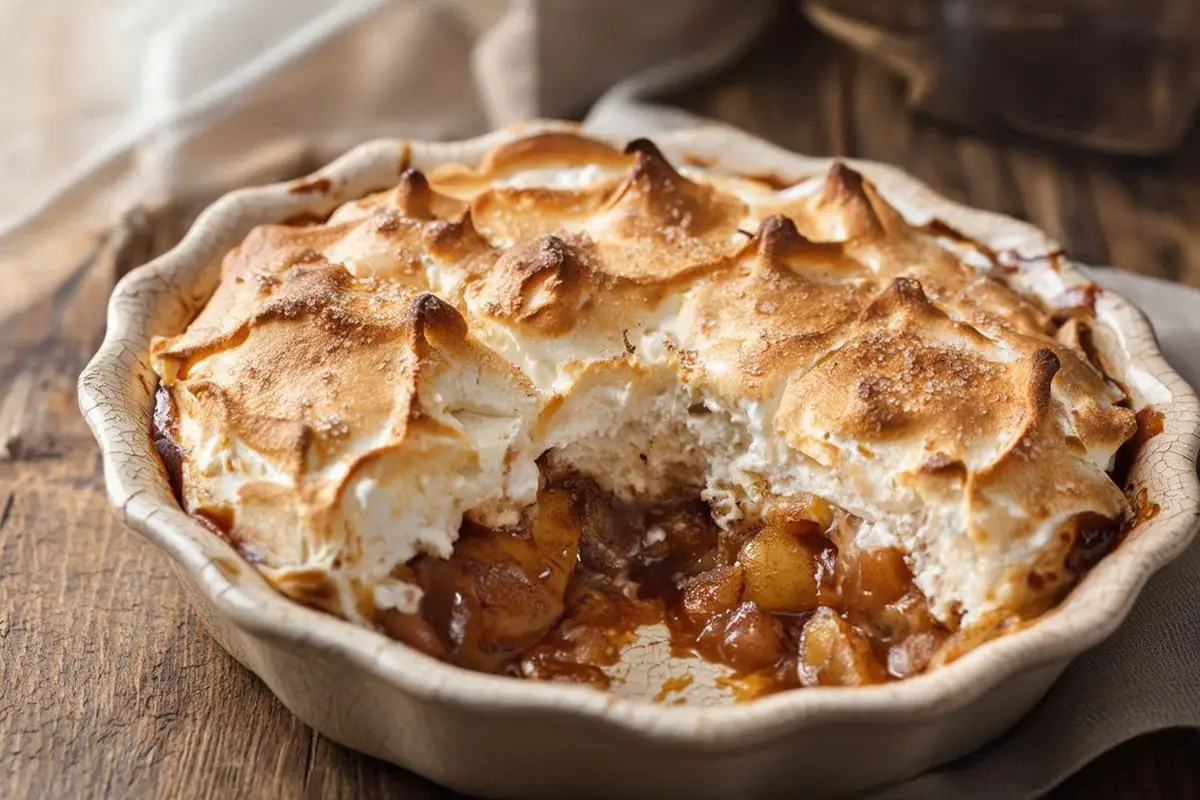
Velvet Apple & Meringue Gratin
A decadent vintage dessert featuring apples slow-cooked in a butter-sugar syrup, topped with a cloud of lemon-scented meringue.