Honey Spice Tea Cookies with Almonds
Honey and spice tea cookies, spiced with cinnamon and clove, brushed with egg yolk and topped with almond halves — they only get better with time.

Quick Summary
A firm honey-and-spice dough, flavored with cinnamon, clove, and lemon, rolled into small rounds and topped with an almond half. Baked until lightly golden, these tea cookies are traditionally made ahead, since they soften and improve with a few days' rest.
This recipe uses How to Blanch Almonds: The Technique Behind the White Kernel — prepare it in advance if you haven't already.
Historical recipe
Modernised adaptation of an early 20th‑century source. Not independently kitchen-tested by Attic Recipes. Quantities, temperatures, and food safety guidance have been updated for a contemporary kitchen — results may vary and errors may exist. Nutritional values, where provided, are estimates only and have not been laboratory tested. Always follow current food safety guidelines for your region. If you have a health condition, allergy, or dietary requirement, consult a qualified professional before preparing this recipe.
Use of this recipe is entirely at your own risk and subject to our Terms of Service and Privacy Policy. Attic Recipes accepts no liability for any adverse outcome.
- Eggs
- Gluten
- Tree Nuts
Additional notes
-
Note
Contains almonds. Omit or substitute the topping for those with nut allergies.
- 1
In a saucepan, combine the honey and sugar. Warm over medium heat, stirring, until the mixture comes to a boil. Remove from heat.
- 2
Place the flour in a separate large pot or bowl. Gradually pour in the hot honey-sugar mixture, stirring well to combine into a thick paste.
- 3
Let the mixture cool completely, about 30 minutes.
Tip The mixture must be fully cooled before the egg yolks are added, or the yolks will cook in the residual heat. - 4
Once cooled, stir in the baking soda, cinnamon, cloves, lemon zest, and lemon juice.
- 5
Add the 8 egg yolks and mix in. Turn the mixture out onto a work surface and knead well until smooth. If the dough is too dry to come together, knead in the additional egg yolk.
- 6
Roll out the dough with a rolling pin to about a finger's thickness (1.5cm), and cut into small rounds about 5-6cm across.
- 7
Brush the top of each round with the beaten egg yolk reserved for brushing.
- 8
Press half an almond into the center of each cookie.
- 9
Bake at 180°C (350°F) / 160°C fan for 12-15 minutes, until lightly golden at the edges.
- 10
Let cool completely before serving. Store in an airtight container — these cookies soften and improve in flavor after a few days.
Nutrition Information per 1 cookie (approx 25g), based on 45 pieces
Nutritional values are approximate estimates and may vary based on specific ingredients used, preparation methods, and portion sizes.
Serving Suggestions
Best made a few days ahead and stored in an airtight tin — the texture softens and the spices mellow with time. Serve with tea or coffee.
About This Recipe
These honey cookies belong to a category of baking meant to be planned ahead rather than eaten fresh — the dense dough, built almost entirely from honey, sugar, flour, and egg yolks, actually improves with a few days’ rest. Cinnamon, clove, and fresh lemon give the dough its warmth, while a half almond pressed into the top of each round marks these as a cookie meant for company rather than an everyday snack.
There’s no butter or milk anywhere in this dough — the richness comes entirely from the egg yolks and honey, which also explains why these cookies keep so well.
Why It Works
Cooling the honey-sugar-flour mixture completely before adding the egg yolks isn’t optional — it’s what keeps the yolks raw and workable rather than scrambling them into the dough. Baking soda, rather than a beaten egg or whipped batter, is what gives these cookies their lift, producing a dense, slightly chewy texture rather than a light, cakey one. Because the dough is honey-based rather than butter-based, it doesn’t dry out the way a butter cookie can — instead, it softens and rounds out in flavor over the following days.
Modern Kitchen Tips
Resist the urge to bake and serve these the same day — if you can, make them at least two or three days before you plan to serve them. Store them in an airtight tin rather than loosely covered; the goal is to trap moisture so the texture softens rather than dries out further.
A classic of early 20th century home cooking, preserved and adapted for the modern kitchen.
The Story Behind This Recipe
Historical Context
Early 20th century recipes for honey-based tea cookies like this one were often made well ahead of when they'd be served, since the dense, honey-rich dough softens and mellows over several days rather than being at its best fresh from the oven. The combination of cinnamon, clove, and lemon reflects spices that had long since become household staples in Central European baking. A half almond pressed into each cookie before baking was a simple, traditional way to mark a tea cookie meant for a more festive occasion.
Modern Kitchen Adaptation
The oven temperature, cookie size, and yield were not specified in the original and have been estimated: a moderate oven suits this dense, honey-based dough, and rounds cut about 5-6cm across, a finger's thickness, bake evenly within 12-15 minutes. The almond quantity has been calculated to match the estimated yield of about 45 cookies, at one half-almond per cookie, since the original only specified the amount per piece. Baking soda is the sole leavener here, consistent with the dense, chewy texture typical of period honey cookies rather than a light, airy crumb.
This recipe is an independent modern adaptation developed from historical sources in the public domain. It is provided for informational and educational purposes only and does not constitute professional dietary, nutritional, or medical advice. Food preparation involves inherent risks. The reader assumes full responsibility for safe food handling, ingredient sourcing, and adherence to current local food safety guidelines. The site operator accepts no liability for outcomes resulting from the preparation or consumption of this recipe.
One recipe.
Every week.
You Might Also Like
More recipes you'll enjoy
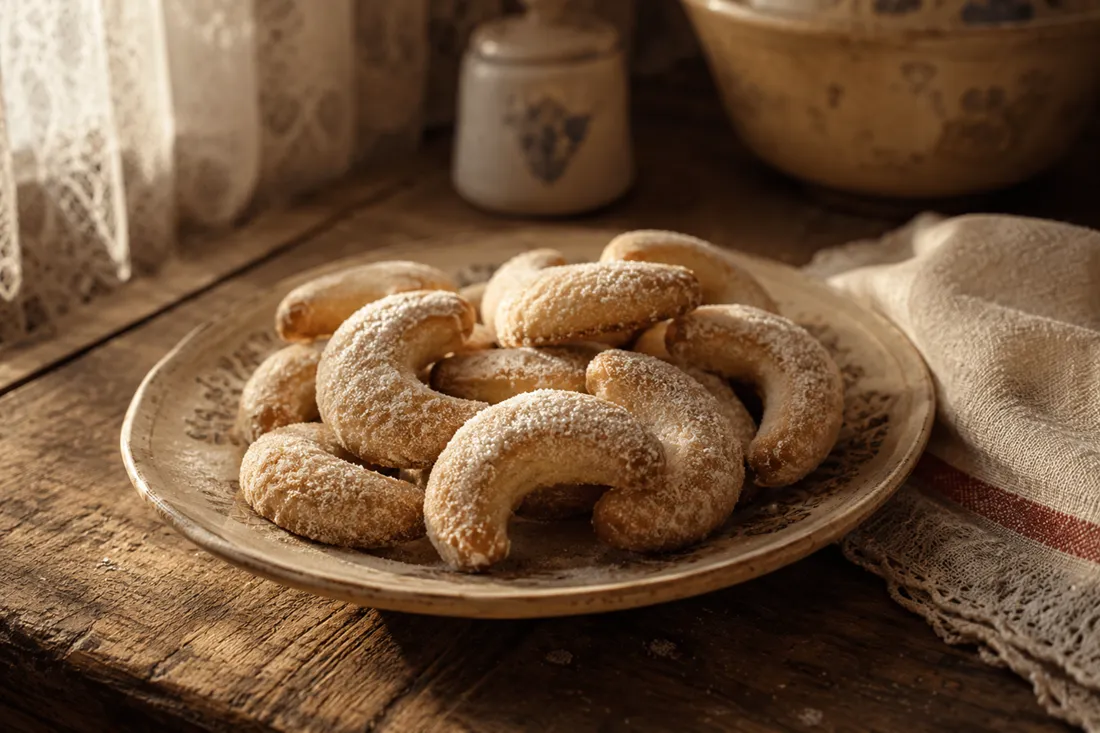
Cooked Egg Yolk Crescent Cookies
Delicate butter cookies made with hard-boiled egg yolks, rolled into crescents and coated in vanilla sugar — a forgotten Central European baking technique.
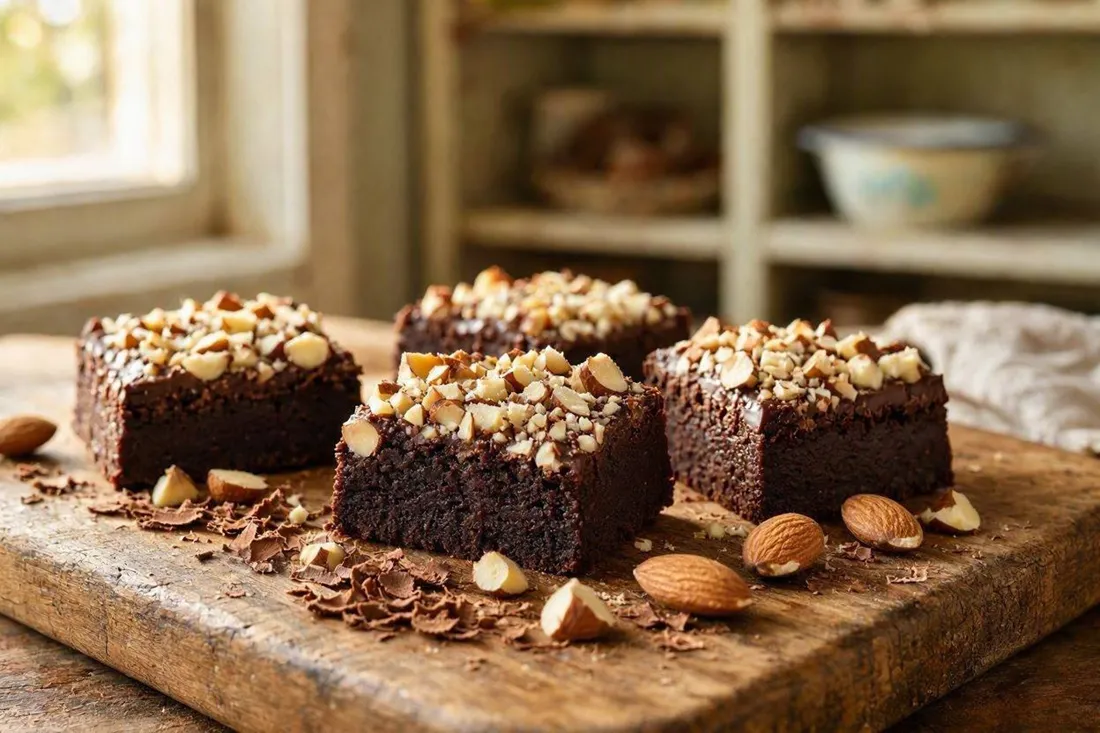
Rich Chocolate Squares with Almonds
A rich, dense chocolate square cake, topped with chopped almonds and baked low and slow until set — cut into neat squares once cooled.
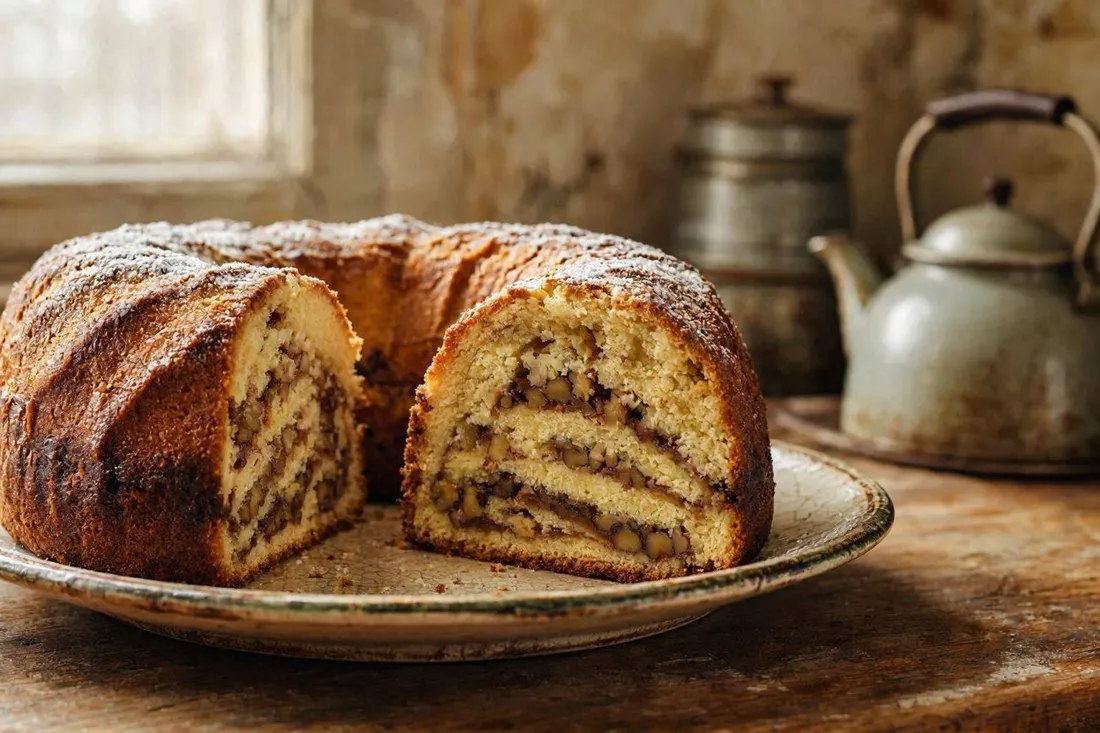
Layered Walnut Kuglof Cake
A rich yeasted cake made from thin rounds of egg-yolk dough, layered with sugar, walnuts, and an optional apricot preserve.