Layered Walnut Kuglof Cake
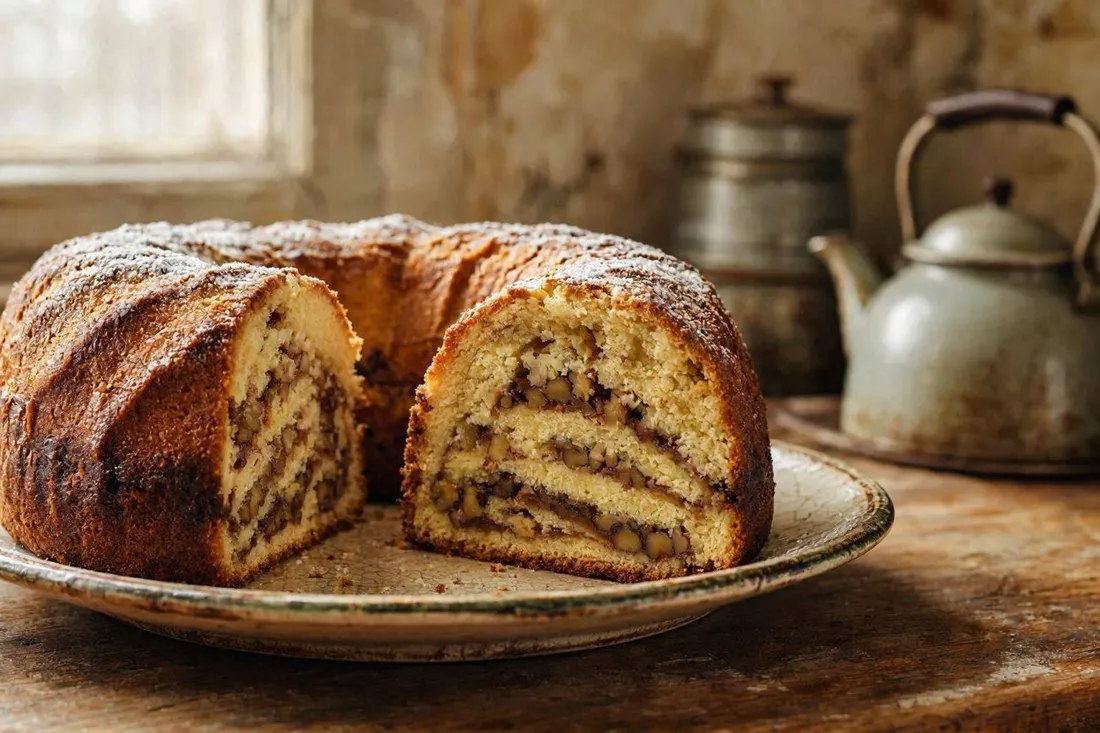
A rich yeasted cake made from thin rounds of egg-yolk dough, layered with sugar, walnuts, and an optional apricot preserve.
Quick Summary
Thin rounds of a rich, egg-yolk-only yeast dough are stacked in a kuglof mold with layers of sugar, ground walnuts, and melted butter, then baked until golden. About 40 minutes of active work, plus rising time, for a dense, festive cake that serves 10-12.
Historical recipe
Modernised adaptation of an early 20th‑century source. Not independently kitchen-tested by Attic Recipes. Quantities, temperatures, and food safety guidance have been updated for a contemporary kitchen — results may vary and errors may exist. Nutritional values, where provided, are estimates only and have not been laboratory tested. Always follow current food safety guidelines for your region. If you have a health condition, allergy, or dietary requirement, consult a qualified professional before preparing this recipe.
Use of this recipe is entirely at your own risk and subject to our Terms of Service and Privacy Policy. Attic Recipes accepts no liability for any adverse outcome.
- Gluten
- Eggs
- Dairy
- Tree Nuts
Additional notes
-
Note
This cake is high in sugar per serving. Those managing blood sugar levels may want to adjust portion size.
-
Note
Contains tree nuts (walnuts). Not suitable for those with nut allergies.
- 1
Crumble the fresh yeast into 80ml of the milk and let it dissolve.
- 2
Beat the egg yolks with 1 tablespoon sugar and 100g softened butter until pale and foamy.
- 3
Add the dissolved yeast to the creamed yolks, then add the remaining 150ml milk, the flour, and the salt. Knead into a soft dough, similar to a doughnut dough.
- 4
Cover the dough and let it rise in a warm place until doubled in size.
- 5
Turn the risen dough onto a floured board, roll it out with a rolling pin into a thin sheet, and cut out rounds with a round cutter.
- 6
Grease the kuglof mold with a little of the melted butter, then dust it with sugar or ground walnuts.
- 7
Arrange a layer of dough rounds in the mold. Drizzle with melted butter and sprinkle with sugar and the walnut mixture. Optionally, spread a little apricot preserve over the second layer.
Tip For the walnut mixture, grind half the walnuts finely and chop the other half by hand, then combine — this gives both texture and body to the filling. - 8
Continue layering dough, butter, sugar, and walnuts until the mold is about half full.
- 9
Let the layered dough rise in the mold until it nears the top.
- 10
Bake at 180°C (350°F) / 160°C fan until golden and a skewer inserted into the center comes out clean.
- 11
Unmold and serve warm or at room temperature, with a milk glaze if desired — the cake is also good plain.
Nutrition Information per 1 slice (approx 154g, based on 12 slices)
Nutritional values are approximate estimates and may vary based on specific ingredients used, preparation methods, and portion sizes.
Serving Suggestions
Traditionally served with a simple milk glaze — warm milk lightly sweetened with sugar, drizzled over the top — though the cake is rich enough to enjoy plain.
About This Recipe
This kuglof takes a different route to richness than most yeasted cakes: instead of whole eggs, it uses only the yolks, creamed with butter and sugar into a dense, glossy base before the yeast and flour go in. The dough is then rolled thin, cut into rounds, and layered into the mold like a savory-style bread rather than poured in as a batter — a construction method that gives the finished cake a distinctly striped, almost pastry-like interior once sliced.
Sugar, ground walnuts, and melted butter fill the gaps between layers, with a strip of apricot preserve as an optional addition partway through. It’s a cake built for a crowd, meant for a table where a whole loaf-sized bundt gets cut into wide, generous slices.
Why It Works
Using only yolks — no whites — concentrates fat and emulsifiers into the dough, producing a closer, more tender crumb than a whole-egg version would, without the extra structure whites would add. Rolling and stacking thin dough rounds, rather than working with a single mass of dough, lets the sugar and walnut layers distribute evenly throughout the cake instead of settling at the bottom, and creates visible striping once it’s sliced.
Modern Kitchen Tips
Keep the rolled dough rounds slightly thinner than you think you need — they puff up considerably during the second rise and again in the oven. If the kitchen is cool, the first rise can take noticeably longer than an hour; judge by volume rather than the clock.
A classic of early 20th century home cooking, preserved and adapted for the modern kitchen.
The Story Behind This Recipe
Historical Context
Early 20th century versions of this cake used only egg yolks in the dough, saving the whites for other uses such as meringues — a practical habit rather than a shortcut, since a richer, more tender crumb was the goal. Home cooks of the period built the cake in thin rolled layers rather than a single dough mass, alternating with sugar and ground walnuts, and finished it with a simple milk glaze or served it plain.
Modern Kitchen Adaptation
Milk quantity, oven temperature, and rising times were not specified in the original and have been estimated based on standard enriched yeast dough practice. The apricot preserve layer and milk glaze were both optional and left unquantified in the original; they are kept here as flexible serving choices rather than fixed measurements, since adding specific amounts would go beyond what the original actually specifies.
This recipe is an independent modern adaptation developed from historical sources in the public domain. It is provided for informational and educational purposes only and does not constitute professional dietary, nutritional, or medical advice. Food preparation involves inherent risks. The reader assumes full responsibility for safe food handling, ingredient sourcing, and adherence to current local food safety guidelines. The site operator accepts no liability for outcomes resulting from the preparation or consumption of this recipe.
One recipe.
Every week.
You Might Also Like
More recipes from the same category
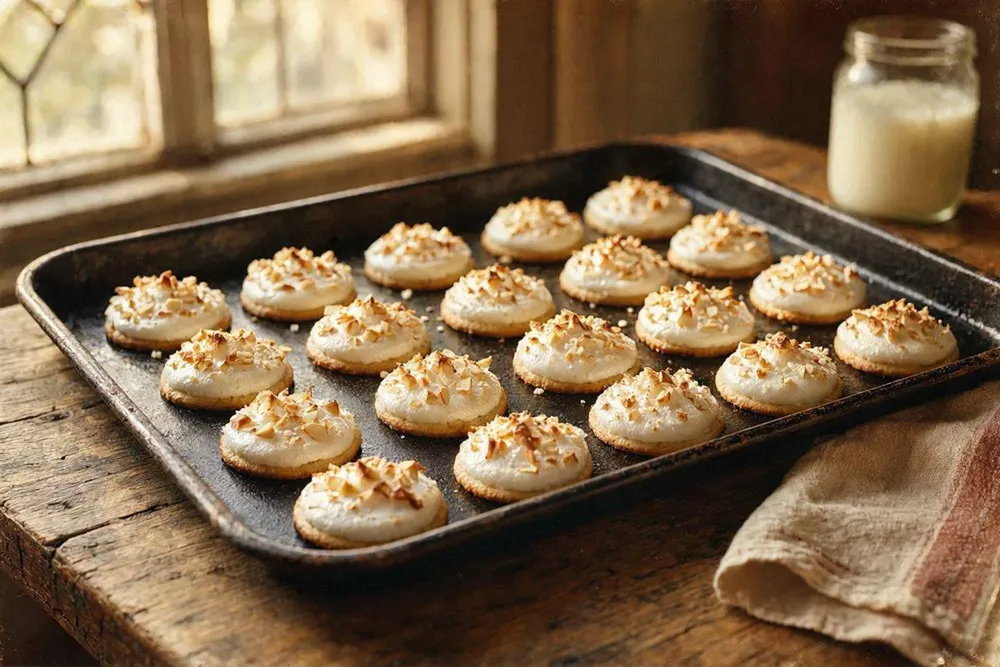
Almond Gurabije Cookies
Small lemon-scented cookies made with lard and egg yolk, indented in the center, coated in whipped egg white, and rolled in sugar and chopped almonds.
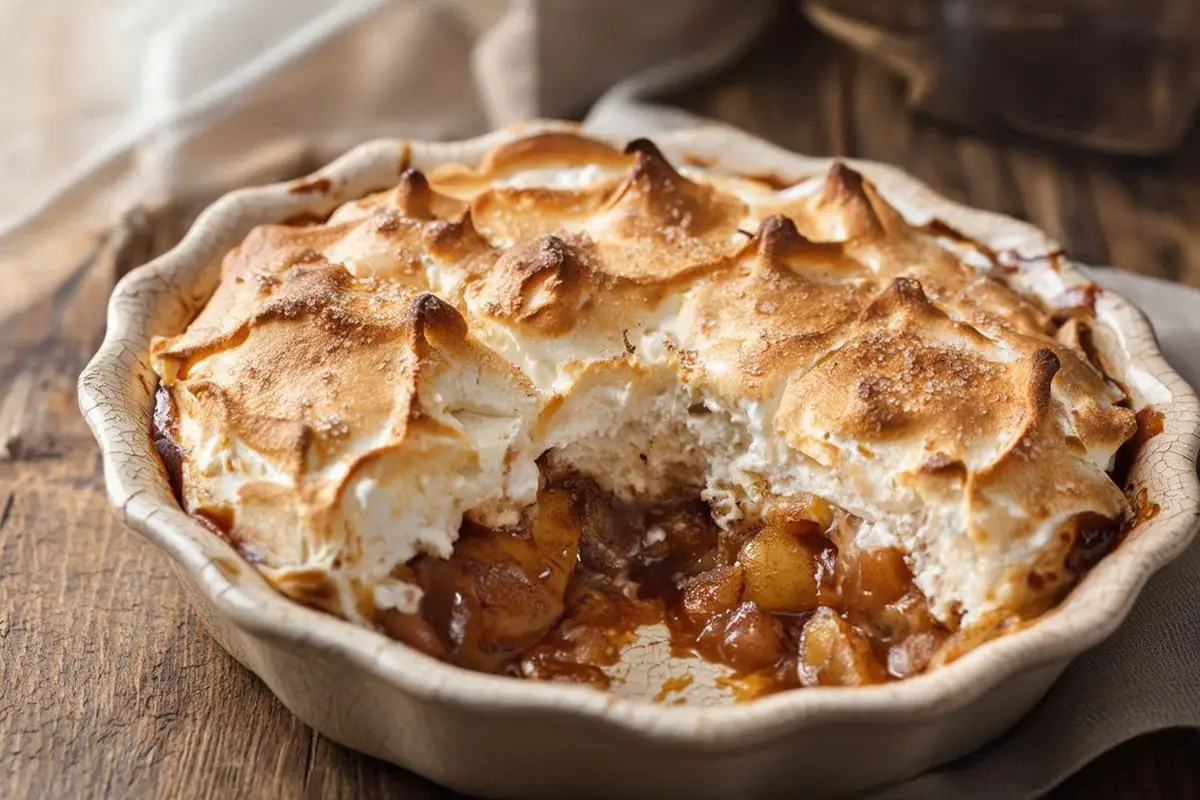
Velvet Apple & Meringue Gratin
A decadent vintage dessert featuring apples slow-cooked in a butter-sugar syrup, topped with a cloud of lemon-scented meringue.
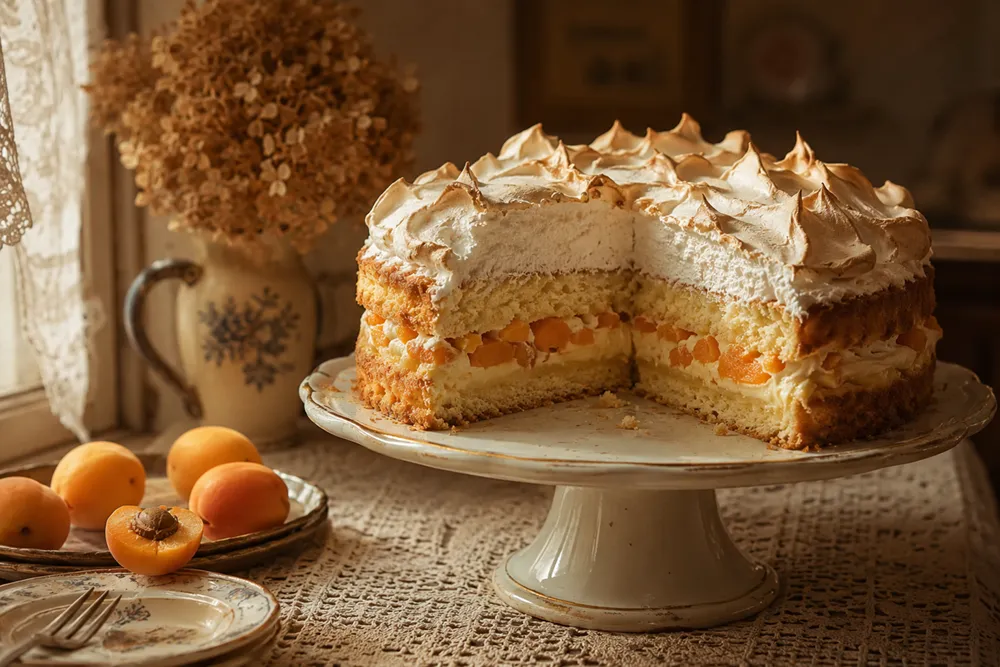
Apricot Cream Torte
Traditional apricot cream cake combining sponge, vanilla custard, and meringue for a timeless European flavor.