Almond Gurabije Cookies
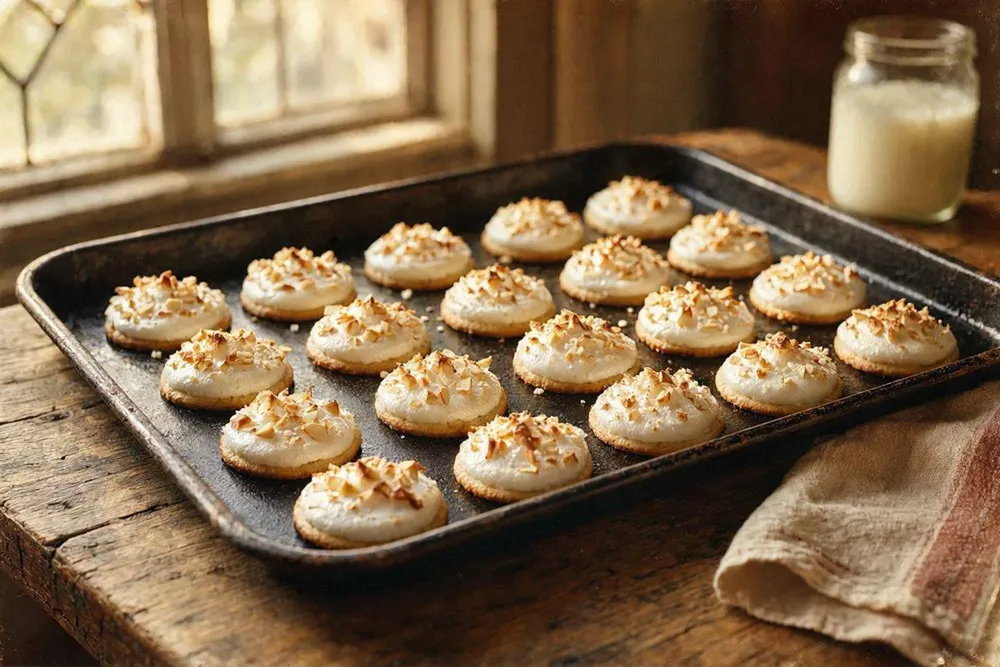
Small lemon-scented cookies made with lard and egg yolk, indented in the center, coated in whipped egg white, and rolled in sugar and chopped almonds.
Historical recipe
Modernised adaptation of an early 20th‑century source. Not independently kitchen-tested by Attic Recipes. Quantities, temperatures, and food safety guidance have been updated for a contemporary kitchen — results may vary and errors may exist. Nutritional values, where provided, are estimates only and have not been laboratory tested. Always follow current food safety guidelines for your region. If you have a health condition, allergy, or dietary requirement, consult a qualified professional before preparing this recipe.
Use of this recipe is entirely at your own risk and subject to our Terms of Service and Privacy Policy. Attic Recipes accepts no liability for any adverse outcome.
- Eggs
- Gluten
- Tree Nuts
Additional notes
-
Note
The whipped egg white coating is only briefly baked alongside the cookies and may not reach a food-safe internal temperature throughout. This is a minor consideration for most healthy adults but worth noting for pregnant women, children under 18, the elderly, and immunocompromised individuals.
Use pasteurized egg whites for the coating.
- 1
In a deep bowl, whisk together the 2 egg yolks, 75g sugar, 28g lard, and lemon zest until well combined and slightly fluffy.
- 2
Add the flour gradually, mixing until the dough is firm enough to roll into small balls — it should hold its shape without being sticky.
- 3
Using a teaspoon, portion out equal pieces of dough and roll them between your palms into balls about the size of a large walnut (roughly 15g each), making about 22 pieces.
- 4
Press a small indentation into the center of each ball with your fingertip or the back of a spoon.
- 5
Whip the 2 egg whites to stiff peaks.
- 6
Coat each cookie with the whipped egg white, then sprinkle generously with coarse sugar and chopped almonds.
- 7
Grease a dark baking sheet with the 10g lard and dust lightly with the 10g flour.
- 8
Arrange the cookies on the sheet, spacing them about 2cm apart.
- 9
Preheat the oven to 170°C (340°F) / 150°C fan. Bake for 15–18 minutes, until just lightly golden — the cookies should not brown deeply.
- 10
Cool completely on the sheet before serving.
Nutrition Information per 1 cookie (approx 22g)
Nutritional values are approximate estimates and may vary based on specific ingredients used, preparation methods, and portion sizes.
Serving Suggestions
Serve at room temperature with coffee or tea. Store in an airtight container for up to a week.
About This Recipe
Gurabije are a family of small, dense cookies found across Central European home baking, usually built around a simple base of egg yolk, sugar, and fat, with almost endless variations in topping and flavoring. This version leans on lemon zest for brightness and finishes each cookie with a distinctive two-step coating: a dab of whipped egg white followed by a generous sprinkle of coarse sugar and chopped almonds.
The small indentation pressed into each ball before baking isn’t just decorative — it helps the cookie hold its shape and gives the egg white coating somewhere to sit rather than sliding off during baking.
Lard was the standard fat for cookies like this in the era, valued as much for its neutral flavor once purified as for its texture. The rinsing step described for the lard here was a common household technique for removing any lingering smell before using it in baked goods.
Why It Works
Egg yolk and a relatively modest amount of fat give this dough a firmer, more shapeable texture than a butter-heavy shortbread — firm enough to hold a rolled ball shape and a pressed indentation without collapsing in the oven. Whipping the egg whites to stiff peaks before coating means they cling to the surface of the cookie rather than running off, creating a light, craggy texture once the sugar and almonds are pressed on top. Baking at a moderate temperature keeps the coating pale rather than browned, which is the traditional look for this style of cookie.
Modern Kitchen Tips
If you’d rather not source lard, a neutral solid fat like coconut oil (measured solid, not melted) can be substituted in a pinch, though the texture and flavor will differ slightly from the traditional version. Work the dough with slightly damp hands if it feels sticky — this makes shaping the balls much easier without adding extra flour.
A classic of early 20th century home cooking, preserved and adapted for the modern kitchen.
The Story Behind This Recipe
Historical Context
Home cooks of the period rinsed the lard under cold water and kneaded it briefly before use, a step meant to purify the fat and neutralize any strong odor. The amount of flour was not measured — it was simply added until the dough held together well enough to roll into balls the size of a large walnut. The choice between chopped walnuts and almonds for the coating was left to the cook; this version uses almonds, as named in the recipe title.
Modern Kitchen Adaptation
The original text gave no measured amount for the flour, the coating sugar, the almonds, the pan-greasing lard and flour, or the oven temperature and baking time — these have been estimated here and are marked accordingly. Because the whipped egg white coating is only briefly baked alongside the cookies rather than cooked through on its own, pasteurized egg whites are recommended in place of raw ones to reduce food safety risk. The proportion of lard to flour in this version is lower than in many modern shortbread-style cookies, giving a slightly firmer, less crumbly texture than a butter-rich cookie — this reflects the traditional ratio and has not been adjusted.
This recipe is an independent modern adaptation developed from historical sources in the public domain. It is provided for informational and educational purposes only and does not constitute professional dietary, nutritional, or medical advice. Food preparation involves inherent risks. The reader assumes full responsibility for safe food handling, ingredient sourcing, and adherence to current local food safety guidelines. The site operator accepts no liability for outcomes resulting from the preparation or consumption of this recipe.
One recipe.
Every week.
You Might Also Like
More recipes from the same category
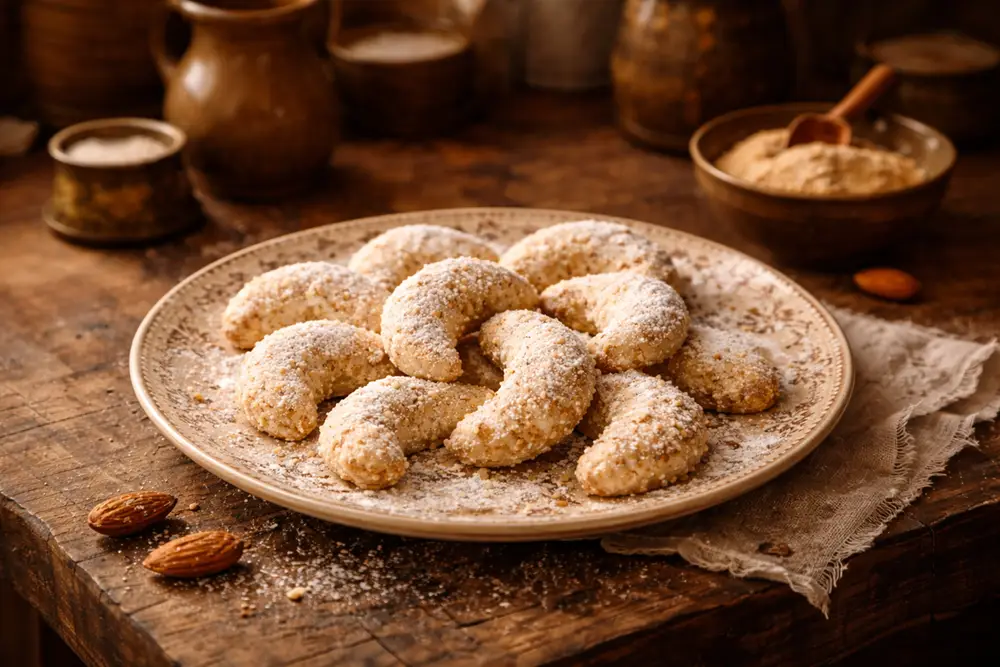
Almond Meringue Crescents
Crisp Central European confections of Swiss meringue shaped into crescents, coated in ground almonds, oven-dried until white and firm.
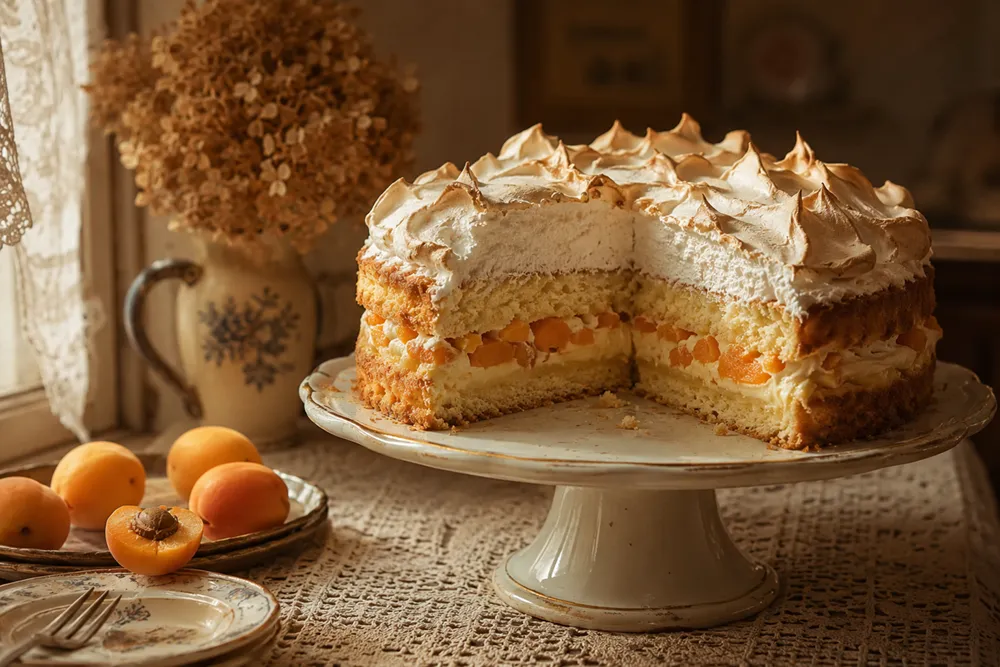
Apricot Cream Torte
Traditional apricot cream cake combining sponge, vanilla custard, and meringue for a timeless European flavor.
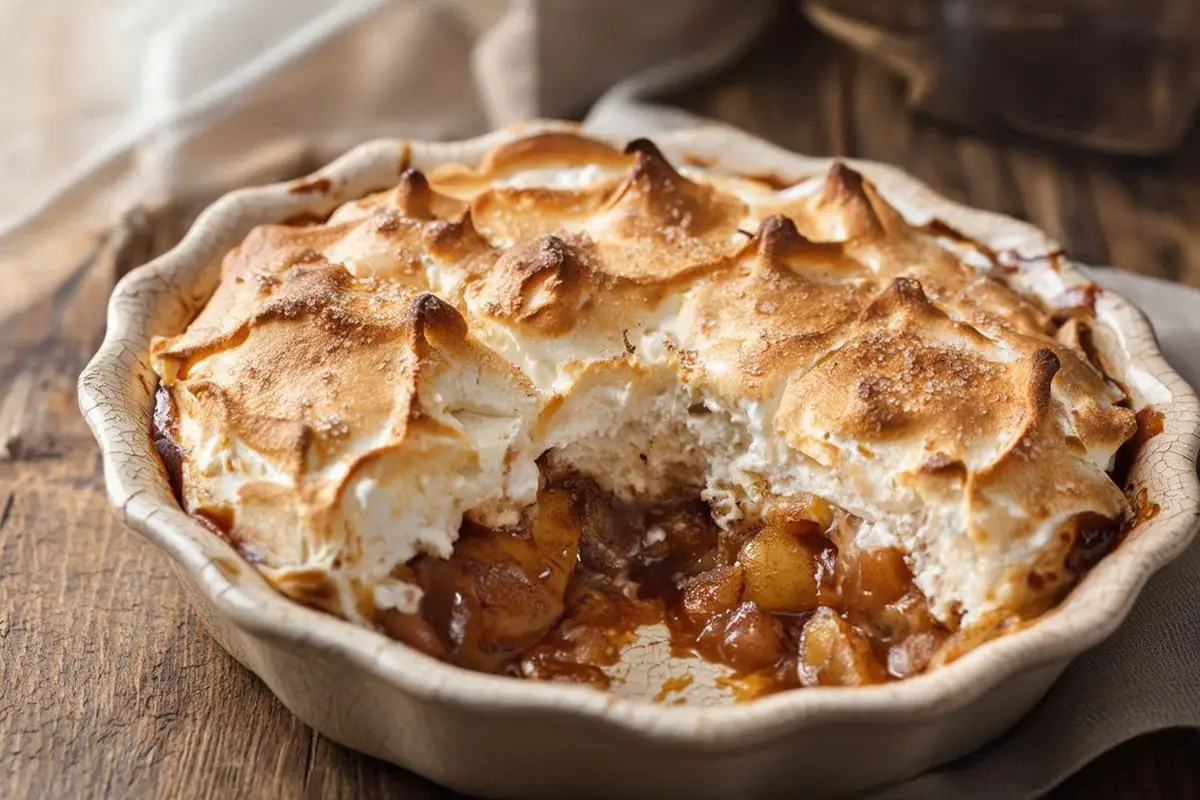
Velvet Apple & Meringue Gratin
A decadent vintage dessert featuring apples slow-cooked in a butter-sugar syrup, topped with a cloud of lemon-scented meringue.