Apricot Cream Torte
Traditional apricot cream cake combining sponge, vanilla custard, and meringue for a timeless European flavor.
Quick Summary
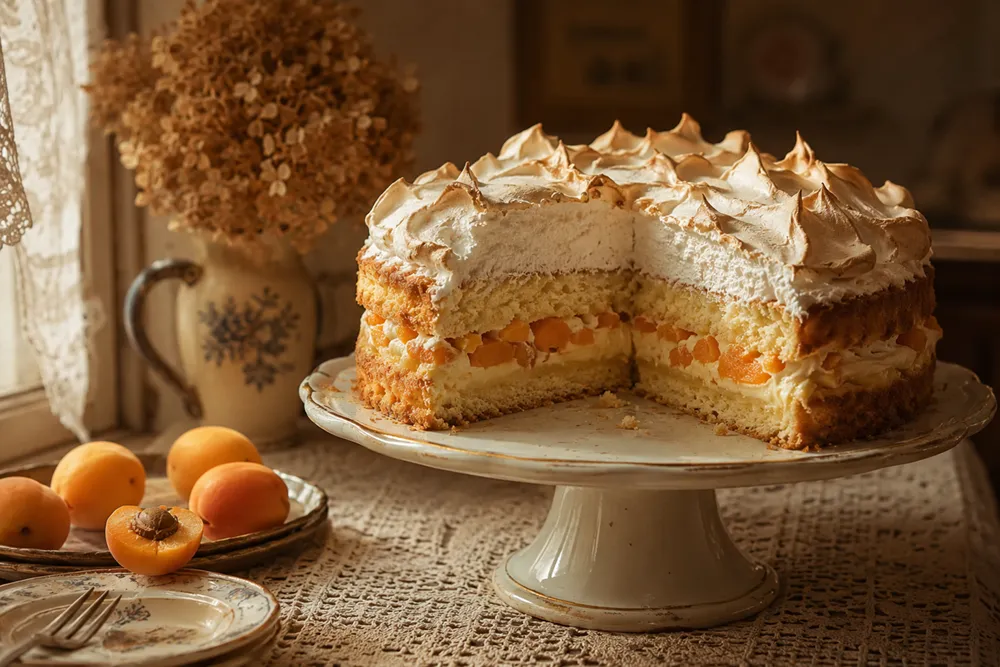
Apricot Cream Torte is a Central European layered dessert with lemon sponge, jam, vanilla custard, fresh apricots, and meringue. Ready in about 85 minutes, it stands out for using whipped egg whites to both lighten the cake and create a glossy topping.
Historical recipe
Modernised adaptation of an early 20th‑century source. Not independently kitchen-tested by Attic Recipes. Quantities, temperatures, and food safety guidance have been updated for a contemporary kitchen — results may vary and errors may exist. Nutritional values, where provided, are estimates only and have not been laboratory tested. Always follow current food safety guidelines for your region. If you have a health condition, allergy, or dietary requirement, consult a qualified professional before preparing this recipe.
Use of this recipe is entirely at your own risk and subject to our Terms of Service and Privacy Policy. Attic Recipes accepts no liability for any adverse outcome.
- Eggs
- Dairy
- Gluten
Additional notes
-
Warning
This recipe uses egg yolks cooked into a custard and egg whites used in a meringue topping. The custard must reach 74°C (165°F) to be safe. The meringue topping must either be made using the Swiss meringue method (heated to 71°C/160°F) or made with pasteurized egg whites — never with raw, untreated egg whites. This is especially important for pregnant women, children under 18, the elderly, and immunocompromised individuals.
Use pasteurized liquid egg whites for the topping if you prefer not to heat the meringue over a double boiler.
- 1
Preheat the oven to 180°C (350°F) / 160°C fan. Grease a 24-26cm round cake pan with the butter and dust with the tablespoon of flour.
- 2
Whip the 8 egg whites to stiff peaks. Gradually add the 96g sugar and continue whipping until glossy.
- 3
Gently fold in the 8 egg yolks, followed by the lemon zest and juice. Fold in the 48g flour in two additions, mixing just until combined.
- 4
Pour the batter into the prepared pan and bake for 30-35 minutes, until a skewer comes out clean. Cool completely in the pan, then turn out.
- 5
Once fully cooled, slice the sponge horizontally into two even layers using a long serrated knife.
- 6
Spread the 225g apricot jam over the bottom layer. Place the top layer back on, cut-side up.
- 7
In a heatproof bowl, whisk the 6 egg yolks with 72g sugar until pale. Heat the 500ml milk in a saucepan until just simmering.
- 8
Temper the yolks by whisking a small amount of the hot milk into the yolk mixture first, then gradually whisk in the rest. Return everything to low heat and stir constantly until the mixture thickens and reaches 74°C (165°F) — do not let it boil.
- 9
Remove from heat immediately and let the cream cool completely, stirring occasionally to prevent a skin from forming. Spread the cooled cream over the top of the torte.
- 10
Arrange the 425g diced apricots evenly over the cream layer.
- 11
Choose one method: for a Swiss meringue, combine the 6 egg whites and 72g sugar in a heatproof bowl over simmering water and whisk constantly until the mixture reaches 71°C (160°F) and the sugar has dissolved, then remove from heat and whip to stiff, glossy peaks. Alternatively, if using pasteurized egg whites, whip them directly with the sugar to stiff peaks without heating.
- 12
Spread or pipe the meringue over the apricots and cream. Refrigerate for at least 2 hours before serving.
Nutrition Information per 1 slice (approx 150g)
Nutritional values are approximate estimates and may vary based on specific ingredients used, preparation methods, and portion sizes.
Serving Suggestions
Serve well chilled, cut into narrow wedges — the meringue and cream layers are rich, so smaller slices work best. Pairs well with a light black tea or a glass of chilled sweet white wine.
About This Recipe
This apricot cream torte is a study in contrasts: a light lemon-scented sponge, a jammy apricot layer, a rich stovetop custard, and a cloud of meringue on top, all finished with fresh apricot pieces. It’s the kind of layered, labor-intensive cake that was reserved for guests and celebrations rather than an everyday treat — the sort of thing a household would make when apricots were at their summer peak and there was a reason to bring out the good serving plates.
What makes it interesting from a technique standpoint is how much it relies on whipped egg whites doing three different jobs: lightening the sponge, and then, separately, forming the entire finishing layer on top. That second use — raw whipped whites left uncooked as a topping — is exactly the kind of period technique that needs a modern food-safety update, which is covered below.
Why It Works
The sponge gets its lift entirely from whipped egg whites rather than a chemical leavener, which was standard before baking powder was common in home kitchens. The custard cream, properly tempered, sets into a soft, spoonable layer that contrasts with the sponge’s lightness and the fresh apricots’ acidity — that acidity is important, since it cuts through the richness of both the custard and the meringue.
Modern Kitchen Tips
- Bake the sponge the day before assembling; it’s much easier to slice horizontally once fully cooled (or even chilled) rather than warm.
- If your kitchen runs warm, keep the custard cream refrigerated right up until you’re ready to spread it — it will hold its shape better against the apricot layer.
- A kitchen thermometer takes the guesswork out of both the 74°C custard target and the 71°C Swiss meringue stage — well worth using for this recipe.
A classic of early 20th century home cooking, preserved and adapted for the modern kitchen.
The Story Behind This Recipe
Historical Context
Early 20th century recipes for this dish typically called for raw whipped egg whites folded directly into the batter and used again, unheated, as the finishing topping. Quantities were given in tablespoons rather than weight, and no oven temperature was specified — home bakers judged doneness by eye and by the wood-fired oven's heat.
Modern Kitchen Adaptation
The finishing meringue in the original recipe was made from raw egg whites simply whipped with sugar and left unheated on top of the cake — a real salmonella risk since it's never cooked. Two safe alternatives are given here: a Swiss meringue, where the egg whites and sugar are gently heated to 71°C (160°F) over a double boiler before whipping, or shop-bought pasteurized egg whites, which can be whipped raw exactly as in the original method since they're already heat-treated. The custard cream also skipped tempering in the original, pouring hot milk directly over raw yolks in the pot — this version tempers properly and targets 74°C (165°F) to avoid both curdling and food safety issues. Tablespoon measurements were converted to grams using standard conversions (1 tbsp sugar ≈ 12g, 1 tbsp flour ≈ 8g). Oven temperature and pan size were not specified in the original and have been estimated based on the recipe type and the cake's construction (a cake that is split and layered calls for a round pan rather than a flat sheet).
This recipe is an independent modern adaptation developed from historical sources in the public domain. It is provided for informational and educational purposes only and does not constitute professional dietary, nutritional, or medical advice. Food preparation involves inherent risks. The reader assumes full responsibility for safe food handling, ingredient sourcing, and adherence to current local food safety guidelines. The site operator accepts no liability for outcomes resulting from the preparation or consumption of this recipe.
One recipe.
Every week.
You Might Also Like
More recipes you'll enjoy
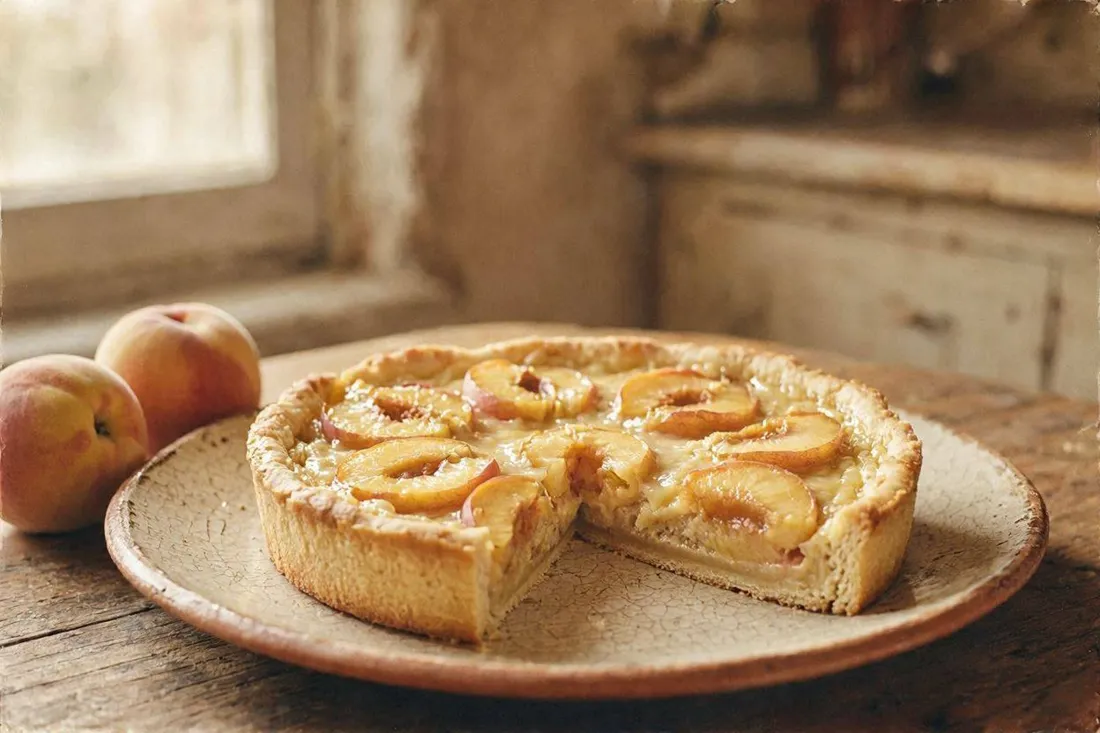
Fresh Peach Tart with Almond Custard Cream
A pale pastry crust topped with fresh peaches and a chilled almond custard cream, cooked over a double boiler — a light Central European fruit dessert.
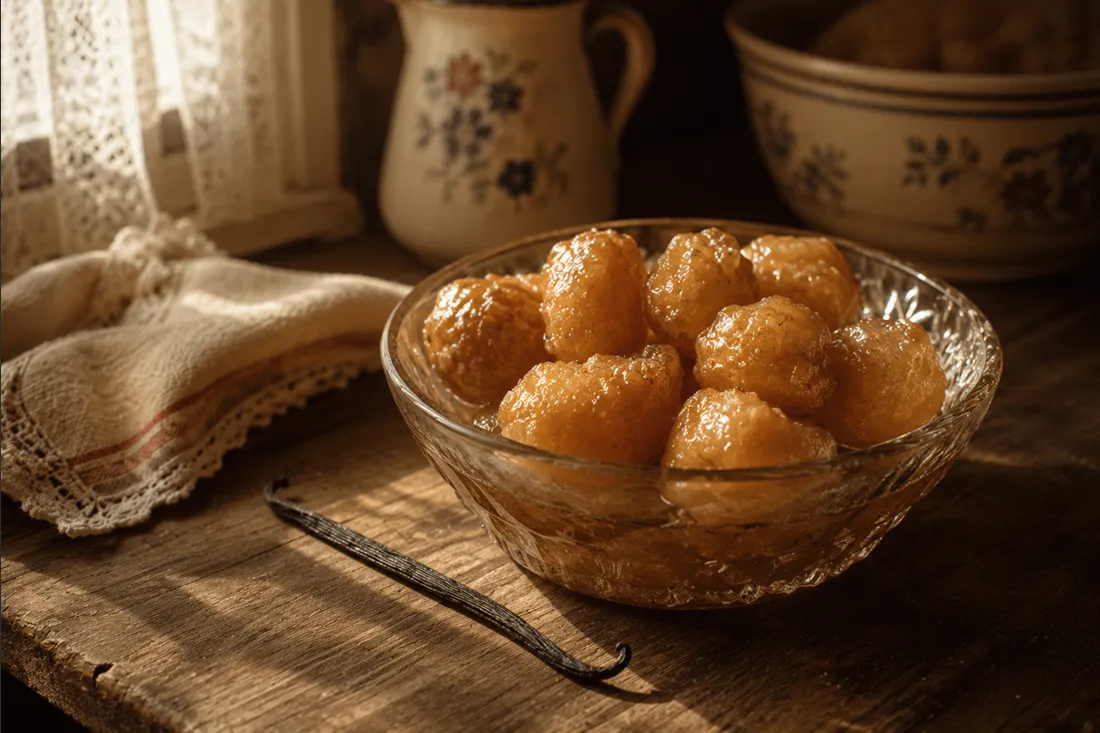
Fried Meringue Dumplings in Vanilla Syrup (Đulnari)
Whipped egg whites, lightly stabilized with cornstarch, are fried into golden dumplings and soaked in a vanilla sugar syrup.
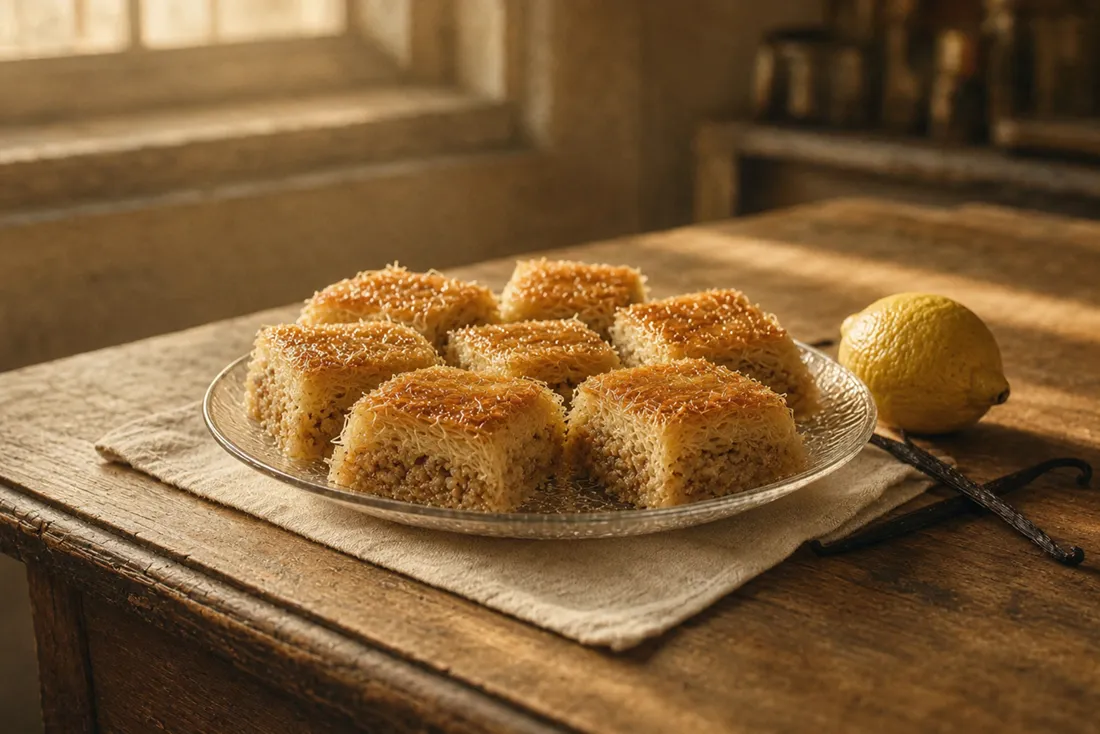
Kadaif with Almonds and Lemon Syrup
Fine egg-yolk noodle dough is layered with ground almonds, butter, and sugar, baked, then soaked in a lemon and vanilla syrup.