Almond Meringue Crescents
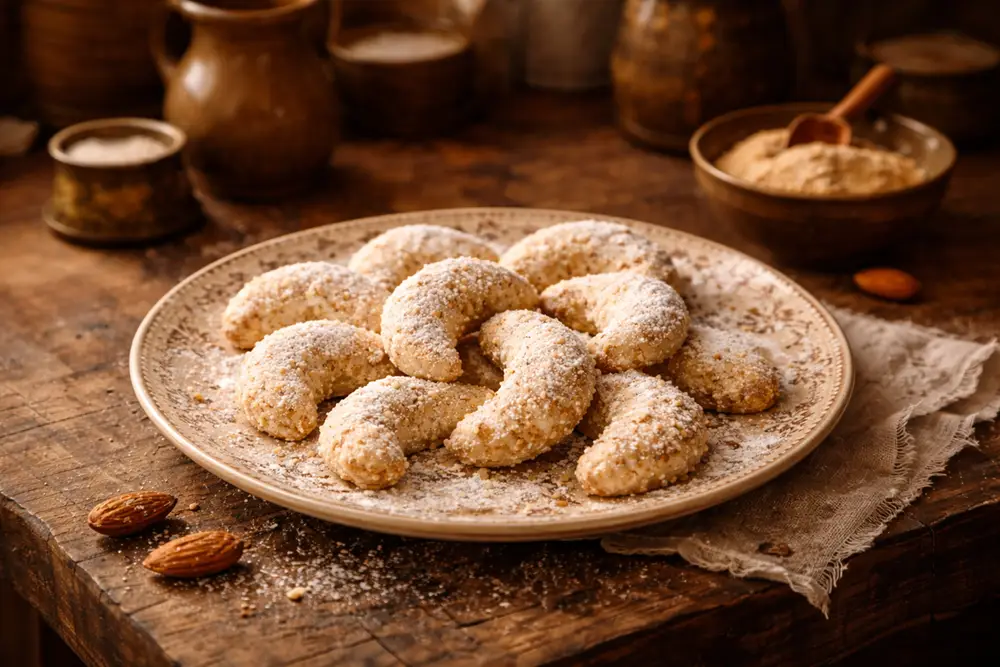
Crisp Central European confections of Swiss meringue shaped into crescents, coated in ground almonds, oven-dried until white and firm.
Historical recipe
Modernised adaptation of an early 20th‑century source. Not independently kitchen-tested by Attic Recipes. Quantities, temperatures, and food safety guidance have been updated for a contemporary kitchen — results may vary and errors may exist. Nutritional values, where provided, are estimates only and have not been laboratory tested. Always follow current food safety guidelines for your region. If you have a health condition, allergy, or dietary requirement, consult a qualified professional before preparing this recipe.
Use of this recipe is entirely at your own risk and subject to our Terms of Service and Privacy Policy. Attic Recipes accepts no liability for any adverse outcome.
- Eggs
- Tree Nuts
Additional notes
-
Warning
The meringue is prepared using the Swiss method — egg whites and sugar are heated over a bain-marie and must reach 71°C (160°F) to be considered heat-treated. Use an instant-read thermometer to verify this temperature is reached before removing from the heat. Pregnant women, children under 18, elderly individuals, and immunocompromised people should confirm the temperature is reached or use pasteurized egg whites.
Pasteurized liquid egg whites can be substituted at the same weight (155g). The Swiss meringue method still applies — heat to 71°C regardless.
-
Note
This recipe contains ground almonds. Suitable for gluten-free diets if no cross-contamination is present in the almond grinding process — verify that equipment and surfaces have not been in contact with gluten-containing ingredients.
- 1
Weigh the 5 egg whites. Use the same weight of caster sugar (approximately 155g). Place the egg whites, 155g sugar, the seeds of half a vanilla pod, the scraped pod itself, and 0.25 tsp cream of tartar into a large heatproof bowl. Whisk briefly to combine.
- 2
Bring a saucepan of water to a gentle simmer. Set the bowl over the saucepan, ensuring the bottom of the bowl does not touch the water. Beat the mixture vigorously and continuously with a hand mixer or whisk until it becomes thick, glossy, and holds firm peaks — about 8–10 minutes. The mixture should reach 71°C (160°F) on an instant-read thermometer.
Tip The mass is ready when it pulls away from the sides of the bowl cleanly and a spoonful holds its shape without slumping. - 3
Remove the bowl from the heat. Discard the vanilla pod. Continue beating for a further 2 minutes off the heat to stabilize the meringue and cool it slightly.
- 4
Preheat the oven to 100°C (210°F) / 80°C fan. Line a baking sheet with parchment paper. Spread the 250g finely ground blanched almonds evenly over a second sheet of parchment laid flat on the work surface.
- 5
Using a dessert spoon, scoop portions of the meringue mass and drop them onto the ground almonds. Working quickly while the meringue is still warm, roll each portion in the almonds and shape into a crescent approximately 5–6 cm long, curving the ends gently. The almond coating should cover the surface completely.
Tip Lightly dampen your hands if the meringue sticks. Work fast — the meringue firms as it cools and becomes harder to shape. - 6
Transfer the shaped crescents to the lined baking sheet, spacing them about 2 cm apart. Place in the preheated oven and dry for 25–35 minutes. The crescents must remain white throughout — if they begin to colour, reduce the temperature by 10°C immediately.
- 7
Remove from the oven. While still warm, roll each piece in the 3 tbsp caster or icing sugar to coat. Transfer to a wire rack and leave to cool completely — they will firm further as they cool.
Nutrition Information per 1 piece (approx. 22g)
Nutritional values are approximate estimates and may vary based on specific ingredients used, preparation methods, and portion sizes.
Serving Suggestions
Serve with coffee or a glass of sweet dessert wine. These keep well in an airtight tin for up to one week — the texture improves on the second day as the exterior crisps further and the centre softens slightly.
About This Recipe
Confections of this kind — ground almonds pressed into a cooked meringue, shaped by hand into crescents, dried white in a low oven — appear across Central European pastry-making under several names and in several forms. They belong to a category of home confectionery that required no specialist equipment, kept well in a tin, and rewarded patience at the stove over complexity in the ingredients.
The method here is what we now call Swiss meringue: egg whites and sugar beaten together over simmering water until the mixture is thick, glossy, and heat-treated, then beaten further off the heat to stabilize. The result is denser and more stable than a cold-beaten meringue, with a surface that dries to a firm, white crust in the oven while the interior stays faintly yielding. Ground almonds coat the outside before baking, pressing into the surface and toasting very gently in the low heat.
The finish is a roll in sugar while still warm — a small refinement that adds a faint crystalline texture to the outside and makes the pieces easier to handle once cooled.
Why It Works
Swiss meringue is more stable than French meringue (cold-beaten whites with sugar folded in) because the sugar dissolves completely into the whites over heat, eliminating the graininess that can cause weeping or collapse. The proteins in the whites begin to denature at around 60°C, which is what gives the mass its body during beating. Continued whisking off the heat aligns these proteins further and traps air, producing a mixture thick enough to hold a shape when scooped.
The low oven temperature — 100°C — is deliberate. Higher heat browns the surface before the interior has dried, producing a crust over a soft, undercooked centre. At 100°C, moisture escapes slowly and evenly, leaving a piece that is dry and crisp throughout without any colour. The crescents must remain white: colour is the sign that the temperature is too high.
The almonds must be properly blanched — skins removed and the nuts thoroughly dried before grinding. Skin-on almonds introduce bitterness and moisture that compromise both the coating texture and the drying process. For a full guide to blanching at home, see How to Blanch Almonds.
Modern Kitchen Tips
Blanched almonds sold whole or flaked grind to a better texture than pre-ground almond flour, which is often too fine and slightly oily. A food processor with short pulses produces the coarse, irregular grind that gives the coating its texture — stop before it becomes paste.
The meringue firms quickly once off the heat. Have the ground almonds spread and ready before the beating is finished, and shape the crescents without delay. If the mass becomes too stiff to work, it cannot be softened — it is better to work quickly than to try to rescue an over-cooled batch.
These keep well. Store in an airtight tin at room temperature; the texture on the second day is better than on the first.
A confection of patience and simplicity — white, crisp, and finished with sugar.
The Story Behind This Recipe
Historical Context
Period Central European confectionery frequently borrowed names and associations from other European culinary traditions — French, Italian, and Spanish techniques and titles appear throughout the domestic recipe literature of the era, often applied to preparations that had been adapted substantially for local ingredients and home kitchens. Recipes of this type were known under various names; the almond and meringue combination, shaped into small crescents and oven-dried rather than baked to colour, was a consistent category. The method of beating egg whites and sugar together over hot water — what is now called Swiss meringue — was standard practice in well-equipped home kitchens of the period, producing a more stable and heat-treated result than cold-beaten whites. The original recipe did not specify a sugar quantity by weight, instructing instead that sugar should equal the weight of the egg whites; it gave no oven temperature beyond the instruction that the crescents must remain white and dry completely.
Modern Kitchen Adaptation
The sugar quantity is given as 155g, derived from the weight of five large egg whites as specified in the original method. Oven temperature of 100°C is estimated from the requirement that the crescents remain white — this is consistent with standard meringue drying temperatures. Cream of tartar (0.25 tsp) has been added as a stabilizer; the original does not include one, but it significantly improves the consistency of the meringue structure and is standard practice in Swiss meringue preparation. The vanilla pod is removed before shaping, as leaving it in the mass during handling creates an inconsistency in texture; the seeds remain and provide full flavour.
This recipe is an independent modern adaptation developed from historical sources in the public domain. It is provided for informational and educational purposes only and does not constitute professional dietary, nutritional, or medical advice. Food preparation involves inherent risks. The reader assumes full responsibility for safe food handling, ingredient sourcing, and adherence to current local food safety guidelines. The site operator accepts no liability for outcomes resulting from the preparation or consumption of this recipe.
One recipe.
Every week.
You Might Also Like
More recipes from the same category
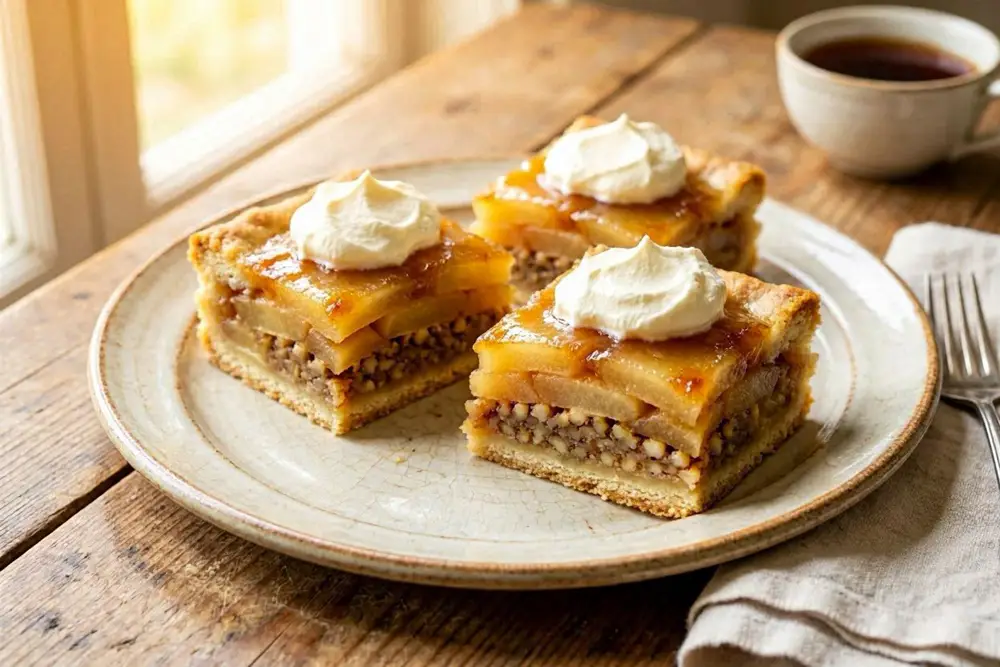
Apple Pie with Whipped Cream
A crisp almond shortcrust base layered with ground walnuts, poached apples, apricot jam, and a thick cloud of sweetened whipped cream.
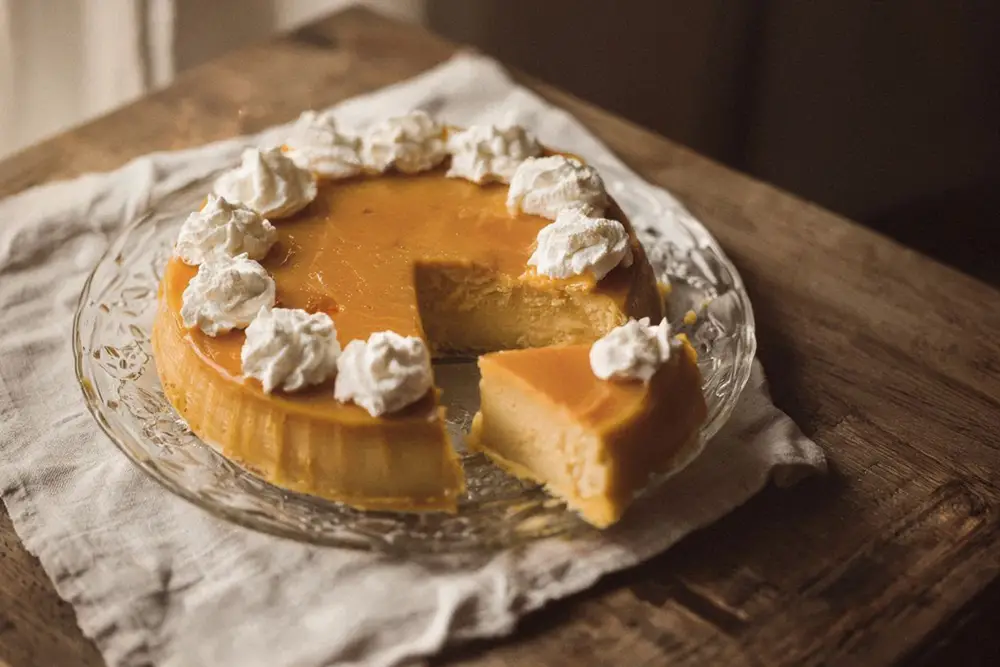
Apricot Cream
A rich chilled cream of apricot marmalade, egg yolks, sugar, and gelatin, set in a mould and served unmoulded with whipped cream.
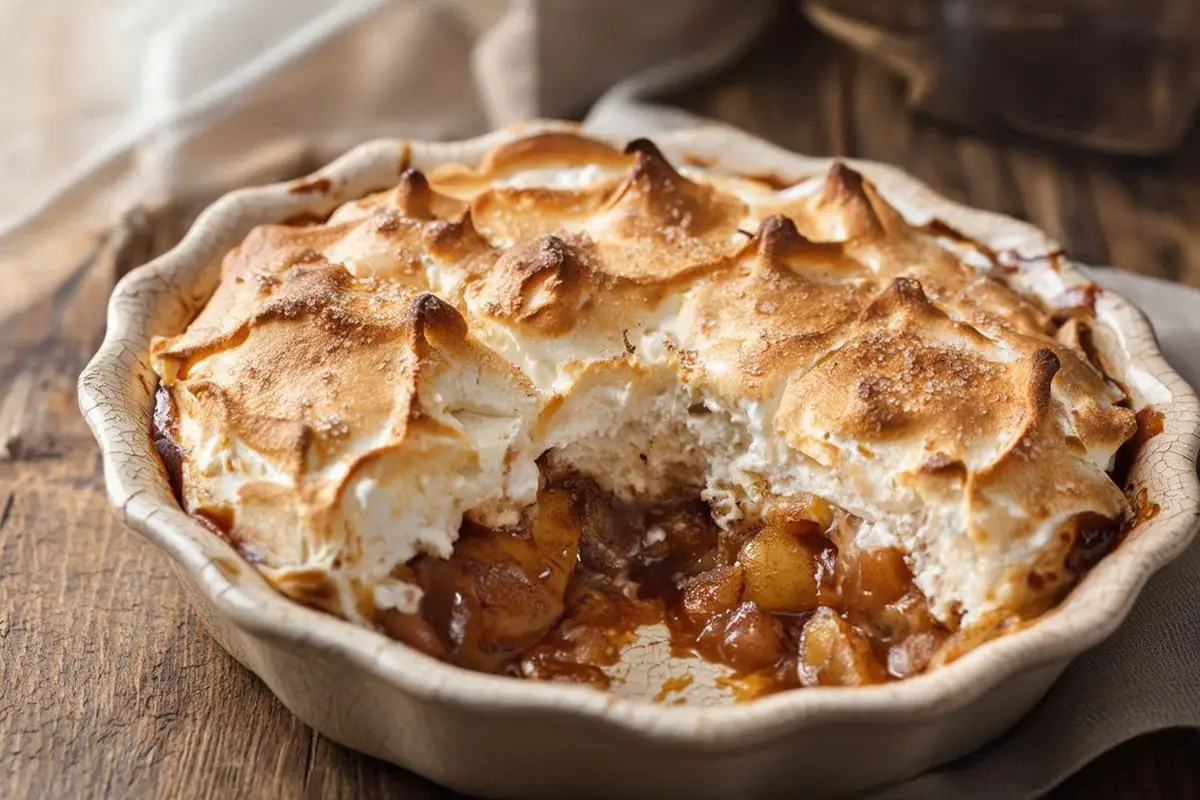
Velvet Apple & Meringue Gratin
A decadent vintage dessert featuring apples slow-cooked in a butter-sugar syrup, topped with a cloud of lemon-scented meringue.