Apricot Sheet Pie with Custard Cream
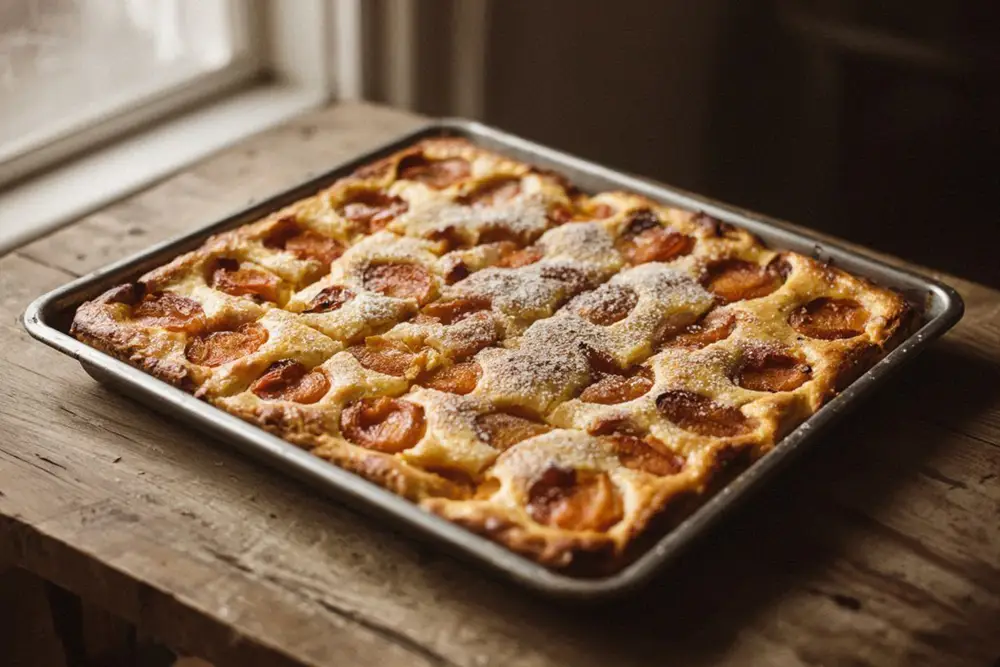
Yeast dough sheet pie topped with fresh apricots and a rich custard of cream, egg yolks, and ground almonds — a classic Central European summer bake.
Historical recipe
Modernised adaptation of an early 20th‑century source. Not independently kitchen-tested by Attic Recipes. Quantities, temperatures, and food safety guidance have been updated for a contemporary kitchen — results may vary and errors may exist. Nutritional values, where provided, are estimates only and have not been laboratory tested. Always follow current food safety guidelines for your region. If you have a health condition, allergy, or dietary requirement, consult a qualified professional before preparing this recipe.
Use of this recipe is entirely at your own risk and subject to our Terms of Service and Privacy Policy. Attic Recipes accepts no liability for any adverse outcome.
- Eggs
- Dairy
- Gluten
- Tree Nuts
Additional notes
-
Warning
Contains partially cooked egg yolks in the custard. The tempering method described brings the custard to 74°C (165°F), which is sufficient for food safety. Ensure the custard is fully set before serving to pregnant women, young children, the elderly, or immunocompromised individuals.
Use pasteurized eggs for an additional safety margin.
-
Note
Contains tree nuts (almonds). The almonds are finely ground and not visible in the finished dish — always declare their presence when serving to guests. Do not serve to anyone with a tree nut allergy.
- 1
Make the dough: In a large bowl, combine the 500g flour, 20g yeast, 2 eggs, 80g caster sugar, lemon zest, vanilla powder, and a pinch of salt. Add the 250ml warm milk gradually and knead until you have a smooth, slightly sticky enriched dough. Cover the bowl with a clean cloth and leave to rise in a warm spot until doubled in size — approximately 60 minutes.
Tip If using fresh yeast, dissolve it in a small amount of the warm milk with a pinch of sugar and let it foam for 5 minutes before adding to the flour. Milk should be warm to the touch (around 35–37°C), not hot — hot liquid will kill the yeast. - 2
Grease the large baking sheet generously with the 15g softened butter and dust lightly with flour. Preheat the oven to 180°C (350°F) / 160°C fan.
- 3
Turn the risen dough out onto a floured board. Pinch off a piece of dough roughly the size of a fist and set it aside. Roll out the remaining dough thinly and transfer it to the prepared baking sheet, pressing it gently into the corners. Roll the reserved piece of dough into a long thin ribbon and press it along all four edges of the sheet to form a raised border.
Tip The border acts as a frame to contain the custard during the second bake. Press it firmly so it adheres — if it lifts away from the base in the oven, the custard will run underneath. - 4
Arrange the quartered apricots closely and evenly over the entire surface of the dough. Place the tray in the preheated oven and bake for 15–20 minutes, until the dough is just set and beginning to colour at the edges.
- 5
While the pie is in the oven, make the custard: In a small saucepan, warm the 200ml heavy cream over low heat until it begins to steam. Whisk the 3 egg yolks with the 3 tbsp powdered sugar in a bowl. Add a spoonful of the hot cream to the yolks while whisking, then another, before combining the tempered yolk mixture back into the saucepan. Add the 50g ground almonds. Cook over low heat, stirring constantly, until the custard thickens enough to coat the back of a spoon — do not allow it to boil. Target temperature: 74°C (165°F). Remove from heat.
Tip The tempering step — warming the yolks gradually with a little hot cream before they enter the saucepan — is essential to prevent scrambling. If you see the mixture beginning to curdle at the edges, remove from heat immediately and whisk vigorously. - 6
Remove the partially baked pie from the oven. Pour the warm custard evenly over the apricots, spreading it gently to the edges of the dough border. Return the tray to the oven and bake for a further 10–15 minutes, until the custard is set and lightly golden.
- 7
Allow to cool in the tray. Once cooled, cut into squares and dust generously with vanilla-scented sugar before serving.
Nutrition Information per 1 piece (approx. 90g)
Nutritional values are approximate estimates and may vary based on specific ingredients used, preparation methods, and portion sizes.
Serving Suggestions
Serve at room temperature, cut into squares and dusted with vanilla sugar. Works equally well as an afternoon cake with coffee or as a dessert after a light lunch. Best eaten the day it is made; the custard softens the dough on the second day but the flavour remains.
About This Recipe
This is the quintessential Central European summer sheet pie — a large-format yeast-based tray bake that feeds a crowd from a single baking sheet. The structure is simple: an enriched dough forms the base, fresh apricots cover it completely, and a warm custard of cream, egg yolks, and ground almonds is poured over the partially baked surface and returned to the oven to set. The result is something between a fruit tart and a custard cake — the dough absorbs the juices from the apricots, the custard turns golden at the edges, and the whole thing is finished with a generous dusting of vanilla sugar.
What distinguishes this preparation from a standard fruit cake is the two-stage bake. The dough and fruit go in first, allowing the base to set and the apricots to begin releasing their juice. The custard is made during this window and poured on while the pie is still hot — the two layers meet at temperature and finish together in the final minutes. The border of dough pressed around the edge of the tray is not decorative; it contains the liquid custard during that second stage.
Why It Works
The acid in the apricots does two things during baking: it keeps the fruit from turning mushy, and it cuts through the richness of the custard above it. Ground almonds add body and a faint bitterness that balances the sweetness of the sugar and the fruit — without them, the custard would be pleasant but one-dimensional. Enriched yeast dough, with eggs, milk, and sugar, produces a base that is soft and slightly bread-like rather than crisp, which means it absorbs the moisture from the fruit rather than resisting it. This is the intended texture for the format.
Modern Kitchen Tips
Fresh yeast is traditional and gives the best flavour, but 7g of instant dry yeast substitutes directly without proofing. The dough should be slightly tacky after kneading — resist adding too much flour, which will make it stiff and heavy. If your kitchen is cool, rise the dough in an oven with just the light on, or set the bowl over a larger bowl of warm water.
For the custard, do not skip the tempering step. Adding cold egg yolks directly to hot cream produces scrambled eggs. A few spoonfuls of warm cream stirred into the yolks first brings them to temperature gradually before the combined mixture goes onto the heat.
A classic of early 20th century home cooking, preserved and adapted for the modern kitchen.
The Story Behind This Recipe
Historical Context
Sheet pies built on a yeast dough base were a staple of Central European home baking across the interwar period — practical, large-format, and suited to feeding a household or a gathering from a single tray. The combination of stone fruit and a poured custard as a secondary bake was a widespread technique of the era: fruit was laid directly onto the raw or partially baked dough, and the enriched topping was added in a second pass through the oven, allowing the layers to set independently. Apricots were a natural choice for this format — abundant in summer, slightly acidic, and structurally firm enough to hold their shape during baking. The addition of ground almonds to the custard reflects the Central European pastry tradition of layering almond flavour alongside stone fruit, a pairing rooted in the botanical kinship between the two.
Modern Kitchen Adaptation
The original recipe gave no oven temperature; 180°C (350°F) is the standard for an enriched yeast dough with fruit and is marked as estimated. The milk quantity was also unspecified — the original indicated 'very little', which likely reflected a ratio understood by the intended reader; 250ml is the standard for 500g flour in this type of dough and is marked as estimated. Apricots can be peeled by blanching in boiling water for 30 seconds and transferring immediately to ice water — the skins slip off easily. Firm tinned apricots in light syrup, well drained, are an acceptable substitute when fresh are not in season. The custard requires tempering of the egg yolks, which is a food-safety and technique correction not explicit in the original method.
This recipe is an independent modern adaptation developed from historical sources in the public domain. It is provided for informational and educational purposes only and does not constitute professional dietary, nutritional, or medical advice. Food preparation involves inherent risks. The reader assumes full responsibility for safe food handling, ingredient sourcing, and adherence to current local food safety guidelines. The site operator accepts no liability for outcomes resulting from the preparation or consumption of this recipe.
One recipe.
Every week.
You Might Also Like
More recipes from the same category
Almond Meringue Crescents
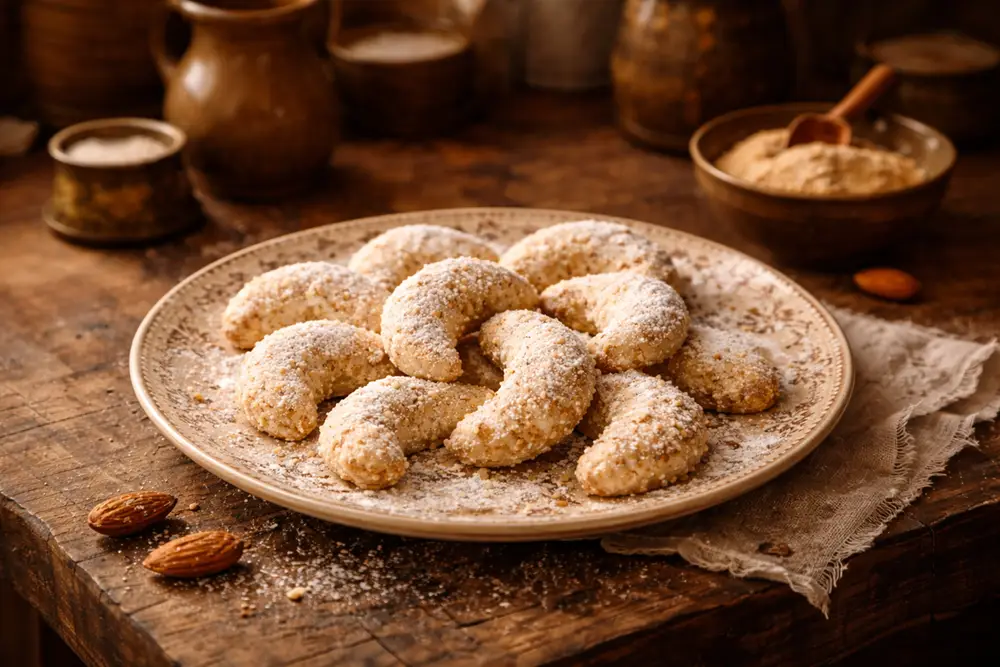
Crisp Central European confections of Swiss meringue shaped into crescents, coated in ground almonds, oven-dried until white and firm.
Apple Pie with Whipped Cream
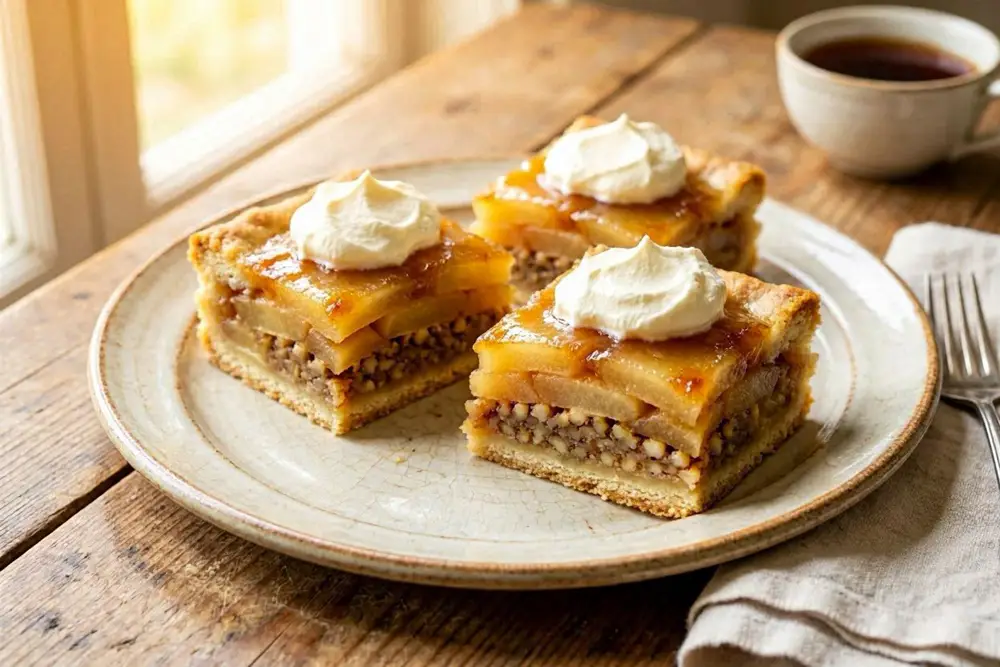
A crisp almond shortcrust base layered with ground walnuts, poached apples, apricot jam, and a thick cloud of sweetened whipped cream.
Almond Gurabije Cookies
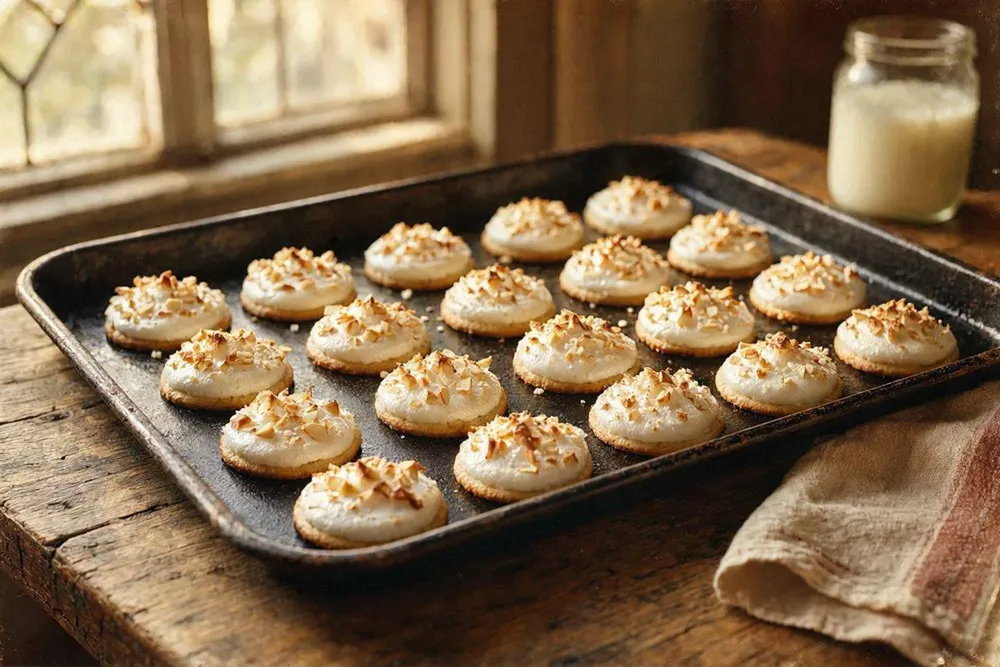
Small lemon-scented cookies made with lard and egg yolk, indented in the center, coated in whipped egg white, and rolled in sugar and chopped almonds.