Grape Compote in Syrup
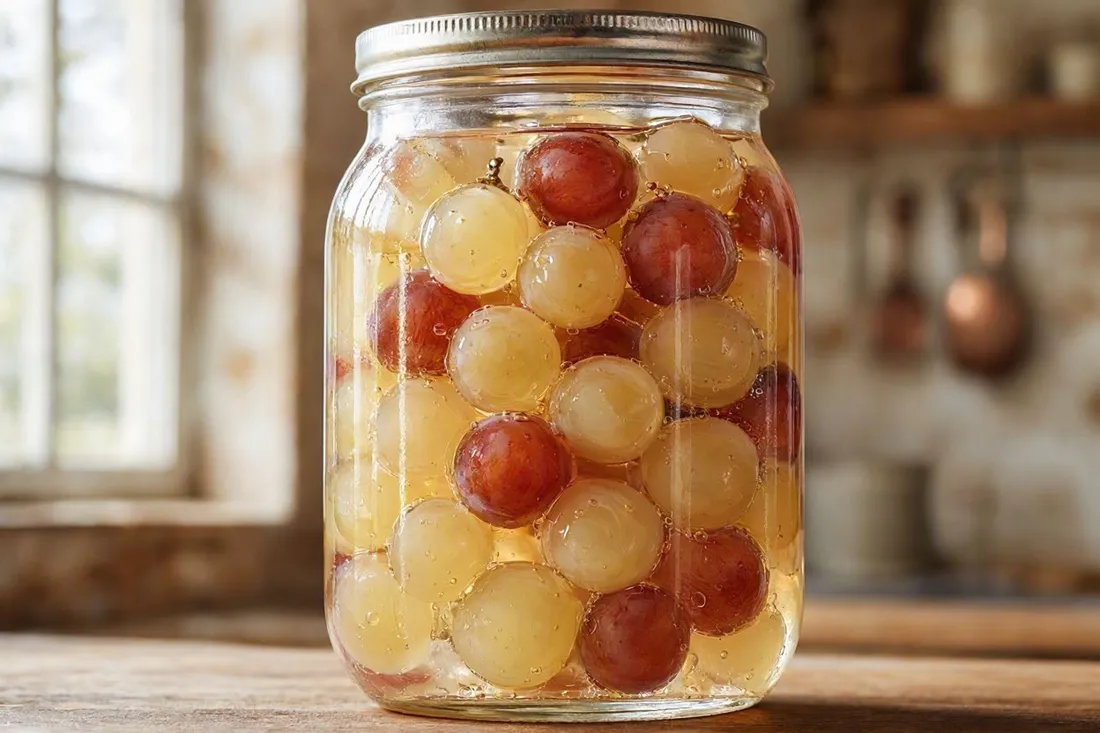
Small clusters of grapes are packed into jars and covered with a light sugar syrup, then home-canned for a stable preserve to enjoy through the colder months.
Quick Summary
Small clusters of white and red grapes are packed into jars and covered with a light sugar syrup, then processed for safe, shelf-stable storage. A simple preserve that showcases whichever sweet, hardy grape variety is on hand, ready to spoon out through the colder months.
Historical recipe
Modernised adaptation of an early 20th‑century source. Not independently kitchen-tested by Attic Recipes. Quantities, temperatures, and food safety guidance have been updated for a contemporary kitchen — results may vary and errors may exist. Nutritional values, where provided, are estimates only and have not been laboratory tested. Always follow current food safety guidelines for your region. If you have a health condition, allergy, or dietary requirement, consult a qualified professional before preparing this recipe.
Use of this recipe is entirely at your own risk and subject to our Terms of Service and Privacy Policy. Attic Recipes accepts no liability for any adverse outcome.
Additional notes
-
Warning
This is a home-canned preserve. Use new two-piece canning lids and process in a full boiling water bath for the time specified - the original cloth-and-string sealing method does not reliably prevent spoilage by modern standards. Do not consume from any jar with a bulging lid, spurting liquid, or an off smell. Pregnant women, young children, older adults, and immunocompromised individuals should be especially cautious with any home-preserved food.
- 1
Wash the grapes and break them into small clusters of 2 to 3 grapes each.
- 2
Pack the small clusters into clean 1-liter jars, filling each one snugly.
- 3
For each jar, bring 200g of sugar and enough water to fill the jar's remaining empty space to a boil in a saucepan, until the sugar is fully dissolved.
- 4
Let the syrup cool slightly, then pour it over the grapes in each jar, leaving about 1cm (1/2 in) of headspace at the top.
Tip Headspace gives the contents room to expand slightly during processing and helps the jar seal properly. - 5
Wipe the jar rims clean, then apply new two-piece canning lids and rings, tightened to fingertip-firm.
Tip This replaces the original cloth-and-parchment tie method. Two-piece lids create a reliable vacuum seal, which the original technique could not guarantee. - 6
Process the jars in a boiling water bath: submerge them fully in water, bring to a rolling boil, and process for 15-20 minutes depending on jar size, adjusting for altitude if needed.
Tip Grapes are acidic enough for a boiling water bath to be a safe processing method, but the process must reach a full rolling boil and be timed properly - this is the step where the original's method falls short of modern food safety standards. - 7
Remove the jars carefully with a jar lifter and let them cool undisturbed, without touching the lids, for at least 12 hours.
- 8
Check that each lid has sealed - it should be concave and should not flex when pressed. Refrigerate any jar that hasn't sealed properly and use it within a week.
- 9
Store sealed jars in a cool, dark place.
Nutrition Information per 1/2 cup with syrup (approx 125g)
Nutritional values are approximate estimates and may vary based on specific ingredients used, preparation methods, and portion sizes.
Serving Suggestions
Serve the grapes chilled, spooned into small dishes with a little of the syrup, on their own or alongside a plain cake or soft cheese.
About This Recipe
This is one of the simpler preserves in the canning repertoire: small clusters of grapes, packed into jars and covered in a light sugar syrup, with almost no active cooking involved beyond bringing the syrup to a boil. What it depends on instead is the grape itself - a hardy, naturally sweet variety holds its shape and flavor far better through processing and storage than a delicate table grape would.
The technique is straightforward, but the sealing and processing method matters more than the recipe might suggest at first glance. This version follows the same packing and syrup approach as the original, while replacing the sealing and sterilization steps with a modern boiling water bath - the part of the process that has changed the most since the original was written.
Why It Works
Grapes are acidic enough that a boiling water bath - rather than pressure canning - is a safe and sufficient processing method, provided the jars reach a full boil for the correct amount of time. The sugar syrup does double duty: it sweetens the grapes and also helps preserve their texture and color during storage. A proper vacuum seal, formed as the jars cool after processing, is what actually keeps the contents shelf-stable - without it, no amount of syrup or sugar makes the jar safe to store outside the refrigerator.
Modern Kitchen Tips
Don’t skip checking the seal the next day - a lid that flexes when pressed in the center hasn’t sealed, and that jar should go straight into the refrigerator rather than onto the pantry shelf. If you’re canning for the first time, a jar lifter is worth having on hand; lifting hot, wet jars out of a boiling water bath with tongs alone is asking for a burn.
A classic of early 20th century home cooking, preserved and adapted for the modern kitchen.
The Story Behind This Recipe
Historical Context
This preserve traditionally called for a hardy, naturally sweet grape variety well suited to keeping its shape and flavor once packed in syrup. Early 20th century households sealed jars like these with a cloth tie, a layer of parchment paper, and string, then processed them by bringing a pot of water to a boil around the jars and letting everything cool together on the stovetop before storing them in a dark place.
Modern Kitchen Adaptation
The original sealing method - cloth, parchment, and string, followed by a single boil and passive cooling in the pot - does not reliably create the vacuum seal or consistent heat processing that modern food safety standards require. This version uses standard two-piece canning lids and a proper boiling water bath, processed at a full rolling boil for a set amount of time, which is the safe, validated approach for a fruit this acidic. The grape quantity per jar and the exact water quantity were not given precisely in the original, since the method describes packing jars by feel rather than by weight, and have been estimated here. Discard any jar that fails to seal and isn't refrigerated promptly, and never taste from a jar that shows a bulging lid, spurts liquid when opened, or has an off smell - these are signs of spoilage.
This recipe is an independent modern adaptation developed from historical sources in the public domain. It is provided for informational and educational purposes only and does not constitute professional dietary, nutritional, or medical advice. Food preparation involves inherent risks. The reader assumes full responsibility for safe food handling, ingredient sourcing, and adherence to current local food safety guidelines. The site operator accepts no liability for outcomes resulting from the preparation or consumption of this recipe.
One recipe.
Every week.
You Might Also Like
More recipes you'll enjoy
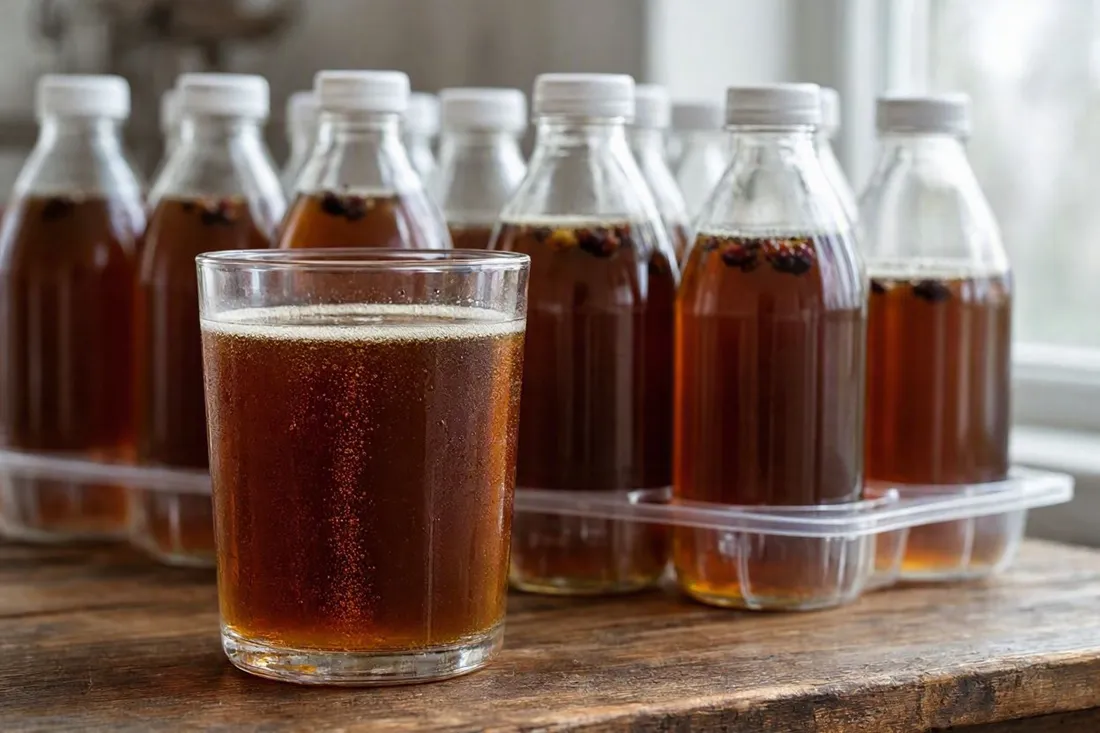
Rye Bread Kvass
A naturally fermented, lightly sparkling drink made from dried rye bread, yeast, sugar, and lemon, bottled and left to carbonate for a couple of days.
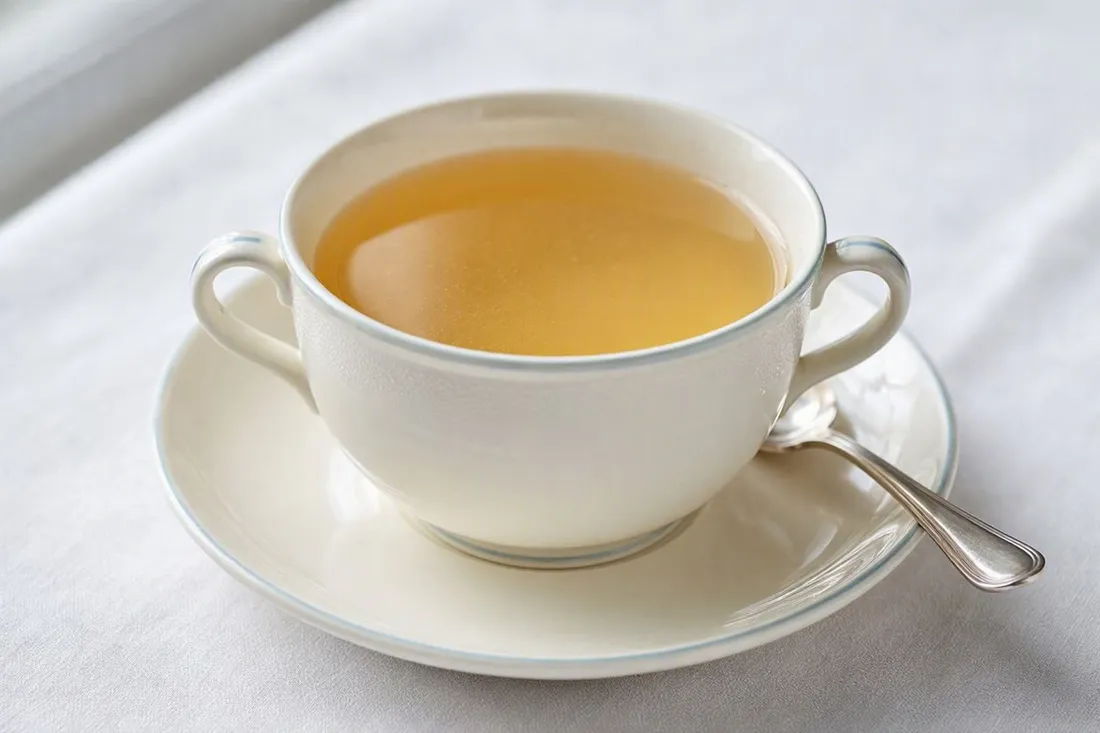
Cold Beef Consommé
A fully clarified beef and chicken broth, simmered for hours and clarified with egg whites, then served ice-cold in cups without any garnish.
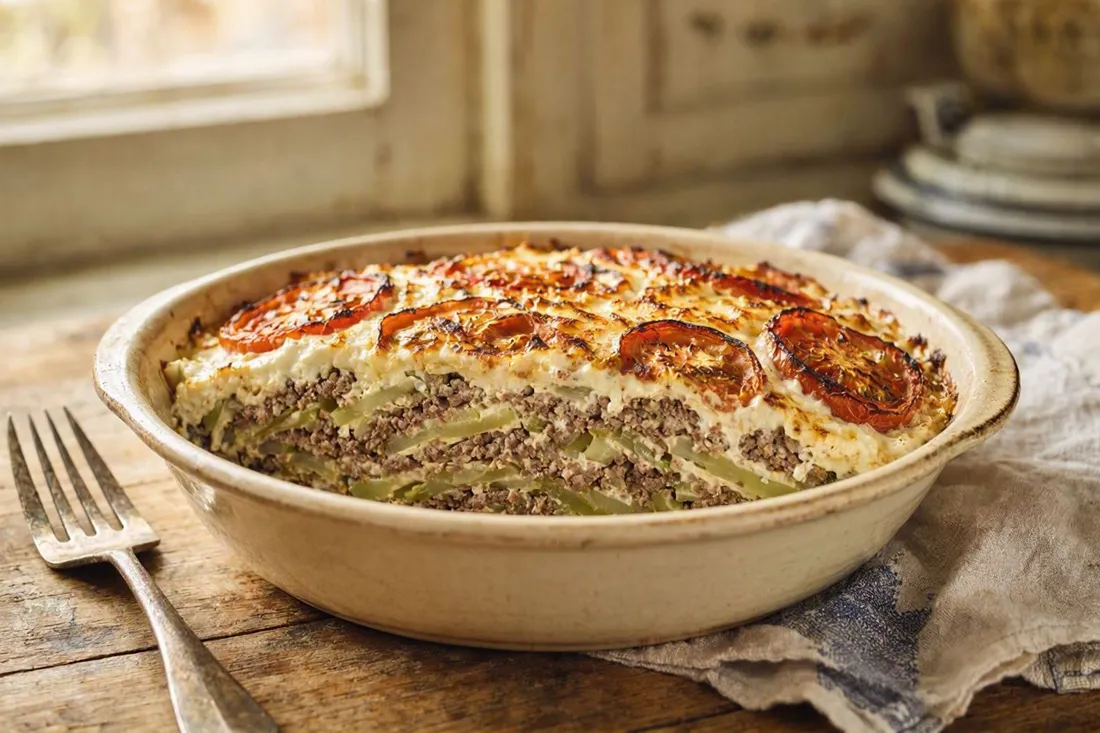
Kohlrabi and Veal Musaka
A layered casserole of braised kohlrabi and seasoned ground veal, baked under sour cream and tomato - a comforting vintage Central European dish.