Boiled Ham with Madeira Sauce
A whole bone-in cured ham, slow-boiled for hours then oven-glazed with Madeira wine — rich, tender, and served with a Madeira pan sauce.
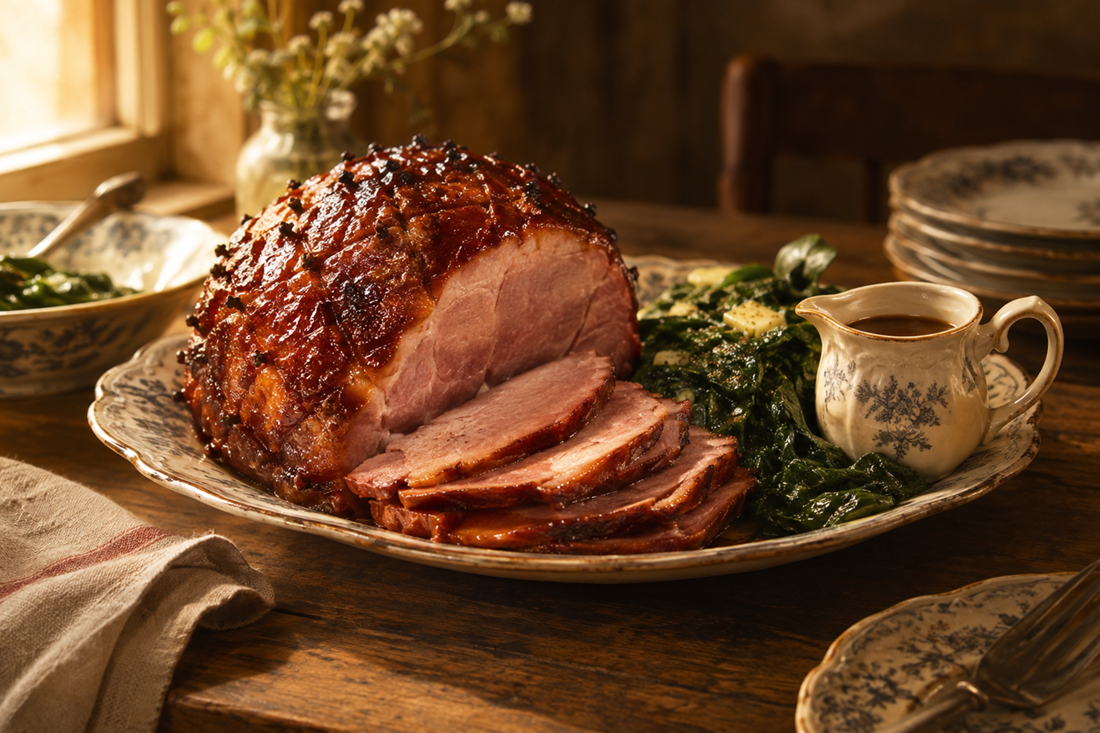
Quick Summary
This whole bone-in ham is slow-boiled for hours until tender, then briefly roasted with Madeira wine for a deep reddish crust. It's traditionally served with a Madeira pan sauce and buttered spinach.
This recipe uses Madeira Wine Sauce — prepare it in advance if you haven't already.
Historical recipe
Modernised adaptation of an early 20th‑century source. Not independently kitchen-tested by Attic Recipes. Quantities, temperatures, and food safety guidance have been updated for a contemporary kitchen — results may vary and errors may exist. Nutritional values, where provided, are estimates only and have not been laboratory tested. Always follow current food safety guidelines for your region. If you have a health condition, allergy, or dietary requirement, consult a qualified professional before preparing this recipe.
Use of this recipe is entirely at your own risk and subject to ourTerms of Service andPrivacy Policy. Attic Recipes accepts no liability for any adverse outcome.
- Dairy
- Sulphites
Additional notes
Note
Contains alcohol (Madeira wine) in the roasting liquid and pan sauce. Most of the alcohol cooks off, but pregnant women, children under 18, and anyone avoiding alcohol should be aware. As always, consult a doctor with specific concerns.
Note
This dish is high in saturated fat and sodium from the cured ham and butter. Those managing cholesterol, blood pressure, or heart health — including older adults and immunocompromised individuals — may want smaller portions or extra fat trimmed before serving.
- 1
Submerge the ham in cold water and refrigerate for about 4 hours to draw out excess salt, changing the water once if the ham is very salty.
TipThis step is a desalting soak, not marinating for flavor — it corrects for how heavily these hams were traditionally cured. - 2
Remove the ham from the water, rinse, and pat dry. Using a sharp knife, remove the leg bone, keeping the opening as small as possible, and leave the shank end intact as a handle.
- 3
Wrap the ham tightly in cheesecloth and tie it securely with kitchen twine.
- 4
Place the wrapped ham in a large stockpot and cover with the 5 l of water. Add the onions, bay leaf, and carrot.
- 5
Bring to a boil, then reduce to a gentle simmer and cook for 8 hours, topping up with hot water as needed to keep the ham fully submerged.
TipThe water should barely move — a hard boil will toughen the meat over such a long cook. - 6
Remove the ham from the pot and set it on a cutting board. Cut away the twine and unwrap the cloth.
- 7
Peel off the skin and trim away most of the fat, leaving a layer about 1 cm thick over the meat.
- 8
Set the ham in a large roasting dish. Pour in the stock and the Madeira wine. Roast in the preheated oven for 30 minutes, basting once or twice with the pan liquid, until the fat develops a deep reddish crust.
- 9
Remove the ham from the roasting dish and wrap the exposed shank bone in foil or paper to use as a handle. Transfer to a serving platter, whole or sliced.
- 10
While the ham roasts, blanch the spinach, drain it very well, and sauté it briefly in the butter with the salt. Serve the ham hot with the buttered spinach and Madeira sauce alongside.
Nutrition Informationper 1 portion (approx 220g: 180g ham, 40g spinach)
Nutritional values are approximate estimates and may vary based on specific ingredients used, preparation methods, and portion sizes.
Serving Suggestions
Serve hot, sliced at the table, with the buttered spinach and a jug of Madeira sauce made from the pan juices.
About This Recipe
A whole leg of ham was, in the early 20th century home kitchen, a project measured in a full day rather than an hour — first a long soak to correct for heavy curing, then hours of quiet simmering, and only at the very end a short, hot finish to color the surface. What looks at first like an unusually slow way to cook something already cured and smoked is really a two-stage process: the simmer cooks the meat through and renders it tender, while the oven step is purely for appearance and a last layer of flavor from the wine.
The Madeira does double duty here. A portion goes into the roasting dish to help build the crust, and the pan juices it leaves behind become the base of the accompanying sauce — the two recipes were clearly meant to be made together.
Why It Works
Simmering the ham at a bare, gentle heat for many hours rather than a rolling boil keeps the muscle fibers from seizing and toughening, which matters enormously on a cut this size and this dense. Trimming the skin and most of the fat afterward, but leaving a thin layer, gives the final oven roast something to render and brown without stripping away all of the moisture and flavor the fat carries. The short, hot finish with wine then does the work a glaze does on a modern holiday ham: color and aroma on the surface, without needing to further cook meat that’s already done.
Modern Kitchen Tips
Start the soak the night before if your ham is on the saltier side — there’s no harm in a longer desalting period, only in too short a one. If you’re unsure how salty a particular ham is, simmer a small offcut for a few minutes and taste it before committing the whole leg to the soaking water. A digital probe thermometer takes the guesswork out of both the simmer and the final roast, even though the timings given here should reliably take the meat well past a safe internal temperature.
A classic of early 20th century home cooking, preserved and adapted for the modern kitchen.
The Story Behind This Recipe
Historical Context
Early 20th century home cooks worked with whole, dry-cured and smoked leg hams rather than the fully cooked or sliced ham common today, so a long soak to draw out salt before cooking was a standard first step, not an optional one. The extended simmer that followed was the period's way of guaranteeing both safety and tenderness in a large, dense cut, and the brief hot-oven finish with wine was a common way to color and flavor the surface once the meat itself was already cooked through.
Modern Kitchen Adaptation
Today's pre-cooked, sliced, or spiral-cut hams are not a substitute here — this method needs a raw, whole, bone-in ham that has been dry-cured and smoked but not fully cooked, closer to what's sold as a country ham. Because curing salt levels vary far more today than they did historically, treat the 4-hour soak as a starting point and taste a small simmered piece partway through the boil, extending the soak next time if it still tastes overly salty. The original gives no oven temperature for the final roast; 200°C (400°F) is a reasonable estimate for developing color in 30 minutes without drying out the surface. The stock quantity for the roasting liquid is also an estimate, since the original only calls for adding "stock or bouillon" without a measure.
This recipe is an independent modern adaptation developed from historical sources in the public domain. It is provided for informational and educational purposes only and does not constitute professional dietary, nutritional, or medical advice. Food preparation involves inherent risks. The reader assumes full responsibility for safe food handling, ingredient sourcing, and adherence to current local food safety guidelines. The site operator accepts no liability for outcomes resulting from the preparation or consumption of this recipe.
One recipe.
Every week.
You Might Also Like
More recipes you'll enjoy
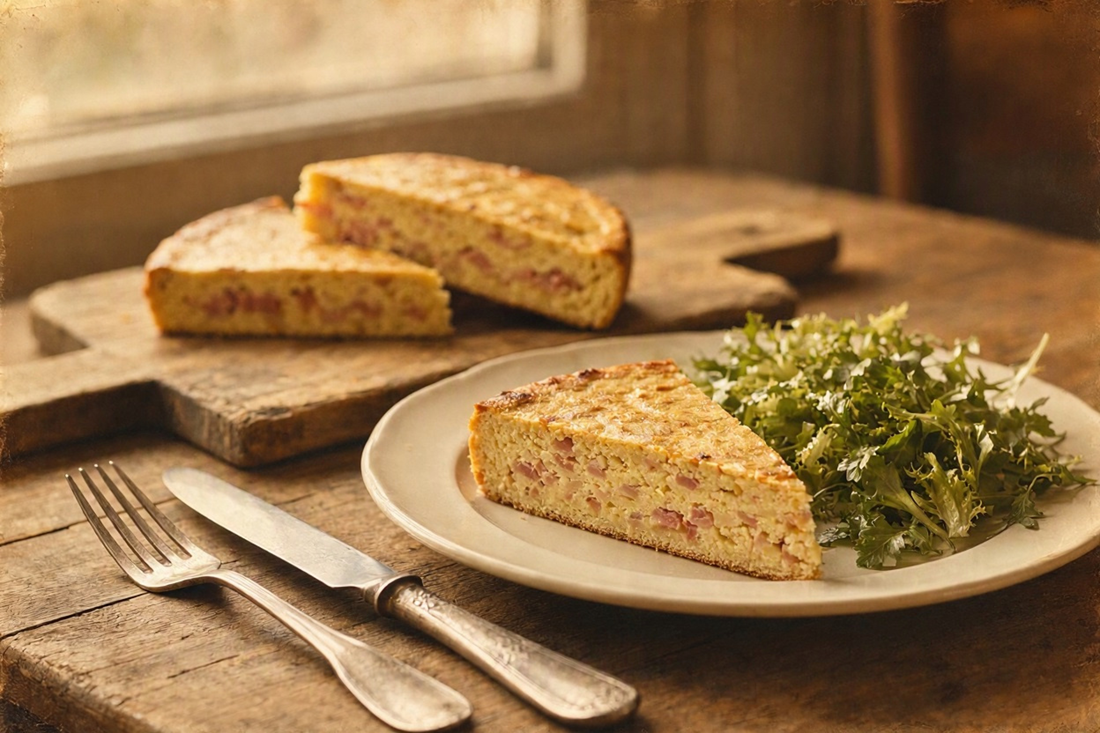
Savory Ham Torte
A savory baked torte of butter, eggs, ground ham, and riced potato, lightened with whipped egg whites and served warm as a starter.
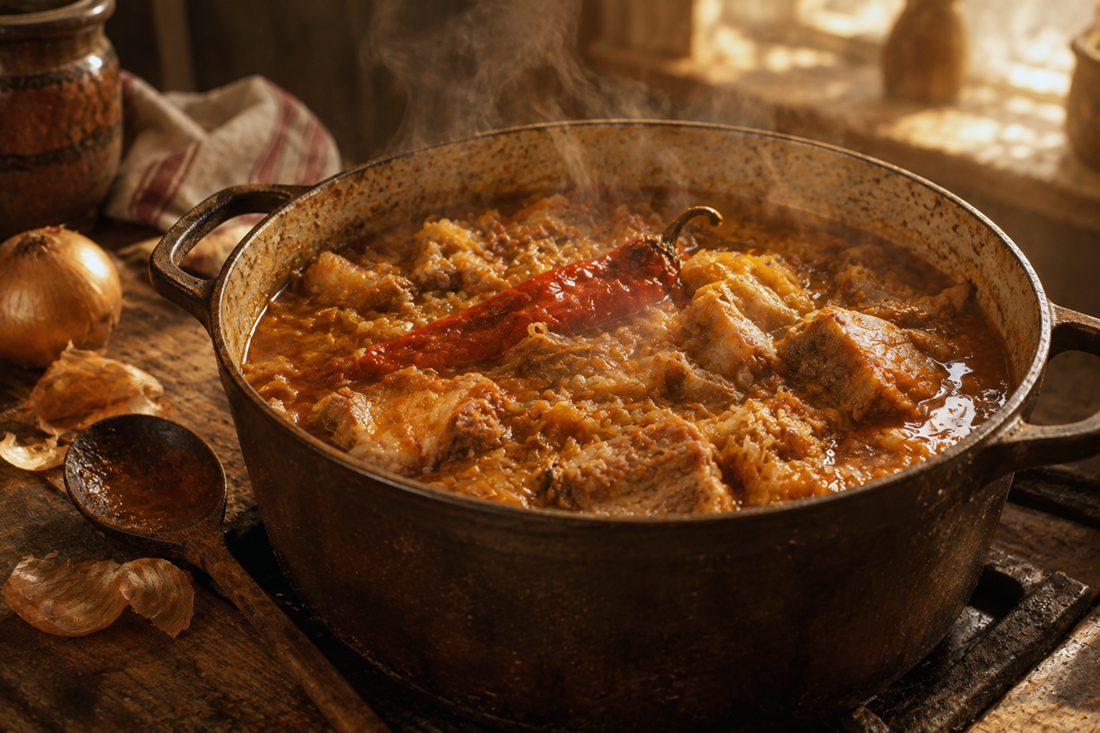
Shredded Cabbage and Pork Stew
Pork simmered slowly with onions, paprika, and shredded lacto-fermented cabbage until deeply tender — a long-cooked, savory stew.
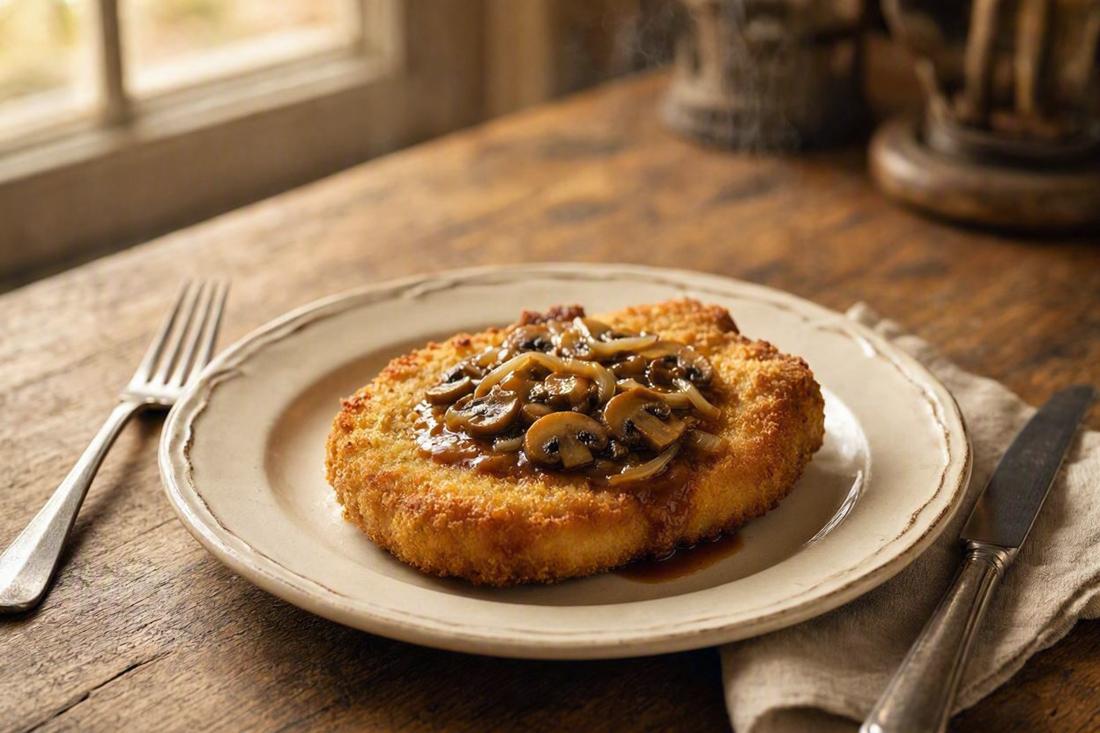
Breaded Pork Chops with Mushroom Sauce
Breaded pork chops, first lightly fried then braised in a caraway-scented broth with onion and mushrooms for a rich pan sauce.