Shredded Cabbage and Pork Stew
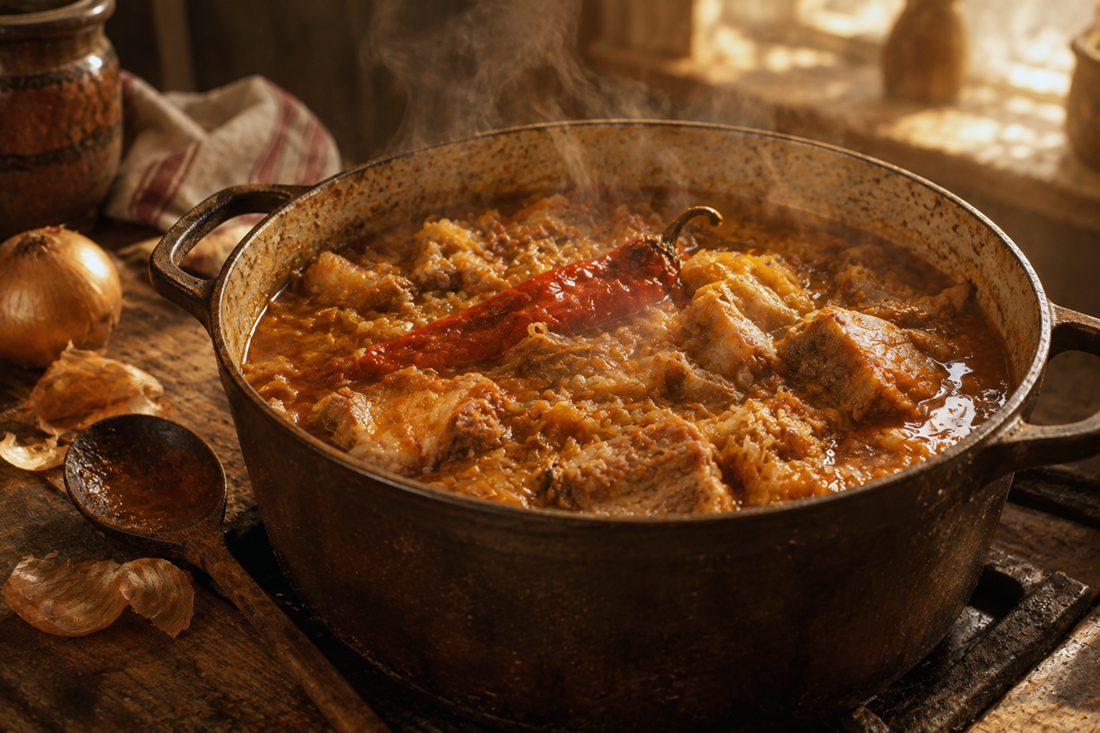
Pork simmered slowly with onions, paprika, and shredded lacto-fermented cabbage until deeply tender — a long-cooked, savory stew.
Quick Summary
Pork is browned with onions and a paprika-flour roux, then simmered slowly and for a long time with shredded lacto-fermented cabbage until the meat is very tender. It's a dish built around patience — the low, gentle simmer is what develops the flavor.
This recipe uses Salt, Time, and Cabbage: How Lacto-Fermentation Works — prepare it in advance if you haven't already.
Historical recipe
Modernised adaptation of an early 20th‑century source. Not independently kitchen-tested by Attic Recipes. Quantities, temperatures, and food safety guidance have been updated for a contemporary kitchen — results may vary and errors may exist. Nutritional values, where provided, are estimates only and have not been laboratory tested. Always follow current food safety guidelines for your region. If you have a health condition, allergy, or dietary requirement, consult a qualified professional before preparing this recipe.
Use of this recipe is entirely at your own risk and subject to ourTerms of Service andPrivacy Policy. Attic Recipes accepts no liability for any adverse outcome.
- Dairy
- Gluten
Additional notes
Note
This stew is high in saturated fat from the pork and butter. Those managing cholesterol or heart health may want a smaller portion or to trim extra fat from the pork before cooking.
- 1
Wash the pork and cut it into small pieces.
- 2
Heat the butter (or oil/lard) in a large pot. Add the sliced onions and fry until lightly softened.
- 3
Add the pork to the onions and fry, stirring occasionally, as you would for a paprikaš, until the meat starts to turn tender.
- 4
Stir in the ground paprika and flour and fry briefly with the meat to form a light roux.
TipKeep this step quick and off the highest heat — burnt paprika turns bitter and there's no fixing it once it happens. - 5
Add the shredded cabbage and mix everything together well.
- 6
Pour in the water, adding enough so the cabbage has plenty of sauce.
- 7
Add the red pepper, then move the pot to the lowest heat and let it simmer slowly and gently for a long time, until the pork is very tender, stirring occasionally to keep it from scorching on the bottom.
- 8
Taste before adding any extra salt — fermented cabbage's own brine is often already quite salty.
Nutrition Informationper 1 serving (approx 1/5 of the pot)
Nutritional values are approximate estimates and may vary based on specific ingredients used, preparation methods, and portion sizes.
Serving Suggestions
Serve hot, on its own or with a slice of crusty bread to soak up the sauce.
About This Recipe
This stew leans entirely on time rather than technique: pork and onions are browned much like the start of any paprikaš, but from there the dish is built to sit and simmer for a long stretch at the lowest possible heat, letting the shredded fermented cabbage soften and its tang mellow into the sauce. There’s no rushing a dish like this — the low, patient simmer is the whole point.
Using ribanac — finely shredded, lacto-fermented cabbage — rather than fresh cabbage or whole fermented heads gives the stew a brighter, more distributed tang throughout, since the fine shred means the cabbage all but melts into the sauce as it cooks rather than staying in distinct pieces.
Why It Works
Frying the paprika briefly with the meat and flour, rather than stirring it in later, blooms its flavor and color into the fat before any liquid is added, the same technique that gives a paprikaš its depth. The long, slow simmer that follows breaks down the pork’s connective tissue gradually, and gives the cabbage time to release its own liquid and absorb the seasoned fat and roux around it, rather than staying separate from the sauce.
Modern Kitchen Tips
If you’re making this ahead, it reheats and even improves after a day in the fridge, once the cabbage has had more time to absorb the sauce’s flavor. Taste for salt only at the very end — fermented cabbage varies a lot in saltiness from batch to batch, and it’s easy to over-season a pot that didn’t need it.
A classic of early 20th century home cooking, preserved and adapted for the modern kitchen.
The Story Behind This Recipe
Historical Context
A long, slow simmer over low heat, well after the initial frying was done, was how dishes like this one built flavor before pressure cookers or slow cookers made shortcuts available — the meat and cabbage were left to cook together at the back of the stove for as long as it took to become tender, rather than by the clock. Using shredded, lacto-fermented cabbage rather than fresh gave the finished stew its characteristic tang and let the dish be made through the colder months, when fresh cabbage's texture and flavor grow less appealing after storage but fermented cabbage keeps well.
Modern Kitchen Adaptation
This is a genuinely good fit for a slow cooker, since the original method is already describing exactly what a slow cooker does: a long, slow simmer at low heat. Brown the onions, pork, and paprika-flour roux on the stovetop first, both for flavor — the browning reaction that builds so much of this dish's taste doesn't happen inside a slow cooker — and so the meat isn't sitting raw for a long stretch while the slow cooker gradually comes up to a safe temperature. Then transfer everything, along with the cabbage, red pepper, and water, into the slow cooker and cook on LOW for about 6-8 hours or on HIGH for about 3-4 hours, until the pork is fork-tender. Because a slow cooker's closed lid traps moisture that would otherwise evaporate on the stovetop, you'll likely need noticeably less water than the stovetop method calls for — start with less than the amount given and add more partway through only if it looks dry, rather than adding it all upfront. As for the fat: the original just says "heated fat" without specifying which, so butter is used here by default, but it's a poor choice for the higher-heat frying this recipe actually needs, since it burns well before onions and pork would properly brown — a neutral oil or lard holds up much better at frying temperatures and is worth using instead for that step specifically.
This recipe is an independent modern adaptation developed from historical sources in the public domain. It is provided for informational and educational purposes only and does not constitute professional dietary, nutritional, or medical advice. Food preparation involves inherent risks. The reader assumes full responsibility for safe food handling, ingredient sourcing, and adherence to current local food safety guidelines. The site operator accepts no liability for outcomes resulting from the preparation or consumption of this recipe.
One recipe.
Every week.
You Might Also Like
More recipes you'll enjoy
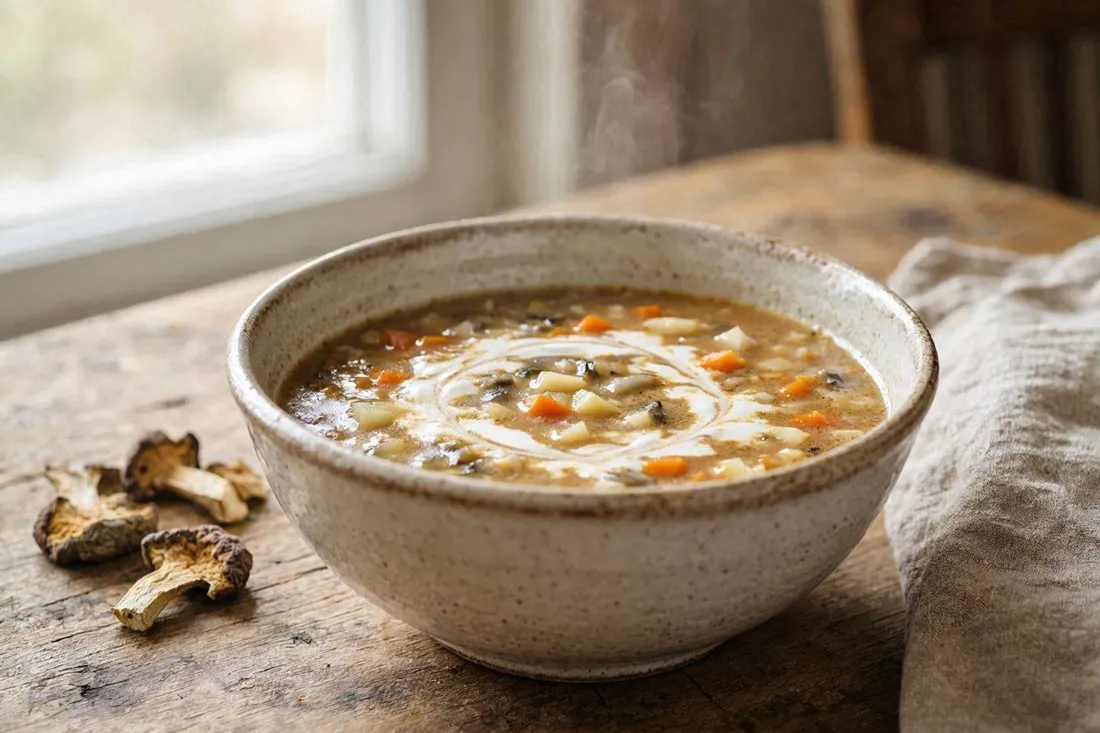
Mushroom Soup with Sour Cream
Dried mushrooms simmered with soup vegetables and finished with a sour cream and flour thickener — a simple, deeply flavored home-style soup.
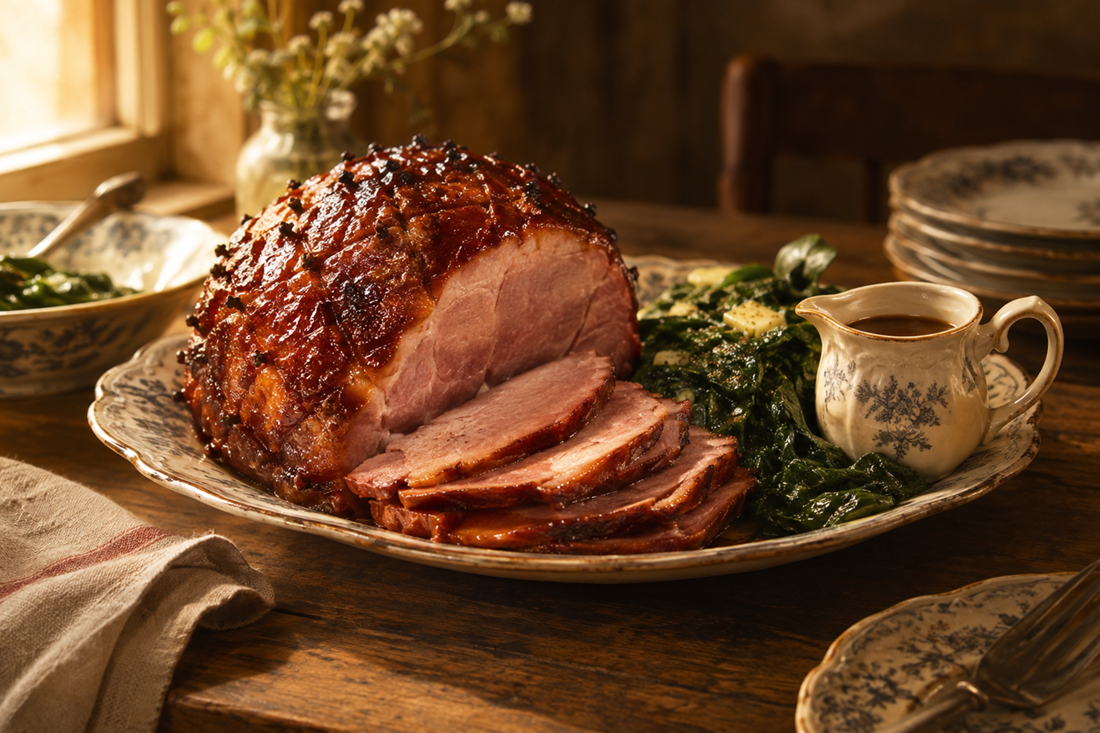
Boiled Ham with Madeira Sauce
A whole bone-in cured ham, slow-boiled for hours then oven-glazed with Madeira wine — rich, tender, and served with a Madeira pan sauce.

Savory Cabbage Crepes with Ham and Sour Cream
Thin cabbage-and-egg crepes layered with smoked ham and sour cream, baked until warmed through — a hearty Central European appetizer.