Beef Wellington
Aged beef tenderloin coated in a mushroom and caper paste, wrapped in golden puff pastry — a celebration roast from the early 20th century.

Historical recipe
Modernised adaptation of an early 20th‑century source. Not independently kitchen-tested by Attic Recipes. Quantities, temperatures, and food safety guidance have been updated for a contemporary kitchen — results may vary and errors may exist. Nutritional values, where provided, are estimates only and have not been laboratory tested. Always follow current food safety guidelines for your region. If you have a health condition, allergy, or dietary requirement, consult a qualified professional before preparing this recipe.
Use of this recipe is entirely at your own risk and subject to our Terms of Service and Privacy Policy. Attic Recipes accepts no liability for any adverse outcome.
- Eggs
- Gluten
- Dairy
- Mustard
Additional notes
-
Warning
This recipe is served medium-rare with an internal temperature of 52°C (125°F). Pregnant women, children under 18, elderly, and immunocompromised individuals should cook the beef to a minimum internal temperature of 71°C (160°F), which will result in a well-done centre.
-
Note
Contains approximately 10g saturated fat per serving from butter and beef. Those monitoring saturated fat intake should be aware.
- 1
Pat the beef tenderloin completely dry with paper towels. Rub all over with the oil, then season with salt and pepper. Heat a heavy frying pan over very high heat until smoking. Sear the fillet for 1–2 minutes per side until deeply browned on all surfaces. Remove immediately and brush all over with Dijon mustard while still warm. Transfer to a plate and refrigerate uncovered until completely cold — at least 30 minutes.
Tip A thorough sear is essential for flavour and for creating a surface the mushroom paste will cling to. Do not cook further at this stage — the fillet must remain raw in the centre. - 2
Melt the butter in a wide pan over medium-high heat. Add the finely chopped onion and cook for 3–4 minutes until softened. Add the mushrooms and capers. Cook, stirring frequently, until all moisture has completely evaporated and the mixture is dry and paste-like — approximately 10–15 minutes. Season lightly with salt. Spread onto a plate and refrigerate until completely cold.
Tip The mushroom mixture must be completely dry before assembly. Any residual moisture will make the pastry soggy from the inside. The mixture is ready when it pulls away from the pan cleanly and no liquid pools when pressed. - 3
Lay a large sheet of plastic wrap on a clean work surface. Spread the cold mushroom paste evenly over the plastic wrap into a rectangle roughly the length and circumference of the fillet. Place the cold, mustard-coated fillet along the near edge and roll tightly, using the plastic wrap to form a compact log. Twist the ends firmly to seal. Refrigerate for 30 minutes to hold the shape.
- 4
Preheat the oven to 200°C (400°F) / 180°C fan. On a lightly floured surface, roll the cold puff pastry to approximately 1 cm thickness — a rectangle large enough to fully enclose the beef log with a 3 cm overlap on all sides.
Tip Work quickly and keep the pastry cold. Warm pastry becomes sticky and tears during rolling, and will not puff properly in the oven. - 5
Remove the plastic wrap from the beef log. Place the log in the centre of the pastry sheet. Fold the pastry over the beef and roll to enclose it completely, pressing the seam firmly to seal. Tuck the ends under and press to seal. Place seam-side down on a lined baking sheet. Brush the entire surface with beaten egg.
- 6
Bake at 200°C (400°F) / 180°C fan for 25–30 minutes until the pastry is deep golden brown. Use a meat thermometer to check the internal temperature of the beef: 52°C (125°F) for medium-rare, 57°C (135°F) for medium. Remove from the oven and rest for 10 minutes before slicing — do not skip the resting step.
Tip Internal temperature will rise by approximately 3–5°C during resting. Pull the Wellington from the oven slightly before your target temperature is reached.
Nutrition Information per 1 porcija (approx 280g)
Nutritional values are approximate estimates and may vary based on specific ingredients used, preparation methods, and portion sizes.
Serving Suggestions
Slice thickly at the table — at least 3 cm per portion. Serve with roasted potatoes, glazed carrots, or a simple green salad. A red wine jus made from the pan drippings pairs well. Allow the Wellington to rest fully before slicing or the juices will run and the pastry will collapse.
About This Recipe
Beef Wellington appears in this cookbook as “Говеђа Печеница Велингтон” — a telling sign of how widely this celebratory dish had traveled by the early 20th century. The Central European household version is stripped to essentials: a good aged fillet, a mushroom and caper paste, and a wrapping of butterteich (puff pastry). No prosciutto, no foie gras, no elaborate garnishes. Just the core technique, executed with care.
What the original understood correctly was the fundamental logic of the dish: sear the meat fast and hot, keep the centre rare, coat it in something savoury, and encase it in pastry that will cook to a shattering golden crust. The details of timing and temperature were left to the cook’s judgment — which was reasonable in an era when cooks knew their ovens and their meat by feel.
The modernization here is primarily one of precision: temperatures, times, and a resting step that the original took for granted.
Why It Works
The sequence matters more than any individual step. The fillet must be completely cold before it goes into the pastry — warm meat raises the temperature of the surrounding pastry before it has time to set, resulting in a soggy base. The mushroom paste must be completely dry for the same reason: residual water has nowhere to go inside a sealed pastry shell except into the dough.
The sear serves two purposes beyond flavour. It creates a dry surface that holds the mustard, which in turn holds the mushroom paste. Without this chain of adhesion, the filling separates from the meat during slicing and the whole structure falls apart on the plate.
Modern Kitchen Tips
A meat thermometer is not optional here — it is the difference between a perfect Wellington and an expensive mistake. Puff pastry browns faster than beef cooks, so judge doneness by internal temperature, not by the colour of the crust. If the pastry browns too quickly before the beef reaches temperature, tent loosely with foil and continue baking. For clean slices, use a serrated knife and cut with a single confident stroke rather than a sawing motion.
A classic of early 20th century home cooking, preserved and adapted for the modern kitchen.
The Story Behind This Recipe
Historical Context
Early 20th century versions of this dish called for searing the fillet in hot lard rather than oil, which was the standard cooking fat of the period. The instruction to begin preparations '2 hours before lunch' refers to the full preparation timeline including cooling and assembly — not a 2-hour oven time. The original described a quick sear in hot fat until all sides were browned and the centre remained bloody, consistent with the modern approach. No oven temperature or final baking time was specified; the instruction was simply to bake until the pastry was completely cooked. The mushroom quantity was given only as 'a few fresh mushrooms' without further specification.
Modern Kitchen Adaptation
Lard has been replaced with neutral oil for searing; lard remains the historically correct fat and may be substituted back if preferred. Mushroom and caper quantities are estimated — the original specified only 'a few mushrooms' and 50g capers. A chilling step for the assembled log (30 minutes) has been added to ensure the Wellington holds its cylindrical shape during baking; this is not in the original but is essential for a clean result. Oven temperature (200°C / 180°C fan) and baking time (25–30 minutes) are estimated — the original gave neither. Internal temperature targets (52°C for medium-rare, 57°C for medium) replace the original's visual instruction of 'centre remains bloody.' A meat thermometer is strongly recommended.
This recipe is an independent modern adaptation developed from historical sources in the public domain. It is provided for informational and educational purposes only and does not constitute professional dietary, nutritional, or medical advice. Food preparation involves inherent risks. The reader assumes full responsibility for safe food handling, ingredient sourcing, and adherence to current local food safety guidelines. The site operator accepts no liability for outcomes resulting from the preparation or consumption of this recipe.
One recipe.
Every week.
You Might Also Like
More recipes from the same category
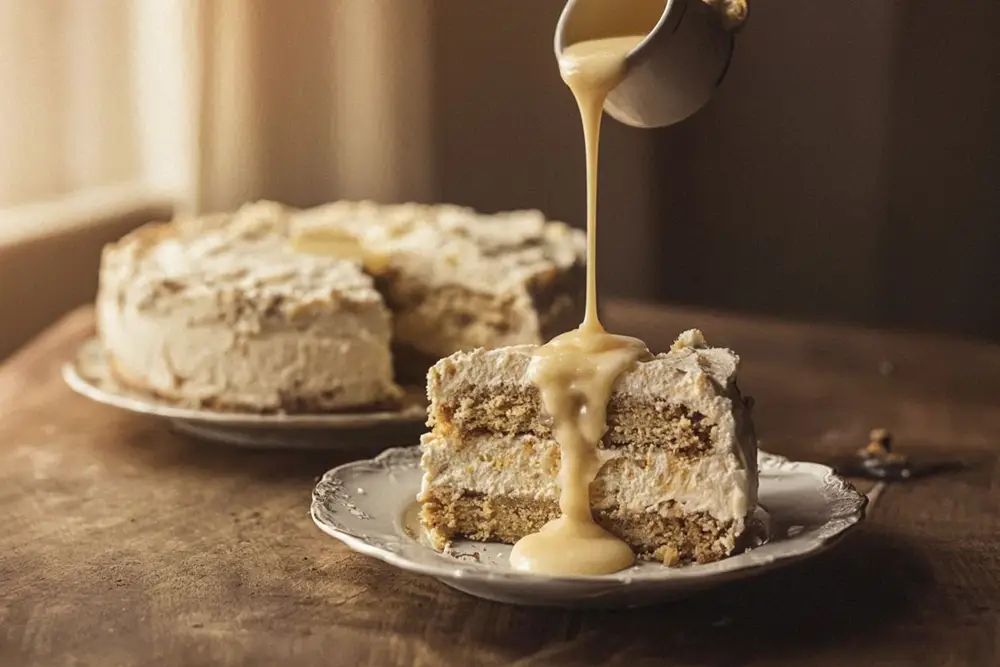
Almond Cream Biscuit Torte
A light sponge layered with almond buttercream and finished with a poured chilled custard sauce — a classic of early 20th century Central European pastry.
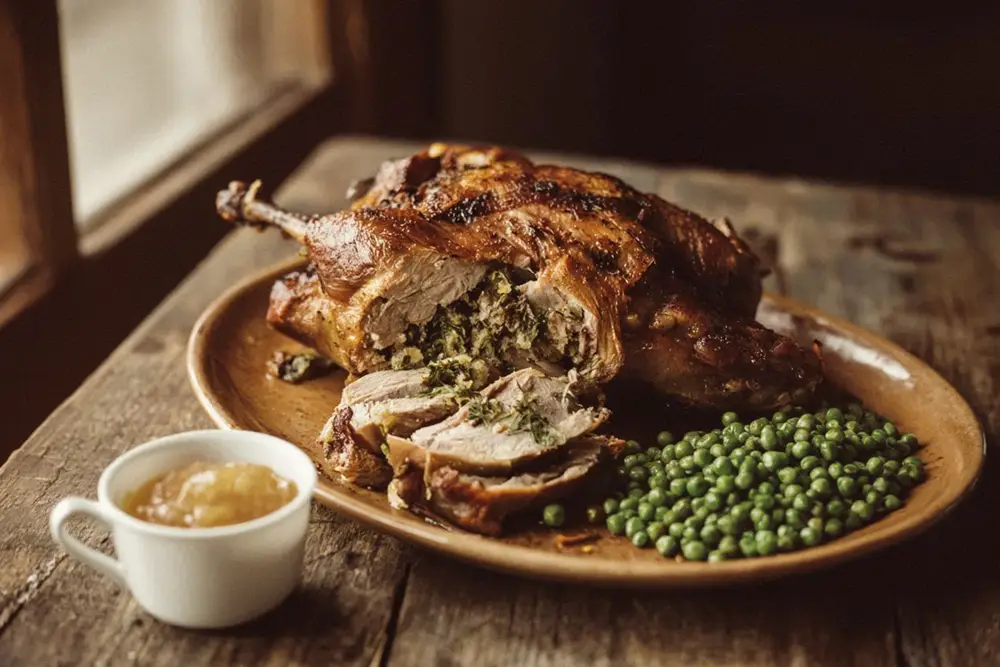
Baked Duck with Sage and Onion Stuffing and Apple Sauce
A whole roast duck stuffed with sage and onion, basted with pan drippings, and served with a warm apple sauce — a classic Central European Sunday roast.
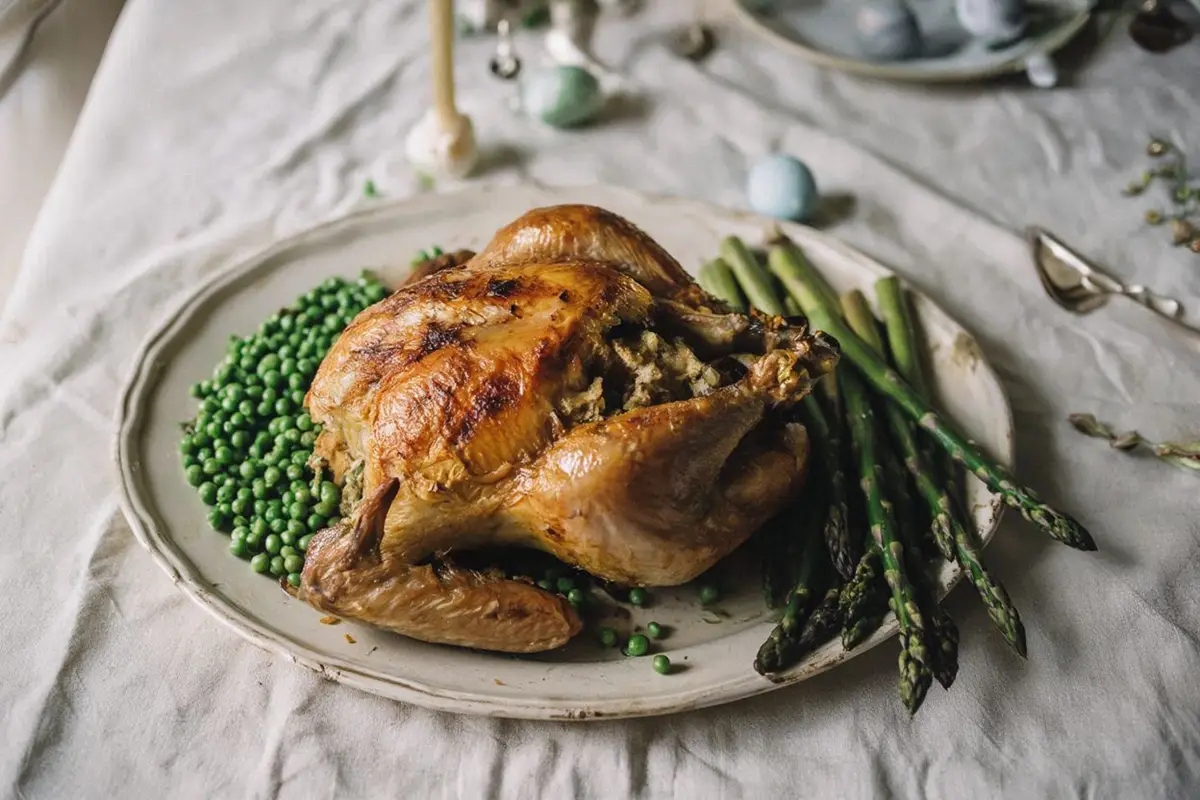
Chicken Stuffed with Crab Meat and Peas
Whole roasted chicken stuffed with crayfish, peas, asparagus and buttered bread — a festive Central European Easter centerpiece.