Almond Cream Biscuit Torte
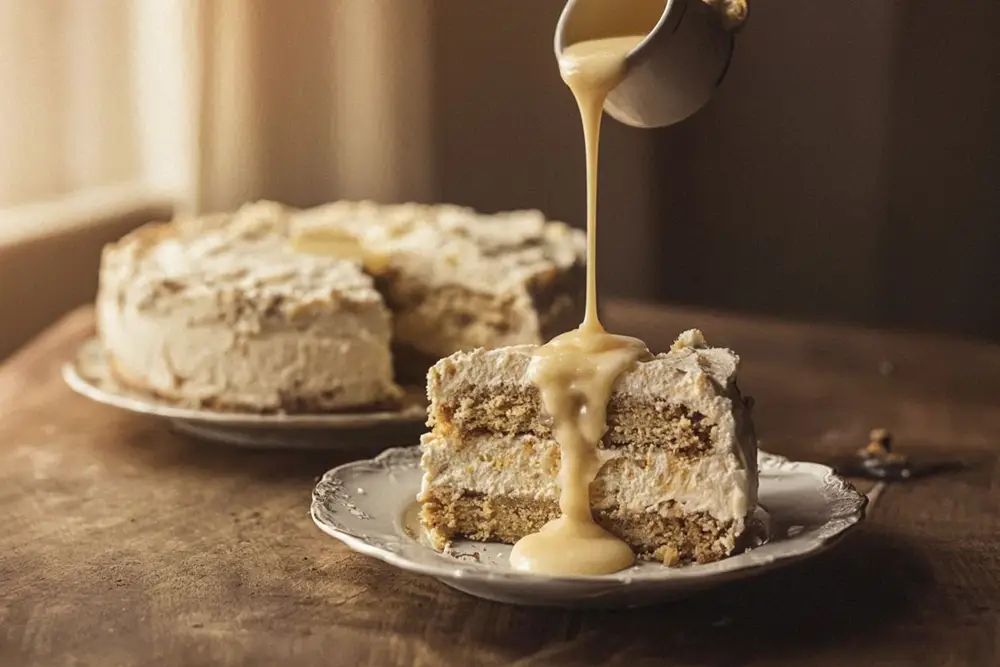
A light sponge layered with almond buttercream and finished with a poured chilled custard sauce — a classic of early 20th century Central European pastry.
Quick Summary
Almond Cream Biscuit Torte je tradicionalna srednjoevropska torta od slojeva laganog, suvog biskvita sa bogatim badem-krem filom. Servira se uz hladan crème anglaise preliv koji se sipa preko parčeta. Priprema traje oko 95 minuta.
This recipe uses How to Blanch Almonds: The Technique Behind the White Kernel — prepare it in advance if you haven't already.
Historical recipe
Modernised adaptation of an early 20th‑century source. Not independently kitchen-tested by Attic Recipes. Quantities, temperatures, and food safety guidance have been updated for a contemporary kitchen — results may vary and errors may exist. Nutritional values, where provided, are estimates only and have not been laboratory tested. Always follow current food safety guidelines for your region. If you have a health condition, allergy, or dietary requirement, consult a qualified professional before preparing this recipe.
Use of this recipe is entirely at your own risk and subject to our Terms of Service and Privacy Policy. Attic Recipes accepts no liability for any adverse outcome.
- Eggs
- Dairy
- Gluten
- Tree Nuts
Additional notes
-
Warning
This recipe contains multiple egg yolk custards. Both the filling base and the custard topping must be cooked to a minimum internal temperature of 74°C (165°F) before use. Use an instant-read thermometer. Pregnant women, young children, elderly individuals, and immunocompromised persons should take particular care to ensure the custards are fully cooked.
- 1
Preheat the oven to 175°C (350°F) / 155°C fan. Grease a 23 cm round cake pan with butter and line the base and sides with parchment paper.
- 2
Make the sponge: beat the 4 egg yolks with 150g granulated sugar until pale and thick, about 4–5 minutes. Add the 1 tsp vanilla extract. Sift in the 125g flour and 1 tsp baking powder and fold gently until just combined — the mixture will be thick.
- 3
In a separate, completely clean bowl, beat the 4 egg whites to stiff peaks. They should not slide when you tilt the bowl.
Tip Any trace of fat in the bowl will prevent the whites from whipping properly. Wipe the bowl and whisk with a little lemon juice or vinegar before starting. - 4
Fold the beaten egg whites into the yolk mixture in three additions, using a wide spatula and a gentle lifting motion from the bottom up. Do not stir. Pour the batter immediately into the prepared pan and bake for 30–35 minutes, until a skewer inserted into the centre comes out clean.
- 5
Remove the sponge from the oven and leave it to cool in the pan for 10 minutes. Turn out onto a rack, peel away the parchment, and leave to cool completely before cutting.
- 6
Make the filling custard base: heat the 240ml milk with 15g sugar and 1 tsp vanilla extract in a small saucepan over medium heat until it just begins to steam — do not boil. In a heatproof bowl, lightly whisk the 3 egg yolks. Slowly pour a ladleful of the hot milk into the yolks, whisking constantly (this tempers the eggs). Pour the tempered yolk mixture back into the saucepan. Cook over low heat, stirring constantly with a wooden spoon or silicone spatula, until the custard reaches 74°C (165°F) and coats the back of a spoon.
Tip Do not allow the mixture to boil or the yolks will scramble. Remove from heat the moment it reaches temperature. - 7
Strain the custard through a fine-mesh sieve into a clean bowl. Press a sheet of cling film directly onto the surface to prevent a skin forming. Allow to cool to room temperature, then refrigerate until fully cold.
- 8
Make the buttercream: beat the 125g softened butter with the 125g icing sugar until pale and fluffy, about 3–4 minutes. Add the cold custard base a tablespoon at a time, beating well after each addition. Fold in the 150g ground almonds. Refrigerate the filling while you make the custard topping.
- 9
Make the custard topping (crème anglaise): in a heatproof bowl, whisk the 8 egg yolks with 3 tablespoons granulated sugar and 1 tsp vanilla until smooth. Heat the 240ml milk in a saucepan until steaming. Temper the yolks by slowly whisking the hot milk into the yolk mixture, then return everything to the saucepan. Cook over low heat, stirring constantly, until the custard reaches 74°C (165°F).
Tip This is a pourable sauce — it will be thinner than the filling custard. It should coat a spoon lightly but flow freely. - 10
Strain the topping custard into a clean bowl or jug. Place the bowl in a larger bowl filled with ice water and stir until the custard is cold. Cover and refrigerate until ready to serve.
- 11
Assemble the torte: using a long serrated knife, cut the cooled sponge horizontally into 3 even layers. Place the bottom layer on a serving plate. Spread half the almond buttercream filling evenly over it. Place the middle sponge layer on top and spread the remaining filling. Place the top sponge layer cut-side down. Refrigerate the assembled torte for at least 1 hour before serving.
- 12
To serve: remove the torte from the refrigerator and slice. Pour the cold custard topping over each slice at the table — not over the whole cake in advance, as it will make the sponge soggy.
Tip The custard topping is meant to pool around and over each slice, not act as a frosting.
Nutrition Information per 1 slice (approx. 120g, based on 10 servings; custard topping not included)
Nutritional values are approximate estimates and may vary based on specific ingredients used, preparation methods, and portion sizes.
Serving Suggestions
Serve chilled. Pour the cold custard topping at the table, directly over each individual slice. The torte keeps well refrigerated for up to 2 days; the custard topping should be stored separately and poured to order.
About This Recipe
This layered sponge cake belongs to a family of Central European pastries known simply as biscuits — not the British or American quick bread, but a fine, egg-lifted sponge that forms the backbone of celebration cakes across the region. The recipe dates to the early 20th century and is more demanding than it first appears: the sponge has no chemical lift beyond a modest pinch of baking powder, relying instead on the structure of properly whipped egg whites. The filling is a hybrid — a cooked almond cream that sits between buttercream and a Bavarian — and the finished cake is served not frosted but poured over with a cold, flowing custard sauce at the table.
The combination of textures is what makes this torte unusual: a dry, light sponge against a dense, nutty filling, finished with a pourable cream that softens the whole thing on the plate. It is not a subtle dessert, but it is a considered one.
From a food safety standpoint, the original recipe relied on techniques that pre-date modern egg safety standards. Both custards in this recipe have been updated accordingly — see the notes below.
This torte pairs particularly well with coffee — see Why Bitter Needs Sweet.
Why It Works
The sponge in this recipe is a génoise in spirit: yolks beaten with sugar for structure and richness, whites whipped separately for volume, flour folded in last. The absence of added fat (no butter in the batter) keeps the crumb light enough to absorb the filling without collapsing under its weight.
The almond filling functions as a stabilised buttercream. The cooked custard base — milk, sugar, and egg yolks taken to 74°C — provides emulsification and richness without making the cream runny. Ground almonds act as a thickener and flavour carrier, absorbing excess moisture from the custard and binding the filling so it holds its shape when sliced cold.
The custard topping (crème anglaise) is the period solution to the question of how to serve a rich, slightly dry cake without frosting it. Poured cold at the table, it pools into the plate around each slice and softens the crumb on contact — functioning more like a sauce than a decoration.
Modern Kitchen Tips
The single most common failure point in this recipe is the egg white fold. Once the whites are incorporated and the batter is in the pan, it must go into the oven immediately — resting the batter even for a few minutes will cause the structure to deflate.
Both custards require a thermometer. Visual cues alone (the custard “coating a spoon” or “steaming”) are not reliable indicators of a safe internal temperature for egg-based custards. An instant-read thermometer costs very little and removes the guesswork entirely.
For the almonds: if grinding your own, blanch them first (30 seconds in boiling water, slip the skins off, dry thoroughly) before processing. Unblanched almonds will produce a filling with a slightly bitter, rougher texture. Almond flour sold as “blanched almond flour” is a reliable substitute.For the almonds: if grinding your own, blanch them first…
The assembled torte improves with time in the refrigerator. One hour is the minimum; overnight produces a better result as the filling firms and the layers settle.
A classic of early 20th century Central European pastry, preserved and adapted for the modern kitchen.
The Story Behind This Recipe
Historical Context
Early 20th century recipes of this type called for layered sponge cakes — referred to as 'biscuits' in the Central European tradition — filled with enriched creams and served with a poured sauce. Home cooks of the period used raw or barely warmed egg mixtures in both the filling and the topping, as food safety guidelines around egg tempering were not yet formalised in domestic cookery. The almond filling reflects the Central European pastry tradition in which ground nuts substitute for a significant portion of flour, producing a denser, richer cream than a plain buttercream. The final custard topping — a crème anglaise — would have been set on ice immediately after cooking, the pre-refrigeration method for rapid chilling.
Modern Kitchen Adaptation
Both egg custards in this recipe — the filling base and the poured topping — have been updated to include full tempering and a minimum cooked temperature of 74°C (165°F), following current food safety standards. The original recipe did not specify temperatures and described the custards only as brought to a boil at the end of the stove, which in period cooking language meant thickened over low heat rather than a true rolling boil. The oven temperature has been estimated at 175°C (350°F) / 155°C fan; the original specified only 'moderately hot.' For the almonds: blanched almonds (skins removed) are recommended for a smoother filling texture; the original did not specify. Butter is used throughout for greasing, as the original did not specify a fat type.
This recipe is an independent modern adaptation developed from historical sources in the public domain. It is provided for informational and educational purposes only and does not constitute professional dietary, nutritional, or medical advice. Food preparation involves inherent risks. The reader assumes full responsibility for safe food handling, ingredient sourcing, and adherence to current local food safety guidelines. The site operator accepts no liability for outcomes resulting from the preparation or consumption of this recipe.
One recipe.
Every week.
You Might Also Like
More recipes you'll enjoy
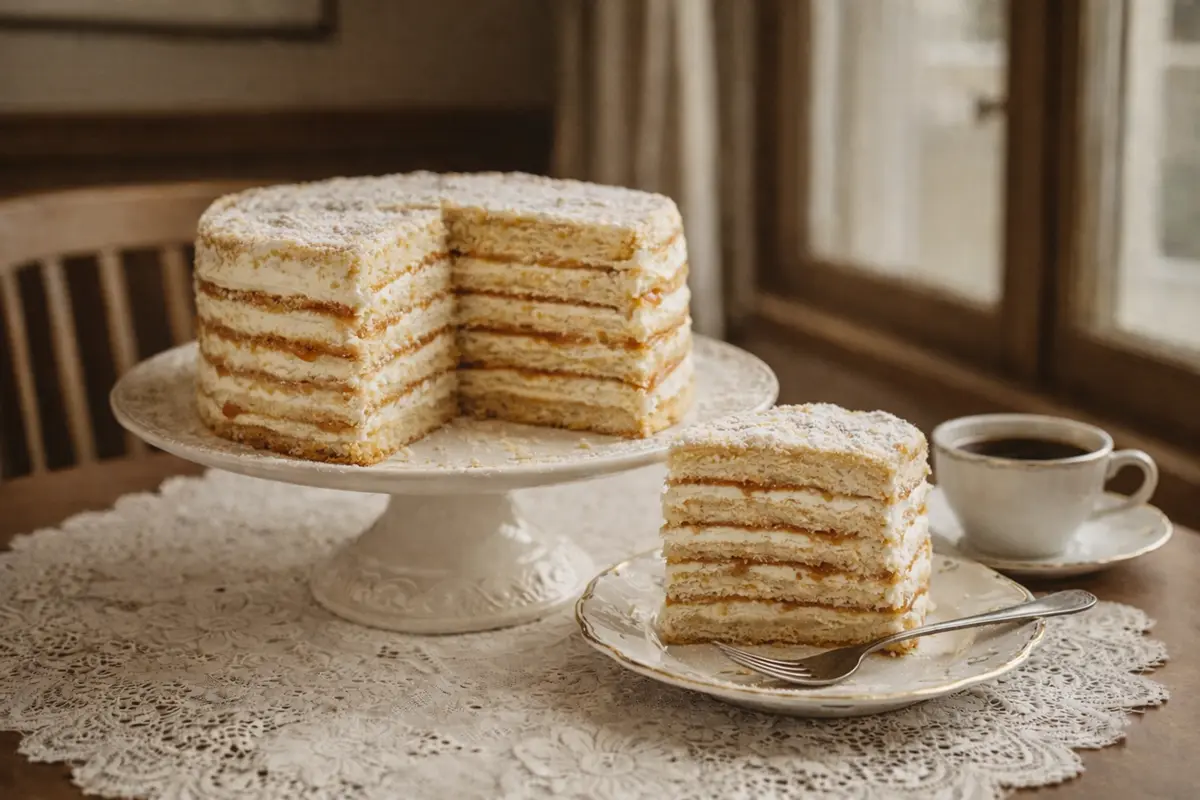
Cream Cake with Apricot Marmalade
Elegant six-layer almond cake with apricot meringue filling — a refined 1930s Central European torte requiring patience and precision.
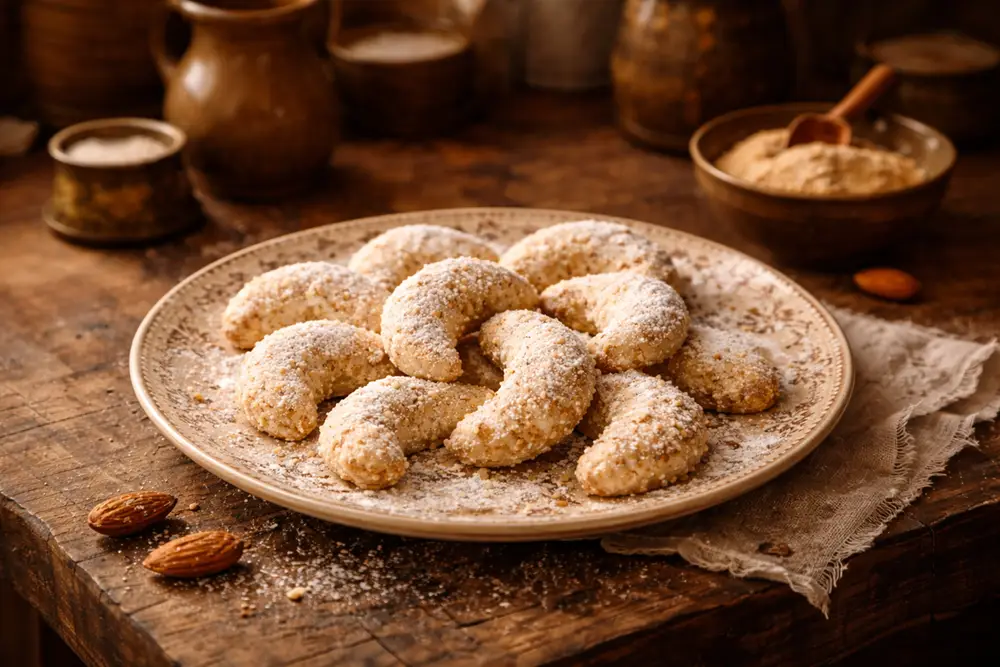
Almond Meringue Crescents
Crisp Central European confections of Swiss meringue shaped into crescents, coated in ground almonds, oven-dried until white and firm.
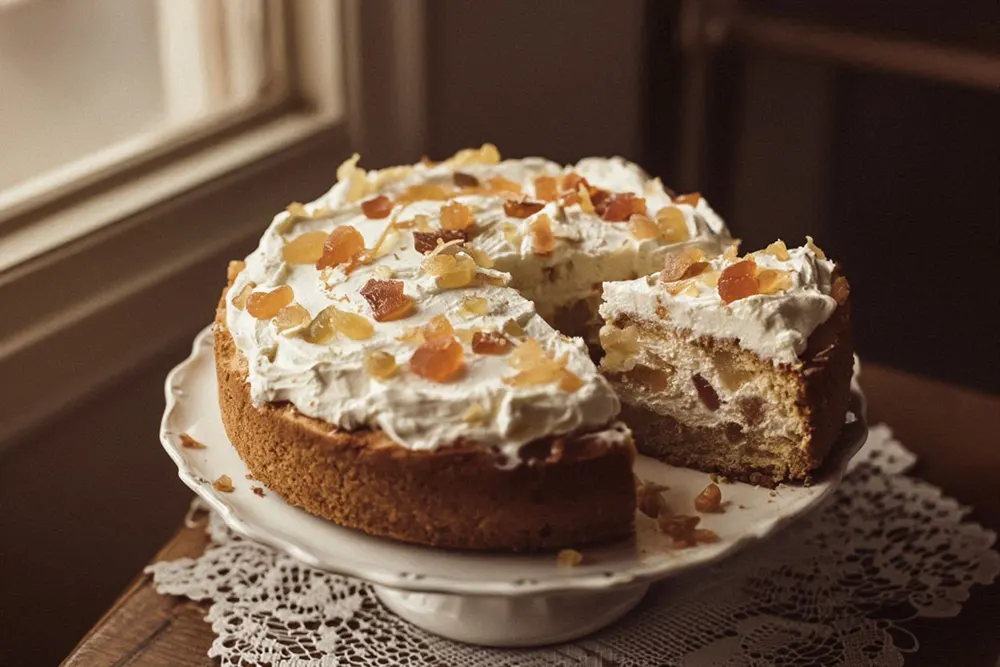
Cake Filled with Fruit Cream
Hollowed sponge filled with rum-soaked candied peel, raisins, jelly candy, and gelatin custard folded with whipped cream. Topped with cream and candied fruit.