Baked Duck with Sage and Onion Stuffing and Apple Sauce
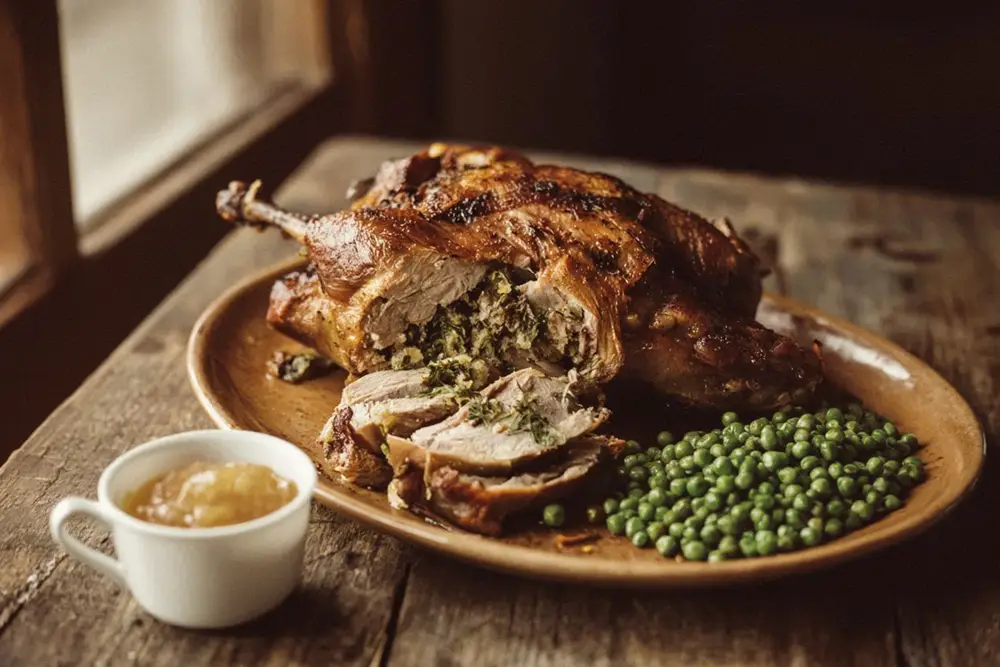
A whole roast duck stuffed with sage and onion, basted with pan drippings, and served with a warm apple sauce — a classic Central European Sunday roast.
Historical recipe
Modernised adaptation of an early 20th‑century source. Not independently kitchen-tested by Attic Recipes. Quantities, temperatures, and food safety guidance have been updated for a contemporary kitchen — results may vary and errors may exist. Nutritional values, where provided, are estimates only and have not been laboratory tested. Always follow current food safety guidelines for your region. If you have a health condition, allergy, or dietary requirement, consult a qualified professional before preparing this recipe.
Use of this recipe is entirely at your own risk and subject to our Terms of Service and Privacy Policy. Attic Recipes accepts no liability for any adverse outcome.
- Eggs
- Dairy
- Gluten
Additional notes
-
Warning
The duck must reach a minimum internal temperature of 82°C (180°F) in the thickest part of the thigh before serving. The stuffing must reach a minimum of 74°C (165°F) measured separately at the centre of the cavity. Both temperatures must be verified with an instant-read thermometer. Pregnant women, young children, elderly individuals, and immunocompromised persons should ensure both temperatures are confirmed before eating.
-
Note
Duck with skin is high in saturated fat — approximately 21g per serving, well above the recommended daily limit of 20g for women and 30g for men. Removing the skin before eating reduces saturated fat by roughly 40%. Individuals managing cardiovascular conditions may prefer the chicken variation noted in modernAdaptation, which reduces saturated fat significantly.
- 1
Prepare the sage and onion stuffing according to the companion recipe. Set aside.
- 2
Preheat the oven to 180°C (350°F) / 160°C fan. Pat the duck dry inside and out with paper towels. Season the cavity generously with salt and pepper. Fill the cavity loosely with the prepared stuffing — do not pack tightly, as the stuffing expands during roasting. Secure the cavity with a skewer or kitchen twine.
Tip Drying the skin before roasting is the single most important step for crisp skin. Moisture on the surface steams rather than roasts. - 3
Prick the duck skin all over with a skewer or fork, particularly around the thighs and breast where fat is thickest. Season the outside with salt and pepper. Place the duck breast-side up on a rack in the roasting pan. Pour the 250ml stock into the bottom of the pan.
- 4
Roast for 90 minutes for a young duck (1.8–2.2kg), basting with the pan drippings every 20–25 minutes. If the pan drippings threaten to burn, add a splash of water or stock. A young duck will require less time — begin checking at 75 minutes.
Tip For older or larger birds (above 2.2kg), allow up to 120 minutes total. The skin should be deep golden-brown and the fat fully rendered before removing from the oven. - 5
The duck is done when an instant-read thermometer inserted into the thickest part of the thigh (without touching bone) reads 82°C (180°F), and the juices run clear when the thigh is pierced. The stuffing must also reach a minimum of 74°C (165°F) — verify separately by inserting the thermometer into the centre of the stuffing through the cavity.
- 6
Transfer the duck to a warm serving platter and leave to rest for 10–15 minutes before carving. Meanwhile, skim the excess fat from the pan drippings. Pour the remaining drippings into a small saucepan and bring to a simmer for 2–3 minutes to concentrate. This is the serving sauce.
- 7
Warm the apple sauce gently in a small saucepan or in a sauce cup set in hot water. Do not boil.
- 8
Carve the duck and arrange on the warm serving platter. Pour the pan sauce over the carved meat. Serve the warm apple sauce separately in a sauce cup alongside young green peas.
Nutrition Information per 1 portion (approx. 270g: 160g duck with skin, 80g stuffing, 30g apple sauce)
Nutritional values are approximate estimates and may vary based on specific ingredients used, preparation methods, and portion sizes.
Serving Suggestions
Carve at the table or in the kitchen and arrange on a warm platter. Pour the pan sauce directly over the meat. Serve the apple sauce in a separate sauce cup so guests can add it to taste — period recipes of this type specify this presentation explicitly. Young green peas are the traditional accompaniment; serve freshly cooked alongside. The stuffing is served from the cavity directly onto the plate.
About This Recipe
This is the main event that the sage and onion stuffing recipe was written for. A whole duck, cleaned and loosely filled, roasted slowly until the skin is deep gold and the fat has rendered into the pan — then carved onto a warm platter and served with its own drippings, a cup of smooth apple sauce, and young green peas. It is not a complicated recipe, but it is an unforgiving one: duck has enough fat to self-baste, which means the margin between perfectly rendered and under-roasted is wider than with leaner birds, but the margin between well-rested and dry is narrow.
The apple sauce is not a garnish here — it is a functional part of the dish. Duck fat is rich and persistent on the palate; the acidity of apple cuts through it in a way that no amount of seasoning can replicate. Period recipes of this type are explicit on the point: compote is preferable to purée, and the sauce is served separately so the diner controls the balance.
Young green peas alongside are non-negotiable by period standards. Their sweetness and slight starchiness balance the fat of the duck and the sharpness of the apple in a combination that has not needed updating.
Why It Works
Duck is unique among roasting birds in that it carries most of its fat between the skin and the flesh rather than marbled through the meat. This means the cooking process is largely about fat management: render it out slowly and the skin crisps, the meat stays moist, and the pan fills with a natural basting liquid. Fail to render it and the result is soft, greasy skin over meat that tastes of nothing.
Pricking the skin before roasting is the technical key. Each puncture allows the liquefying fat to escape during cooking instead of pooling beneath the skin. Basting every 20–25 minutes with the accumulated drippings accelerates the process and builds colour on the exterior.
The stuffing serves two purposes: it flavours the cavity from the inside out as it cooks, and it absorbs some of the rendered fat that flows into the cavity during roasting — producing a richer, more flavourful stuffing than if it had been baked separately.
The 10–15 minute rest before carving is not optional. Cutting into the bird immediately causes the juices to run out of the muscle fibres before they have reabsorbed. A rested duck carves cleanly and stays moist on the platter.
Modern Kitchen Tips
A good instant-read thermometer removes all guesswork from this recipe. The thigh temperature (82°C / 180°F) and stuffing temperature (74°C / 165°F) are the only reliable indicators of doneness — skin colour and juice colour are useful signals but not sufficient on their own.
If the skin is browning too fast before the internal temperature is reached, tent the bird loosely with foil for the remaining cooking time. Remove the foil for the last 15 minutes to re-crisp the skin.
Ready-made unsweetened apple sauce from a jar is a perfectly acceptable choice. Bramley or Granny Smith varieties give the tartness needed. Avoid sweetened or spiced versions, which overwhelm rather than contrast.
A classic of early 20th century Central European home roasting, preserved and adapted for the modern kitchen.
The Story Behind This Recipe
Historical Context
Early 20th century recipes for roast duck of this type specified baking time but not oven temperature — period stoves operated at variable heat and cooks calibrated by experience rather than a thermometer. Home cooks of the period understood "baking juice" to mean the drippings accumulated during roasting, supplemented at the start of cooking with whatever stock or liquid was available in the kitchen. Apple compote or purée was the standard fruit accompaniment for fatty roasting birds across Central European home cooking of the era, valued for the acidity it brought against rendered duck fat. Young green peas were considered the proper vegetable pairing and appear without elaboration in period recipes of this type, treated as self-evident.
Modern Kitchen Adaptation
Oven temperature has been set at 180°C (350°F) / 160°C fan; the original specified only approximately one hour of baking without temperature. The initial 250ml of chicken or duck stock has been added as a starting liquid for the roasting pan, as the original assumed accumulated drippings from prior cooking — a common period practice when the stove was in continuous use. Ready-made unsweetened apple sauce (jarred or canned, smooth) is a direct modern substitute for the apple purée called for in the original. For a homemade version, simmer 4 peeled and cored apples (approx. 600g, Bramley or Granny Smith) with 3 tablespoons water and 1 tablespoon sugar until completely soft, then pass through a sieve or blend smooth. Chicken may be substituted for duck: use a whole chicken of 1.5–1.8kg, reduce oven temperature to 190°C (375°F) / 170°C fan, and roast for 20 minutes per 500g plus 20 minutes, until the thigh reads 82°C (180°F) and juices run clear. The stuffing recipe and apple sauce accompaniment remain unchanged.
This recipe is an independent modern adaptation developed from historical sources in the public domain. It is provided for informational and educational purposes only and does not constitute professional dietary, nutritional, or medical advice. Food preparation involves inherent risks. The reader assumes full responsibility for safe food handling, ingredient sourcing, and adherence to current local food safety guidelines. The site operator accepts no liability for outcomes resulting from the preparation or consumption of this recipe.
One recipe.
Every week.
You Might Also Like
More recipes from the same category
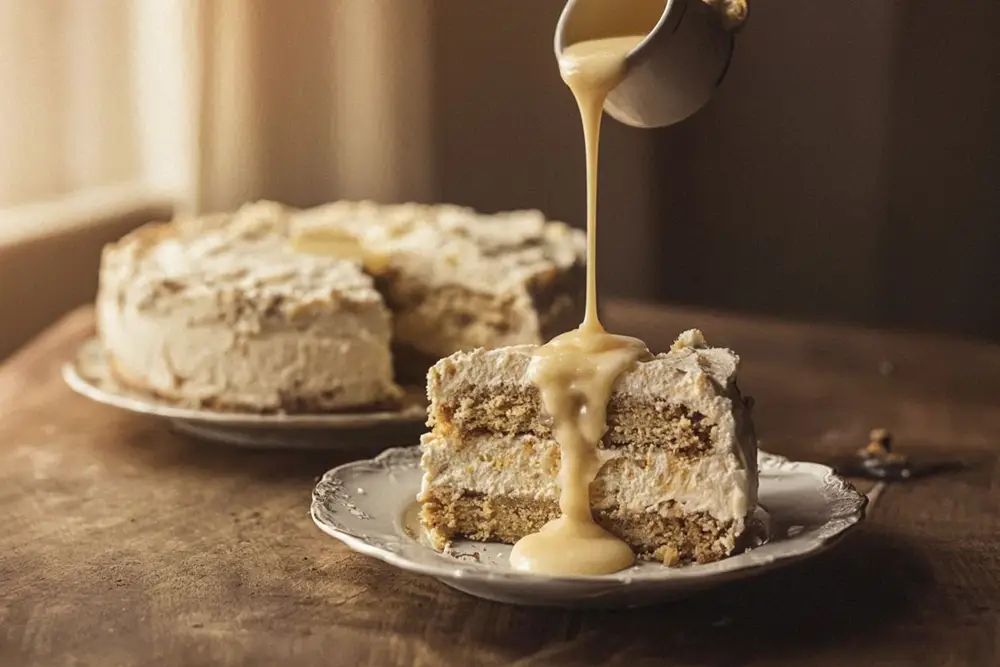
Almond Cream Biscuit Torte
A light sponge layered with almond buttercream and finished with a poured chilled custard sauce — a classic of early 20th century Central European pastry.
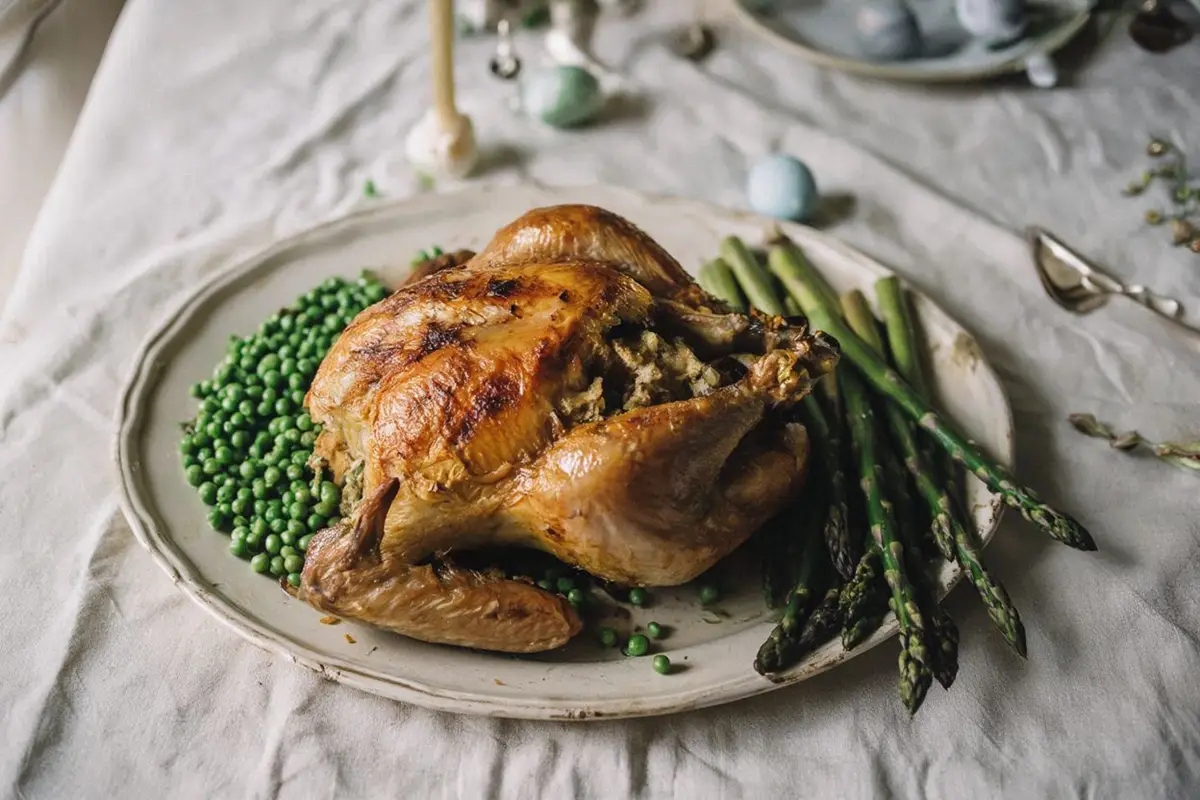
Chicken Stuffed with Crab Meat and Peas
Whole roasted chicken stuffed with crayfish, peas, asparagus and buttered bread — a festive Central European Easter centerpiece.
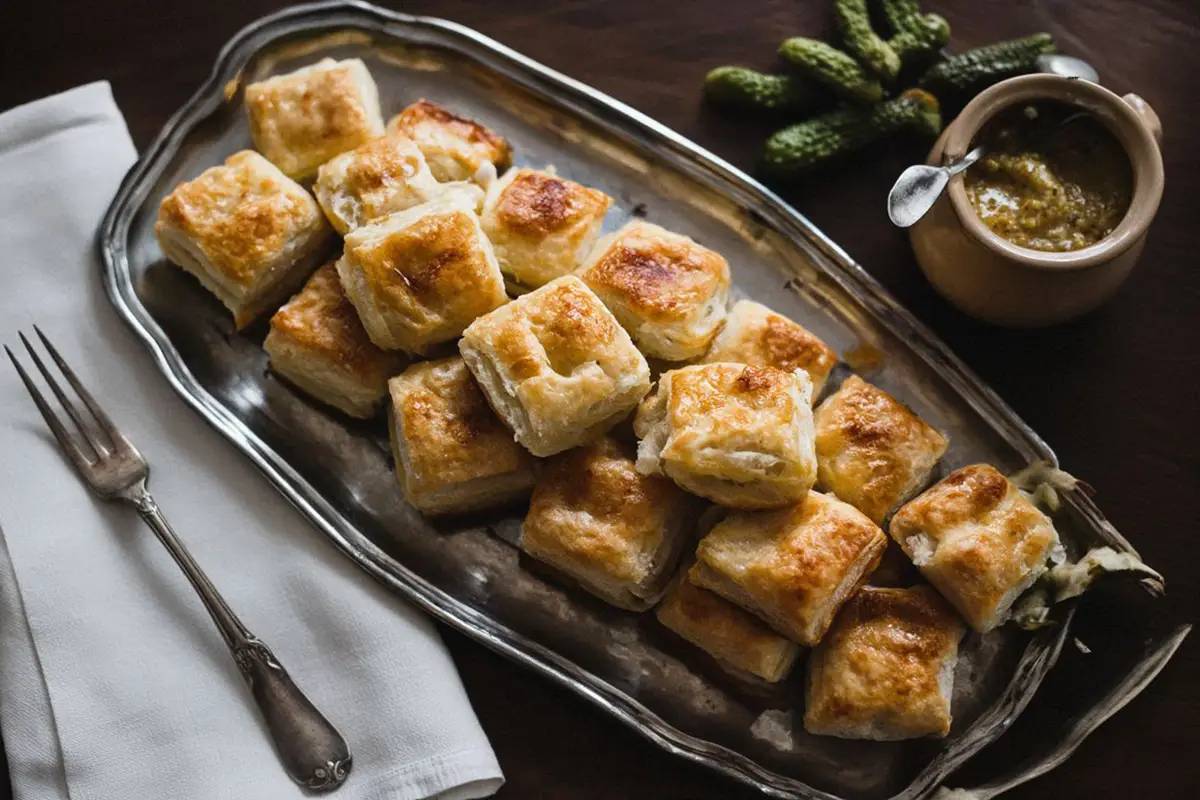
Fried Turkey Skin Rolls with Liver, Tongue and Pistachios
Crispy turkey skin rolls filled with ham, tongue, goose liver, capers and pistachios — an elegant Central European festive appetizer.